-
Designed around movement and experience
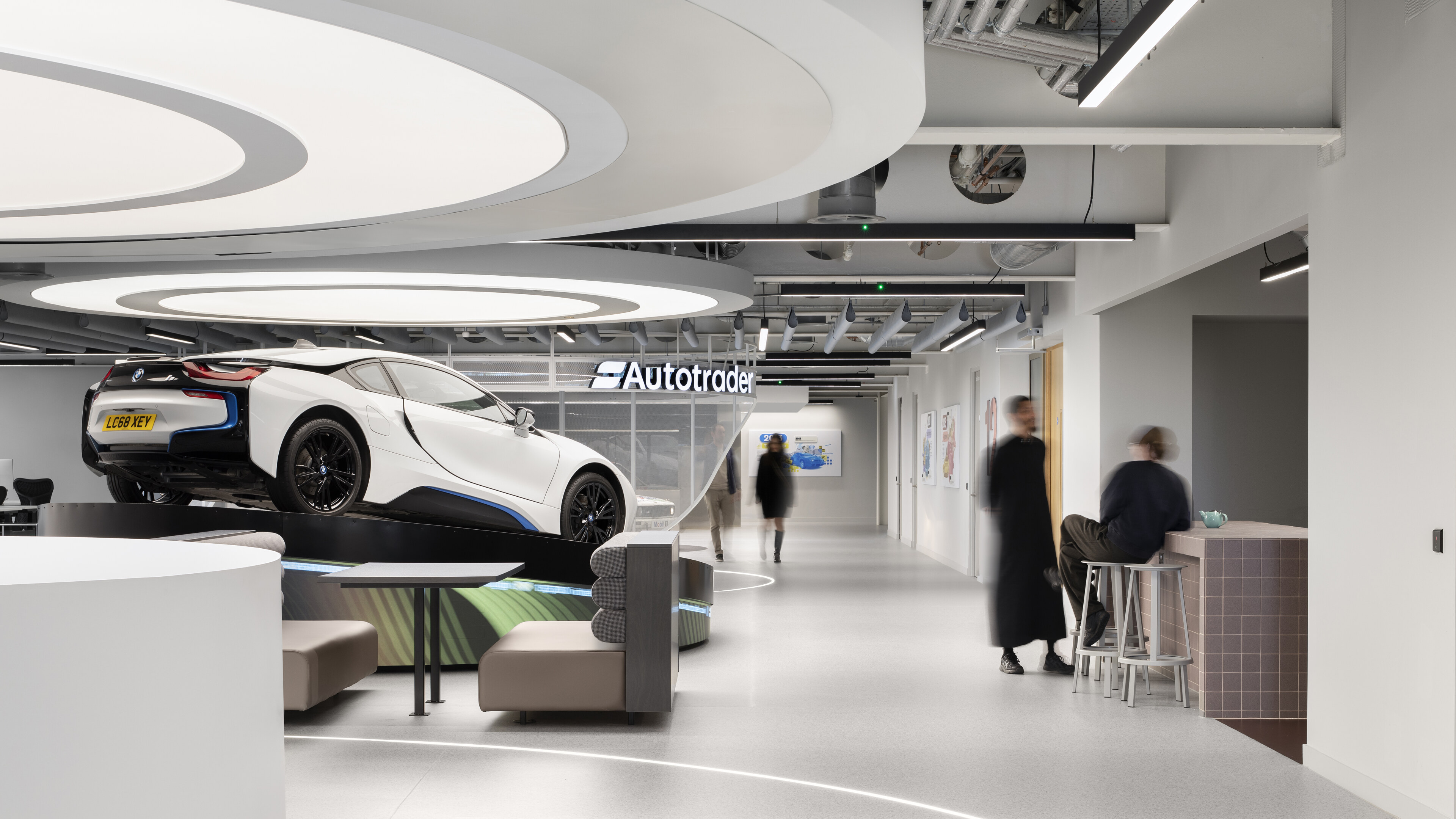
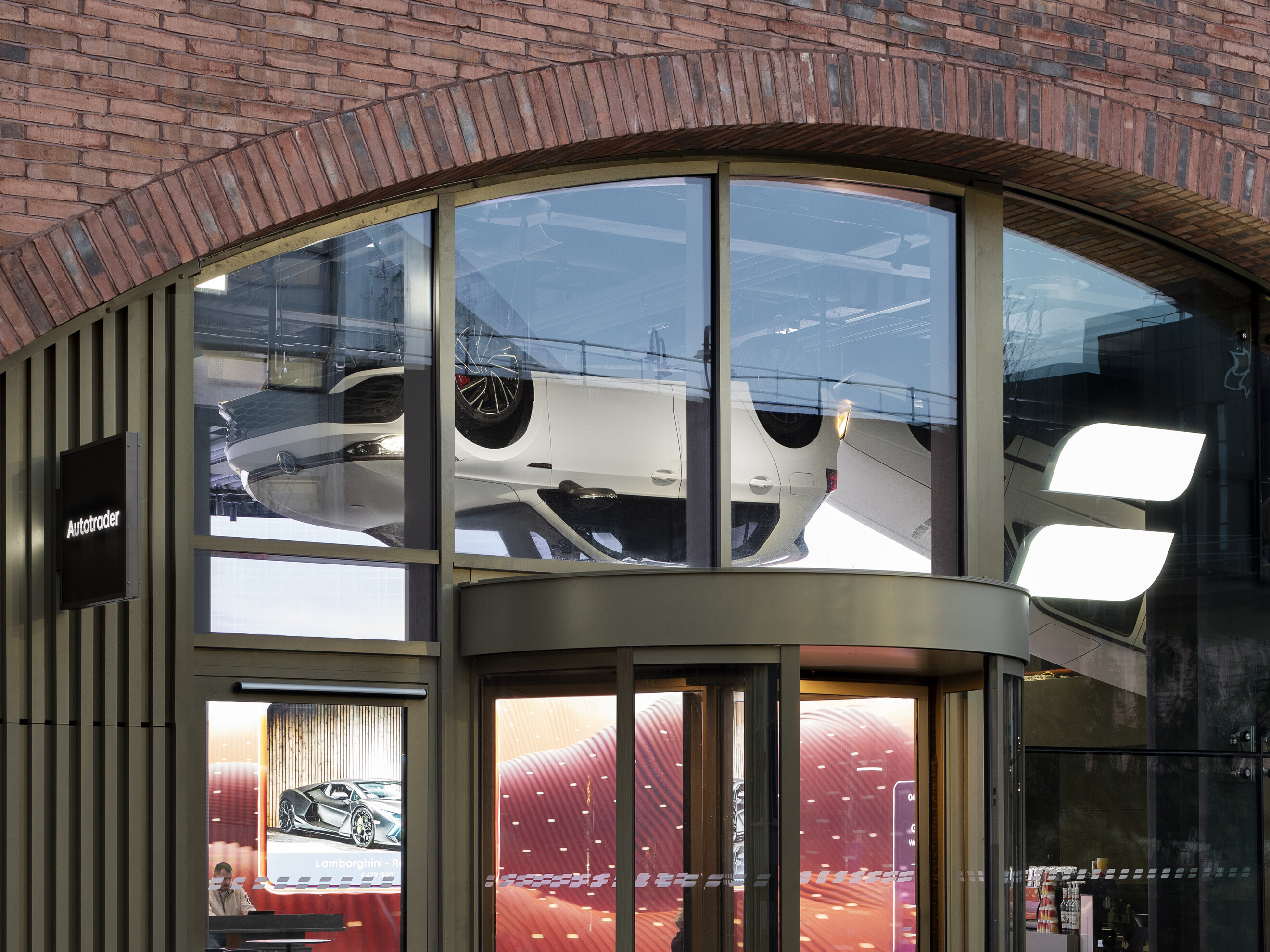
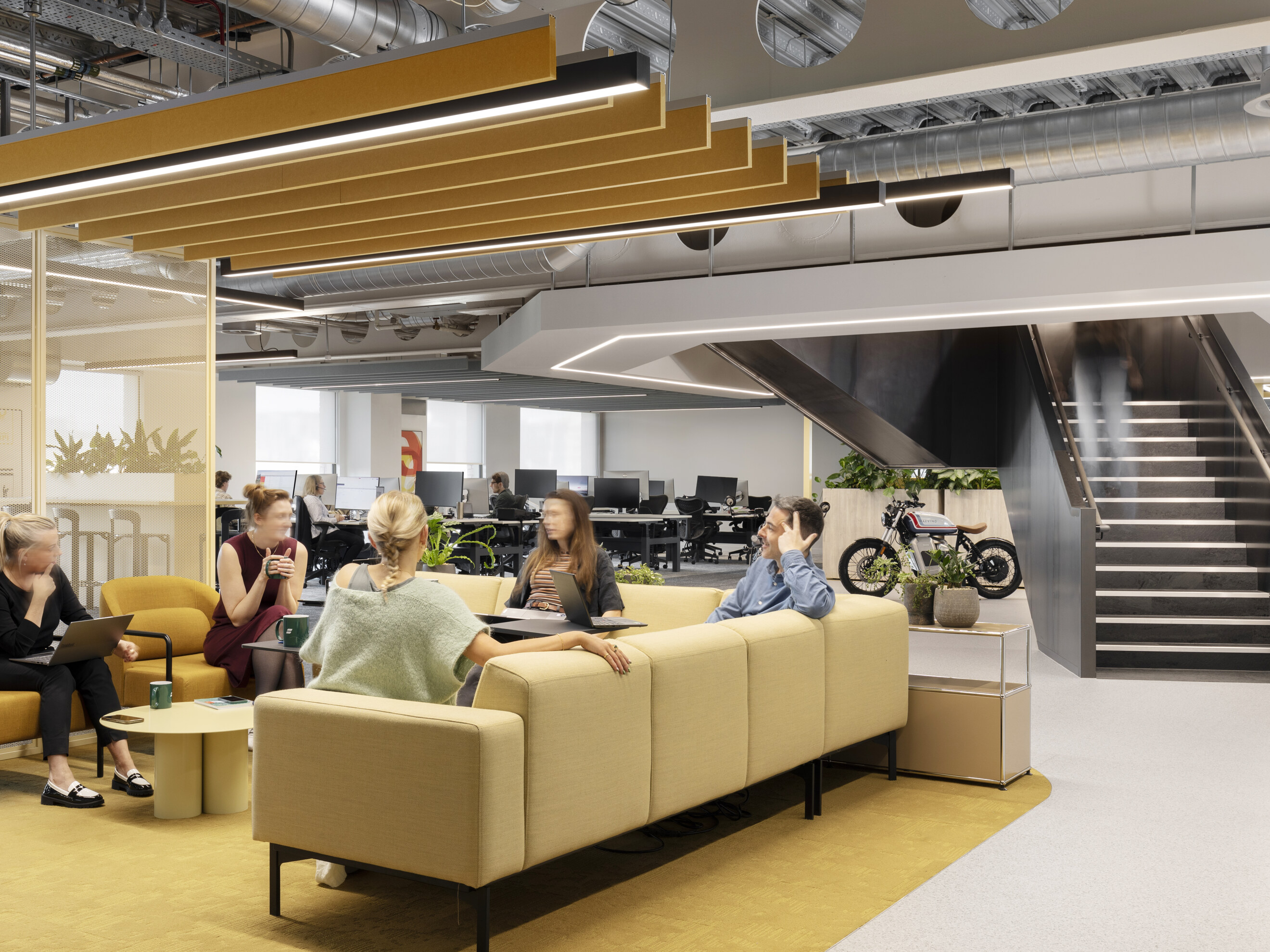
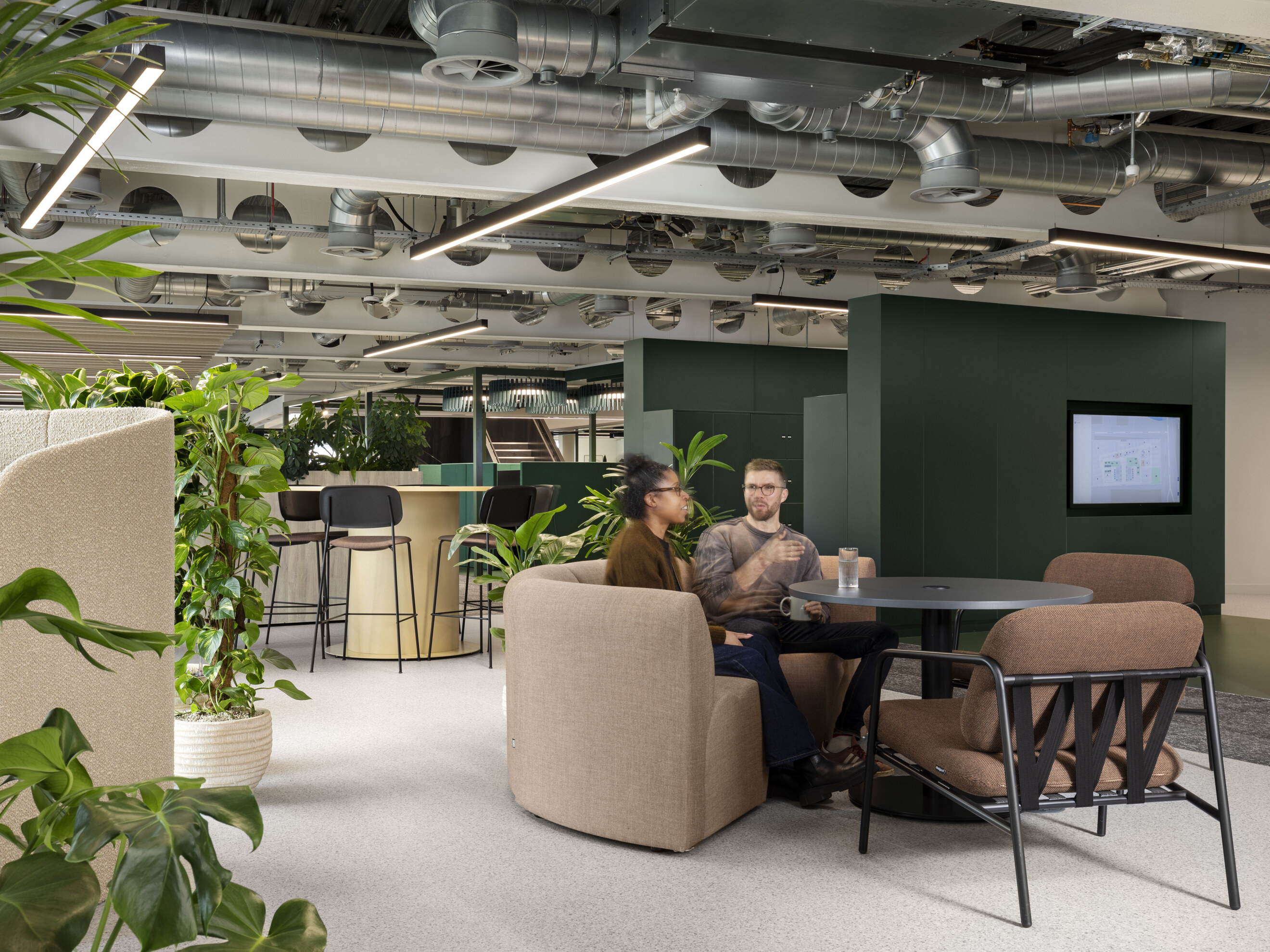
Autotrader’s new Manchester headquarters brings together 130,000 sq ft across eight floors at No.3 Circle Square, creating a workplace defined by movement, identity and connection. The project responds to an ambition to translate a digital marketplace built on automotive culture into a physical environment, without relying on conventional branding.
The concept centres on journey – a spatial narrative that unfolds as people move through the building. Architecture, circulation and carefully placed landmarks work together to guide that experience, creating a sequence of moments rather than a static office.
-

-
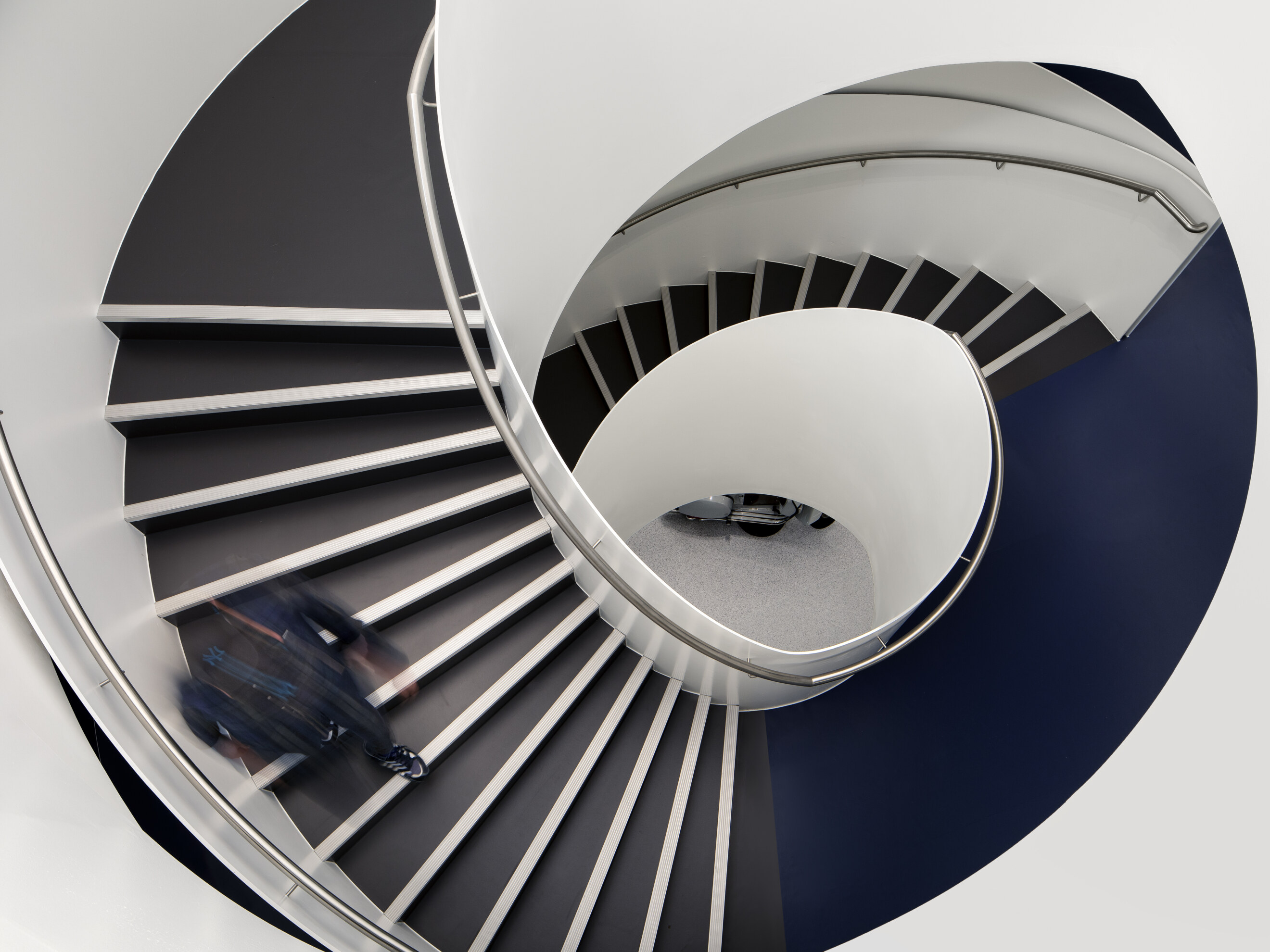
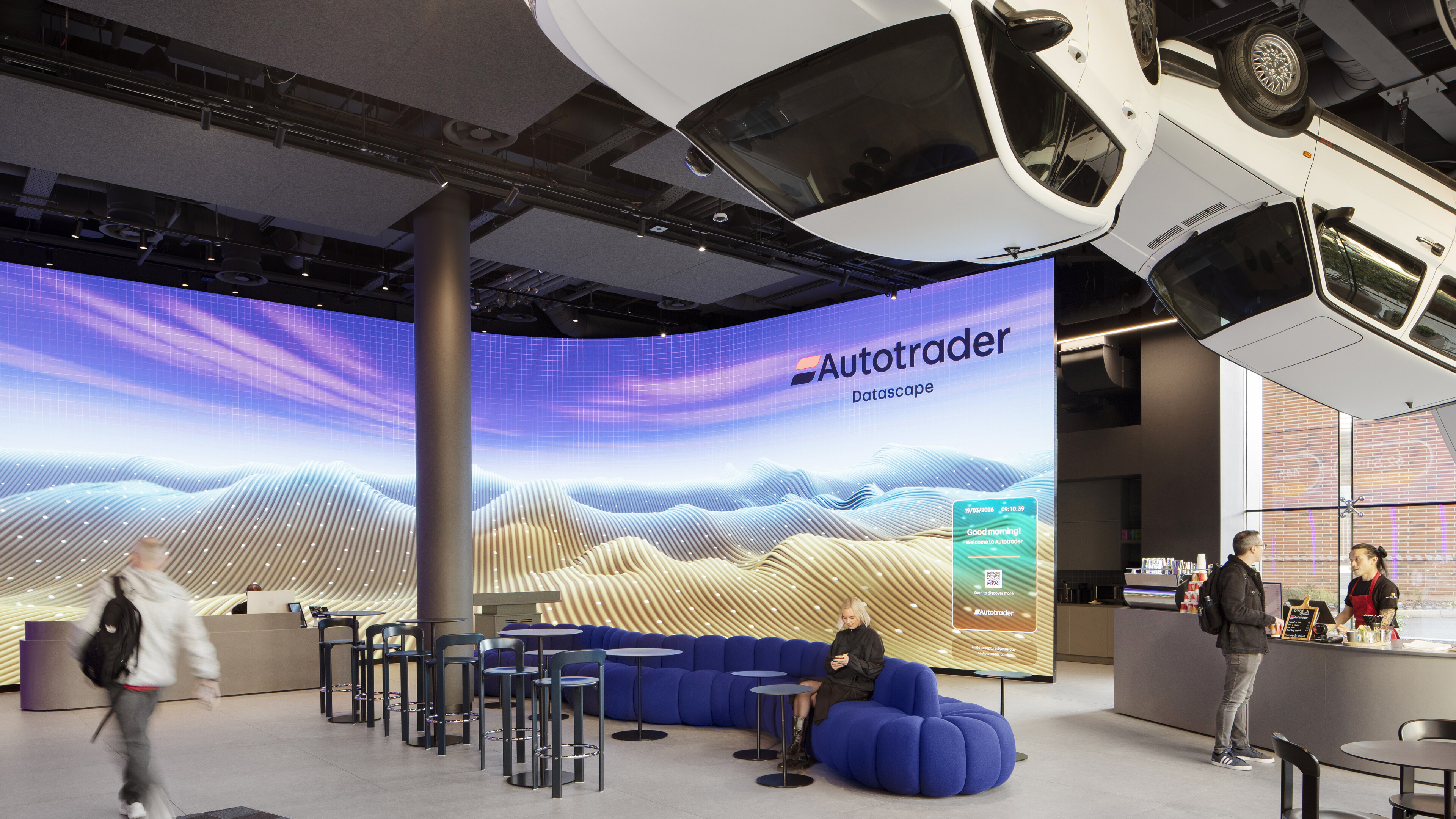
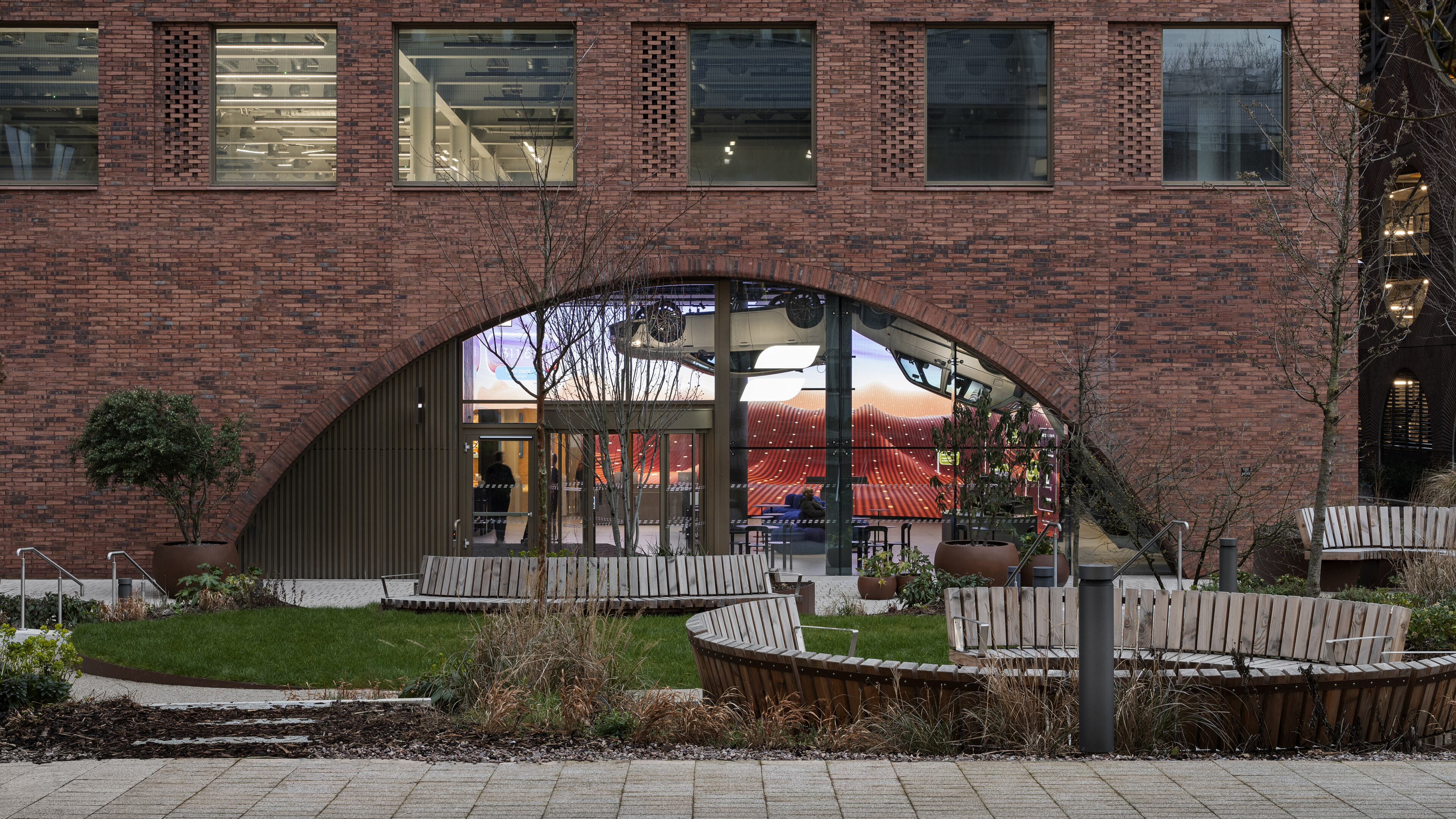
From a dedicated arrival space defined by suspended vehicles, to three sculptural staircases formed from retained structural voids, the design embeds identity within the fabric of the building. Each working floor carries its own character, while a diverse range of environments supports how Autotrader’s people collaborate, focus and connect.
The headquarters operates as both a workplace and statement, in that it’s an environment that reflects how Autotrader works today and signals where it is heading next.
-
-
Journey through the space
While the design is shaped through a series of carefully considered moments, the full story of Autotrader’s Manchester headquarters is best understood in motion.
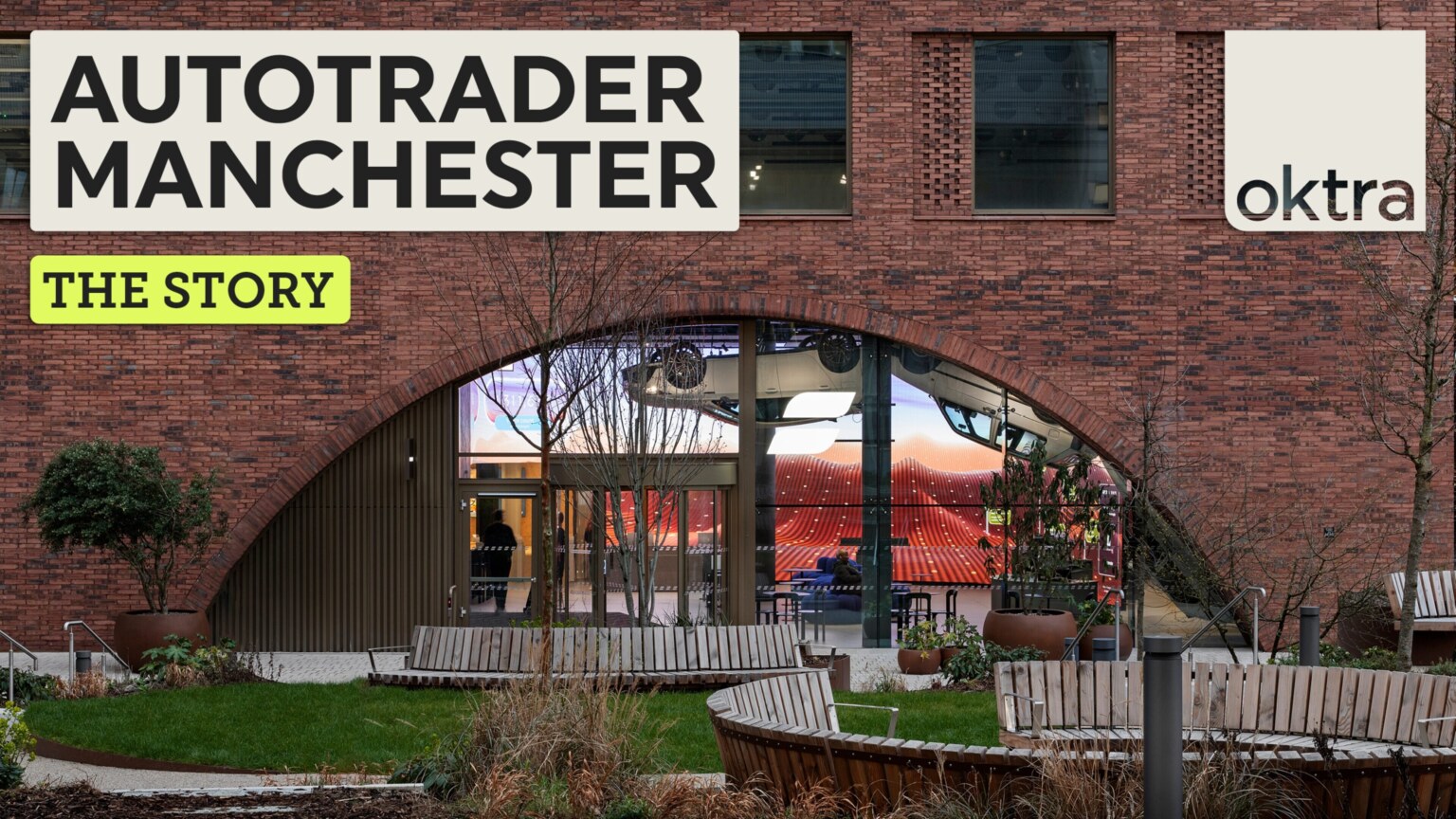
Our short film captures the scale, complexity and craft behind the Autotrader project — from the technical installation of suspended vehicles to the transformation of the space from shell to a fully realised workplace. It brings together the voices, decisions and details that sit behind what you see. You can explore the full story in more depth here.
-

-
Balancing the new with the familiar
The brief set a clear direction. Autotrader wanted a workplace that felt new, and – more specifically – presented something they hadn’t seen before. But they wanted to balance this with the sense of familiarity that defines their culture. It needed to push boundaries, while still feeling recognisably Autotrader.
That ambition shaped the early stages of the project, with the task of balancing originality with something intuitive and grounded underpinning the initial design concepts. The space needed to feel immediate and understandable, even as it introduced something unexpected.
-
-
Translating journey through design
The workplace explores the broader idea of journey, translating Autotrader’s purpose into a spatial experience that unfolds as people move through the building. This idea is supported narratively by ‘fuel’ and ‘landmark’ as design concepts.
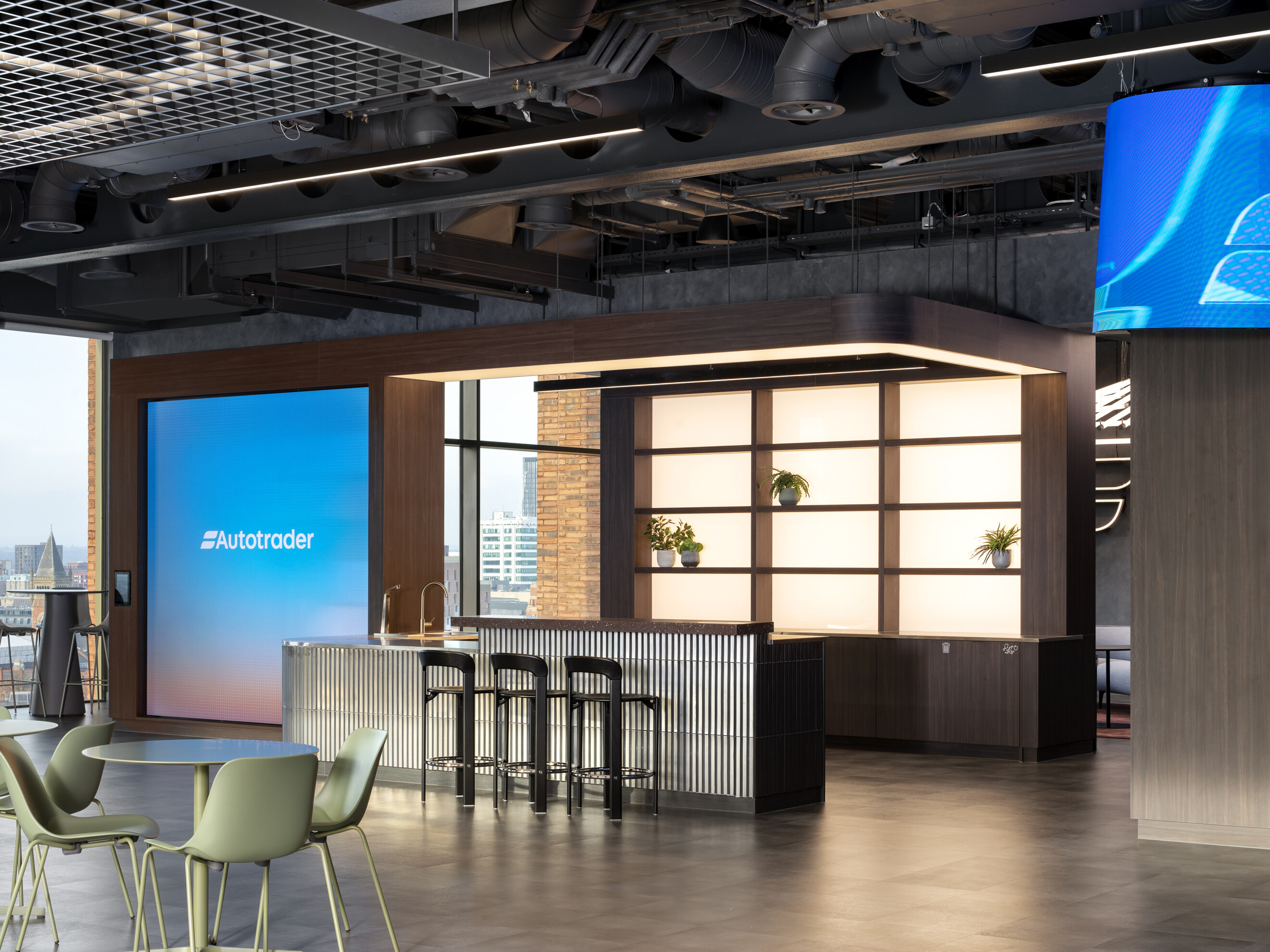
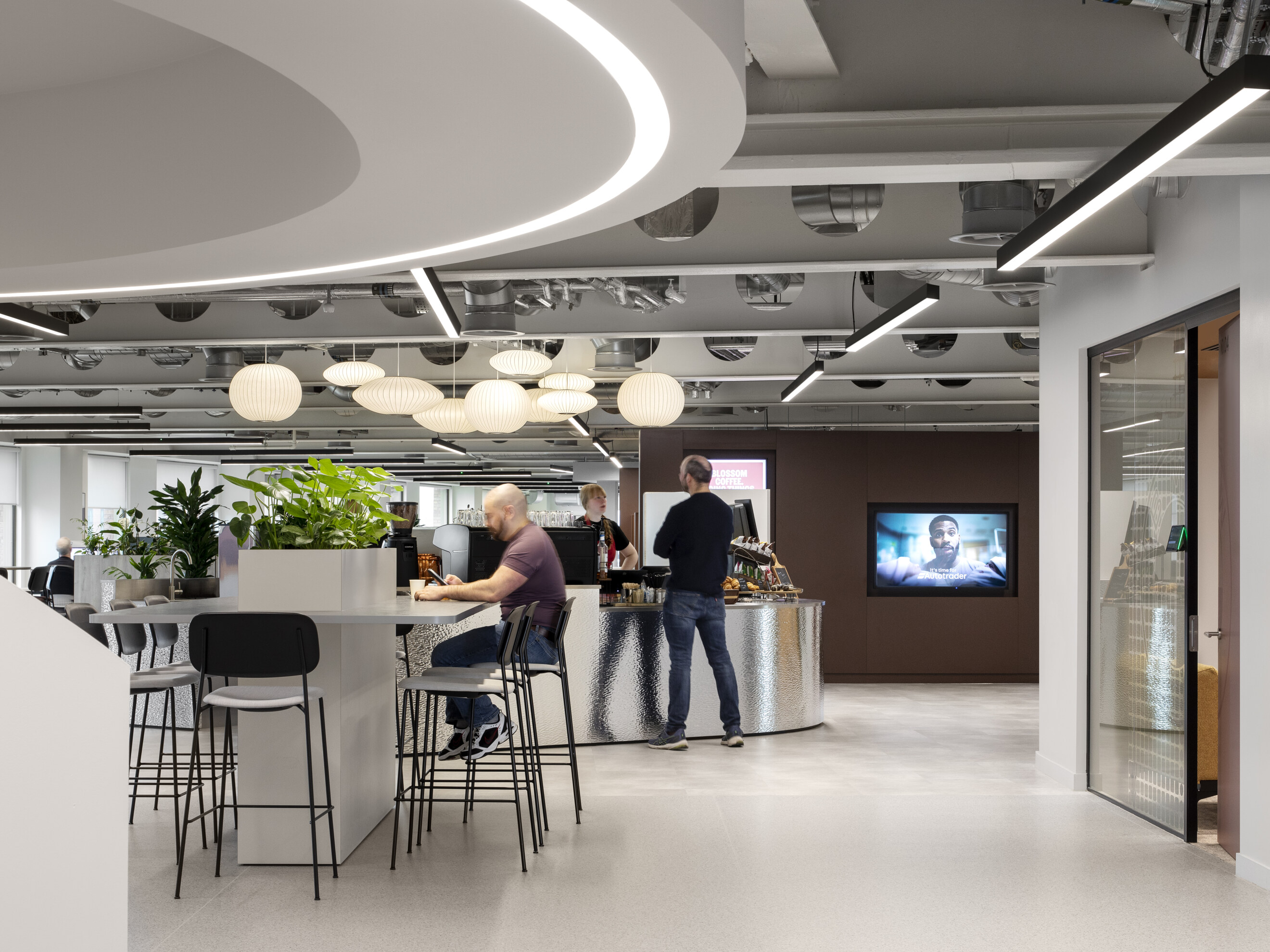
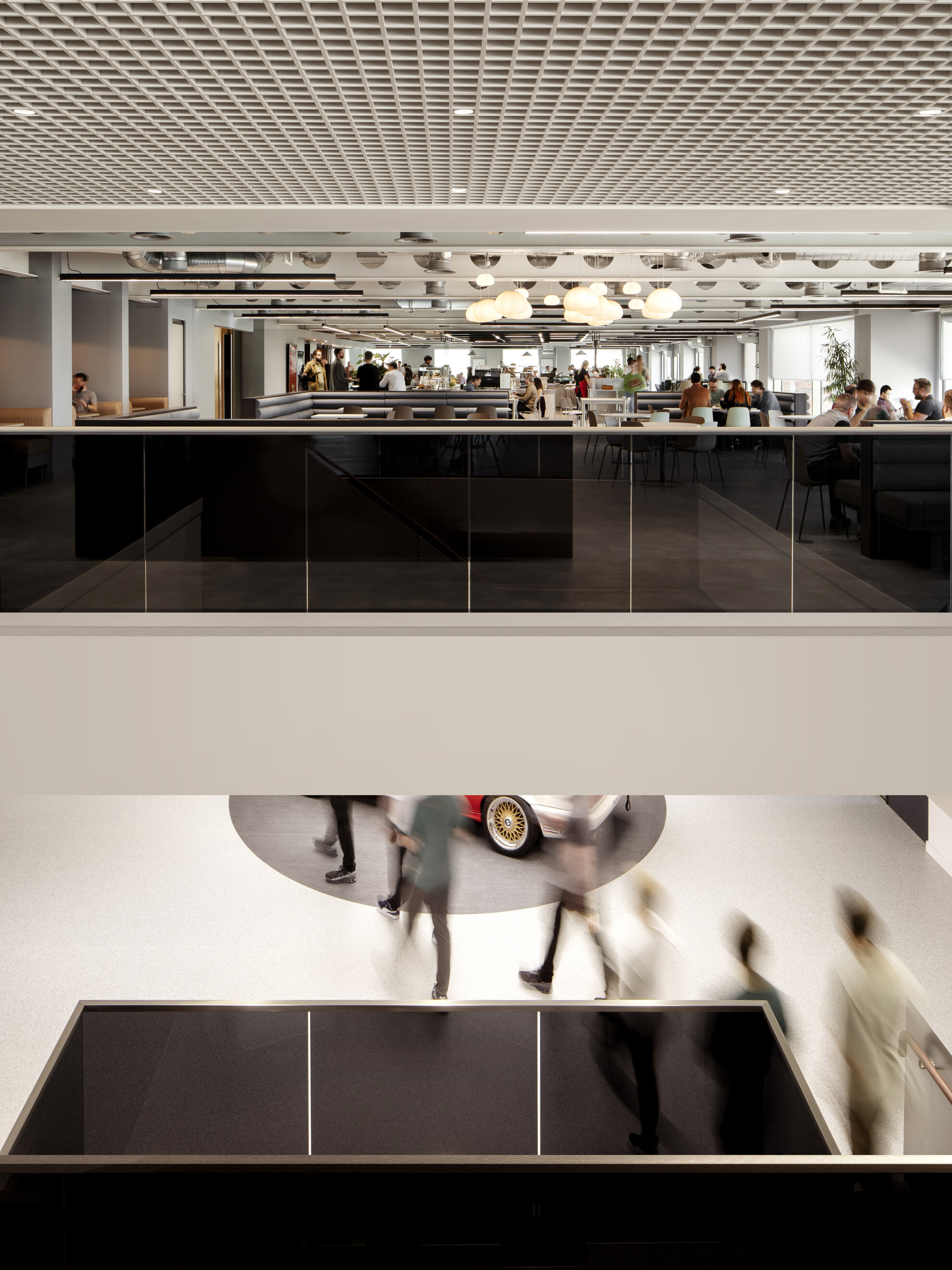
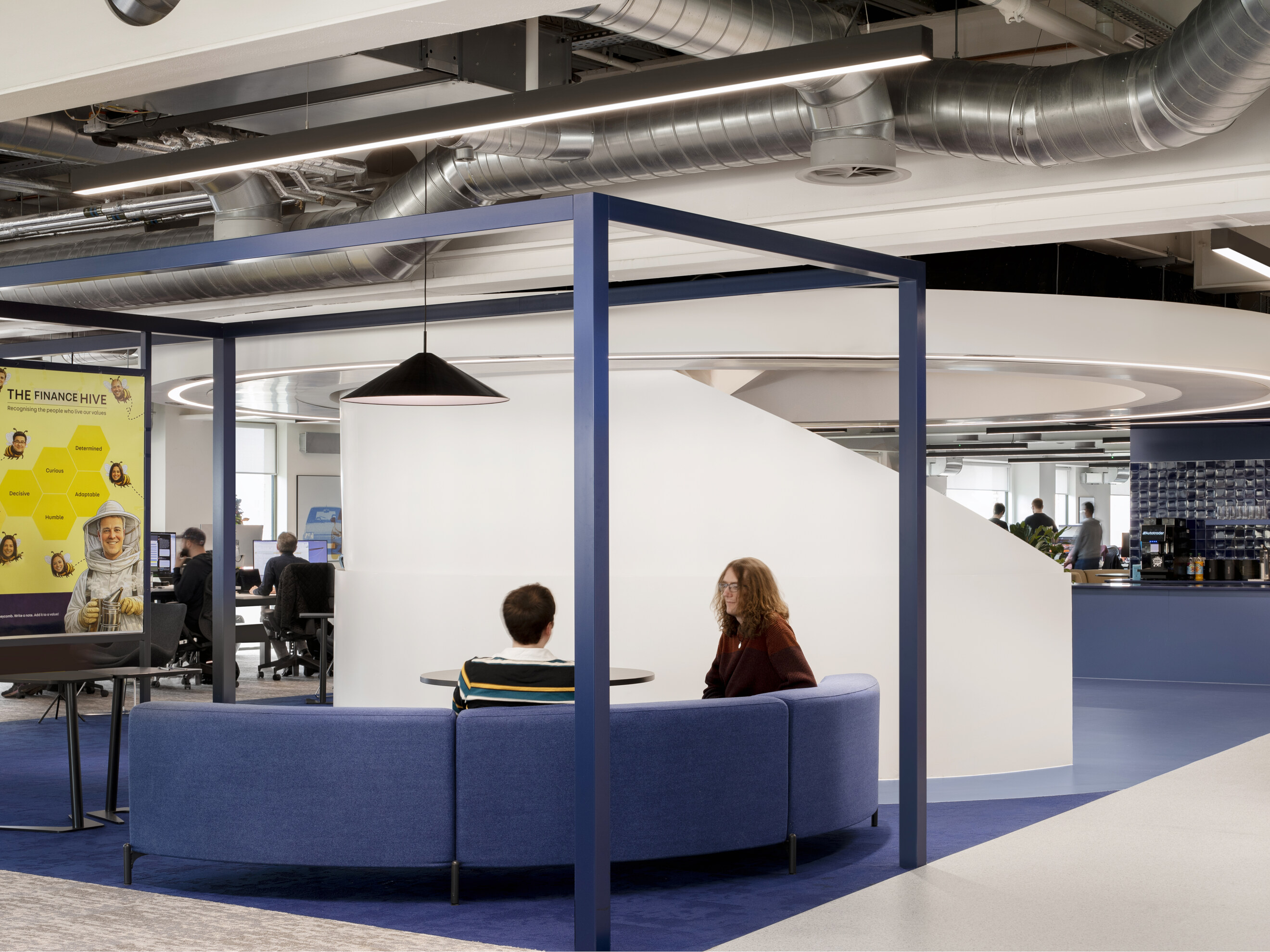
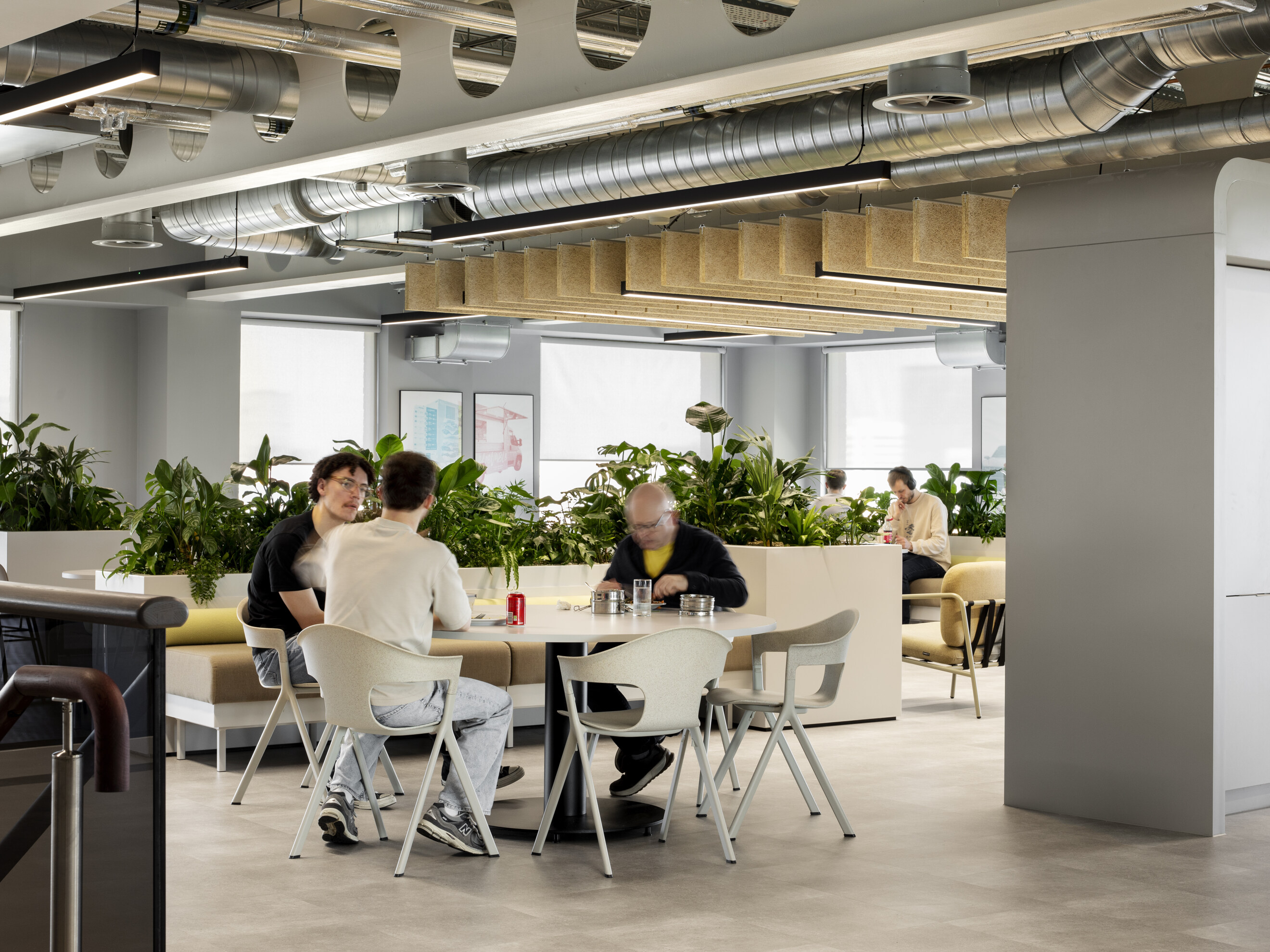
Fuel represents the energy behind the organisation. The workplace is designed to power Autotrader’s people, supporting different modes of work across the day. Spaces allow employees to shift between focus, collaboration and social interaction, reflecting the pace and dynamism of a digital technology company.
-
-
Landmark introduces moments of identity within that journey. Signature features act as memorable anchors within the workplace, referencing Autotrader’s automotive heritage while creating distinctive architectural moments.
Journey ties the experience together. Rather than functioning as a series of disconnected rooms, the workplace comes together as a sequence of spaces that guide employees through moments of energy, collaboration and quieter focus.
-
-
Finding identity in the structure
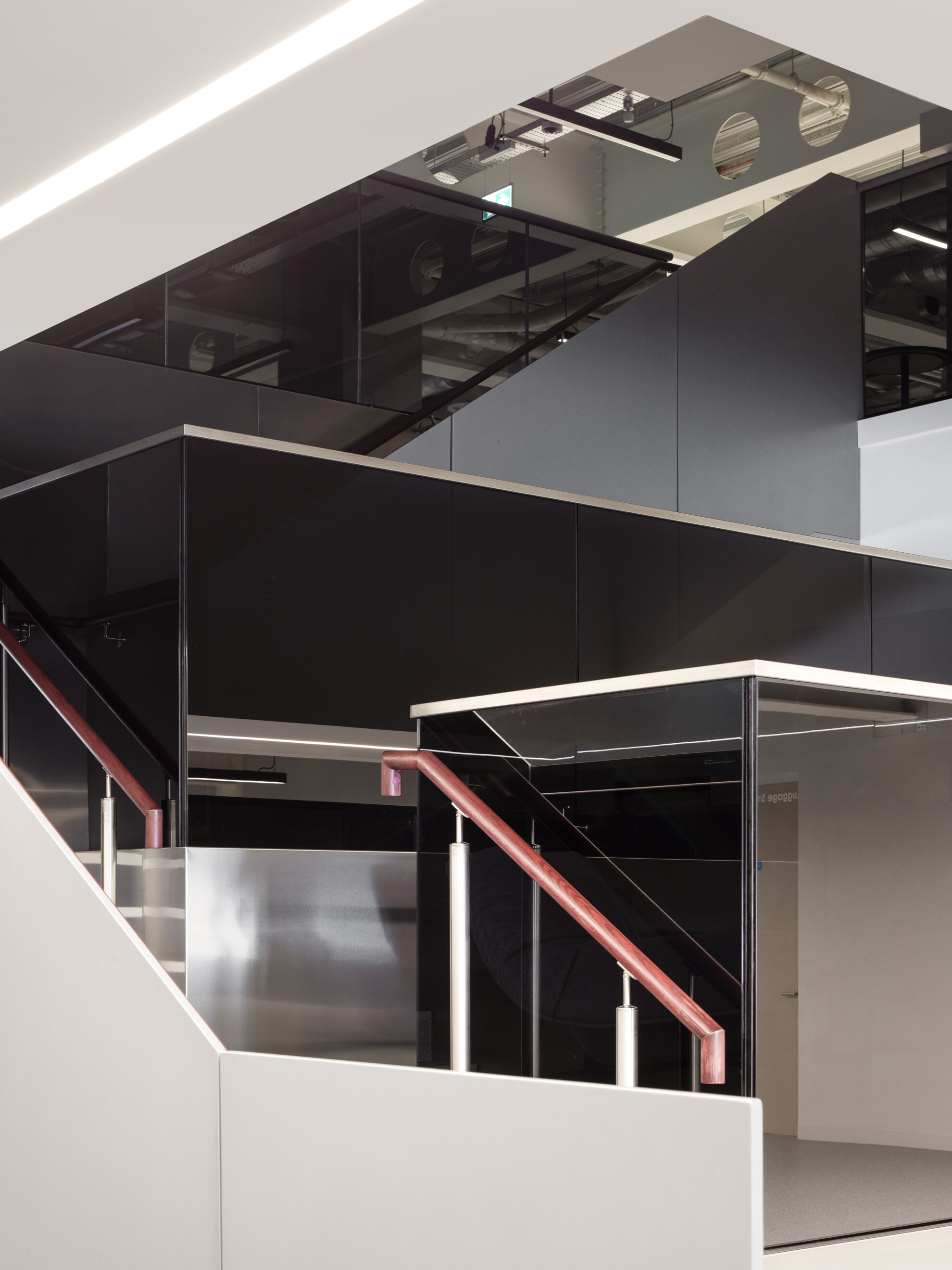
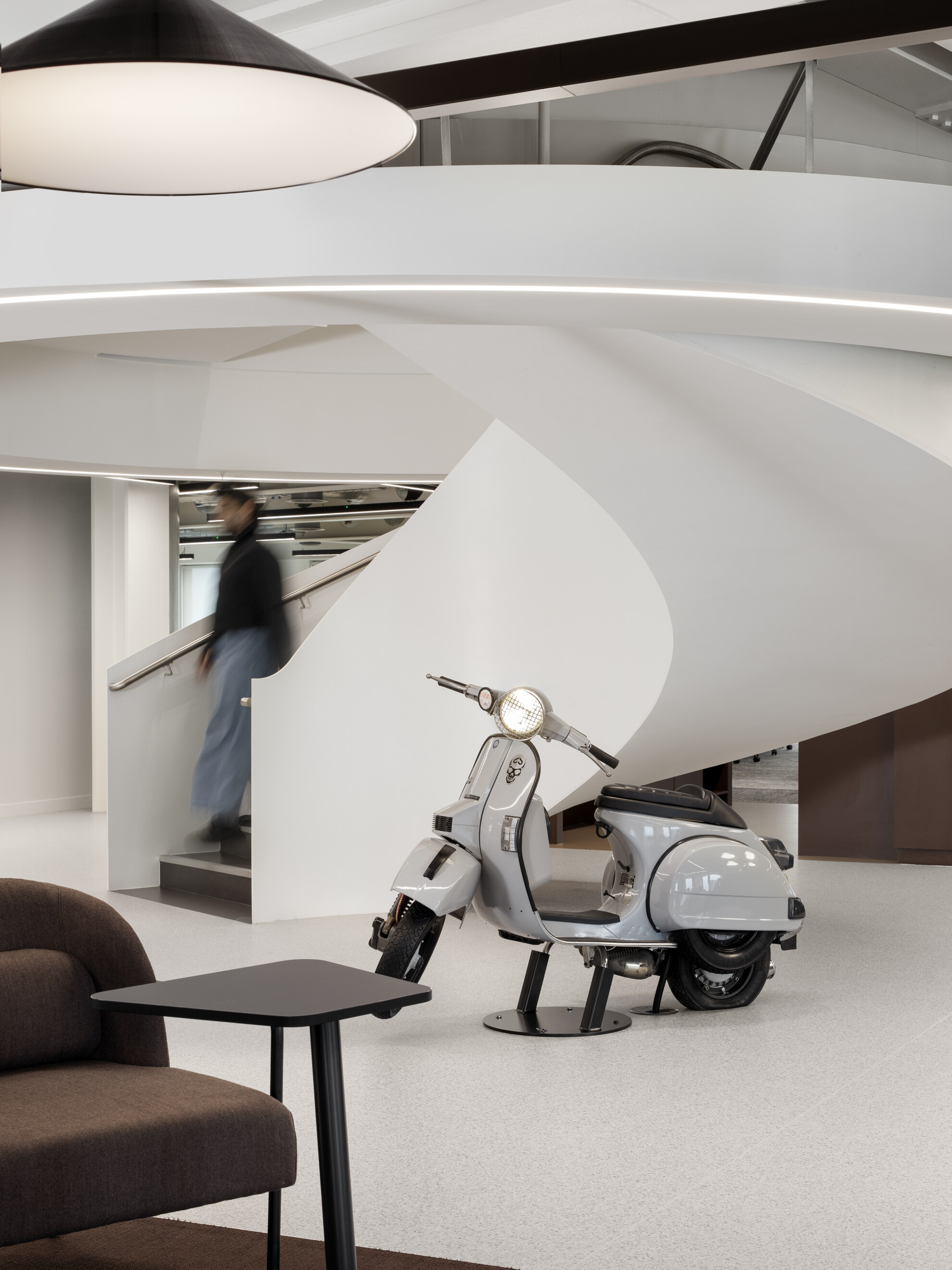
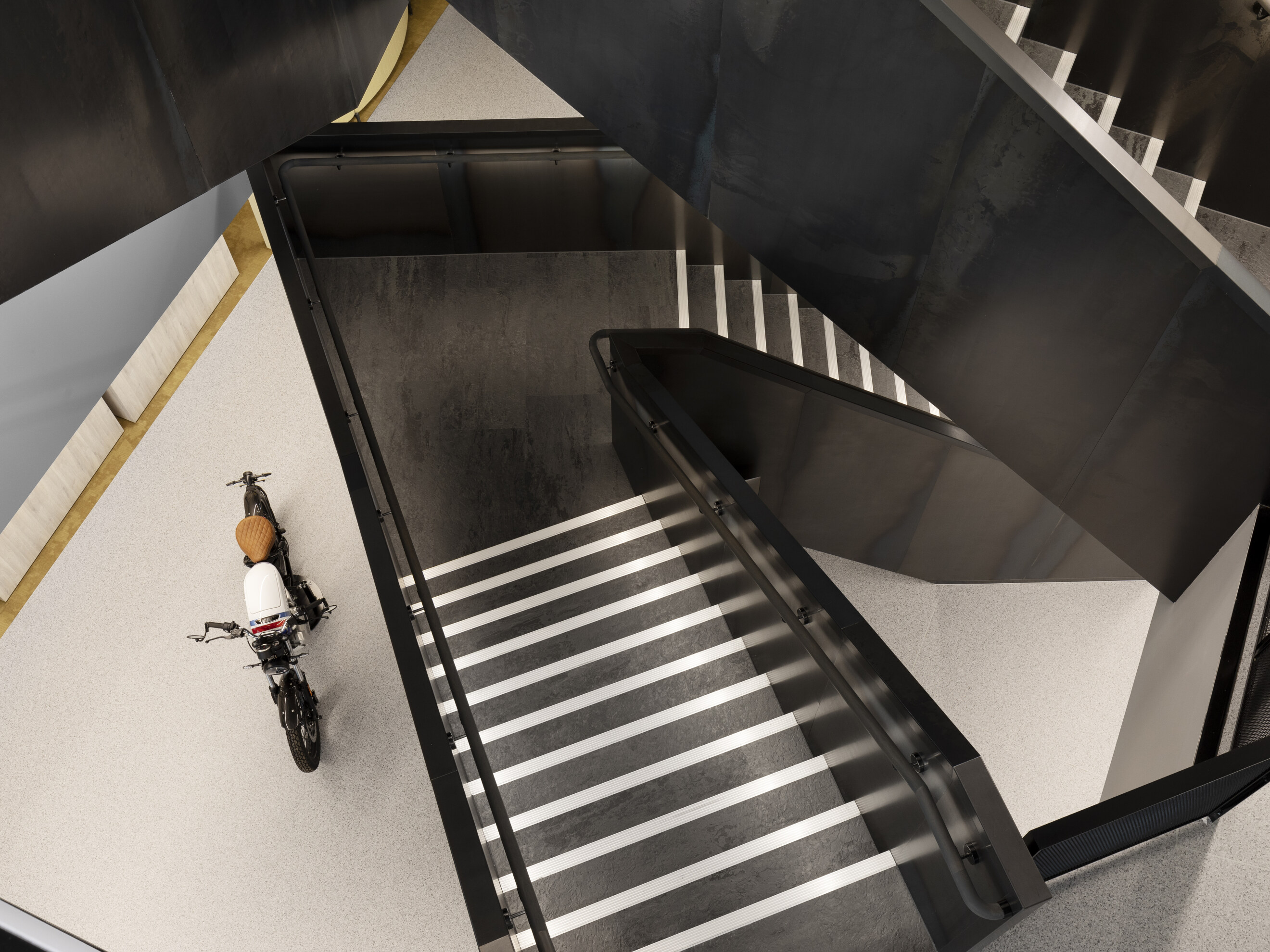
The project included the transformation of existing structural crane openings within the building, which were repurposed to create three sculptural internal staircases that link the eight-floor workplace. Each staircase – directional, spiral and social – has a distinct character and function. One moves people quickly, one encourages people to slow down, while the other draws people together.
This strategy fundamentally reshaped how the workplace operates. Instead of teams feeling isolated across multiple floors, the staircases promote chance encounters, spontaneous collaboration and a stronger sense of organisational connection.
-
Cars, but not as you’d expect
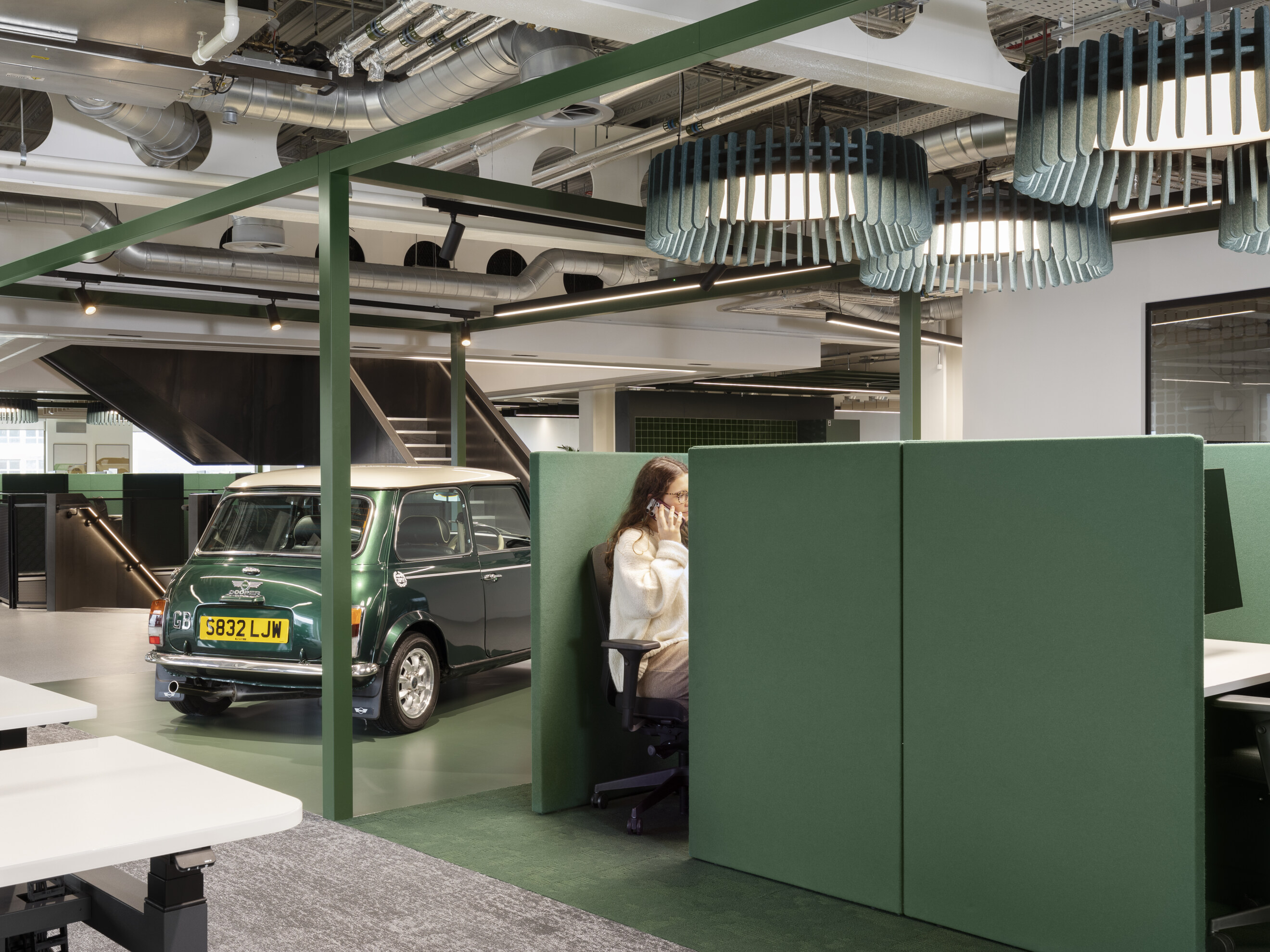
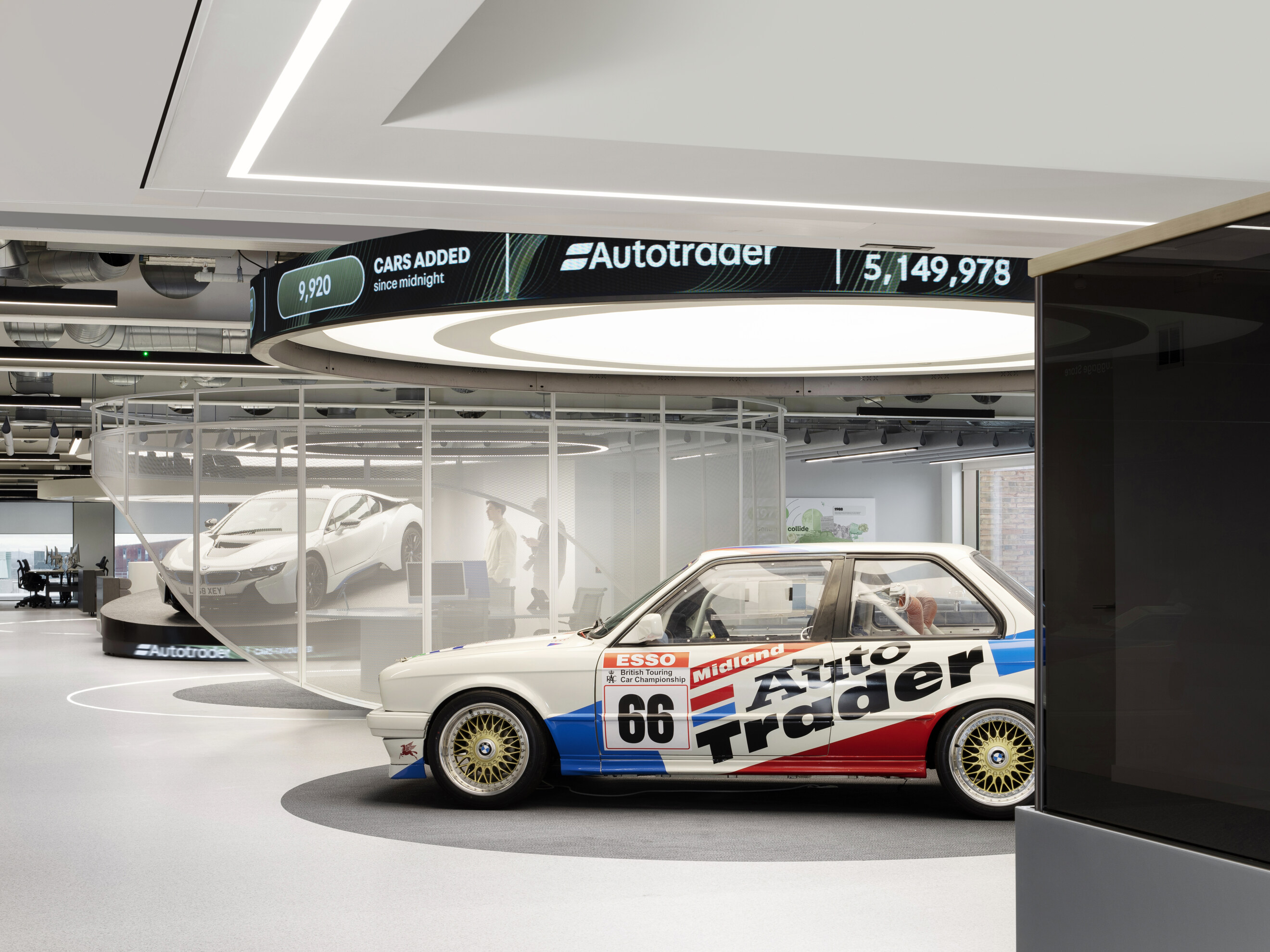
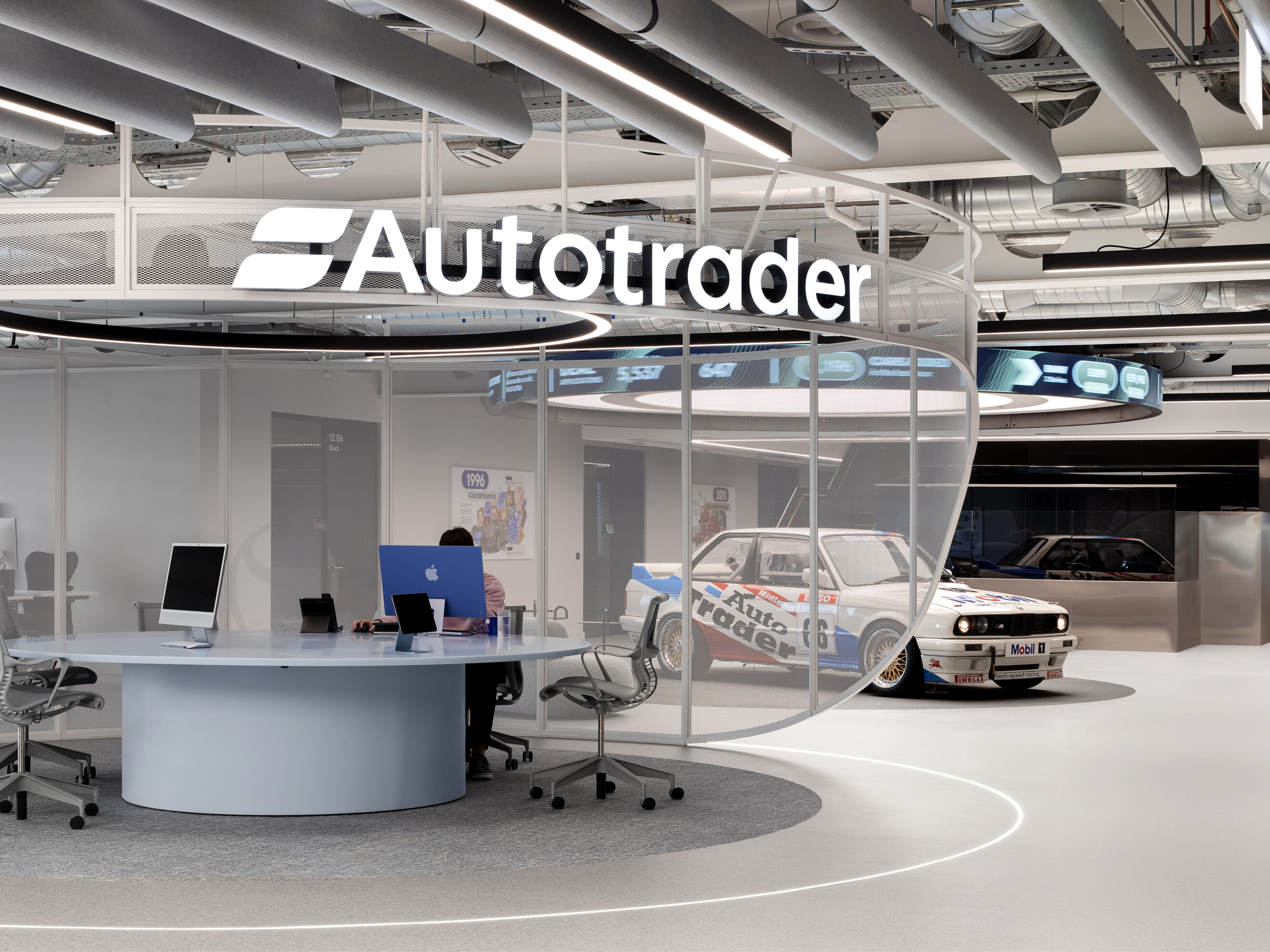
Autotrader’s connection to automotive culture needed to be present, but not in a way that felt literal or expected. The automotive reference runs through the entire building, with eight vehicles selected with intention and placed across the space. They act as landmarks – points people refer to without needing to explain.
The most striking moment occurs on arrival. Autotrader has its own dedicated entrance at No.3 Circle Square, where three suspended cars appear in a dramatic barrel-roll formation within the reception space. Visible from the street, the installation traces the company’s evolution from print magazine to digital technology platform.
Taking this concept a step further, each working floor also carries its own identity in relation to cars. The palette and tone of each level are influenced by automotive cultures from different countries, giving people a sense of where they are without needing signage.
-
-
“It was really important to find a partner that wasn’t just about big, splashy design, but understood that every room has to work, every detail matters – and Oktra delivered that.“
Alison Ross MBE
Chief People & Operations Officer at Autotrader
-
A workplace that keeps moving
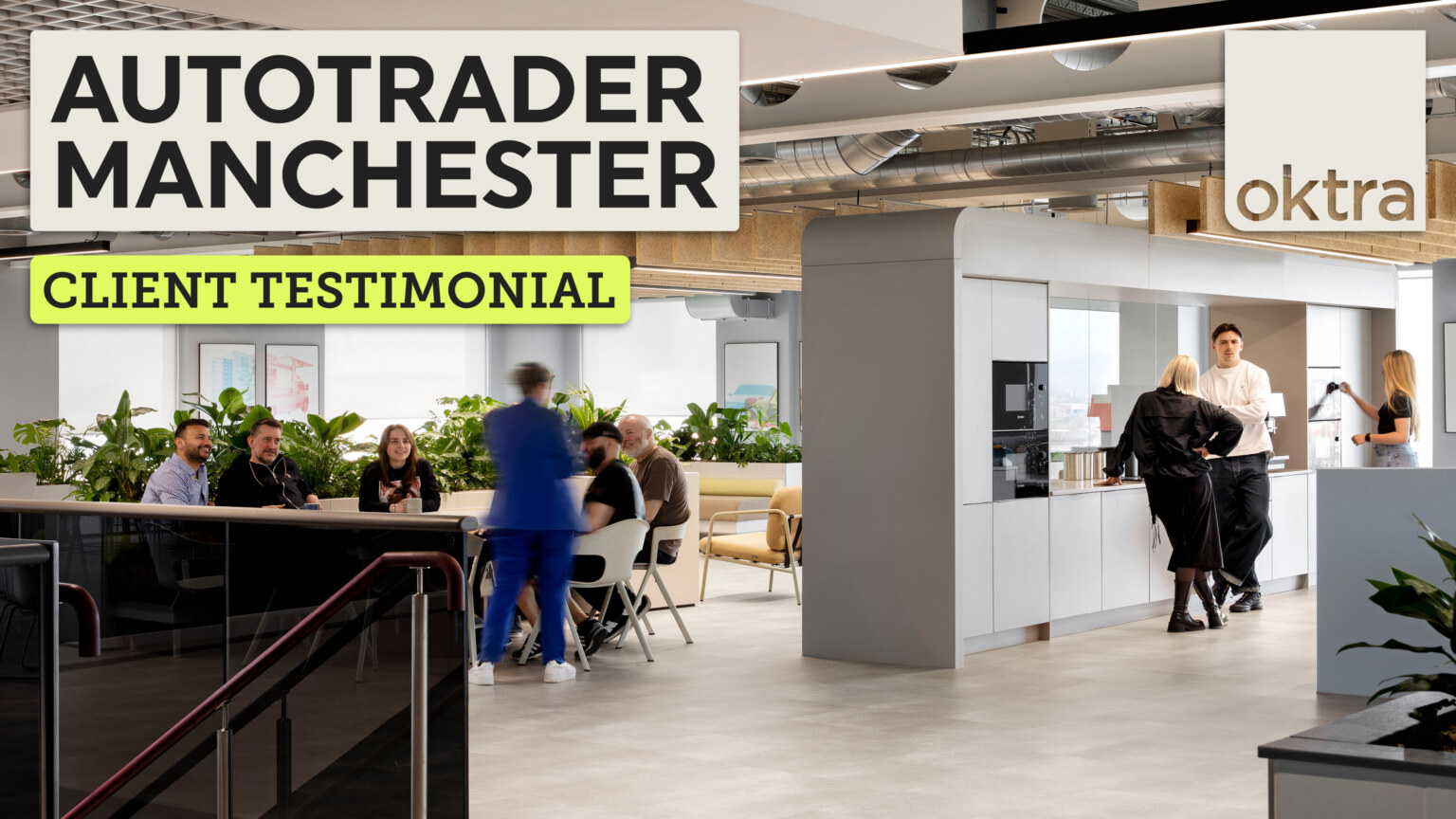
This is a workplace that reflects how Autotrader thinks, works and grows. Movement isn’t just a concept here. It’s embedded into how people use the space every day, from the routes they take to the conversations that happen along the way.
For us, this project is a clear example of what happens when design moves beyond aesthetics and becomes part of how a business operates. A workplace that doesn’t just support people, but actively shapes how they connect, collaborate and move forward.
-
-
Go behind the build
For a deeper look into the thinking, craftsmanship, and journey behind Autotrader’s Manchester HQ, explore the full digital experience at autotraderbyoktra.com. Bringing together the complete documentary series, behind-the-scenes stories, and the design philosophy behind the project, it offers an immersive look at how the space evolved from early ambition to a workplace designed around movement, connection, and identity.
-
Inspired by what you see?
Get in touch to discuss your next project
020 7553 9500
info@oktra.co.uk
-
"*" indicates required fields
Explore other projects in the Technology sector
-
Find out more
London EC3 | Technology
Telefónica Tech UK&I: Shaping a Landmark Workplace for People, Clients, and Growth
-
Find out more
London W1T | Technology
Designing a Workspace for a Global Software Company Where No Two Rooms are the Same
-
Find out more
London EC4 | Technology
Netcompany: Establishing a London Base Built for Client Engagement and Industry Influence