

Share

10 min read

Senior Content Manager
Content specialist in office design and build.
-
King’s Cross has undergone one of the most significant transformations of any London neighbourhood in recent decades. What was a derelict railway hinterland in the 1990s is now one of the most sought-after business addresses in Europe. It’s home to Google DeepMind, Meta, Universal Music, AstraZeneca and a rapidly expanding community of artificial intelligence companies.
The change is more than physical too. The 67-acre King’s Cross estate has been built around a deliberate idea. It’s that proximity to research institutions, technical talent, academic neighbours and like-minded businesses creates conditions that commercial real estate alone can’t replicate.
And that idea has proven remarkably durable. It’s now attracting the world’s leading AI laboratories at a pace that few predicted even five years ago.
The office market here extends beyond the King’s Cross estate itself. Euston to the west and Bloomsbury to the south form a wider geography that institutions, researchers and businesses have occupied for generations. Increasingly referred to as the Knowledge Quarter, this broader area contains a concentration of academic institutions, hospitals, cultural organisations and technology businesses that’s exceptional in London and even in Europe.
This guide covers what you need to know about office space in King’s Cross and the Knowledge Quarter. We’ll cover the streets, transport, building types and what this market offers businesses at different stages of growth.
Table of contents:
-
Working in King’s Cross
The working environment in King’s Cross is defined by the density of talent. Take a short walk from Pancras Square and you’ll find:
- Researchers from UCL
- Engineers from Google DeepMind
- Clinicians from University College Hospital
- Policy analysts from The Alan Turing Institute
- Founders from some of the fastest-growing AI companies in the world.
That concentration is the product of two decades of deliberate investment by the estate and its institutional neighbours.
-
For AI and technology businesses in particular, the talent density has a practical value that goes beyond the address. The ability to recruit from a local talent pool that already includes frontier AI researchers, machine learning engineers and technical leaders is genuinely different to what most London locations can offer.
When demand for specialist AI skills is growing faster than the broader job market, proximity to experienced people in a small area definitely matters.
-

-
The day-to-day working environment
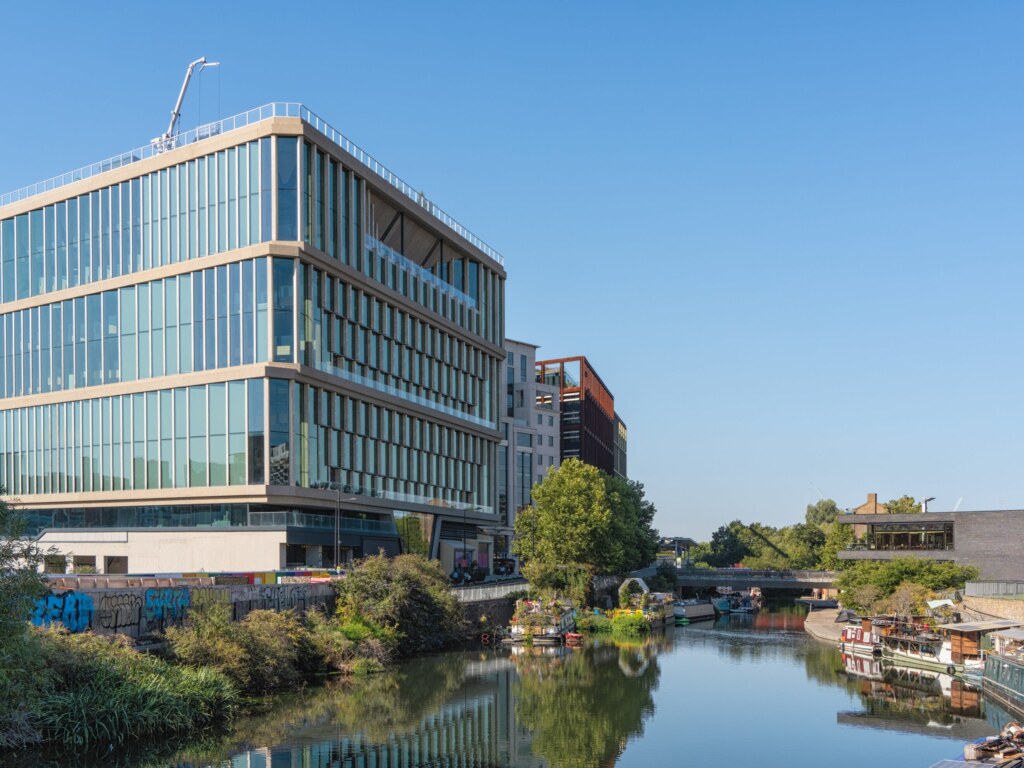
The working day in King’s Cross reflects the estate’s investment in public realm. Granary Square, Coal Drops Yard and the canal-side paths along Regent’s Canal provide a working environment that’s visibly different from a conventional office district.
Lunch options range from canal-side cafes to destination restaurants, and the energy is collaborative rather than corporate. With businesses recruiting from a generation that evaluates workplace environment alongside salary, that distinction carries real weight.
The wider Knowledge Quarter has a quieter, more academic character. It extends into Euston and Bloomsbury plus the streets around Gray’s Inn Road. Buildings here are often larger and older with less curated streets and a more mixed amenity offer.
But the occupier community is no less compelling. Great Ormond Street Hospital, the Wellcome Trust, the British Museum, UCLH and the Francis Crick Institute are all within a short walk of the buildings we’ve featured in this guide.
-
Location, transport and key streets
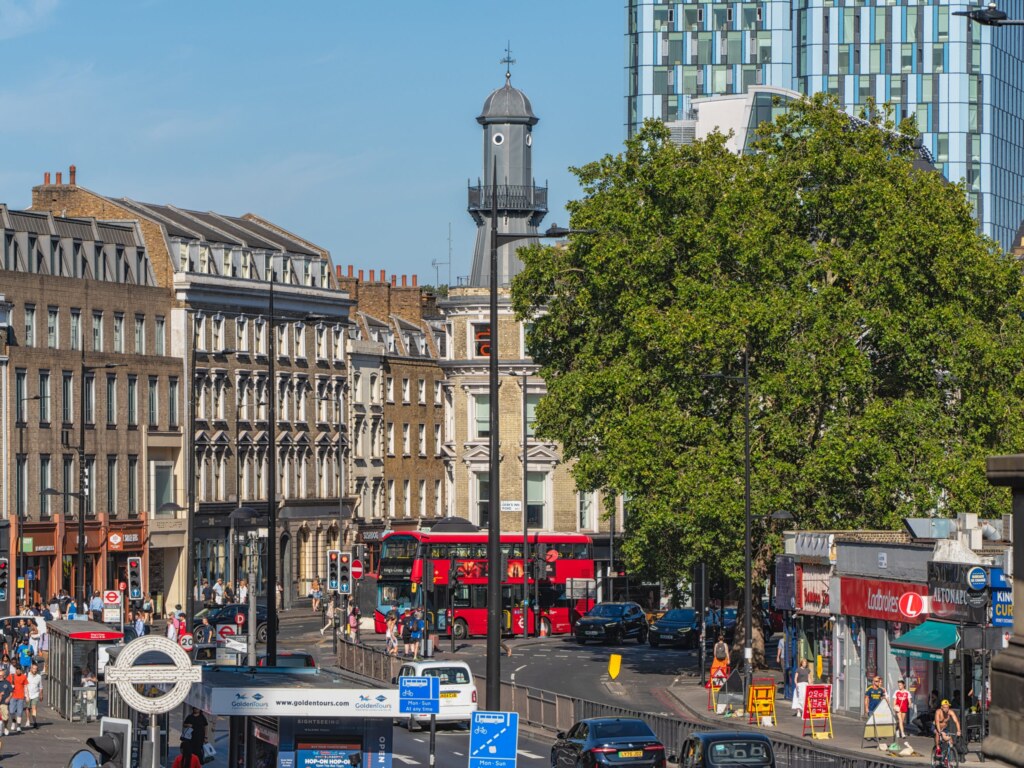
King’s Cross sits in the N1C postcode, with the Knowledge Quarter extending into NW1 (Euston) and WC1 (Bloomsbury). The active office market is concentrated in three overlapping clusters:
- The King’s Cross estate around Pancras Square and Granary Square
- The canal-side streets around All Saints Street and Regent’s Canal
- The Gray’s Inn Road corridor running south into Bloomsbury
-
-
Key streets and clusters include:
- Pancras Square is the commercial heart of the King’s Cross estate, home to seven Grade A office buildings including Two Pancras Square and a new London Underground entrance directly on the square. Google’s new 11-storey London headquarters is under construction nearby on King’s Boulevard.
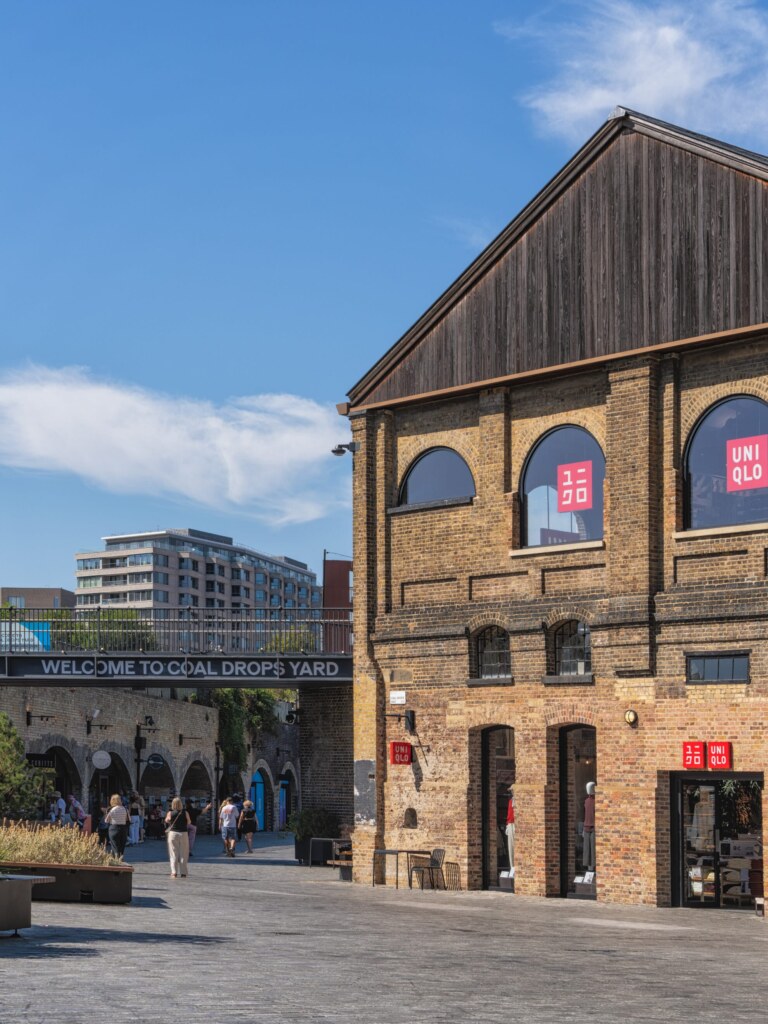
- Granary Square and Coal Drops Yard form the cultural and social centre of the estate, with destination retail and restaurants giving the area its distinctive character. Several creative and media occupiers are anchored here, including Universal Music.
- All Saints Street and the Regent’s Canal corridor attract businesses that want King’s Cross proximity with a more characterful, canal-side environment. Regent’s Wharf is the newest and most significant development in this cluster.
- Gray’s Inn Road runs south from King’s Cross into Bloomsbury, linking the estate to Holborn and the legal district. 200 Gray’s Inn Road is the most significant office building on this stretch, positioned at the intersection of King’s Cross, Clerkenwell and Bloomsbury.
- Bloomsbury Square and Southampton Row form the southern end of the Knowledge Quarter. This is where Victoria House (now being transformed into London’s largest dedicated life sciences campus) sits among academic institutions and cultural organisations that have defined this neighbourhood for centuries.
-

-
Transport connectivity is exceptional throughout the Knowledge Quarter, anchored by one of the most connected interchanges in Europe:
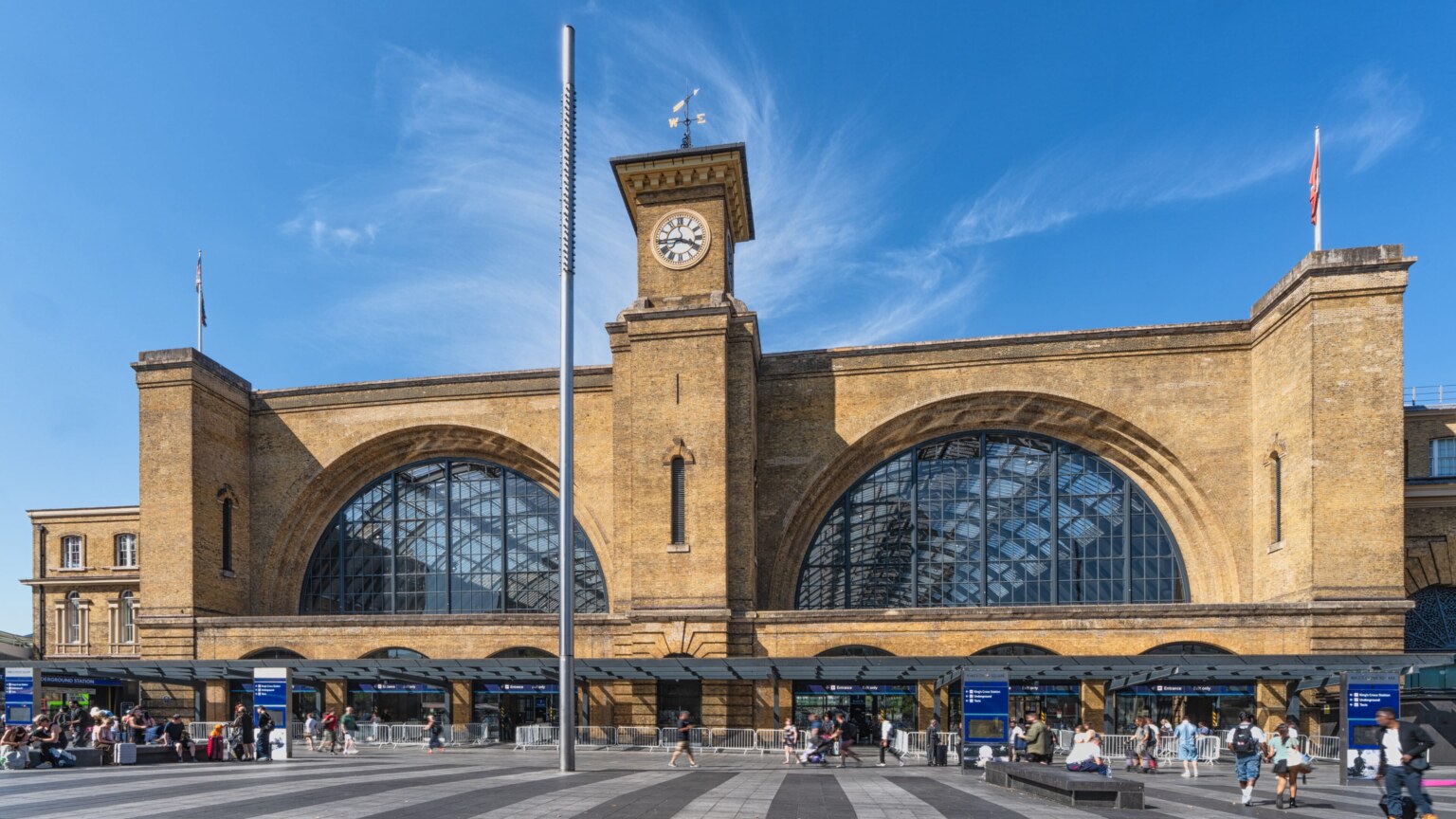
- King’s Cross St Pancras serves six Underground lines (Circle, Hammersmith & City, Metropolitan, Northern, Piccadilly and Victoria), plus Thameslink, East Midlands Railway and Southeastern. St Pancras International provides direct Eurostar services to Paris, Brussels and Amsterdam. The Elizabeth line at nearby Farringdon extends the network further.
- Euston is a 10-minute walk and serves the Northern and Victoria lines alongside National Rail services to the Midlands, North West and Scotland. That’s ideal for businesses with offices or clients outside London.
- Farringdon serves the Elizabeth line, Thameslink and three further Underground lines, placing Heathrow under 30 minutes away and Canary Wharf around 15 minutes. It’s the most important transport improvement for the southern end of the Knowledge Quarter.
- Chancery Lane is a five-minute walk from 200 Gray’s Inn Road and provides Central line access east to the City and west to the West End.
- Eurostar connectivity from St Pancras makes King’s Cross one of very few London office locations where Paris or Brussels is a practical day-trip destination. That’s a big plus for businesses with European operations or clients.
-
-
Types of office space in King’s Cross
The King’s Cross and Knowledge Quarter office market spans several building types and tenure options. Here’s a closer look at the main categories:
-
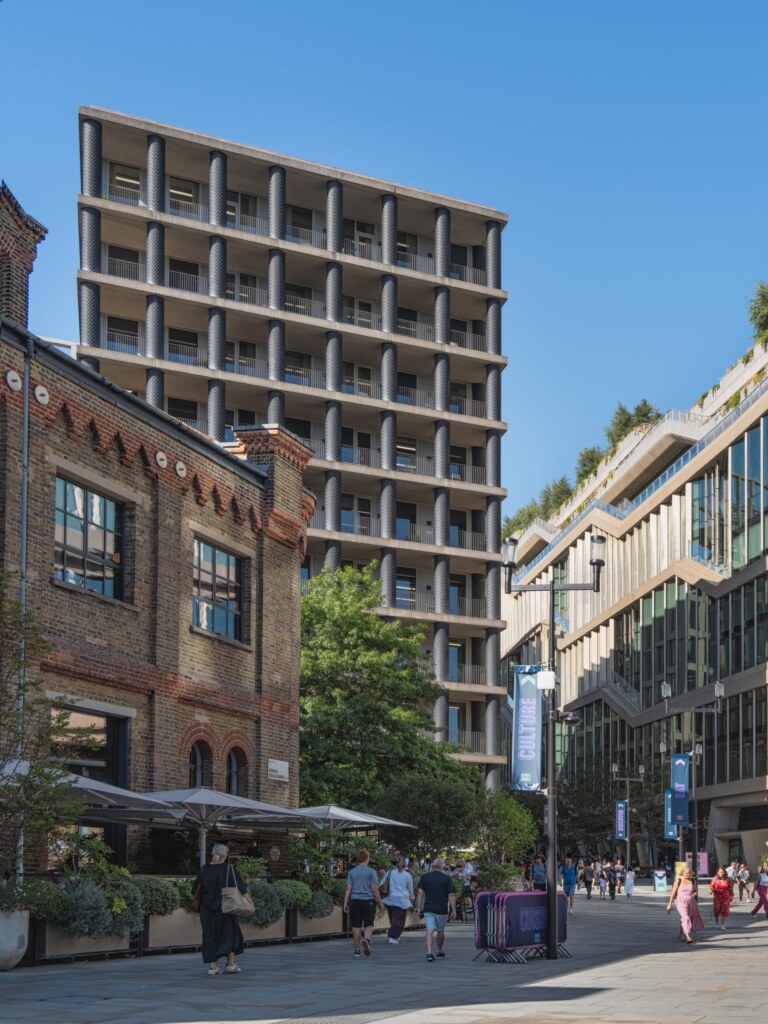
Estate Grade A offices
The King’s Cross estate’s Pancras Square cluster delivers some of the most comprehensively specified Grade A offices in London outside the City. Privately managed by the estate, buildings benefit from BREEAM Outstanding credentials and sit within a curated public realm that most other office districts can’t match. It’s no surprise this is where the largest AI and technology occupiers have anchored.
-
-
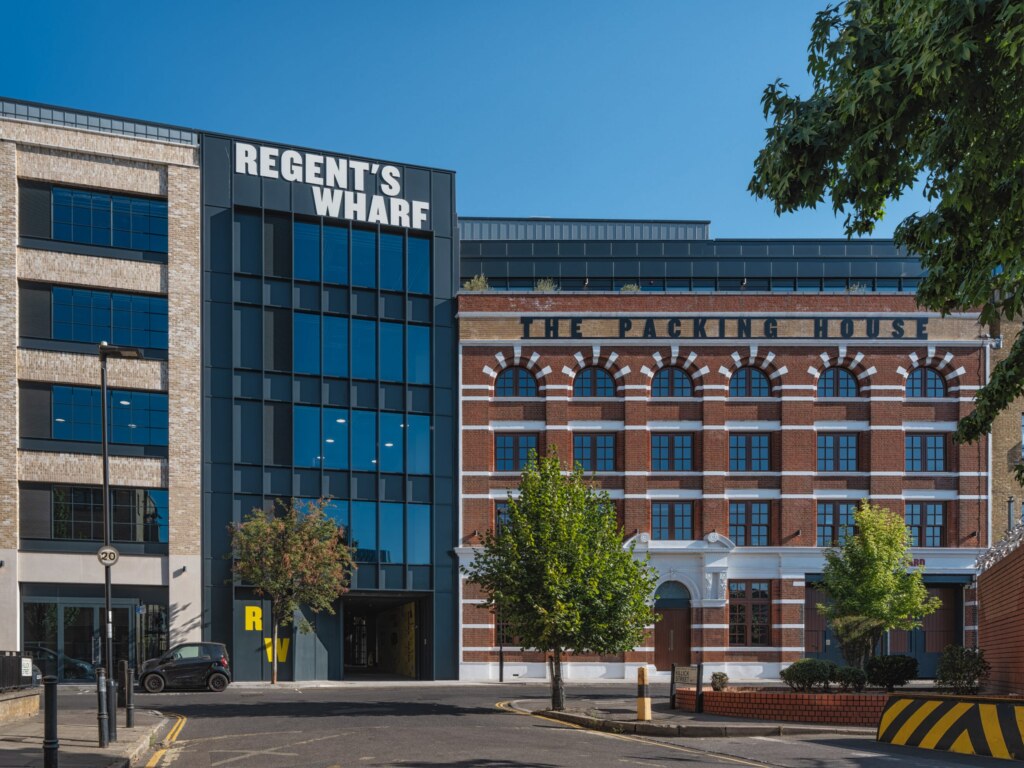
Heritage and campus developments
The canal-side buildings around All Saints Street and the wider Knowledge Quarter offer a different proposition. Think characterful space in refurbished Victorian warehouses and industrial buildings, often combined with new-build elements. Regent’s Wharf is the most notable example. The campus of converted and new-build buildings suits businesses for whom environment and identity matter as much as specification.
-
-
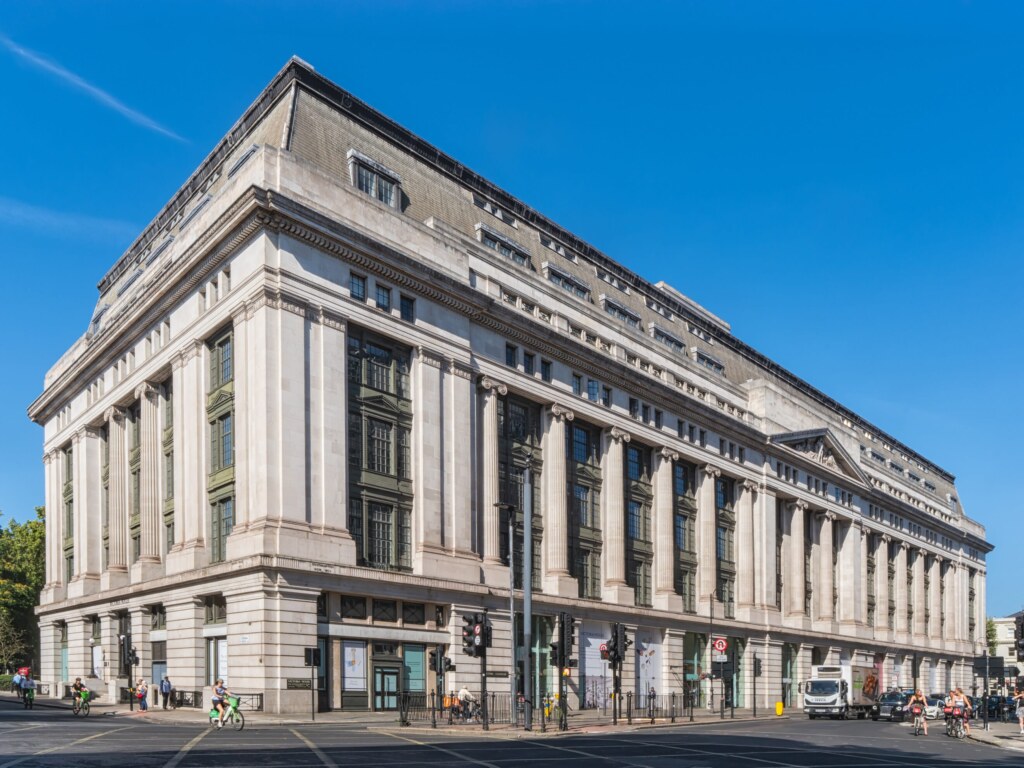
Repositioned headquarters buildings
Several larger buildings in the Knowledge Quarter are being repositioned or refurbished to attract a new generation of occupiers. 200 Gray’s Inn Road is the most significant example. It offers large, efficient floorplates at a price point below the estate buildings and a location that bridges King’s Cross, Clerkenwell and Bloomsbury.
-
-
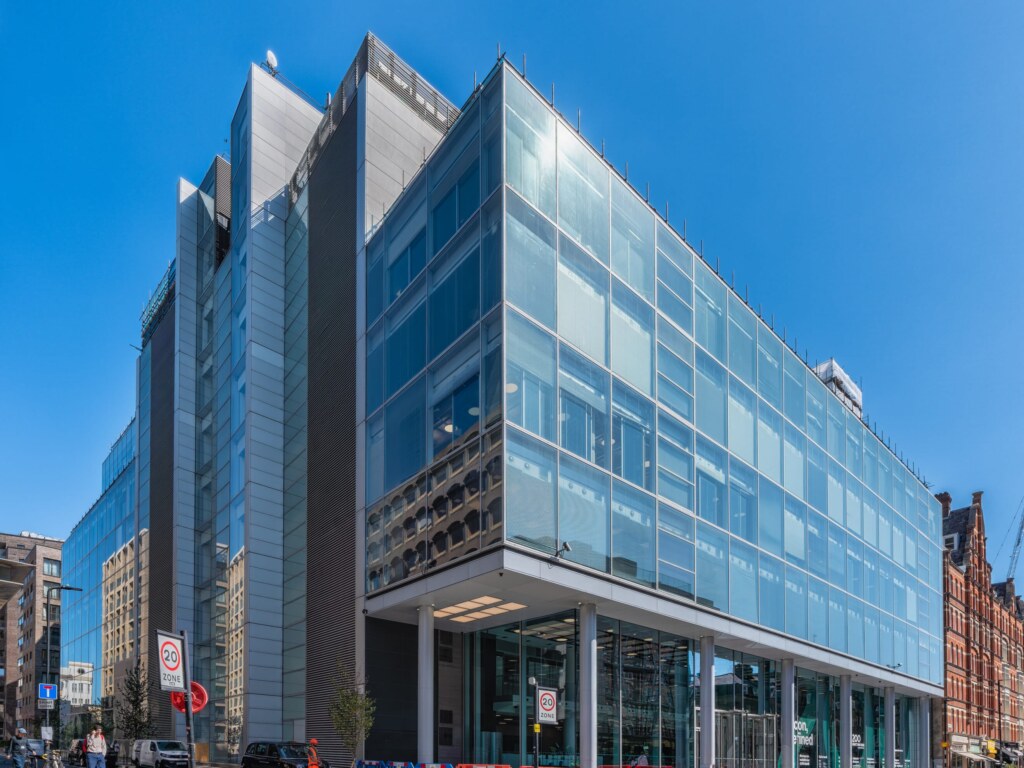
Life sciences and flexible workspace
Victoria House in Bloomsbury represents a category that barely existed in London five years ago. The large-scale life sciences campus has been purpose-adapted from a heritage building with everything from single-bench incubator space to full laboratory floors. Alongside it, serviced and flexible offices like The Lighthouse provide shorter-commitment options for earlier-stage businesses that want a King’s Cross address while they grow.
-
-
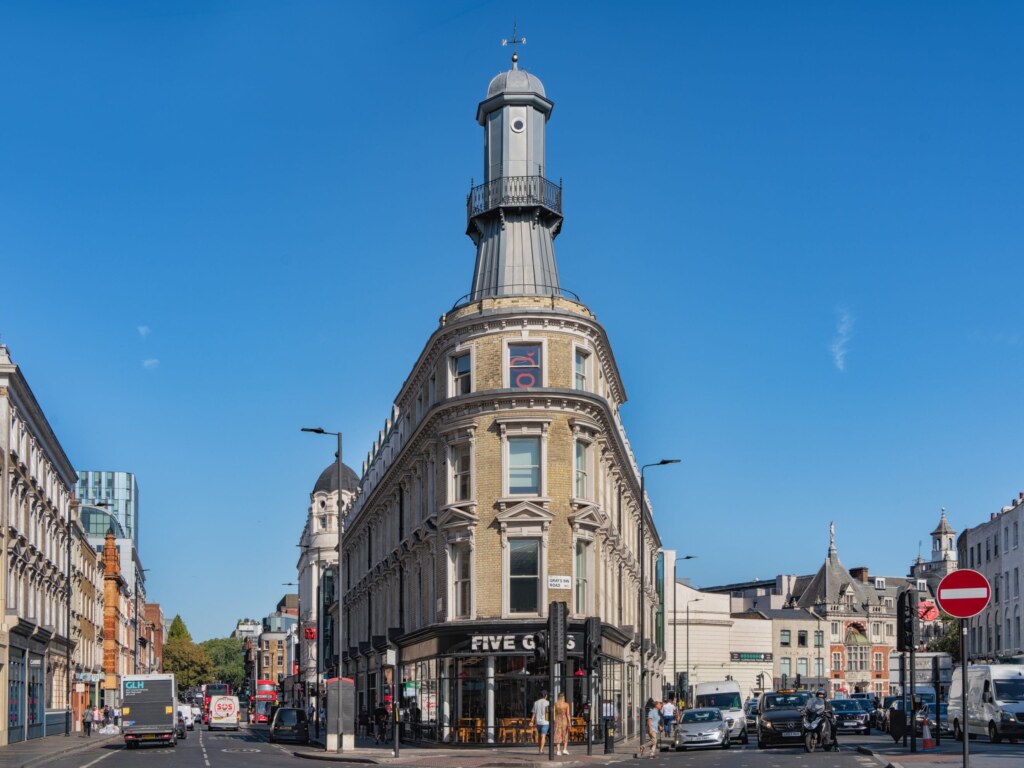
5 office buildings in King’s Cross and the Knowledge Quarter
No other London office market has been shaped as deliberately by its occupiers as King’s Cross and the Knowledge Quarter. From a BREEAM Outstanding estate building at the centre of London’s AI cluster to a life sciences campus in a Grade II listed Bloomsbury landmark, the buildings below illustrate how varied the market has become.
-
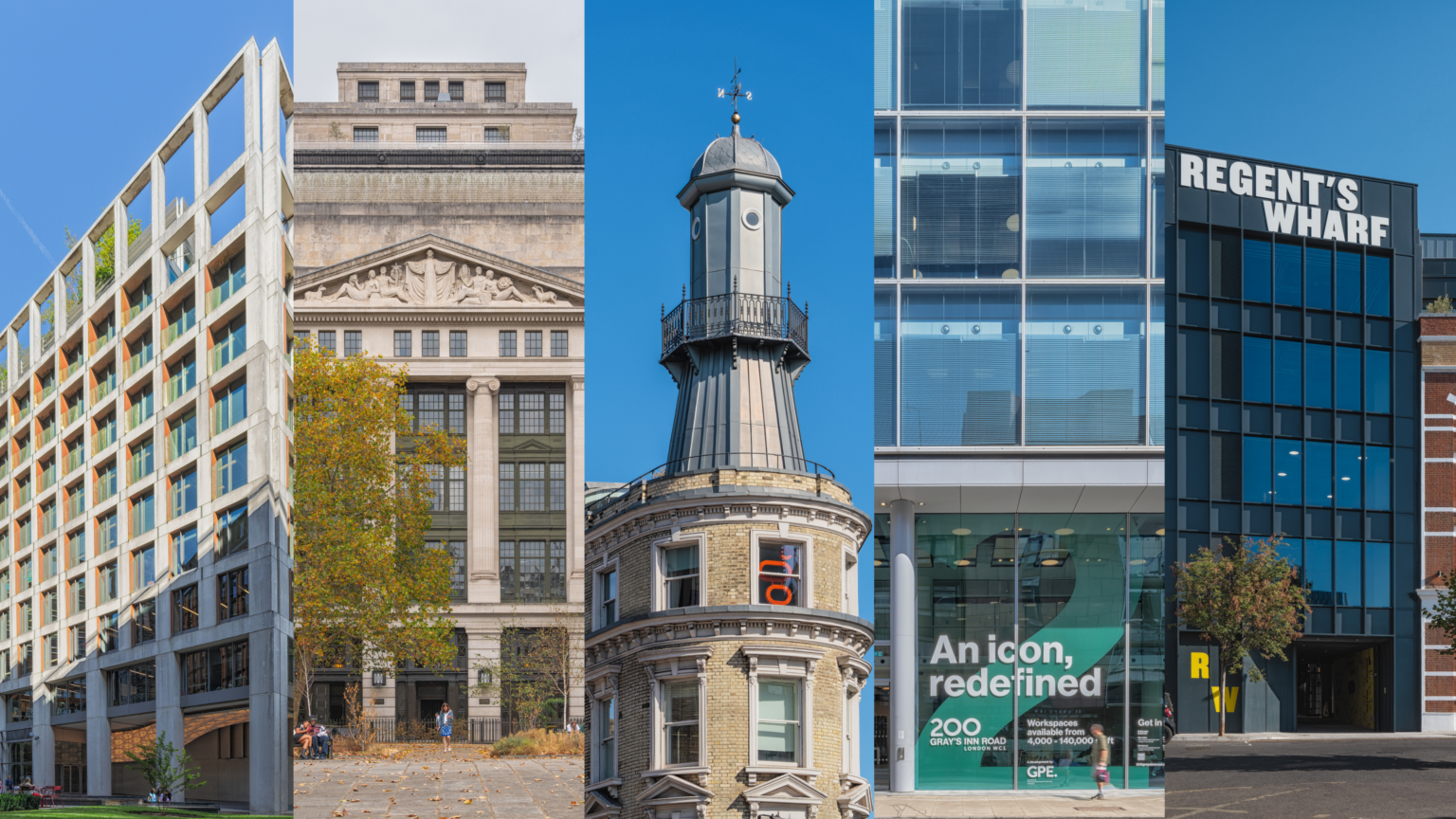
1) Two Pancras Square
Two Pancras Square is one of the defining office buildings of the King’s Cross estate, designed by Allies and Morrison as part of the original Pancras Square masterplan. The 11-storey building delivers around 130,000 sq ft of BREEAM Outstanding office space across efficient floorplates, with a 10th-floor roof terrace and a new London Underground entrance directly on the square below. It’s been comprehensively refurbished in recent years, including updated Cat A floors plus a new reception and an enhanced rooftop terrace.
Two Pancras Square has become one of the most visible addresses in the King’s Cross AI cluster. Scale AI (the global AI data and evaluations business) recently committed to space here alongside Fanatics Collectibles. These arrivals follow a tenant mix already anchored by AstraZeneca, PRS for Music, AutoTrader and Havas. The estate reports that availability in the building is now limited, with the most recent lettings taking it close to full occupancy.
Key facts
- Size: c. 130,000 sq ft NIA
- Floors: 11
- Completed: 2014
- Architect: Allies and Morrison
- Owner: King’s Cross Group (Argent)
- Lease type: Traditional leasehold
- Accreditations: BREEAM Outstanding, CarbonNeutral® certified, Net Zero Carbon target 2035
-
-
Why businesses choose it
- One of the estate’s most established AI addresses. Scale AI and AstraZeneca are among the building’s tenants, reflecting the concentration of AI and life sciences businesses that has made Pancras Square the most active technology leasing market in London
- BREEAM Outstanding and CarbonNeutral® certified, with a commitment to Net Zero Carbon by 2035. Regulated technology and financial services occupiers increasingly require these credentials
- A new London Underground entrance directly on Pancras Square, with six lines at King’s Cross St Pancras and Eurostar at St Pancras International within a two-minute walk
- A 10th-floor roof terrace with views across London, recently refurbished alongside reception and end-of-trip facilities as part of the estate’s ongoing investment programme
Occupiers
The tenant mix at Two Pancras Square spans AI, life sciences, media and professional services. This breadth reflects the estate’s deliberate effort to build a community rather than a single-sector cluster. That variety matters for recruitment, with businesses able to draw from a talent pool that isn’t limited to one industry.
Features
The estate context is Two Pancras Square’s most significant differentiator. Being part of a privately managed, 67-acre estate with a curated occupier community creates a working environment that standalone buildings can’t replicate. That’s paired with 26 acres of public realm and an active events programme.
AI and technology businesses gain access to a talent pool and peer network that’s denser here than anywhere else in London. Not to mention the practical value of a landlord with a demonstrated long-term commitment to the quality of the estate.
-
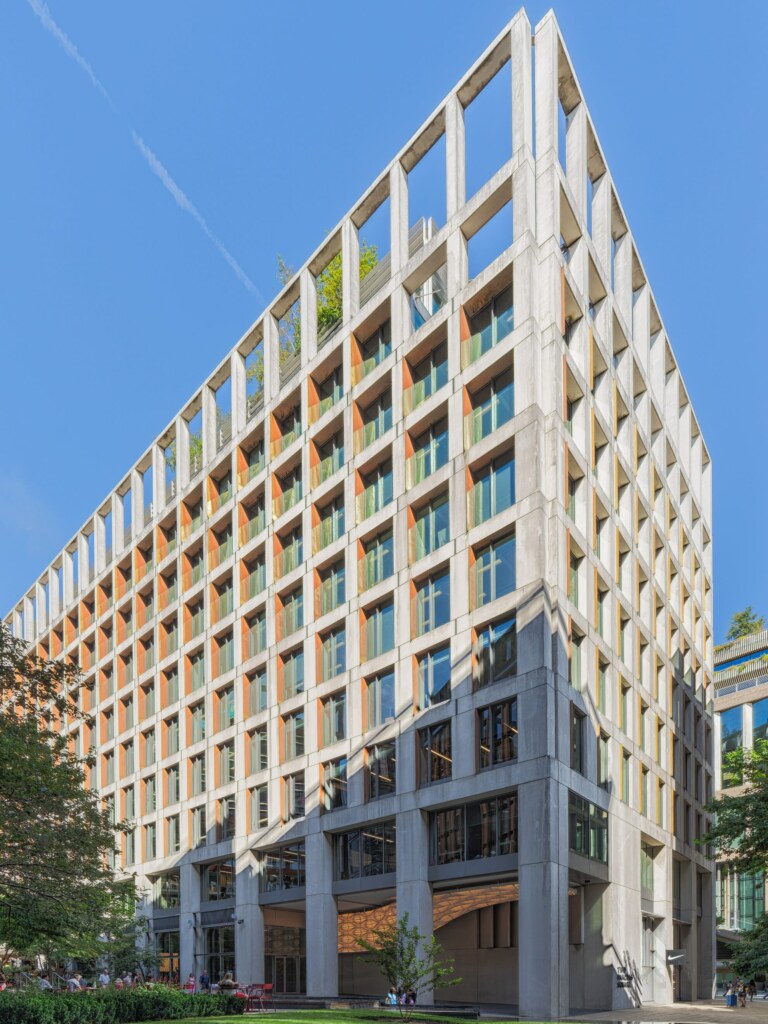
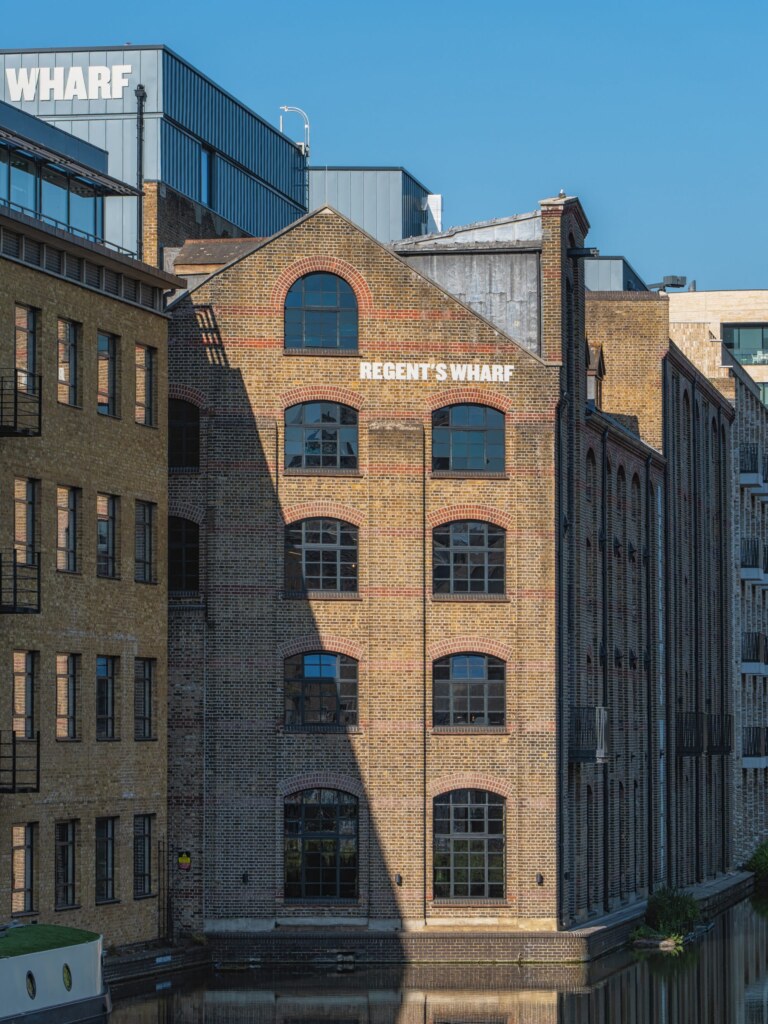
2) Regent’s Wharf
Regent’s Wharf is a 111,000 sq ft campus on the Regent’s Canal in King’s Cross, comprising four interconnected buildings around a central courtyard:
- Thorley Works: A new-build of around 61,500 sq ft
- The Canal Building: Around 28,700 sq ft of refurbished Victorian warehouse
- The Packing House: Around 7,500 sq ft
- Mill House: Around 10,000 sq ft
Completed in 2025, the campus holds BREEAM Excellent, WiredScore Platinum, WELL Gold and Active Score Platinum credentials.
It’s accessed through a discreet archway off All Saints Street, opening onto a landscaped courtyard with 17,500 sq ft of outdoor space including a private garden for Thorley Works occupiers. The first tenants committed in mid-2025, with around 85,000 sq ft remaining across Cat A and Cat A+ fitted suites.
Key facts
- Size: 111,000 sq ft NIA across four buildings
- Buildings: Thorley Works (new-build), The Canal Building, The Packing House, Mill House (all refurbished)
- Completed: 2025
- Owner: BGO / Welput
- Lease type: Traditional leasehold (Cat A and Cat A+ fitted options)
- Accreditations: BREEAM Excellent, WiredScore Platinum, WELL Gold Enabled, Active Score Platinum, Net Zero gas-free
-
-
Why businesses choose it
- A campus of four interconnected buildings offering genuine variety, from new-build contemporary floorplates in Thorley Works to characterful Victorian warehouse space in The Canal Building. All within a single canalside setting
- 17,500 sq ft of outdoor space including 18,000 sq ft of gardens and terraces, with 160 long-stay and 34 short-stay cycle spaces, 16 showers and 108 lockers. It’s among the most generous active travel provision of any King’s Cross building
- WiredScore Platinum digital infrastructure and WELL Gold Enabled certification, alongside a Net Zero gas-free specification that suits businesses with serious sustainability commitments
- Five minutes’ walk from King’s Cross St Pancras station and close to Granary Square, with Cat A+ fitted suites available for businesses that want quality space without a full fit-out programme
Occupiers
Bending Spoons was among the first to commit at Regent’s Wharf. It’s the Italian technology company behind apps including Splice, Elytra and Meetup. This tenant profile reflects the campus’s appeal to creative and technology businesses that value character alongside specification. They were followed by architecture practice, Sordo Madaleno.
The campus’s mix of warehouse and contemporary space suits businesses that want a distinctive address rather than a conventional office building, and its canalside position gives it an environment that the estate’s Pancras Square buildings don’t offer.
Features
Regent’s Wharf’s canal-side position is its most distinctive quality. The combination of Victorian industrial heritage, contemporary new-build space and 17,500 sq ft of outdoor space creates an environment that is rare in London at this scale.
That environment carries genuine recruitment value among businesses competing for technical and creative talent. As does the prospect of occupying a campus rather than floors in a tower. The Engine Room (a 1,400 sq ft event and community space within the campus) reflects a deliberate effort to create a self-contained working community rather than a collection of tenants sharing a postcode.
-
3) The Lighthouse, 1 King’s Cross Bridge
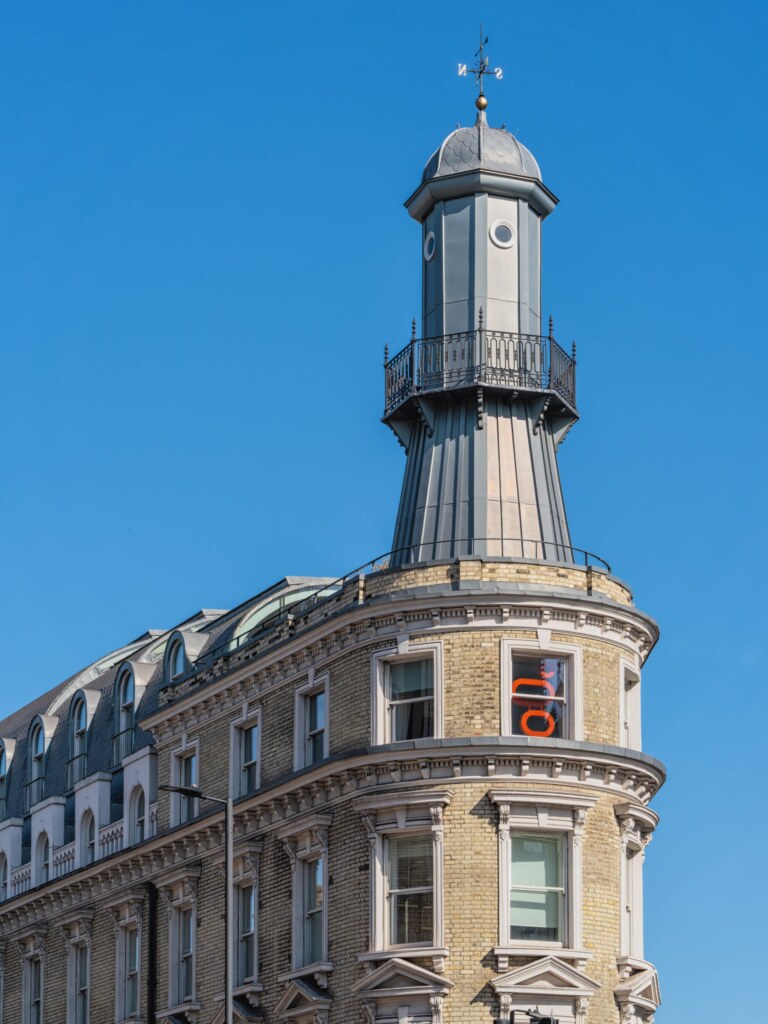
The Lighthouse is a serviced office building directly opposite King’s Cross station at 1 King’s Cross Bridge, operated by Landmark Space. The building is named for the working lighthouse on its roof – a feature visible from the station and one of the more distinctive architectural gestures in the immediate area. It offers around 22,000 sq ft of workspace across the ground to fourth floors, with a mix of private offices, coworking space and meeting rooms.
The building operates on fully serviced terms, including rent, rates, insurance, utilities and facilities management in a single monthly cost. Private offices are available from around £800 per desk per month. It’s positioned explicitly for businesses that want to be at King’s Cross without committing to a traditional lease. That includes earlier-stage companies, teams testing a London presence or businesses that need to scale quickly without the lead time of a conventional fit-out.
Key facts
- Size: c. 22,000 sq ft NIA
- Floors: Ground to 4th
- Operator: Landmark Space
- Lease type: Fully serviced / managed offices
- Pricing: From c. £800 per desk per month
- Amenities: Private offices, coworking, meeting rooms, roof terrace, bar, shower facilities, bike storage
-
-
Why businesses choose it
- Directly opposite King’s Cross station, one of the most connected transport hubs in Europe. Six Underground lines, mainline rail and Eurostar are all within a two-minute walk
- Fully serviced terms with a single monthly cost, 24-hour access and enterprise-grade connectivity. It’s ideal for businesses that need to be operational quickly without a capital commitment
- Private offices for teams of 3 to 80 people across multiple floors, with a roof terrace and bar that provide informal meeting and networking space above the King’s Cross streetline
- A building with genuine character. The lighthouse on the roof is visible from the station, and the interior blends period features with contemporary interiors in a way that reflects the wider King’s Cross neighbourhood
Occupiers
The Lighthouse serves businesses at an earlier stage of growth than the estate’s traditional leasehold buildings. They’re the kind of AI startups, technology spinouts and scale-ups that are increasingly drawn to the King’s Cross cluster, but aren’t yet at the scale to commit to a five-year lease.
Being directly opposite the station gives it a visibility and convenience that few serviced buildings in London can match. The Landmark Space platform provides access to other locations across the UK too, if a business’s needs change.Features
The Lighthouse occupies a different part of the market to Two Pancras Square or Regent’s Wharf. And that’s precisely its value.
Consider an AI company that’s just raised a Series A or a US technology business opening its first London office. The ability to take space opposite King’s Cross station on a flexible basis, with immediate operational readiness and no fit-out risk, is a meaningful practical advantage. The King’s Cross address and the proximity to the estate’s occupier community are available from day one, without the commitment of a traditional lease.
-
4) 200 Gray’s Inn Road
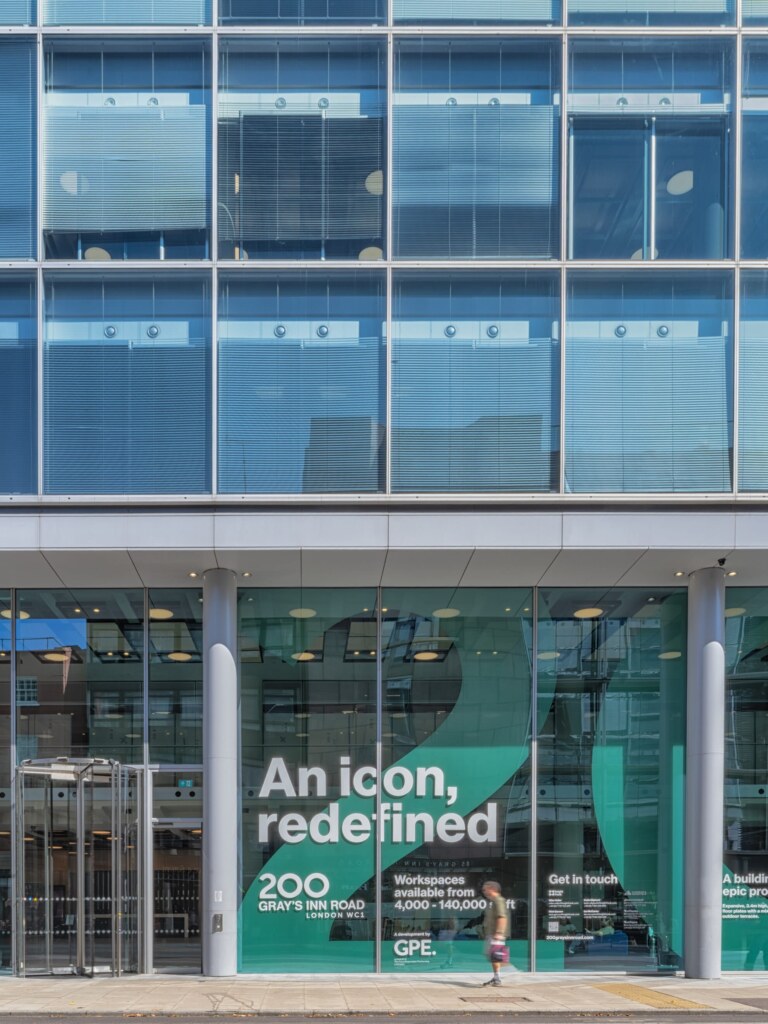
200 Gray’s Inn Road is one of London’s most significant office buildings outside the City core. Foster + Partners’ first commercial project in the UK is now being reimagined by Bennetts Associates for a new generation of occupiers.
The building delivers around 287,900 sq ft of Grade A office space, with a defining 10-storey atrium cathedral wall that floods the floorplates with natural light. Spaces are available from 4,000 to 140,000 sq ft from Q3 2026, with ITN having recently renewed its lease for 117,000 sq ft across 200 and 214 Gray’s Inn Road as an anchor commitment.
The Bennetts Associates refurbishment introduces a new garden atrium with over 45 plant species plus a communal rooftop pavilion and garden terrace. Not to mention upgraded specification throughout. The building’s position on Gray’s Inn Road places it at the intersection of King’s Cross, Clerkenwell and Bloomsbury – five minutes from Chancery Lane station and nine minutes from the Elizabeth line at Farringdon.
Key facts
- Size: c. 287,900 sq ft NIA (available from 4,000 to 140,000 sq ft)
- Floors: 10 above ground plus basement and lower ground
- Original architect: Foster + Partners
- Refurbishment architect: Bennetts Associates
- Owner: The Great Ropemaker Partnership (GPE / British Land)
- Lease type: Traditional leasehold
- Available: From Q3 2026
-
-
Why businesses choose it
- A building with genuine architectural pedigree, which is rare at this scale outside the City
- Floorplates available from 4,000 to 140,000 sq ft, with the flexibility to take a single floor or the whole building. Ideal for both growing businesses and large occupiers seeking a headquarters position
- Five minutes from Chancery Lane (Central line), nine minutes from Farringdon (Elizabeth line, Thameslink) and within 30 minutes of Heathrow. Strong connectivity for a building positioned between three distinct submarkets
- A new garden atrium, rooftop pavilion and terrace as part of the Bennetts Associates refurbishment, alongside ITN’s anchor commitment, signalling sustained occupier confidence in the building’s repositioning
Occupiers
ITN’s renewal of 117,000 sq ft across 200 and 214 Gray’s Inn Road is the anchor that defines the building’s current positioning. The long-standing media and news occupier is recommitting to a building it’s occupied for years. With availability opening from Q3 2026, the opportunity is there for a business that wants a large, architecturally significant headquarters at the centre of the Gray’s Inn Road corridor. That includes simultaneous access to the King’s Cross, Bloomsbury and Holborn talent pools.
Features
The atrium is the feature that makes 200 Gray’s Inn Road architecturally distinctive at this scale. A 10-storey cathedral wall of natural light is genuinely unusual in a building of this depth. The Bennetts Associates decision to introduce a garden at the atrium’s base makes it a practical amenity rather than a visual gesture.
That investment in the heart of the building has a direct effect on how the workspace functions day to day, especially for businesses that use the atrium as a collaboration and client space.
-
5) Victoria House, Bloomsbury
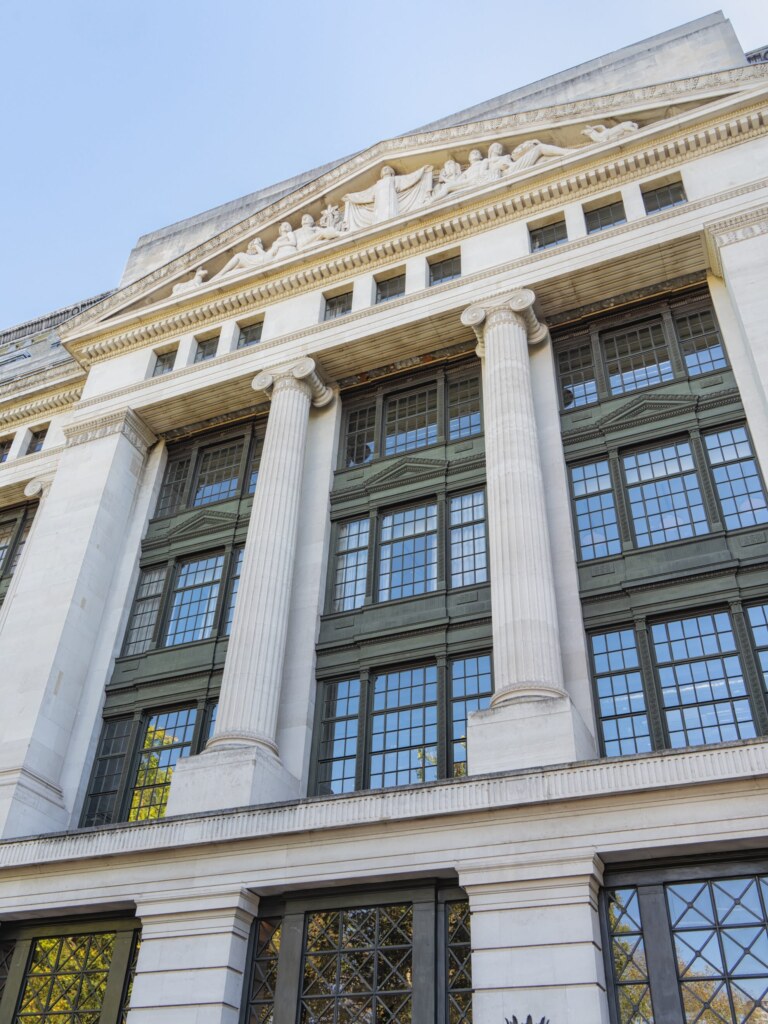
Victoria House is the most ambitious life sciences conversion in London. The Grade II listed building on Bloomsbury Square was originally built between 1926 and 1932 as the headquarters of the Liverpool Victoria Friendly Society, with neo-classical Portland stone facades and Art Deco interiors. Now it’s being transformed into 300,000 sq ft of laboratory and office space by Pioneer Group.
The building offers 220,000 sq ft of Grade A wet lab-enabled life sciences space alongside 80,000 sq ft of office, amenity and retail space, with availability from autumn 2024.
Victoria House’s position within the Knowledge Quarter is central to its proposition. It sits between UCL, Great Ormond Street Hospital, the Wellcome Trust, the Francis Crick Institute and the British Museum. Essentially, it’s surrounded by the academic and medical institutions that define Bloomsbury’s character.
Key facts
- Size: 300,000 sq ft total (220,000 sq ft lab-enabled, 80,000 sq ft office and amenity)
- Floors: 8 main storeys plus basement
- Built: 1926–1932 (Grade II listed)
- Operator: Pioneer Group
- Lease type: Flexible – single bench to full floors
- Lab specification: Up to 65% CL2 laboratories, 6 air changes per hour
- Available: From autumn 2024
-
-
Why businesses choose it
- 300,000 sq ft of laboratory and office space in a Grade II listed Bloomsbury landmark. It’s the largest purpose-adapted life sciences campus in central London, in a building with architectural credentials no new-build can replicate
- A 23,000 sq ft incubator lab on the seventh floor offers single-bench entry points for early-stage life sciences businesses, alongside dedicated CL2-capable laboratory floors for larger occupiers. That’s a genuine range of tenure options within a single building
- Positioned within the Knowledge Quarter’s academic and medical cluster. UCL, UCLH, Great Ormond Street Hospital, the Wellcome Trust and the Francis Crick Institute are all within walking distance
- Heritage meeting rooms, an eighth-floor club lounge and a roof terrace provide a working environment that’s genuinely different to a conventional laboratory building. Great for life sciences businesses that need to attract and retain scientific talent
Occupiers
Victoria House’s occupier model is designed around an ecosystem rather than a conventional tenant mix. The building targets life sciences businesses across the full growth spectrum, from a spinout taking a single bench in the seventh-floor incubator to a multinational pharmaceutical company taking a full laboratory floor.
The Pioneer Group platform brings expertise in managing life sciences environments. Additionally, the building’s academic and hospital neighbours create the kind of collaborative proximity that early-stage life sciences businesses typically have to move to a science park to find.
Features
The combination of heritage architecture and laboratory specification is what sets Victoria House apart. Building a fully CL2-capable laboratory environment within a Grade II listed building from the 1920s requires a level of technical expertise and investment that is rare even among specialist life sciences developers.
The result is a building that offers scientific capability without sacrificing the character of a landmark Bloomsbury address. It also positions life sciences alongside the technology, academic and cultural institutions of the Knowledge Quarter rather than isolating it on an out-of-town science park.
-
Key considerations
King’s Cross and the Knowledge Quarter have become one of London’s most competitive office markets in a short time. The AI boom has accelerated demand from occupiers who would previously have defaulted to the West End or the City, and the estate’s limited supply means that the best space moves quickly. Understanding what is actually available (and what each building genuinely offers) is essential before committing to a shortlist.
The AI cluster creates real competitive pressure on availability
King’s Cross has seen more significant AI leasing activity than any other London submarket since 2025. Google DeepMind, Scale AI, OpenAI, Meta, Wayve and Synthesia are among the businesses that have committed to space on or near the estate.
That demand has reduced available supply materially, and the estate’s buildings are close to full, particularly Two Pancras Square. Businesses considering King’s Cross need to move with more urgency than in most London submarkets.
Power and digital infrastructure are increasingly a differentiator
AI and life sciences businesses have infrastructure requirements that conventional office specification doesn’t meet. Think power density, dual supply, resilient connectivity and WiredScore Platinum credentials. These matter operationally for businesses running GPU clusters, laboratory equipment or data-intensive workloads.
Not all buildings in the Knowledge Quarter can meet these requirements. Regent’s Wharf’s WiredScore Platinum and 20 Water Street’s dual substation supply are examples of buildings that have been built with these needs in mind. It’s a checklist worth applying to any shortlisted building.
-
Office space calculator
Planning for growth in King’s Cross? Use Oktra’s Office Space Calculator to estimate the footprint your team needs now and the space you may need as your workplace evolves.
Try it out -


-
The Knowledge Quarter extends well beyond King’s Cross station
Businesses that define their search too narrowly around Pancras Square will miss a broader market. 200 Gray’s Inn Road, Victoria House and Regent’s Wharf are all within the Knowledge Quarter’s talent catchment but offer distinct building types plus different rent levels and tenure structures.
The wider geography is well worth exploring alongside the estate itself if you need laboratory space, heritage character or a price point below the estate’s premium.
Fit-out for AI and technical occupiers requires specific expertise
Technical businesses have fit-out requirements that go beyond a conventional office brief:
- Power infrastructure
- Server room design
- Acoustic treatment for collaboration spaces
- Security systems for sensitive research environments
- The ability to adapt space rapidly as teams scale
These are all considerations that standard Cat B fit-out specifications don’t automatically address. Getting that right from the outset (rather than retrofitting as needs evolve) requires a fit-out partner with direct experience of technical occupier briefs in this market.
-
King’s Cross has evolved into one of London’s most established business destinations, and its transformation is reflected in the cost of securing high-quality space. Explore Oktra’s London Office Rent Report for the latest rental data and a clearer picture of where the area sits within the wider London office market.
Download now -
-
Alternative areas to King’s Cross for office space
Around 15 to 20 minutes to the east, Shoreditch and Clerkenwell are the most active markets for early-stage technology and creative businesses. Lower rents, informal character and a dense cluster of startups make this the natural alternative for businesses that aren’t yet at the scale to justify King’s Cross estate rents.
Immediately to the south of Euston, Fitzrovia offers a West End address with strong UCL adjacency and transport via Goodge Street and Tottenham Court Road. It suits technology and creative businesses that want a central London character without the King’s Cross premium.
The City of London provides the deepest financial services adjacency and the largest available floorplates in London. The City’s EC2 cluster (including 22 Bishopsgate and 8 Bishopsgate) may offer a more commercially relevant address than King’s Cross, particularly for technology businesses whose primary client base is in financial services.
Canary Wharf has been actively diversifying its occupier base towards technology and life sciences, with Wood Wharf’s new-build stock offering BREEAM Outstanding credentials at rents below the King’s Cross estate. The Elizabeth line now makes Canary Wharf genuinely accessible from King’s Cross in around 15 minutes.
Not settled on a location? Oktra’s London area guide compares the main submarkets by sector, character and cost.
-
-
King’s Cross office space FAQs
-
 What kind of businesses are based in King’s Cross?
King’s Cross has the highest concentration of AI and technology companies of any London office district, alongside a strong base of media, creative and life sciences businesses.
Google DeepMind, Meta, Scale AI, Wayve, Synthesia and OpenAI are among the technology occupiers anchored on or near the estate. Universal Music, Havas, AstraZeneca and PRS for Music represent the media and life sciences dimension. The wider Knowledge Quarter extends this occupier base into academic, medical, cultural and professional services organisations.
How much does office space in King’s Cross cost?
Headline rents on the King’s Cross estate’s Pancras Square buildings typically run from £70 to £95/sq ft for Grade A space, reflecting their specification, estate management and BREEAM Outstanding credentials.
Buildings on the canal-side and Gray’s Inn Road corridor generally offer lower rents, and serviced options like The Lighthouse are priced on a per-desk basis from around £800/month. A full overview of London office costs is available in Oktra’s London cost guide.
Why are so many AI companies choosing King’s Cross?
There are several factors at play:
- Google DeepMind’s long-established presence created an anchor that attracted other AI businesses
- UCL, the Alan Turing Institute and the Francis Crick Institute provide access to research talent that is genuinely concentrated in this geography
- The estate’s buildings offer the power infrastructure, digital resilience and specification that data-intensive organisations need
- The density of the existing community creates a talent pool and peer network that AI businesses find operationally valuable
Is there space available for early-stage or smaller businesses?
Yes, though the options differ from the estate’s larger buildings. Each of the following serves a different size and stage of business, but all sit within the Knowledge Quarter’s talent catchment:
- The Lighthouse at 1 King’s Cross Bridge provides serviced offices from £800 per desk per month on flexible terms, suited to earlier-stage businesses or those establishing a London presence for the first time
- Victoria House in Bloomsbury offers single-bench incubator space for life sciences startups
- Regent’s Wharf offers Cat A+ fitted suites for businesses that want quality space without committing to a full fit-out
How does King’s Cross compare to Shoreditch or the City for technology businesses?
King’s Cross has a stronger concentration of frontier AI research talent and institutional neighbours than Shoreditch, and a newer, more comprehensively specified building stock than most of the City. Shoreditch continues to attract early-stage technology businesses at lower rents with more informal character. The City offers the largest available floorplates and the deepest financial services adjacency.
King’s Cross is the best choice for technology businesses, particularly AI companies, that need proximity to research institutions, technical talent and a peer community of similar organisations.
-
 What kind of businesses are based in King’s Cross?
-
Contact us
Get in touch to discuss your potential office space costs
020 7553 9500
info@oktra.co.uk
-
"*" indicates required fields
Related content


-
Want updates on similar new content? We’ll send you an email a month with new insights when you join our mailing list.
JOIN THE LIST
