


Share

10 min read

Senior Content Manager
Content specialist in office design and build.
-
Mayfair is the most prestigious office address in London. The W1 postcode carries a weight that no other part of the city can replicate. Its combination of architectural quality, social history and commercial credibility has drawn private equity firms, hedge funds, asset managers, luxury brands and sovereign wealth offices to its streets for generations.
The area is broadly bounded by Oxford Street to the north, Regent Street to the west, Piccadilly to the south and Park Lane to the east. Within that roughly one square mile, the density of high-net-worth individuals and ultra-high-net-worth family offices is greater than anywhere else in the UK. Not to mention the professional firms that serve them.
That concentration is self-reinforcing. The right clients expect a Mayfair address, so the right businesses take space here, which attracts more clients of that profile.
The building stock is unlike any other London submarket. Think Portland stone façades, Georgian townhouses, interwar commercial buildings and a handful of significant modern developments. All sitting alongside each other on streets that have changed relatively little in their fundamental layout for 200 years. The newest buildings like 65 Davies Street are designed to complement rather than dominate this context.
This guide covers what you need to know about office space in Mayfair: the streets, the transport connections, the building types and the practical considerations for businesses thinking about making this their address.
Table of contents:
-
Working in Mayfair
Mayfair has a different quality to almost every other London office market. The streets are quieter than the City or the West End shopping core. The pace is deliberate. And the amenity offer is calibrated to a clientele that values discretion and quality over convenience and volume. From private member clubs and Michelin-starred restaurants to luxury hotels and specialist retail, the environment Mayfair businesses inhabit shapes how they operate and how their clients perceive them.
Working here is expensive by any measure. Rents are among the highest in London and service charges reflect the quality of the buildings and the streets. Running a Mayfair operation is higher than any comparable location, especially when you factor in the day-to-day cost of lunches and entertaining clients. But for most businesses that choose Mayfair, that cost is the point. It signals to clients and counterparties that the business operates at a certain level.
The area is also calmer than most people expect for somewhere so central. The streets between Berkeley Square, Grosvenor Square and Hanover Square have a residential quality even during the working week. That calm is part of what occupiers pay for.
-
Location, transport and key streets
Mayfair covers the W1J, W1K and W1S postcodes, broadly within the rectangle formed by Oxford Street, Regent Street, Piccadilly and Park Lane. The active office market is concentrated in the central and eastern parts of the area, around Berkeley Square, Davies Street, Brook Street, Curzon Street and Grosvenor Street.
-

-
Key streets and clusters include:
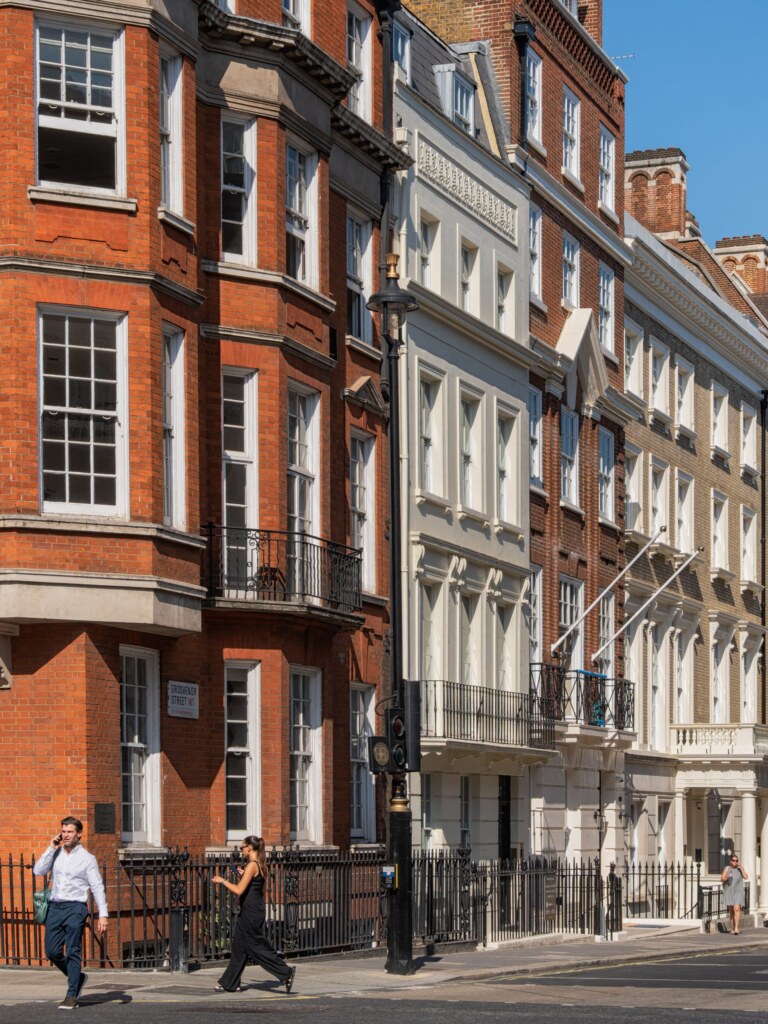
- Berkeley Square is the social and geographic heart of Mayfair’s office market. The square and the streets immediately surrounding it (Davies Street, Hill Street, Charles Street) contain some of the most sought-after addresses in London. Berkeley Square House on the east side of the square is the area’s largest office building.
- Grosvenor Street and its immediate surroundings form the core of the hedge fund and asset management cluster. The streets between Berkeley Square and New Bond Street have the highest concentration of alternative investment businesses of anywhere in Europe.
- Curzon Street runs east–west through the southern part of Mayfair. It offers a mix of building ages and sizes, from the large modern block at 1 Curzon Street to smaller Georgian-era conversions. This area suits businesses that want a Mayfair address at a slightly lower rent than the Berkeley Square core.
- Brook Street connects Oxford Street to Grosvenor Square, offering access to Bond Street station alongside a mix of boutique office buildings. It sits on the northern edge of the submarket, closer to Marylebone in character than the southern Mayfair core.
- Davies Street and Mount Street form the western commercial spine of the submarket, with 65 Davies Street representing the newest significant development in this part of Mayfair.
-

-
Transport in Mayfair is served by several major Underground stations, all within walking distance of the submarket’s core:
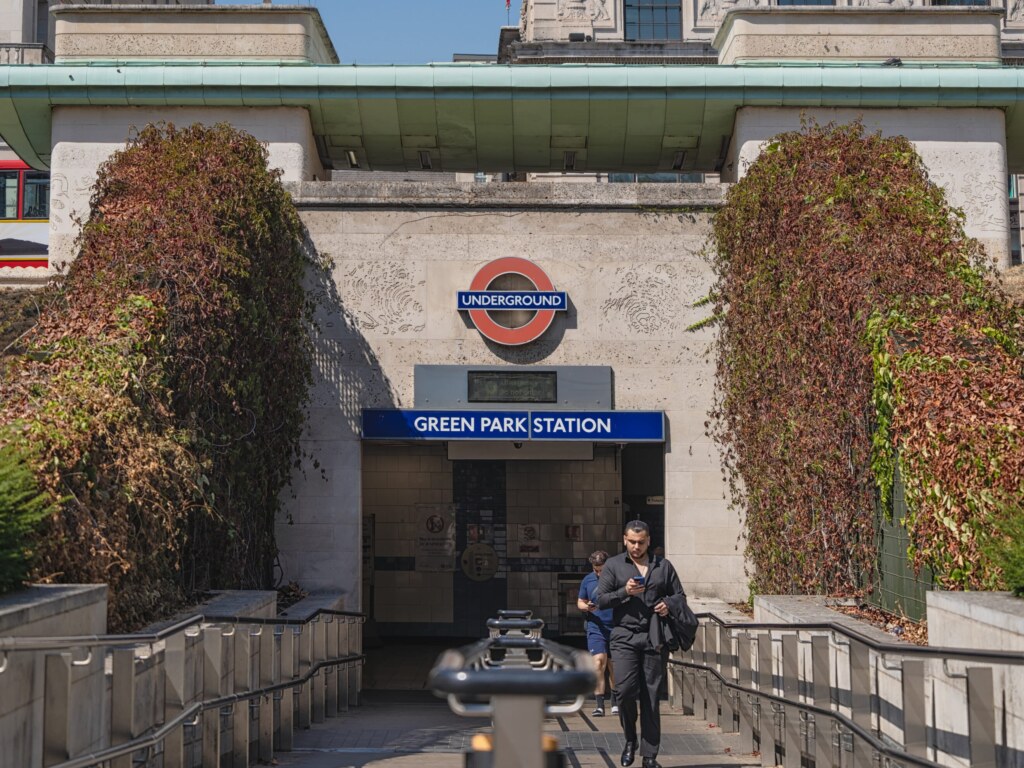
- Green Park is the most centrally positioned station for the Mayfair office market, serving the Jubilee, Victoria and Piccadilly lines. Devonshire House has direct access to the station from within the building.
- The Jubilee line provides fast connections to Canary Wharf, Waterloo and London Bridge.
- The Victoria line connects to Victoria and King’s Cross.
- The Piccadilly line provides direct access to Heathrow.
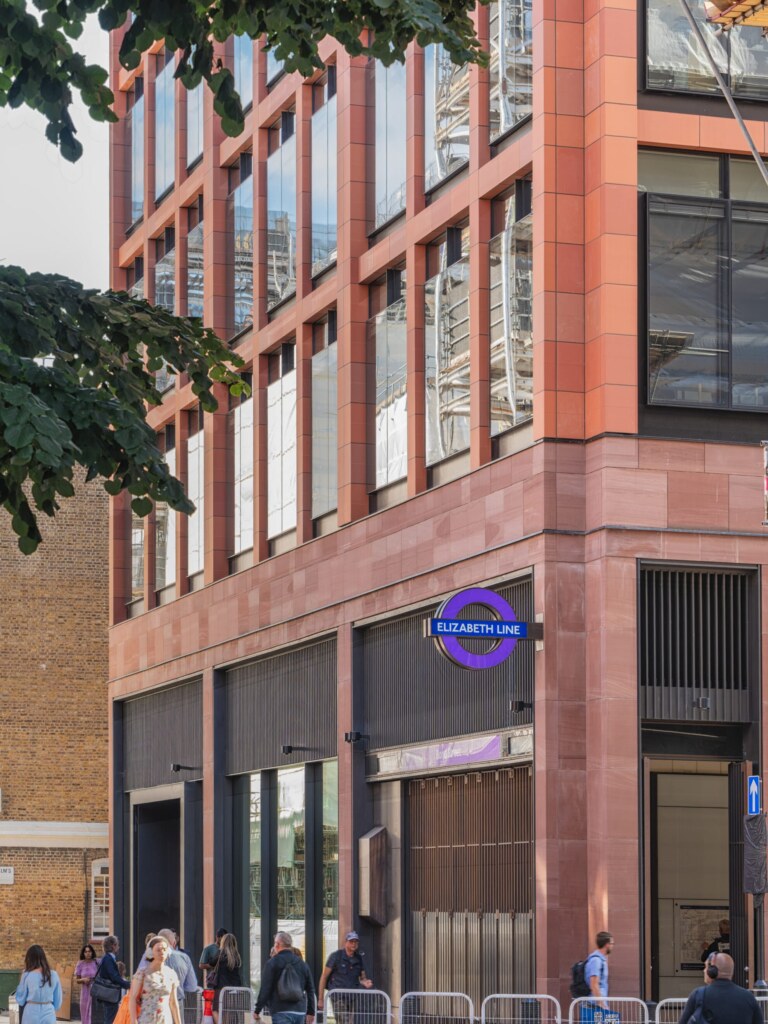
- Bond Street serves the Central and Jubilee lines, with the Elizabeth line now also running through. The Elizabeth line has transformed Bond Street’s connectivity, putting Heathrow 27 minutes away and Liverpool Street under 10 minutes. For businesses with international clients or teams commuting from the west, this is now the most important station in the submarket.
- Oxford Circus serves the Central, Bakerloo and Victoria lines, providing access to the northern end of the submarket from Oxford Street. Useful for teams commuting from north or south London.
- Hyde Park Corner serves the Piccadilly line and provides access to the south-western corner of Mayfair, near Piccadilly and Park Lane.
- Green Park is the most centrally positioned station for the Mayfair office market, serving the Jubilee, Victoria and Piccadilly lines. Devonshire House has direct access to the station from within the building.
-
-
Types of office space in Mayfair
Mayfair’s office market is more varied than its reputation suggests. Alongside the headline-grabbing top-floor suites, there is a wide range of building types and tenure options. Here’s a closer look at the main categories:
-
Large multi-tenanted office buildings
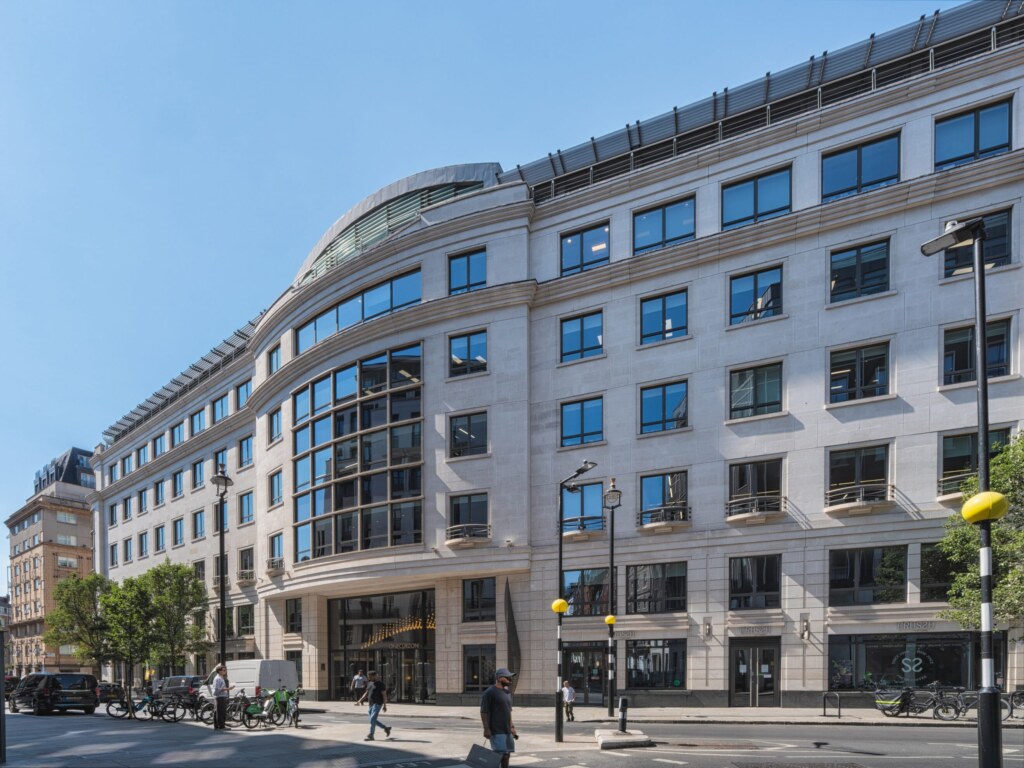
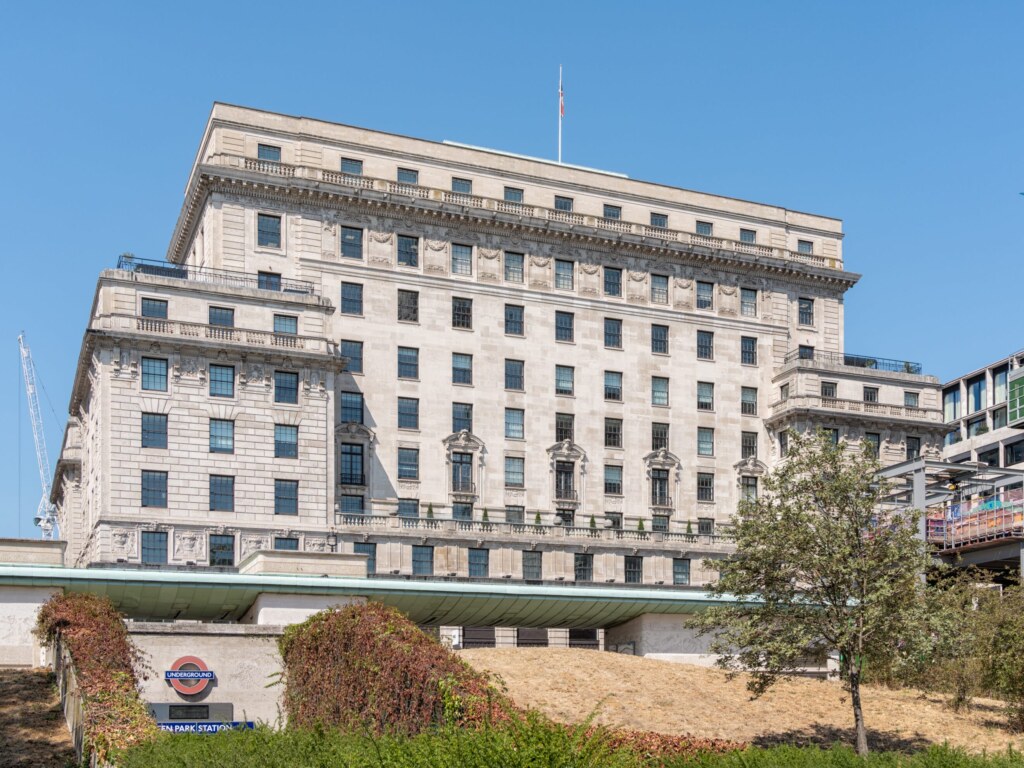
The biggest buildings in Mayfair include Devonshire House, Berkeley Square House and 1 Curzon Street. They offer the largest floorplates available in the submarket, typically between 20,000 and 34,000 sq ft. These buildings suit established financial services businesses and professional services firms, plus family offices that need meaningful space in a single building. They tend to be comprehensively managed, with staffed receptions and concierge services. Expect the full amenity package to match the price point.
-
-
Boutique and refurbished buildings
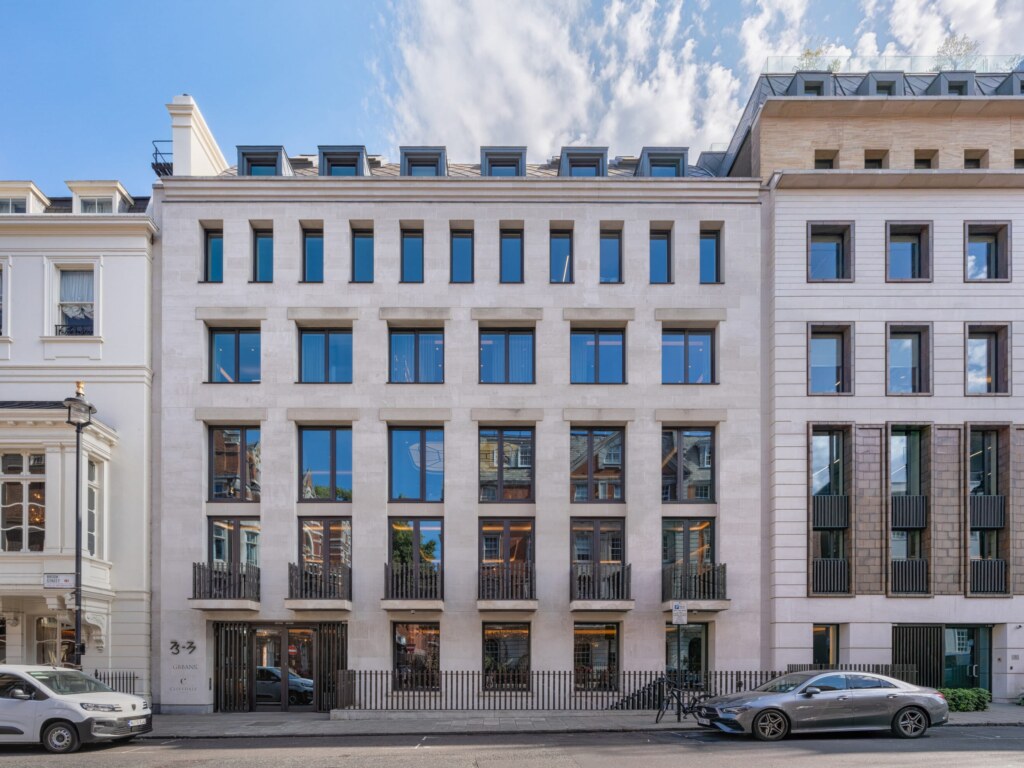
Much of Mayfair’s stock sits in buildings of 10,000 to 40,000 sq ft that have been refurbished to a high standard while retaining their period character. 65 Davies Street and 73–77 Brook Street represent this category. They’re buildings where the architecture reinforces the address rather than contradicting it. This is the most active part of the Mayfair market, where the widest range of businesses find the right combination of quality, character and size.
-
-
Georgian townhouse conversions
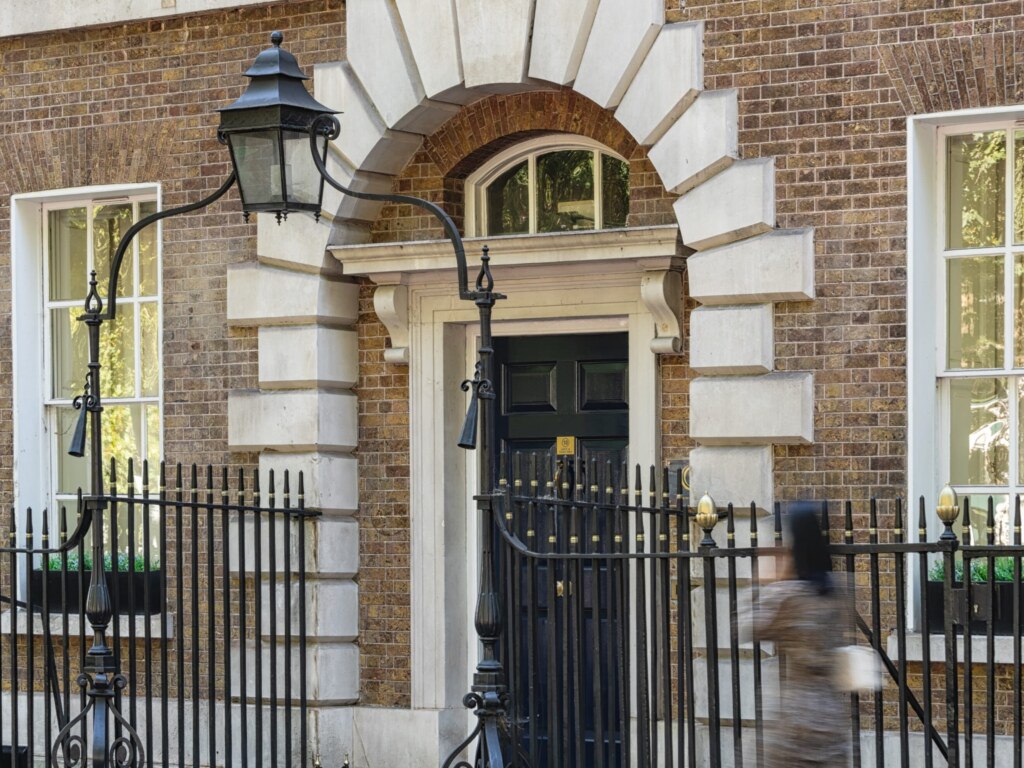
Mayfair contains a significant number of Georgian townhouses that have been converted to office use, typically offering 2,000 to 8,000 sq ft across several floors. These suit boutique investment firms and advisory businesses for which the exclusivity of a private building matters as much as the specification. As you can expect, supply is extremely limited and availability is rare.
-
-
Managed and flexible workspace
Mayfair has a growing flexible office market, with operators including Servcorp (within Devonshire House) and various boutique providers running managed suites across the submarket. This is ideal for businesses testing a Mayfair address or those with small teams that want the postcode without committing to a full lease.
-
-
5 key office buildings in Mayfair
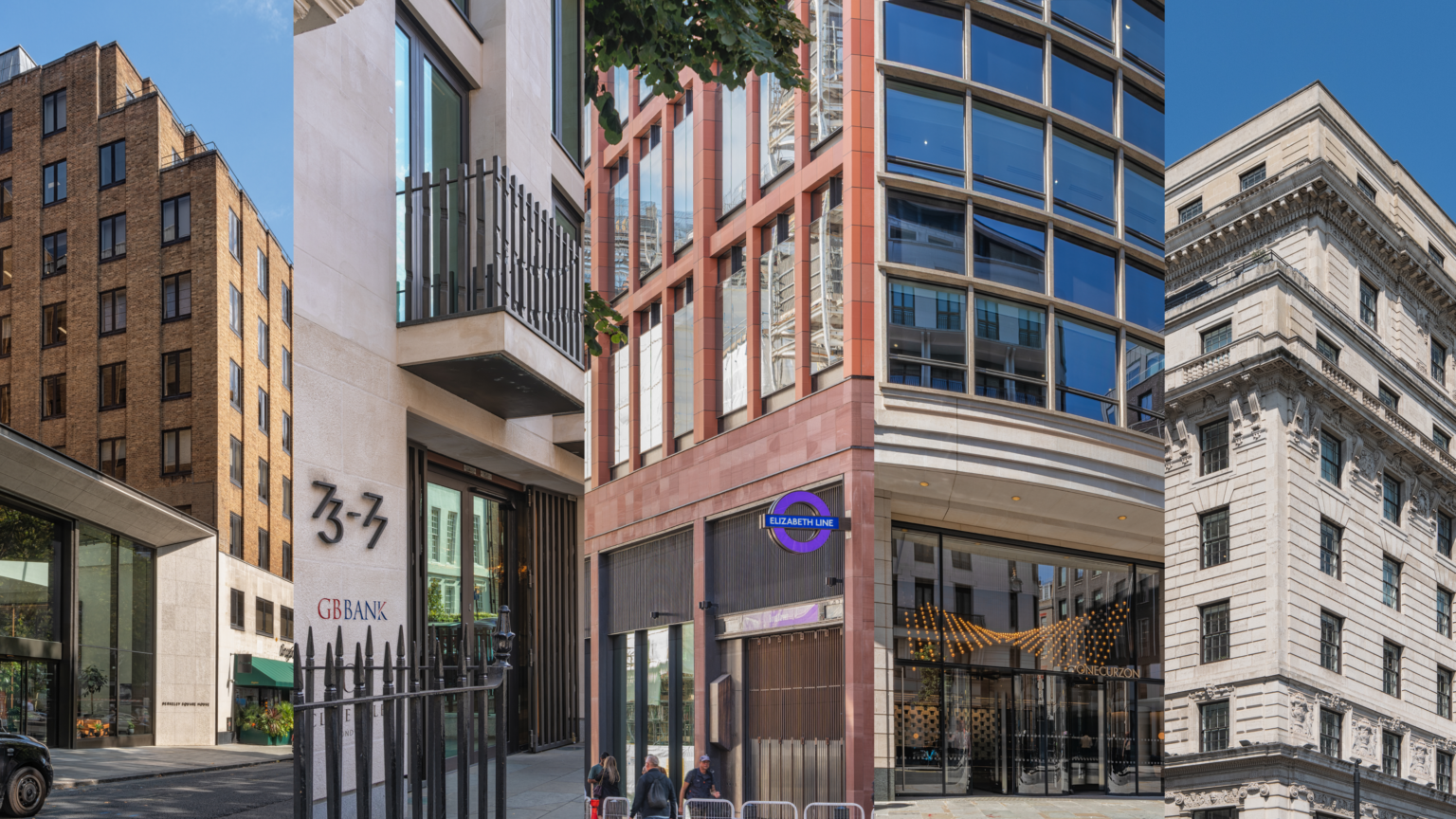
Mayfair’s office market is characterised by prestige and scarcity with a building stock that has changed remarkably little in its fundamental character over two centuries. From the largest interwar blocks on Berkeley Square to the newest development on Davies Street, the range is narrower than most London submarkets, but the quality is consistently high.
The following buildings illustrate that range, from large multi-tenanted blocks capable of housing a major financial services firm to boutique refurbishments where a single floor is the entire proposition.
-
1) Devonshire House
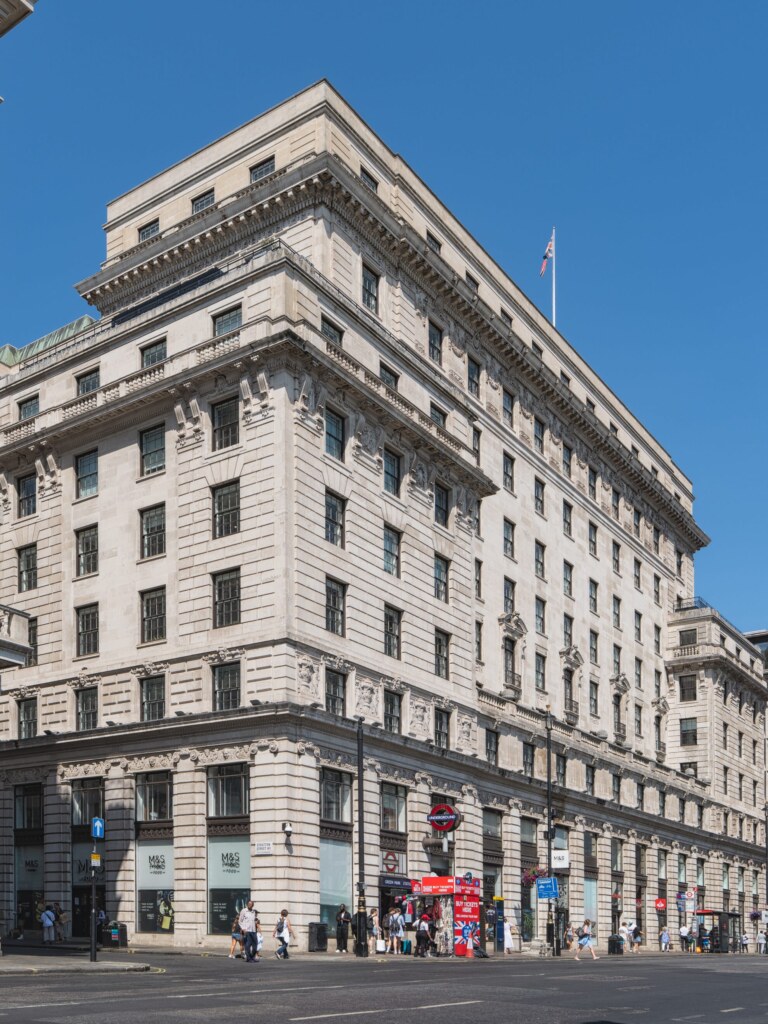
Devonshire House at 1 Mayfair Place is one of the defining buildings of the Mayfair office market. Originally built in 1926 and comprehensively refurbished in 2013, the Grade II Listed building occupies an island site bounded by Piccadilly, Stratton Street, Mayfair Place and Berkeley Street – directly opposite The Ritz and overlooking Green Park. At 375,958 sq ft across 11 floors, it’s one of the largest office buildings in Mayfair and one of the very few with direct access to a London Underground station. In fact, Green Park is accessible from within the building.
The 2013 refurbishment was substantial. A full Cat A upgrade across the first to fourth floors was paired with new receptions on Mayfair Place and Stratton Street, an atrium link bridge and new terraces overlooking Green Park. The Portland stone colonnade entrance remains intact, giving the building an arrival experience that few London offices can match. Average asking rent of £157.89/sq ft is the highest of any building in this selection and reflects both the address and the quality of the refurbishment.
Key facts
- Size: 375,958 sq ft NIA
- Floors: 11
- Built / Renovated: 1926 / 2013
- Owner: PonteGadea UK Ltd
- Lease type: Traditional leasehold and managed (Servcorp)
- Accreditations: BREEAM Excellent
- CoStar est. rent: £129 – £157/sq ft
-
-
Why businesses choose it
- Direct access to Green Park Underground station from within the building. One of only a handful of office buildings in London with this feature, providing immediate access to the Jubilee, Victoria and Piccadilly lines.
- A Grade II Listed Portland stone building on one of Mayfair’s most prominent island sites, with views over Green Park and The Ritz on three sides. An arrival experience that carries significant commercial weight with clients.
- 98.2% leased with three small suites available from 50 sq ft upwards, including a 19,375 sq ft first-floor suite. Rare availability in a building of this calibre at this location.
- Typical floorplates of 34,178 sq ft offer genuine scale in a submarket where large contiguous space is limited. A service charge of £21.02/sq ft reflects the quality and depth of building management.
Occupiers
Devonshire House’s tenant roster reads like a directory of alternative asset management. TA Associates, Bain Capital Credit and LMR Partners are among 19 tenants occupying a building that has become a natural home for private equity, credit and hedge fund businesses.
Servcorp operates managed workspace, providing a route into the building for smaller businesses. Achieved rents of £145/sq ft on recent transactions confirm the building’s position at the very top of the Mayfair market.
Features
The Green Park station access is the feature that no other Mayfair building can replicate. For a business whose partners and clients are arriving from across London, being able to walk directly from the Underground platform into the building’s lobby without stepping outside is a genuine operational convenience. That’s especially true in wet weather or for late evening departures. When the building commands £145/sq ft in achieved rents, this kind of detail is part of what occupiers are paying for.
-
2) Berkeley Square House
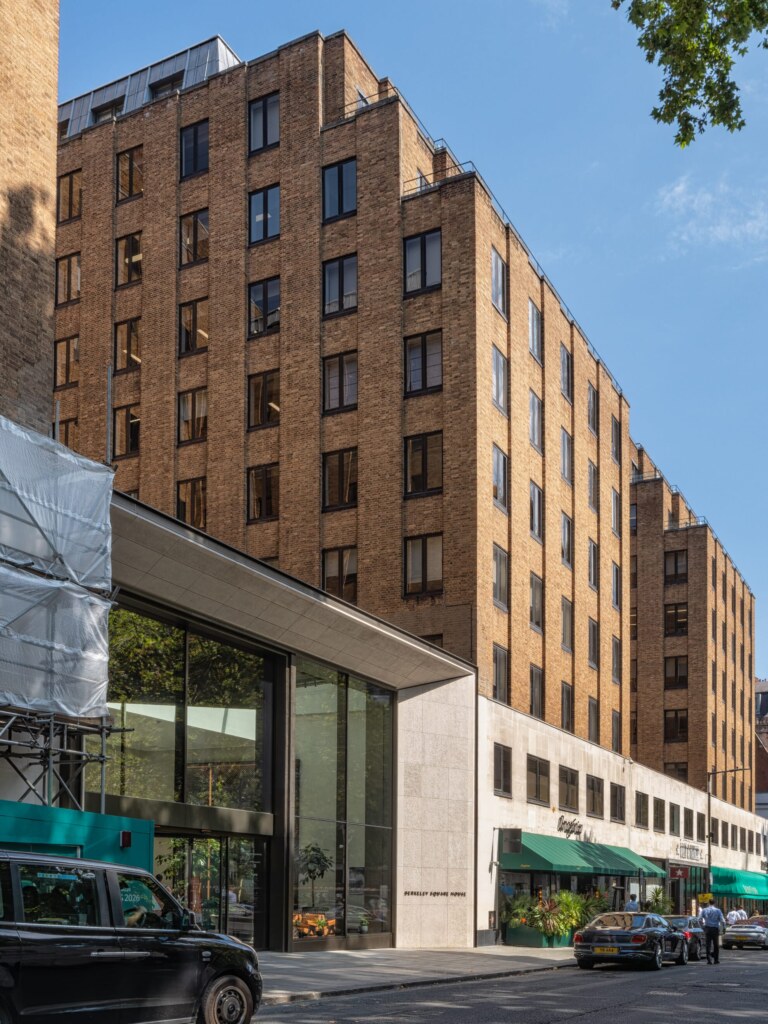
Berkeley Square House is the largest office building in Mayfair, occupying the full eastern side of Berkeley Square. Originally built in 1937 and fully renovated in 2020, the 11-storey building delivers 483,970 sq ft across typical floorplates of 43,361 sq ft. It’s significantly larger than anything else in the submarket and the only building in Mayfair capable of accommodating a major corporate occupier at genuine scale.
The 2020 renovation was comprehensive, bringing the building up to a modern specification while retaining its prewar character. With 100% occupancy across 23 tenants and an average asking rent of £141.99/sq ft, Berkeley Square House consistently outperforms its peer group. Green Park station is a four-minute walk and Bond Street is eight minutes.
Key facts
- Size: 483,970 sq ft NIA
- Floors: 11
- Built / Renovated: 1937 / 2020
- Owner: National Bank of Abu Dhabi
- Freehold: Private Department of the President of the UAE
- Lease type: Traditional leasehold and managed (Signature by Regus)
- Accreditations: BREEAM Very Good
- Asking rent: £140 – £155/sq ft
-
-
Why businesses choose it
- The largest office building in Mayfair at 483,970 sq ft, with typical floorplates of 43,361 sq ft. The only building in the submarket offering genuine corporate scale on a single level, with a maximum contiguous availability of 65,531 sq ft.
- 100% leased across 23 tenants following the 2020 renovation, with achieved rents of £141/sq ft and asking rents of up to £155/sq ft on available first-floor space.
- Signature by Regus operates managed workspace within the building at 22,268 sq ft, providing a flexible route into Berkeley Square for businesses that want the address without a long lease commitment.
- Green Park station is a four-minute walk and Bond Street eight minutes, covering the Jubilee, Victoria, Piccadilly, Central and Elizabeth lines between them.
Occupiers
Berkeley Square House’s 23 tenants span the financial services and corporate sectors that define Mayfair’s occupier base. Global steel and mining company, ArcelorMittal is the largest tenant at 45,536 sq ft on a lease to March 2029. Greenhill & Co (independent investment bank) and Tristan Capital Partners (European real estate fund manager) sit alongside Signature by Regus’s managed workspace operation.
Restaurant Amazónico anchors the ground floor on a lease to June 2039. It’s one of Mayfair’s more prominent restaurant tenancies and an indicator of the foot traffic and profile the building generates at street level.
Features
Berkeley Square House’s position on the square is its most valuable asset. The eastern side of Berkeley Square has an uninterrupted view across one of London’s most famous garden squares. No amount of specification can replicate this outlook in a building elsewhere in the submarket.
For a business entertaining clients or holding board meetings, the setting matters. The 2020 renovation has brought the interiors up to a standard consistent with current market expectations, but the view from the upper floors across Berkeley Square towards the western side remains the building’s defining feature. It’s the reason it commands rents at the top of its peer group despite its prewar bones.
-
3) 65 Davies Street
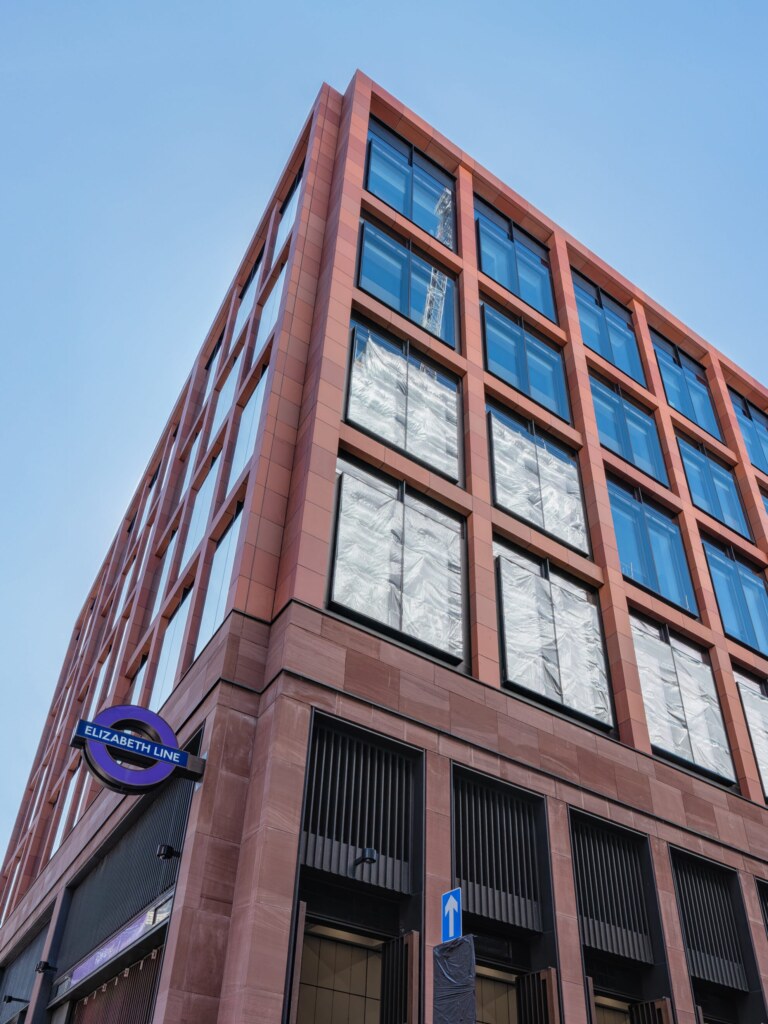
65 Davies Street is the newest significant office building in Mayfair. Opened in September 2023, the eight-storey building delivers 67,814 sq ft of five-star office space across typical floorplates of 8,220 sq ft.
It’s fully let, with three tenants all on leases to December 2033. Blue Owl Capital, Hayfin and Harris Williams benefit from BREEAM Excellent credentials and a terracotta and red brick facade that complements the surrounding Mayfair townscape rather than interrupting it.
The building occupies an island site on the west side of Davies Street, with Weighhouse Street to the north, St Anselm’s Place to the south and Gilbert Street to the west. Bond Street station is a one-minute walk too. The average asking rent of £201/sq ft is the highest of any building in this selection and significantly above the submarket’s 4–5 star average of £130.67/sq ft. It represents the current market ceiling for new-build Mayfair space.
Key facts
- Size: 67,814 sq ft NIA
- Floors: 8
- Completed: 2023
- Architect: PLP Architecture
- Developer: Grosvenor Group Ltd
- Owner: Grosvenor Group Ltd
- Lease type: Traditional leasehold
- Accreditations: BREEAM Excellent
- CoStar est. rent: £144 – £176/sq ft
-
-
Why businesses choose it
- The newest significant office development in Mayfair, completed in 2023 and fully let. Achieved rents of £145/sq ft and an average asking rent of £201/sq ft set the current benchmark for new-build space in the submarket.
- Bond Street station is a one-minute walk, giving occupiers immediate Elizabeth line access to Heathrow (27 minutes) and Liverpool Street (under 10 minutes), plus the full Central and Jubilee line network.
- A PLP Architecture design in terracotta and red brick responds to the Mayfair townscape. The building that looks like it belongs on Davies Street rather than having been inserted into it.
- Grosvenor has owned and managed this part of Mayfair for centuries. That kind of continuity is rare in the London office market, and it shows in the streets.
Occupiers
65 Davies Street’s three tenants are a concentrated expression of the alternative asset management community that defines this part of Mayfair.
Blue Owl Capital, Hayfin and Harris Williams are all on identical December 2033 lease expiries, suggesting coordinated leasing at the point of building completion. All three are significant players in private credit, alternative lending and investment banking advisory respectively.
The building’s 100% occupancy and the profile of its tenants confirm its position as the current gold standard for new-build Mayfair office space.
Features
The Grosvenor ownership context is worth understanding for any business considering 65 Davies Street or any building on the Grosvenor estate. Grosvenor has owned significant parts of Mayfair since the 17th century. It manages the estate with a long-term perspective that’s fundamentally different from an institutional investor with a five-to-ten year hold period.
For occupiers, that means a landlord with a deep interest in maintaining the quality and character of the surrounding streets. It’s the kind of stewardship that helps explain why Mayfair has retained its character and commercial premium for so long.
-
4) 73–77 Brook Street
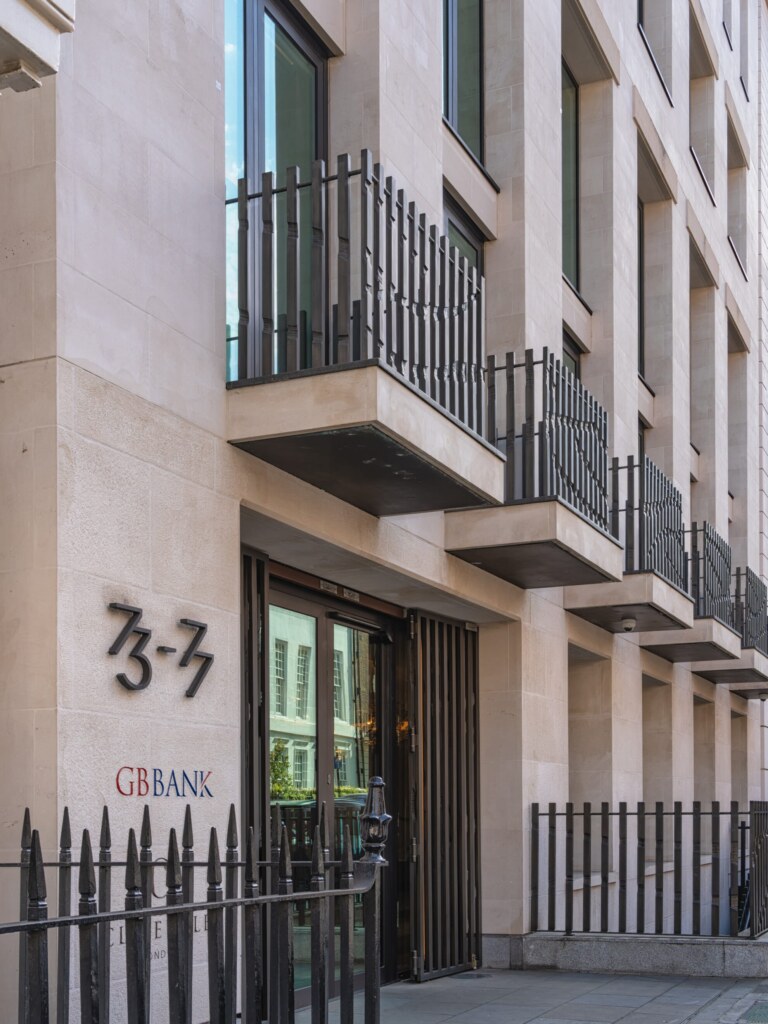
73–77 Brook Street is a nine-floor boutique office building on the south side of Brook Street, moments east of Grosvenor Square. Originally built in 1976 and refurbished in 2017, the building delivers 31,500 sq ft across typical floorplates of 2,444 sq ft. It’s among the smallest in this selection, making it well suited to businesses that want a dedicated floor in a Mayfair building without the size commitment of the larger blocks.
Fully let with achieved rents reaching £170/sq ft on recent transactions, the building’s location is a strong part of its appeal. Grosvenor Square (once the American Embassy compound and now a public garden) is seconds to the west. Berkeley Square and Hyde Park are both within a few minutes’ walk. Bond Street station is 0.2 miles away, with the Elizabeth line now adding a further dimension to a station that was already one of the most useful in central London.
Key facts
- Size: 31,500 sq ft NIA
- Floors: 9
- Built / Renovated: 1976 / 2017
- Architect: PLP Architecture
- Developer: Clivedale Ventures Ltd
- Owner: Clivedale London
- Lease type: Traditional leasehold
- Accreditations: BREEAM Very Good
- CoStar est. rent: £108 – £132/sq ft
-
-
Why businesses choose it
- Typical floorplates of 2,444 sq ft make each floor a self-contained office for a team of 15 to 20 people. It’s the right size for a boutique investment firm or advisory practice that wants a private floor with a Brook Street address.
- Achieved rents of £170/sq ft confirm market confidence at the top end, while the CoStar estimated range of £108 to £132/sq ft reflects the building’s refurbished rather than new-build status.
- Bond Street station is a three-minute walk, with Elizabeth line, Central and Jubilee line access. Additionally, Marble Arch and Oxford Circus are both within 10 minutes on foot.
- Fully let with 0% vacancy. The consistent track record of occupancy reflects the building’s appeal to the boutique financial services community on and around Brook Street.
Occupiers
CMA CGM Europe Regional Office occupies 2,007 sq ft alongside Clivedale London itself, which owner-occupies space in its own building. The building’s small floorplates mean the tenant base is naturally made up of businesses operating at an intimate scale. Expect the kind of financial services, advisory and investment firms that populate the streets between Grosvenor Square and Berkeley Square.
Achieved rents of £170/sq ft on a recent transaction are among the highest in this selection and reflect the scarcity of small-floor boutique space at this quality level in Mayfair.
Features
73–77 Brook Street occupies a position in the Mayfair market that larger buildings can’t replicate. For a business of 15 to 20 people that wants the cachet and character of a genuine Mayfair address, this kind of building is almost impossible to find.
Along with PLP Architecture’s 2017 refurbishment and the Brook Street location, tenants get high ceilings and natural light that characterise the best of Mayfair’s period commercial stock. It’s no wonder it’s a highly sought-after option in a part of the market where supply is genuinely scarce.
-
5) 1 Curzon Street
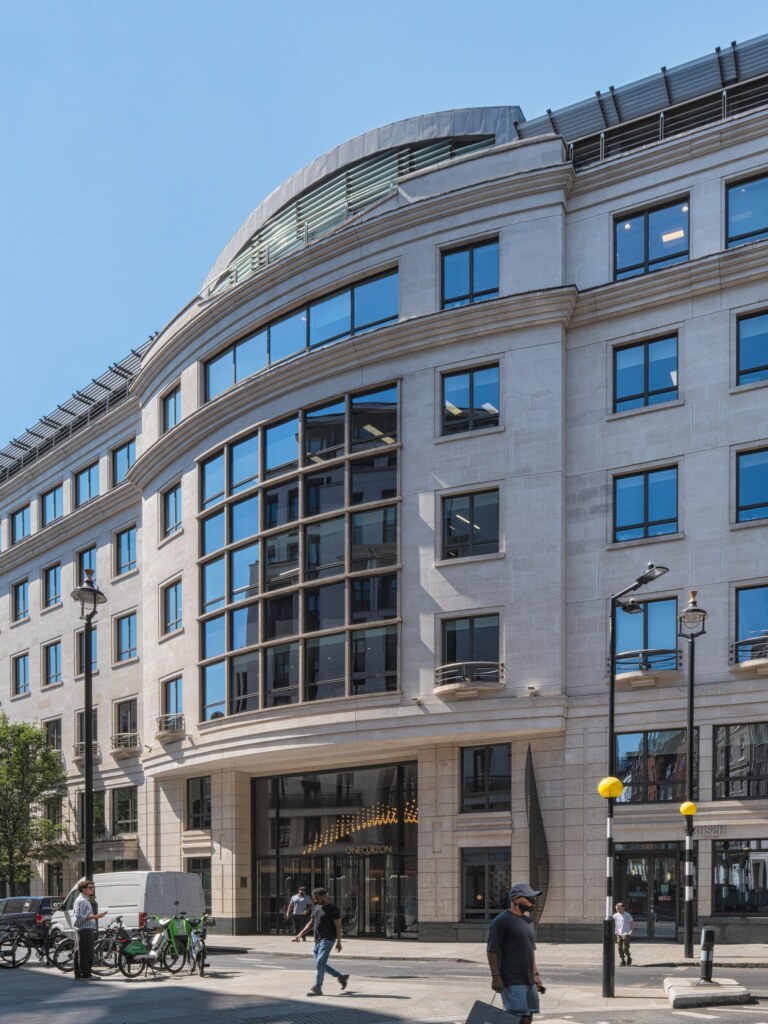
1 Curzon Street is a substantial mixed-use building at the eastern end of Curzon Street, close to Berkeley Square. Completed in 1998, the eight-storey building delivers 221,716 sq ft of office space across typical floorplates of 30,000 sq ft. With largest single floors available in the Mayfair submarket alongside Devonshire House, it’s the natural choice for businesses that need genuine scale in W1.
Colliers manages the building for Mayfair Commercial Limited. It’s fully let, with average asking rent of £144.81/sq ft and achieved rents reaching £116.45/sq ft on recent transactions.
The building’s position on Curzon Street, with access from Clarges Mews, places it at the point where southern Mayfair meets Green Park. Five Underground stations are all within walking distance, giving occupiers an unusually broad range of transport options for a single building. These are Green Park, Piccadilly Circus, Oxford Circus, Bond Street and Hyde Park Corner.
Key facts
- Size: 221,716 sq ft NIA
- Floors: 8
- Completed: 1998
- Owner: Mayfair Commercial Limited
- Lease type: Traditional leasehold
-
-
Why businesses choose it
- Typical floorplates of 30,000 sq ft make this one of only two buildings in Mayfair capable of accommodating a large financial services or professional services team on a single level – the other being Devonshire House.
- Having five Underground stations within walking distance gives occupiers more transport flexibility than almost any other Mayfair building.
- 100% leased with 0% vacancy. Achieved rents of £116.45/sq ft confirm sustained demand for large-floor Mayfair space at a price point below the newest buildings.
- An atrium, fitness centre, shower facilities and 24-hour access. While it’s not new-build, the building offers a comprehensive amenity package suited to a large professional services workforce.
Occupiers
1 Curzon Street’s tenant base reflects the full breadth of Mayfair’s financial and professional services community. Global investment bank, Houlihan Lokey anchors the building with 83,150 sq ft on a lease to August 2033. PJT Partners, Moore Europe Capital Management, Gulf International Bank and Third Space complete a tenant mix that spans investment banking, asset management, private banking and wellbeing.
Third Space’s long lease to November 2044 reflects both the building’s scale (a full-service gym requires significant space) and the value that large financial services occupiers place on in-building fitness provision.
Features
The Third Space gym on a lease to 2044 is worth noting as an amenity decision rather than just a tenant. For a building of 221,000 sq ft housing investment banks and asset managers with demanding hours and high expectations, an in-building full-service gym is a meaningful retention and recruitment tool.
-
Key considerations
Mayfair is one of the most straightforward office markets to understand in principle and one of the most demanding to navigate in practice. The address is clear and the occupier profile is well defined. But availability is limited and specification expectations are high. Crucially, the gap between a Mayfair office that reinforces your brand and one that merely has the postcode is wider than most people expect.
The address is a commercial decision
In most London office markets, the address is one factor among several. In Mayfair, for the right kind of business, it’s the primary factor. Private equity firms, hedge funds and family offices operate in a world where clients form an impression before the meeting begins. The building and the street communicate something instantly, as does the postcode. For businesses in those sectors, the cost of a Mayfair address is part of the commercial infrastructure, not an overhead to be minimised.
Rents are the highest in London outside the St James’s core
Headline rents for Grade A space in Mayfair range from £108/sq ft in older refurbished stock to £176/sq ft at the top of 65 Davies Street, with the submarket average for 4–5 star space running at £117.68/sq ft. Service charges are typically £18 to £22/sq ft. Total occupancy cost is among the highest of any London submarket. A full breakdown is available in Oktra’s London cost guide.
-
Download Oktra’s London Office Rent Report for the latest rental insights and occupancy costs across the capital’s key office locations, and an overview of how the city’s commercial office landscape is looking in the short and long term.
Download now -
-
Large contiguous floorplates are scarce
Mayfair’s building stock reflects its residential and heritage character. Most buildings offer floorplates of 5,000 to 15,000 sq ft. Businesses that need 20,000 sq ft or more on a single level are largely limited to Devonshire House and 1 Curzon Street, both of which are currently close to fully let. Planning constraints make it unlikely that significant new large-floor space will come forward in the submarket in the near term.
Fit-out in Mayfair demands a different standard
Clients arriving at a Mayfair office carry expectations shaped by the surrounding environment. A fit-out that would be perfectly appropriate in Shoreditch or even the City can feel incongruous in a Mayfair context.
Whether it’s a new-build like 65 Davies Street or a refurbished period building, the best Mayfair offices share a material quality, attention to detail and a sense of permanence that takes careful design to achieve. Getting that right in a heritage building requires experience specific to this market, given the constraints that listed or protected status can impose.
-
Office space calculator
In Mayfair, making efficient use of every square foot matters. Use Oktra’s Office Space Calculator to establish how much space your team needs before committing to a premium address.
Try it out -


-
Alternative areas to Mayfair for office space
Mayfair is the right address for businesses that need their office to carry weight with clients, counterparties and talent at the top of their respective markets. The building stock is distinctive and the transport connections are strong. Crucially, the submarket has a consistency of quality that reflects decades of careful ownership by the Grosvenor estate and other long-term landlords. However, if this isn’t the right fit for your business, there are plenty of alternative submarkets to consider.
St James’s is the closest alternative and competes directly for the same occupier profile. The SW1 postcodes around St James’s Square and Pall Mall carry comparable prestige and similar rents. They also attract a similar mix of asset managers, private equity firms and professional services businesses. Worth considering if the specific client and counterparty relationships a business maintains are more anchored to the St James’s end of the West End.
Fitzrovia, immediately to the north of Oxford Street, offers a more creative character at rents that are typically 30 to 40% below Mayfair. It suits businesses that want a central West End location without the formality or cost of a W1J address.Soho is 10 minutes east and appeals to financial services businesses that want a West End presence with more energy and a broader amenity offer. 1 Soho Place and 1 Newman Street have brought institutional-grade space to Soho at rents that sit below the Mayfair top end.
Knightsbridge and Belgravia, immediately to the south of Mayfair, offer a similar level of prestige in a quieter, more residential environment. The transport connections are less strong than Mayfair, but the address carries comparable weight for luxury and family office businesses.
Not settled on a location? Oktra’s London area guide compares the main submarkets by sector, character and cost.
-
-
Mayfair office space FAQs
-
 What kind of businesses are based in Mayfair?
Mayfair is dominated by alternative asset management like private equity, hedge funds, credit funds and family offices. They sit alongside the investment banks, legal advisers and professional services firms that work with them. Sovereign wealth offices and specialist advisory businesses are also well represented, as are luxury brands. The common thread is businesses for whom a prestigious W1 address is either commercially necessary or strategically important.
How much does office space in Mayfair cost?
Headline rents range from approximately £108/sq ft in older refurbished buildings to over £170/sq ft in the newest and most prestigious. Service charges are typically £18 to £22/sq ft. Total occupancy cost is the highest of any London submarket outside St James’s. A full breakdown is available in Oktra’s London office cost guide.
What are the transport links from Mayfair?
Mayfair is served by:
- Green Park (Jubilee, Victoria and Piccadilly lines)
- Bond Street (Central, Jubilee and Elizabeth lines)
- Oxford Circus (Central, Bakerloo and Victoria lines)
- Hyde Park Corner (Piccadilly line)
- Marble Arch (Central line)
The Elizabeth line at Bond Street has been the most significant transport improvement in recent years, putting Heathrow 27 minutes away and dramatically improving east–west connections across central London.
Is there large office space available in Mayfair?
Large contiguous floorplates are scarce in Mayfair. The submarket’s heritage character means most buildings offer floors of 5,000 to 15,000 sq ft. Devonshire House (34,178 sq ft typical floor) and 1 Curzon Street (30,000 sq ft typical floor) are the primary options for businesses needing significant scale on a single level, and both are currently close to fully let. Availability at this size tends to be limited and moves quickly.
How does Mayfair compare to St James’s for offices?
St James’s is the closest comparable market to Mayfair. It comprises the SW1 postcodes around St James’s Street, Pall Mall and St James’s Square.
Rents are broadly similar at the top end. St James’s has a slightly more institutional and government-adjacent character while Mayfair has a stronger concentration of alternative asset managers and a more international client base.
Both are appropriate for businesses operating at the highest end of the market. The choice typically comes down to which specific street and building best fits the business’s client profile and culture.
Can smaller businesses afford Mayfair?
Yes, though the options are more limited. Serviced and managed offices within larger buildings (including Servcorp at Devonshire House) provide a Mayfair address at lower cost and on shorter terms than a traditional lease. Some boutique buildings offer small suites of 500 to 2,000 sq ft that rarely appear on the open market but can represent genuine value for a small financial services practice or advisory firm that needs the address.
-
 What kind of businesses are based in Mayfair?
-
Contact us
Get in touch to discuss your potential office space costs
020 7553 9500
info@oktra.co.uk
-
"*" indicates required fields
Related content

-
Want updates on similar new content? We’ll send you an email a month with new insights when you join our mailing list.
JOIN THE LIST
