


Share

10 min read

Senior Content Manager
Content specialist in office design and build.
-
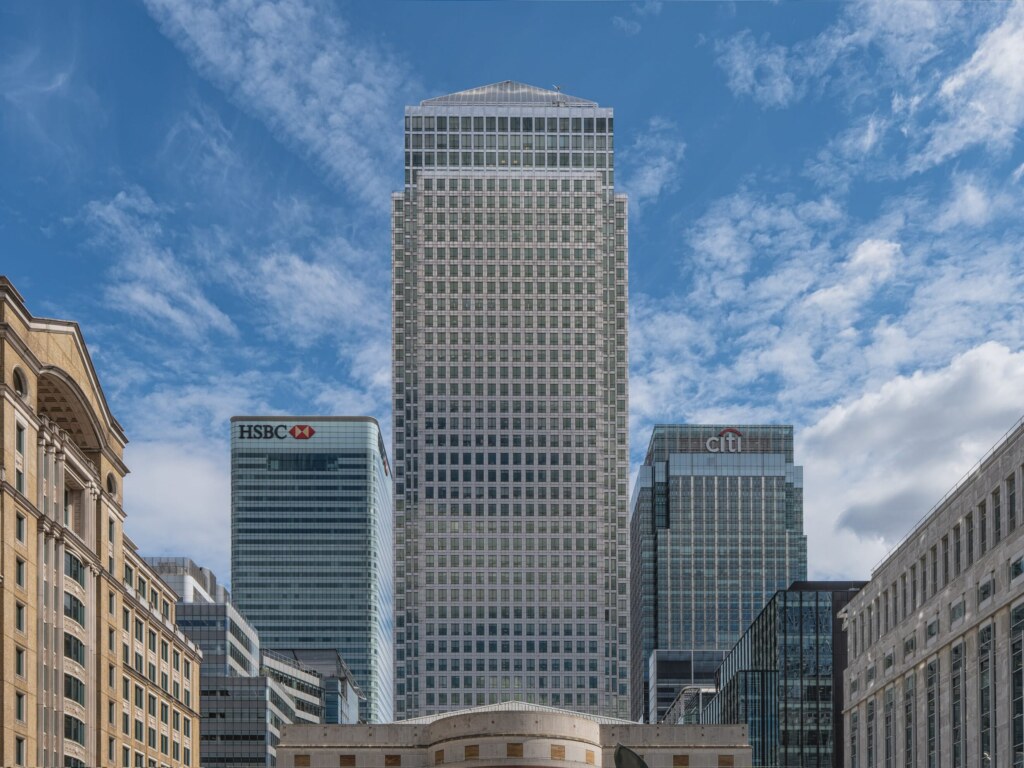
Canary Wharf is Europe’s largest urban regeneration project and one of London’s most significant business districts. What began in the late 1980s as a redevelopment of derelict docklands is now home to over 120,000 workers across more than 16 million sq ft of office space. It’s also anchored by some of the tallest and most recognisable towers in the city.
The estate has changed considerably over the past decade. Once associated almost exclusively with banking and professional services, Canary Wharf now hosts a genuine mix of finance, technology, life sciences and media occupiers. New developments at Wood Wharf sit alongside 1990s and 2000s towers, and the retail, leisure and residential offer has expanded well beyond the original financial district.
This guide covers what you need to know about office space in Canary Wharf: the streets, the transport, the building types and five of the area’s most notable buildings.
Table of contents:
-
Working in Canary Wharf
Canary Wharf offers something that’s genuinely hard to find elsewhere in London: scale. Floorplates here regularly run to 20,000, 30,000 or even 50,000 sq ft, and several buildings can accommodate a single occupier across hundreds of thousands of square feet. For businesses that need to bring large teams onto one or two floors, or that want long-term room to grow within the same building, Canary Wharf offers options that the City and West End rarely match.
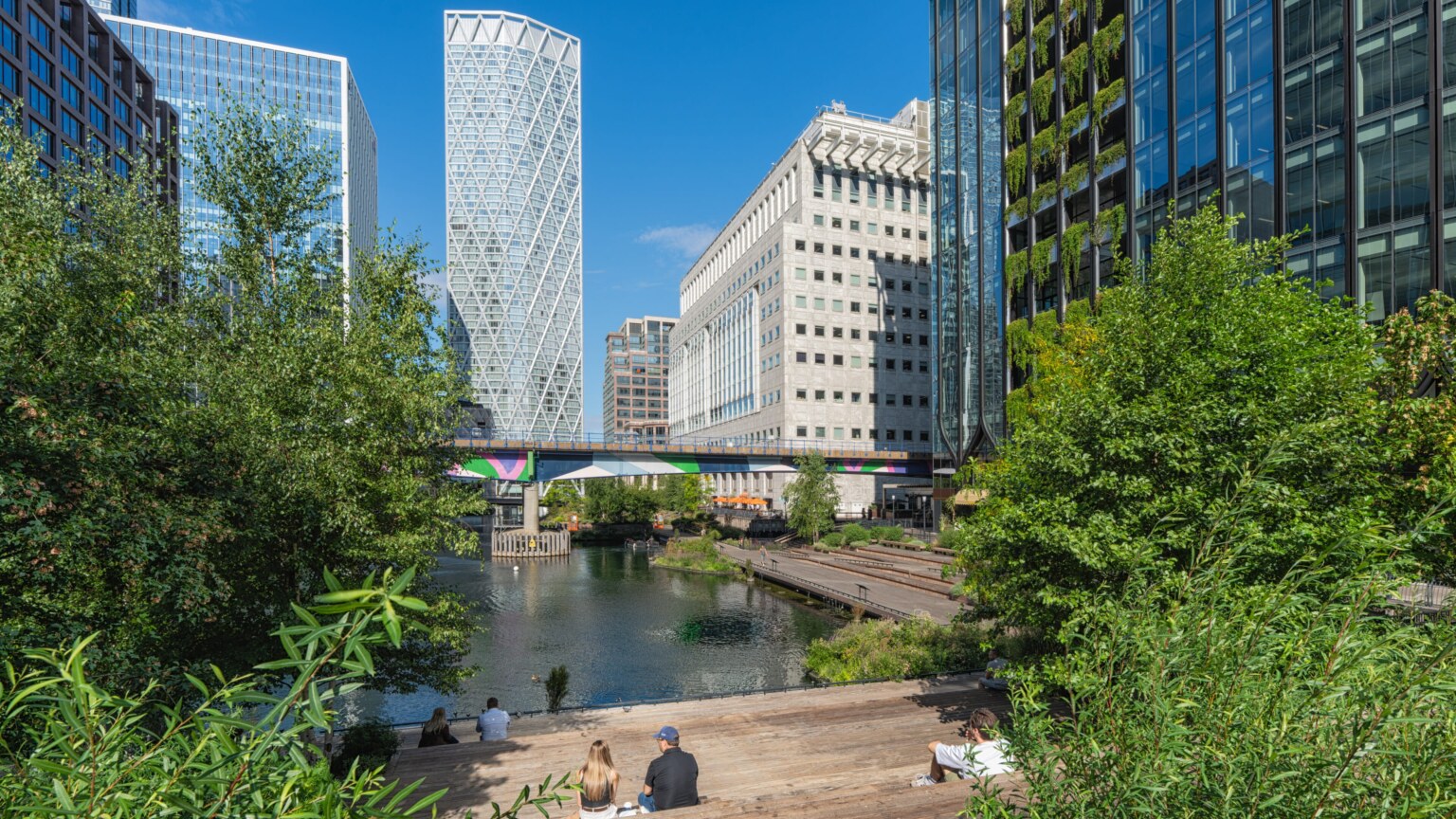
The estate has also worked hard to shed its reputation as a place that empties out after 6pm. Total footfall reached around 54 million in 2022 (its highest ever) and over 30 new restaurants have opened in recent years alongside expanding retail and hotels. As for leisure, open water swimming, padel courts, GoBoat and paddleboarding now sit alongside the docks that once served working ships. There are even two new primary schools, a nursery and the UCL School of Management.
None of this changes the fundamental character of the place. Canary Wharf still works best for businesses that value efficiency and scale over the kind of street-level character you’d find in Soho or Shoreditch. But the gap has narrowed considerably. The estate continues to invest in parks and waterside boardwalks as well as sustainability credentials. As a result, the trade-off between efficient space and a genuinely pleasant working environment is smaller than it used to be.
-
Location, transport and key streets
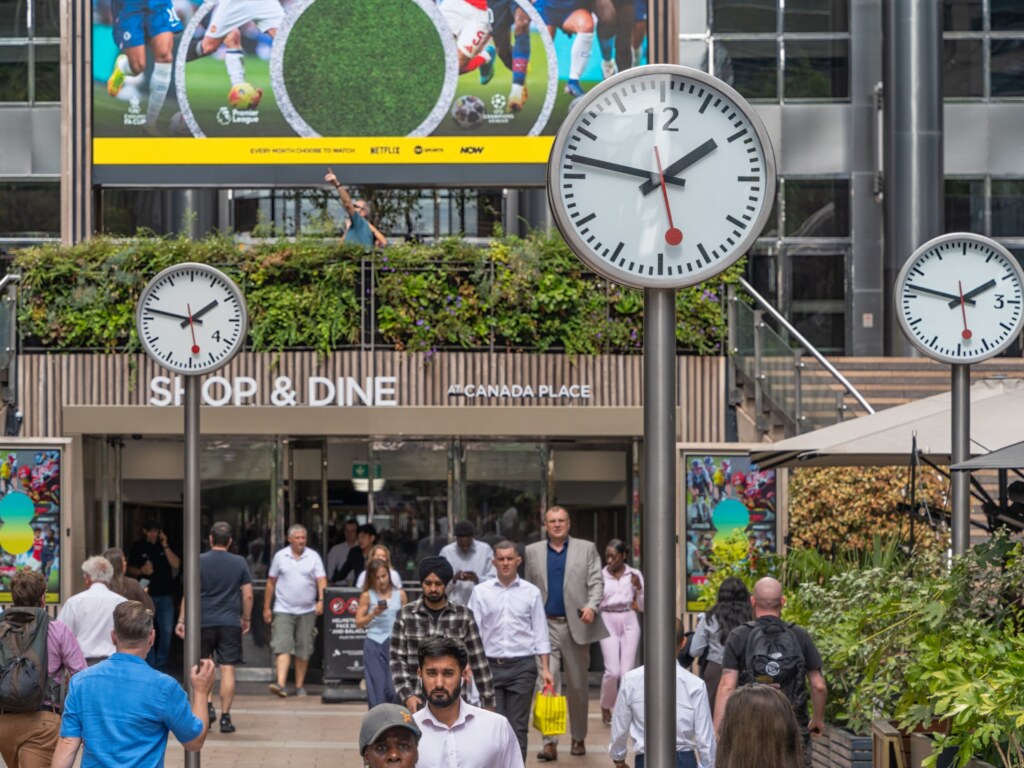
Canary Wharf covers the E14 postcode on the Isle of Dogs, bounded loosely by West India Quay to the west and Poplar to the east. The estate is built around a series of former docks, now landscaped waterways, with the original office core centred on Canada Square and a newer district, Wood Wharf, extending north and east.
-

-
Key streets and clusters include:
- Canada Square is the heart of the original estate, home to One Canada Square and its surrounding towers. It’s the most recognisable address in Canary Wharf and remains the estate’s most concentrated cluster of Grade A office space.
- Cabot Square and Bank Street form the western part of the estate, with waterfront buildings including 10 Cabot Square fronting directly onto the dock. This part of the estate has increasingly become a leisure and dining destination alongside its office stock.
- Immediately north-east of the original estate, Wood Wharf is Canary Wharf Group’s newest district. Buildings including 20 Water Street and 30 South Colonnade sit alongside new residential towers, a nursery and school, and the estate’s emerging life sciences cluster.
- On the eastern edge, Churchill Place offers a quieter, more contained cluster of towers with direct access to Canary Wharf Elizabeth line station.
-

-
Transport connectivity is one of Canary Wharf’s biggest advantages, built around one of the busiest interchanges in London:
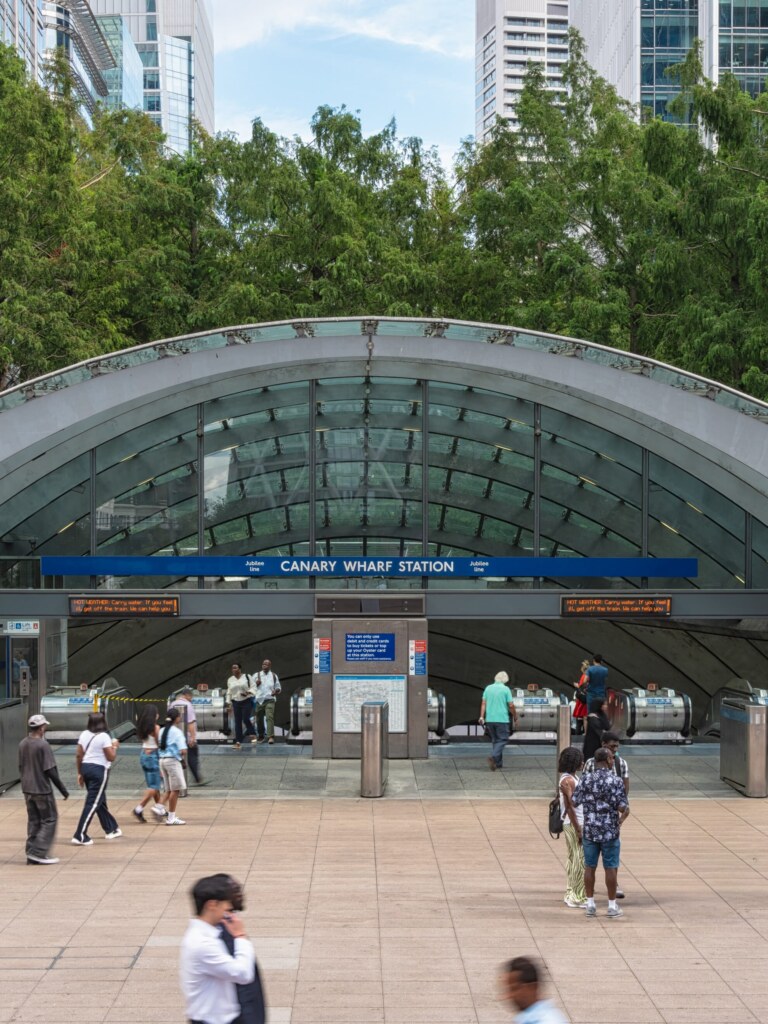
- Canary Wharf station serves the Jubilee line and the Elizabeth line, the latter having transformed journey times across London. Liverpool Street is seven minutes away, Bond Street 14 and Heathrow 45.
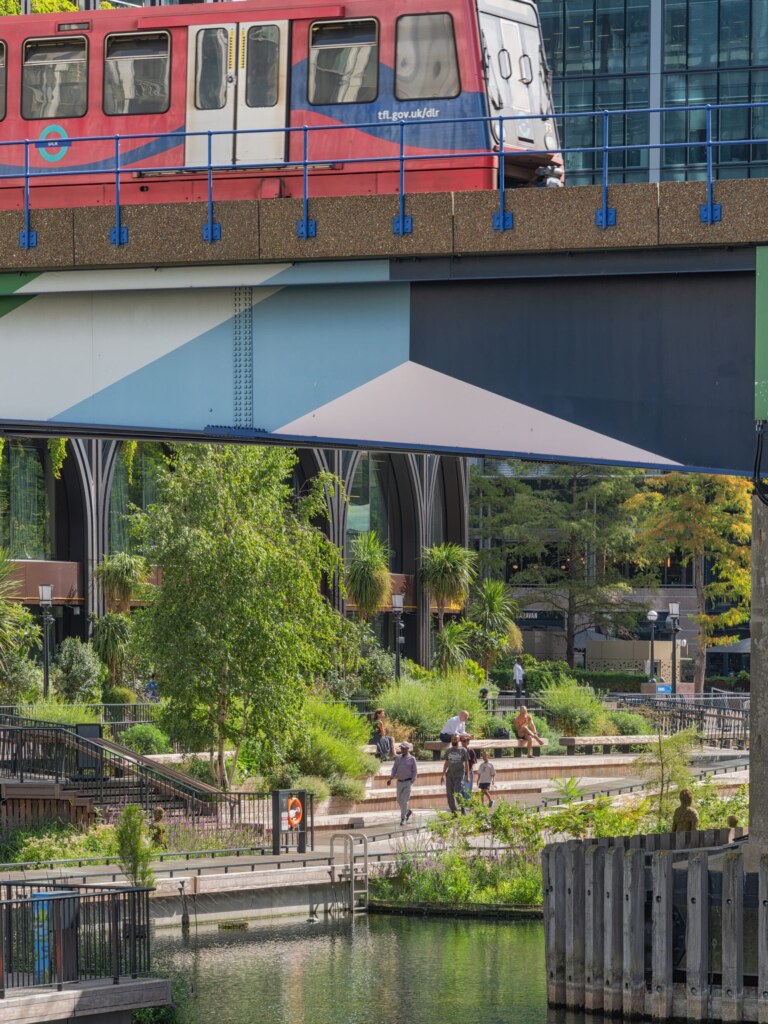
- Heron Quays, Canary Wharf, West India Quay and Poplar DLR stations provide additional connections across east London and to Stratford, Greenwich and London City Airport.
- Thames Clipper river bus services by Uber connect the estate directly to the City, London Bridge and central London along the river.
- Limehouse and Maze Hill provide nearby National Rail connections for occupiers whose teams commute from further afield.
-
-
Types of office space in Canary Wharf
Canary Wharf’s office market covers a wide range of building types and tenure options:
- New-build Grade A space at Wood Wharf, including 20 Water Street and 30 South Colonnade, offering the newest specification and sustainability credentials on the estate.
- Established Grade A towers such as One Canada Square, 5 Canada Square and 10 Cabot Square, most completed between the early 1990s and mid-2000s and since refurbished to varying degrees.
- Flexible and managed workspace, including Canary Wharf Group’s own MadeFor brand and independent operators such as Fora, offering shorter commitments within larger buildings.
- Life sciences and lab-enabled space, with a wet lab incubator already open at 20 Water Street ahead of the larger North Quay life sciences hub due in 2027.
-
New-build Grade A
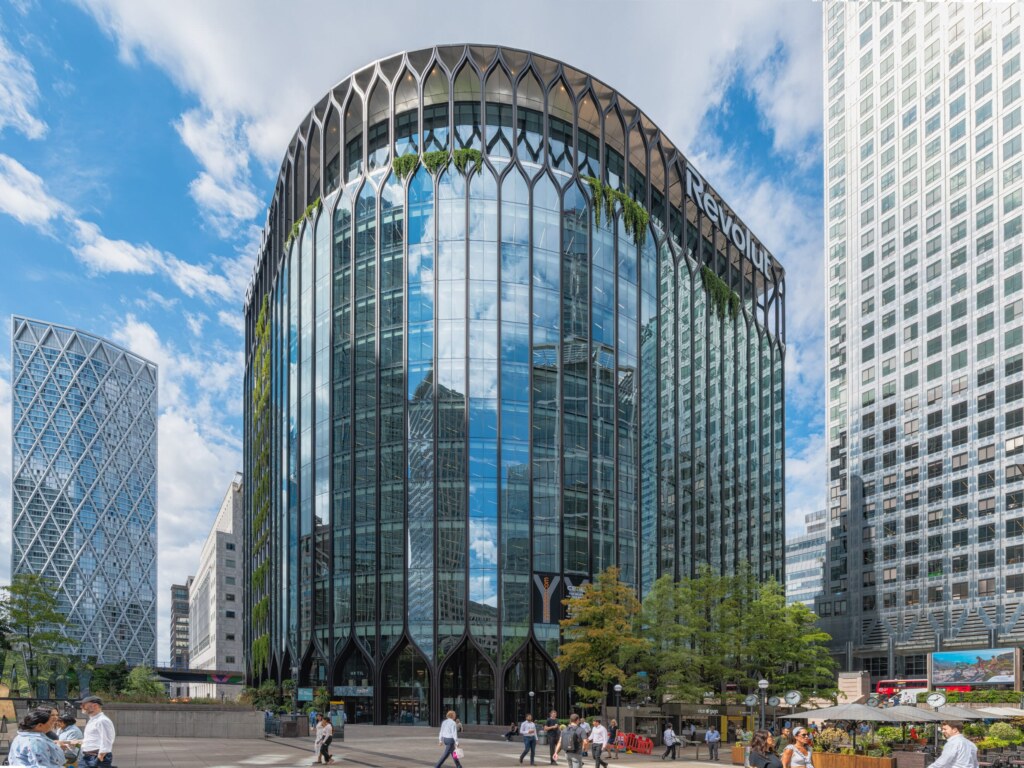
Wood Wharf has delivered the newest office stock on the estate, led by 30 South Colonnade (2023) and 20 Water Street (2021). Both offer BREEAM Outstanding credentials with generous outdoor space. Specification is built around resilience and sustainability rather than pure floor area. This is where occupiers with strong ESG commitments or a need for the very newest specification tend to look first.
-
-
Established Grade A towers
The majority of Canary Wharf’s stock sits in towers completed between 1991 and 2003. One Canada Square, 5 Canada Square and 10 Cabot Square are three well-known examples. These buildings offer the largest floorplates on the estate. In most cases, they’ve been substantially refurbished since completion. Rents here are generally lower than new-build Wood Wharf stock, reflecting age and specification rather than location.
-
-
Flexible and managed workspace
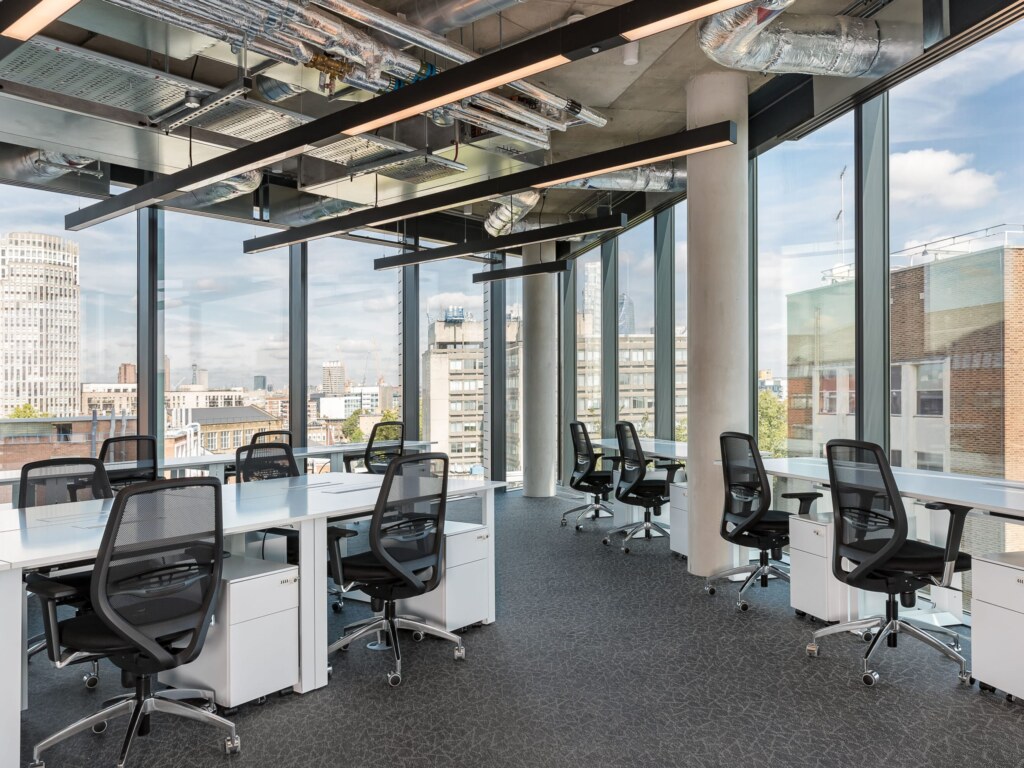
Canary Wharf Group’s MadeFor brand has leased 200,000 sq ft of managed space across 40 Bank Street and One Canada Square, and operators including Fora run substantial flexible space within several estate buildings. This suits businesses that want a Canary Wharf address without committing to a traditional lease, or that need to scale up or down as headcount changes.
-
-
Life sciences and lab-enabled space
Canary Wharf Group’s joint venture with Kadans Science Partner has already delivered a wet lab incubator at 20 Water Street. The wider North Quay masterplan is set to deliver what’s described as the largest private commercial lab in Europe from 2027. This is a genuinely new dimension for the estate, aimed at biotech and healthcare occupiers who would previously have looked elsewhere in London.
-

-
5 key office buildings in Canary Wharf
Canary Wharf’s office market is all about scale and connectivity with a building stock that now spans three decades of development. From the 1990s towers that established the estate to the newest Wood Wharf buildings, the range on offer is wider than most people expect.
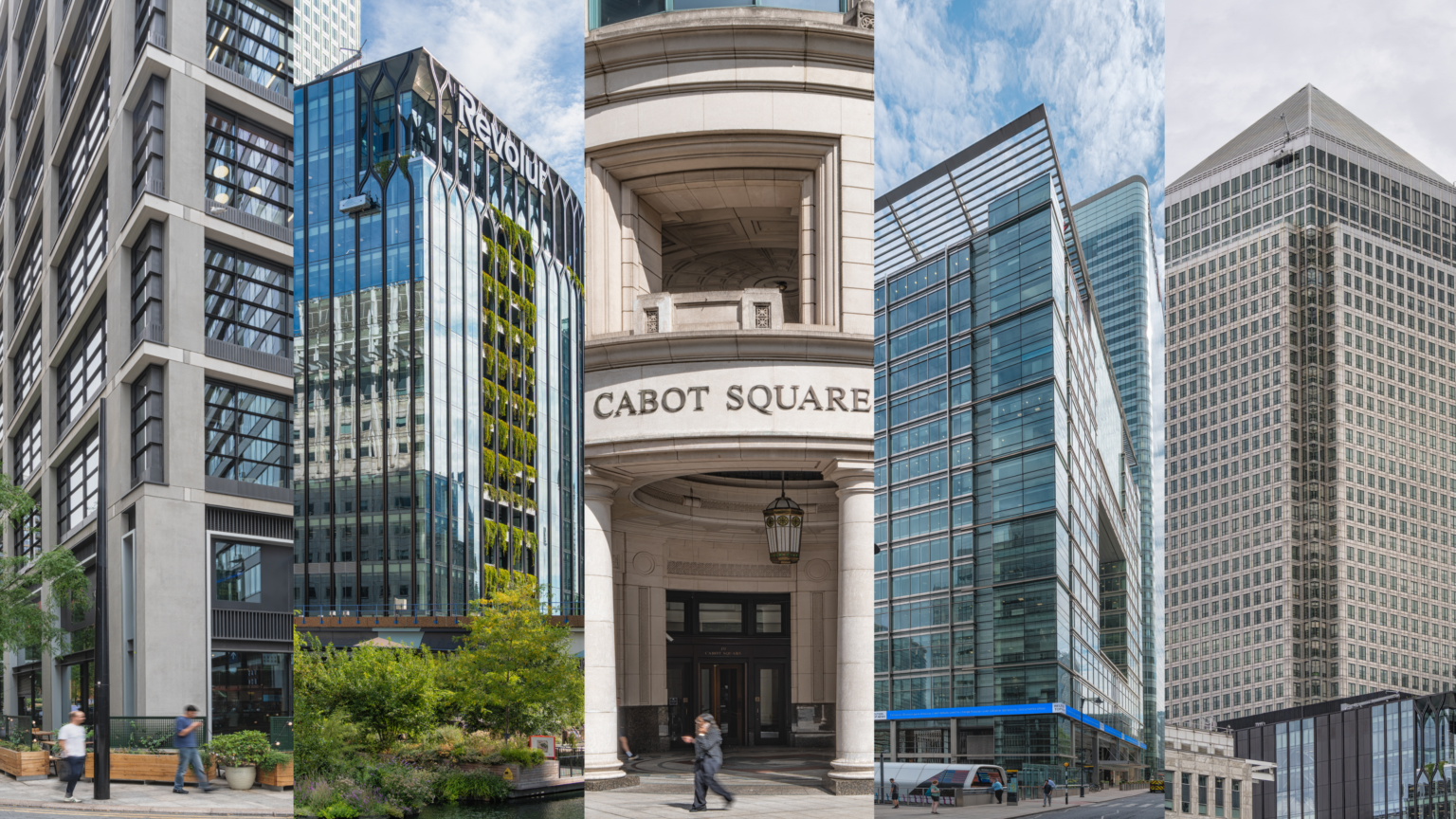
The following five buildings illustrate that variety, from landmark towers with some of the largest floorplates in London to newer developments that have brought a different kind of occupier to the estate.
-
1. 30 South Colonnade (YY London)
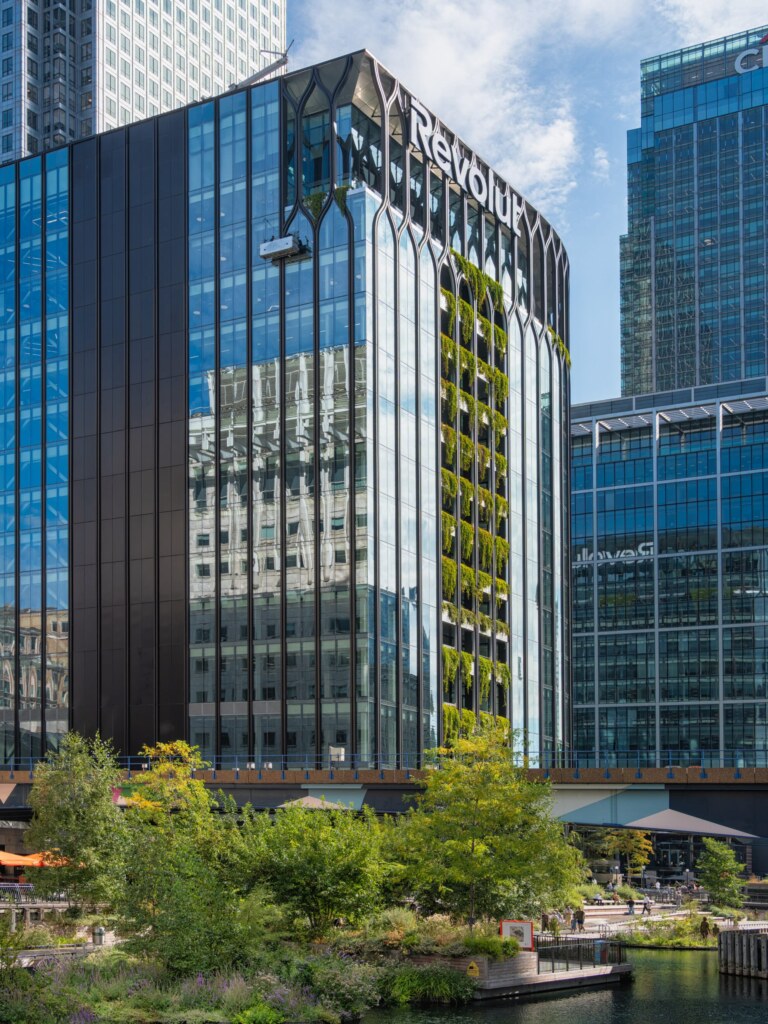
30 South Colonnade (known as YY London) is Canary Wharf’s newest large-scale office building, completed in 2023 on the South Colonnade waterfront in Wood Wharf. It’s owned by a partnership between Quadrant, Oaktree Capital Management and Cindat Capital Management, and leased through Knight Frank.
The building delivers 413,448 sq ft of 5-star office space over 17 floors, with typical floorplates of 24,320 sq ft. It holds a BREEAM Outstanding rating, which is still relatively rare in Canary Wharf. You might recognise its curved glazed façade, which has become a distinctive addition to the South Colonnade skyline.
Key facts
- Size: 413,448 sq ft NIA
- Floors: 17
- Built / Renovated: 2023
- Architect: Buckley Gray Yeoman
- Developer: Skanska UK plc
- Owner: Quadrant / Oaktree Capital Management / Cindat Capital Management
- Lease type: Traditional leasehold
- Accreditations: BREEAM Outstanding
- CoStar est. rent: £47 – 57/sq ft FRI
-
-
Why businesses choose it
- One of only a handful of BREEAM Outstanding buildings in Canary Wharf, combining new specification with the sustainability credentials that regulated financial services occupiers increasingly need.
- A genuine waterfront position on South Colonnade, with sweeping views across the dock and skyline from every floor, plus two new restaurants and a juice bar at ground level.
- A rooftop communal terrace and end-of-trip facilities for 300 cyclists, including 300 lockers and 30 showers. It’s among the most generous cycling provision in Canary Wharf.
- Revolut has taken 113,892 sq ft to 2035, anchoring the building and signalling confidence from fintech occupiers in the newest Canary Wharf stock.
Occupiers
Revolut is the anchor tenant on a lease running to April 2035, taking the majority of the building’s office space. Hitachi Rail, Big Mamma, Brother Marcus and Hagen Espresso occupy smaller office and ground-floor retail units. The building was around 41% leased at the time of writing, which means prospective occupiers still have rare access to a substantial contiguous block in a new-build Canary Wharf tower (up to 242,254 sq ft).
Features
As one of the newest large buildings on the estate, 30 South Colonnade gives occupiers a genuine alternative to the established towers around Canada Square. The waterfront position, cycling facilities and rooftop terrace speak to a different kind of occupier brief than the 1990s stock nearby – one focused as much on wellbeing and sustainability as on raw floor area.
-
2) 20 Water Street, Wood Wharf
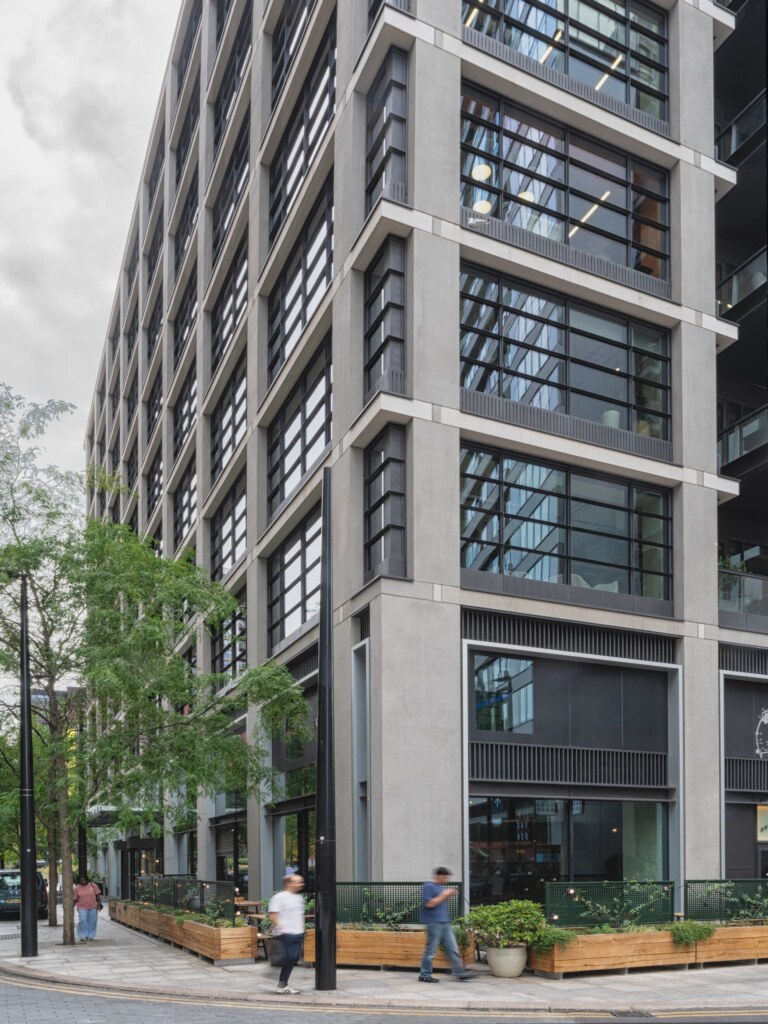
Designed by Allies and Morrison and completed in 2021, 20 Water Street is part of Wood Wharf. It delivers 232,457 sq ft over 14 floors, with retail space at ground level and a growing life sciences presence.
Canary Wharf Group has owned the building since 2024. It’s leased through Dowley Turner Real Estate and holds a BREEAM Outstanding rating.
Key facts
- Size: 232,457 sq ft NIA
- Floors: 14
- Built / Renovated: 2021
- Owner: Canary Wharf Group plc
- Developer: Canary Wharf Group plc
- Architect: Allies and Morrison
- Lease type: Traditional leasehold
- Accreditations: BREEAM Outstanding
- Asking rent: £59.50 – 62.50/sq ft FRI
-
-
Why businesses choose it
- 1:8 occupational density throughout, with dual power supply from two independent substations. The specification is built for occupiers with intensive space use or genuine resilience requirements.
- 7,534 sq ft of accessible terraces and balconies. More outdoor space than most Canary Wharf buildings of a similar size.
- Home to the Kadans Science Partner wet lab incubator, giving the building a genuine life sciences dimension ahead of the wider North Quay hub arriving in 2027.
- Canary Wharf Underground station is a five-minute walk, with resilient 5G and Wi-Fi built in throughout.
Occupiers
Zopa occupies 44,138 sq ft as the building’s largest office tenant, with JLL (38,800 sq ft, to March 2032) and life sciences occupier Kadans Science Partner (38,310 sq ft, to April 2038) also holding substantial space. Hireright Ltd and AviadoBio occupy smaller floors, alongside six further tenants. The mix of fintech, professional services and life sciences occupiers reflects Wood Wharf’s broader positioning as a more diverse district than the original estate.
Features
20 Water Street’s design draws on the site’s dock heritage, forming part of the first phase of Wood Wharf’s wider mixed-use development. Flexible lease terms are available direct from Canary Wharf Group, and the building’s life sciences tenant gives it a distinct identity within the wider Wood Wharf office stock.
-
3) One Canada Square
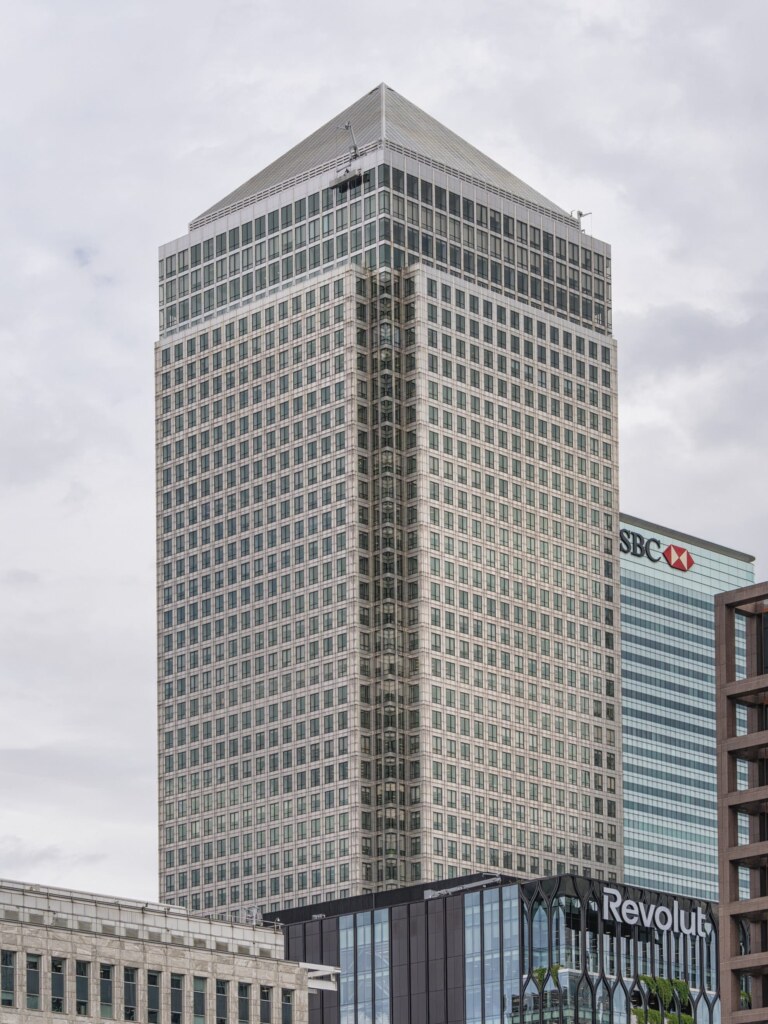
One Canada Square has been the centrepiece of the Canary Wharf estate since it completed in 1991. Rising to 800ft with its distinctive pyramid roof, it remains one of the most recognisable buildings on the London skyline. Owned by the Qatar Investment Authority and managed by Canary Wharf Group, it’s the largest building in this guide by a significant margin.
The tower delivers 1,244,834 sq ft of office space, with an average floor plate of 28,000 sq ft. It’s 86.1% leased across a genuinely diverse occupier base spanning finance and education alongside flexible workspace.
Key facts
- Size: 1,244,834 sq ft NIA
- Floors: 48
- Completed: 1991
- Architect: Cesar Pelli & Associates
- Developer: Canary Wharf Group plc
- Owner: Qatar Investment Authority
- Lease type: Traditional leasehold
- Height: 800ft (244m), with a 130ft pyramid roof
- CoStar est. rent: £65.00 – 70.00/sq ft (asking)
-
-
Why businesses choose it
- London’s most recognisable office tower, with 35 lifts including three firefighting lifts and 24-hour access. It’s built for occupiers who need scale and continuous operation.
- Home to Level39, described as the world’s most connected tech community. It comprises over 1,250 leaders across fintech, cyber security and green tech with £795m invested into member companies to date.
- Recently refurbished levels 47 and 48 deliver some of the best views in London, part of Canary Wharf Group’s ongoing programme of upgrading the tower’s upper floors.
- Canary Wharf Group’s own managed workspace brand, MadeFor has leased 200,000 sq ft across this building and 40 Bank Street. It gives occupiers a flexible route into the tower without a traditional lease.
Occupiers
UCL School of Management anchors the building with 146,413 sq ft to February 2031, alongside:
- Fisher Investments (82,797 sq ft, to June 2030)
- Flexible workspace operator Fora (81,864 sq ft)
- BBVA (58,322 sq ft, to December 2031)
- Reach (55,972 sq ft, to June 2028)
A further 43 tenants occupy the remaining space, spanning education, financial services, media and flexible workspace. In short, One Canada Square is one of the most genuinely diverse multi-let buildings on the estate.
Features
Few buildings in London carry the same recognition as One Canada Square. For occupiers, that profile comes with genuine practical advantages. They benefit from continuous operation and an exceptionally diverse neighbouring occupier base. Not to mention direct access to Level39 and MadeFor if businesses want flexibility alongside a traditional lease.
-
4) 5 Canada Square
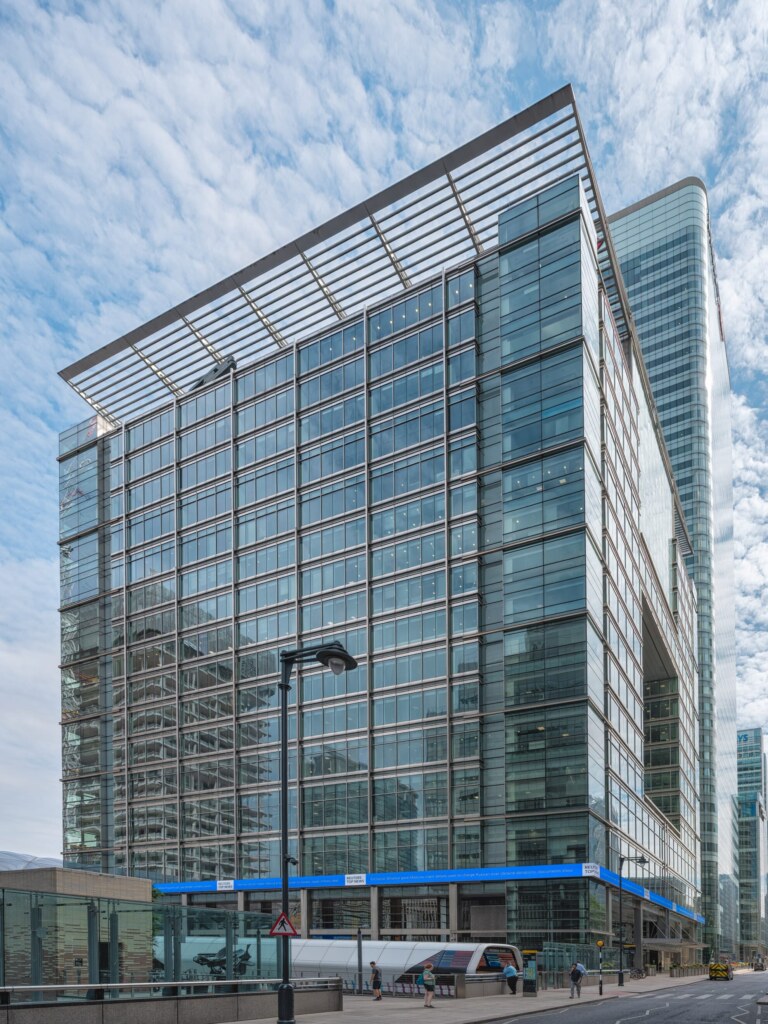
Completed in 2003, 5 Canada Square sits on the west side of the square between North and South Colonnade. It’s one of the most central addresses on the estate, owned by St Martins Property Group since it was acquired for £383 million in January 2013.
The building delivers 479,674 sq ft over 15 floors, with typical floorplates of around 35,755 sq ft and a large full-height atrium on its south side.
Key facts
- Size: 479,674 sq ft NIA
- Floors: 15
- Completed: 2003
- Architect: Skidmore, Owings & Merrill
- Owner: St Martins Property Group
- Lease type: Traditional leasehold
- Height: 288ft
- CoStar est. rent: £35 – 43/sq ft FRI
-
-
Why businesses choose it
- Anchored by Thomson Reuters and LSEG, two of the most significant financial data occupiers in Canary Wharf, both committed on leases to October 2027.
- A large full-height atrium brings natural light deep into the floorplates, which is unusual for a building of this scale and era.
- Up to 122,313 sq ft of contiguous space available, split flexibly from 12,787 sq ft.
- A genuinely central position between North and South Colonnade, a few minutes’ walk from Canary Wharf Underground, DLR and the Elizabeth line.
Occupiers
Thomson Reuters occupies the largest share of the building, with LSEG also holding substantial space. Both are committed on leases running to October 2027, giving 5 Canada Square one of the more stable, long-dated occupancy profiles of any building in this guide.
Features
The building’s steel frame construction and full-height atrium were unusual for their time, and the covered parking (67 spaces) is a genuine practical advantage for senior teams. Its position at the centre of the estate, between the two Colonnades, is hard to match for occupiers who want to be at the heart of Canary Wharf.
-
5) 10 Cabot Square
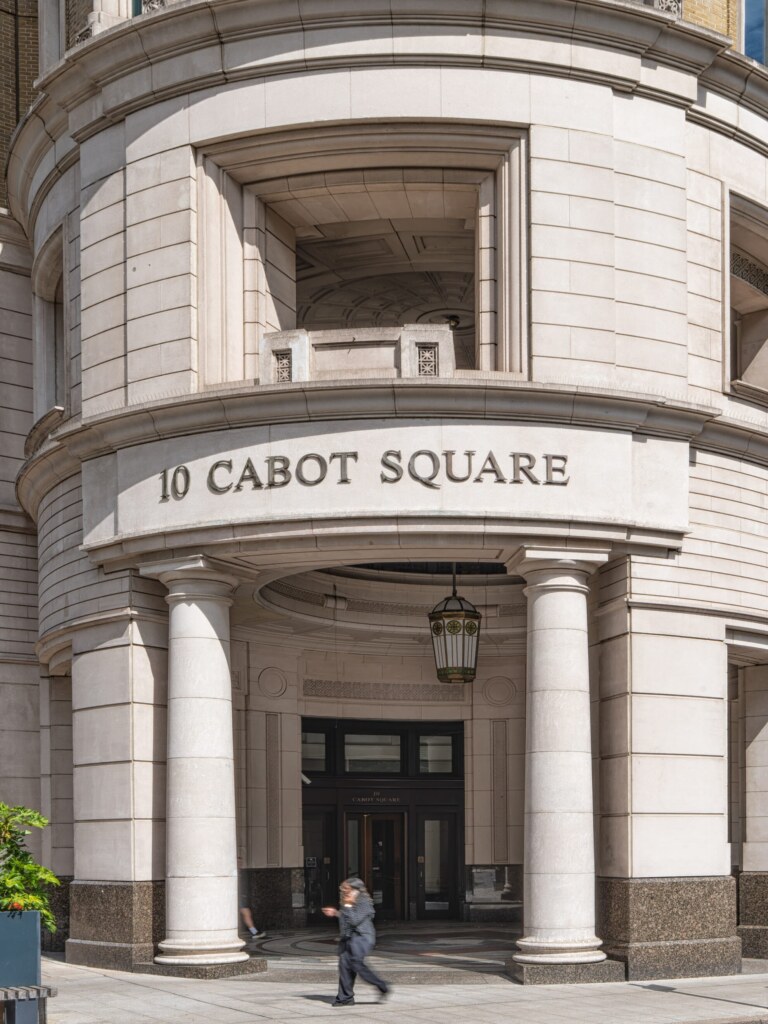
Completed in 1991, 10 Cabot Square is a Grade A listed office building on the western edge of the Canary Wharf estate. Canary Wharf Group has owned and managed the building since 2005, which fronts directly onto the water at Cabot Square.
The building delivers 576,108 sq ft over 11 floors, with typical floorplates of 51,694 sq ft. Rather than a conventional office letting, its ground and lower floors have been prepared as a dining and leisure destination, while the upper floors are currently being prepared for future office use.
Key facts
- Size: 576,108 sq ft NIA
- Floors: 11
- Completed: 1991
- Architect: Skidmore, Owings & Merrill
- Owner: Canary Wharf Group plc
- Lease type: Traditional leasehold
- Height: 243ft
- CoStar est. rent: £37 – 46/sq ft FRI
-
-
Why businesses choose it
- A genuine landmark on Cabot Square, with a waterfront position and Grade A listed status that’s rare among Canary Wharf’s 1990s stock.
- The ground floor has become one of the estate’s most notable leisure destinations. It’s home to Fairgame, The Cocktail Club, Blacklock and Electric Shuffle among others.
- Typical floorplates of 51,694 sq ft are among the largest in this guide. They’re ideal for occupiers who need genuine scale on a single floor.
- A direct waterfront position at Cabot Square, with immediate access to Canary Wharf Underground and DLR stations.
Occupiers
The building’s leisure and dining occupiers (Fairgame, The Cocktail Club, Blacklock and Electric Shuffle) reflect Canary Wharf’s wider push to diversify its ground-floor offer beyond traditional retail. The upper office floors are currently being repositioned, which gives prospective occupiers an unusual opportunity. They can secure a substantial, single-let presence in a landmark waterfront building at a formative stage of its next chapter.
Features
10 Cabot Square shares its architect with One Canada Square and 5 Canada Square, giving it a design heritage that connects three of the estate’s most significant buildings. Combined with its ongoing repositioning, its waterfront position on Cabot Square makes it one of the more distinctive opportunities covered in this guide.
-
Key considerations
Canary Wharf offers a compelling combination of modern infrastructure and transport connectivity that few London submarkets can match. But it isn’t the right choice for every business, and the estate’s size means the differences between buildings (age, specification, rent and character) are more significant than they might appear from the outside. Understanding those differences is essential before committing to a shortlist.
The Elizabeth line has changed the connectivity calculation
Canary Wharf’s Elizabeth line connection puts Heathrow 45 minutes away and the City seven. For businesses whose teams travel widely, this has materially improved the estate’s competitive position against the West End and City. The same is true for those that need to attract talent from across London.
Canary Wharf offers scale that’s hard to match elsewhere in London
Typical floorplates across the buildings in this guide range from around 24,000 sq ft at 30 South Colonnade to over 51,000 sq ft at 10 Cabot Square. Additionally, One Canada Square can accommodate occupiers across hundreds of thousands of square feet in a single building. Businesses that need genuine scale on one or two floors will struggle to find equivalent options in the City or West End.
-
Canary Wharf can offer a different cost equation to many central London locations, particularly for businesses looking for high-specification space at scale. Oktra’s London Office Rent Report puts current rents into context, helping you understand how far your budget could go across the capital.
Download now -
-
The estate’s amenity offer has changed considerably
Canary Wharf is no longer a place that empties out after work. Over 30 new restaurants have arrived in recent years, along with expanding hotel provision, new parks, waterside boardwalks and leisure activities. For businesses weighing Canary Wharf against the West End on amenity alone, the gap has narrowed significantly.
Rents span a wide range depending on building age and specification
Estimated rents in this guide run from around £35–46/sq ft in established 1990s and 2000s towers up to £59–62/sq ft at Wood Wharf’s newest buildings and £65–70/sq ft asking at One Canada Square’s best space. Almost all of these buildings sit within a few minutes’ walk of each other, so the gap reflects specification and age rather than location.
-
Office space calculator
Canary Wharf’s large, efficient floorplates create plenty of options for businesses planning at scale. Use Oktra’s Office Space Calculator to work out the footprint your team needs and start your search with a clearer brief.
Try it out -


-
Alternative areas to Canary Wharf for office space
The City of London offers a comparable concentration of financial and professional services occupiers, with smaller floorplates on average but a longer-established reputation and marginally better connectivity to the West End.
To the north, Stratford offers newer building stock and strong transport via the Elizabeth line and Jubilee line, generally at lower rents than Canary Wharf. It’s an option for businesses that want modern space and good connectivity without the Canary Wharf address.
Further east, the Royal Docks and Greenwich Peninsula offer emerging office districts with significant new development. You get strong river and DLR connections, plus lower rents than Canary Wharf, but with a less established occupier base.
Elsewhere, London Bridge and Southwark offer a different kind of scale, with strong City and West End connectivity and a more varied mix of building ages and specifications.
Not settled on a location? Oktra’s London area guide compares the main submarkets by sector, character and cost.
-
-
Canary Wharf office space FAQs
-
 What kind of businesses are based in Canary Wharf?
Canary Wharf has traditionally been dominated by banking, financial services and professional services firms. That base remains strong, but the estate has diversified considerably. Technology companies, life sciences businesses, media organisations and flexible workspace operators have all taken significant space in recent years. The arrival of UCL’s School of Management and a growing life sciences cluster point to further diversification ahead.
How much does office space in Canary Wharf cost?
Estimated rents across the buildings in this guide range from around £35/sq ft in established towers to £70/sq ft asking in the best space at One Canada Square. Service charges typically run from £9 to £13.50/sq ft. A full breakdown is available in Oktra’s London office cost guide.
Is Canary Wharf well connected for public transport?
Yes. Canary Wharf station serves both the Jubilee line and the Elizabeth line, with Heathrow reachable in 45 minutes and Liverpool Street in seven. Heron Quays, Canary Wharf, West India Quay and Poplar DLR stations add further connections, and Thames Clipper river bus services run along the Thames to the City and central London.
Are there large office buildings in Canary Wharf?
Yes, Canary Wharf has some of the largest office buildings in London. One Canada Square alone delivers over 1.2 million sq ft, and typical floorplates across the estate regularly exceed 25,000 sq ft. This makes Canary Wharf one of the few London submarkets that can comfortably accommodate very large single occupiers.
How does Canary Wharf compare to the City of London for offices?
Canary Wharf offers larger floorplates and generally lower rents than the City, along with more modern infrastructure in its newest buildings and a more contained, campus-like environment. The City offers greater density of financial and legal occupiers, plus a longer history as London’s financial centre and marginally better connectivity to some parts of London. The right choice often comes down to whether a business prioritises scale and efficiency or the City’s traditional prestige and density.
-
 What kind of businesses are based in Canary Wharf?
-
Contact us
Get in touch to discuss your potential office space costs
020 7553 9500
info@oktra.co.uk
-
"*" indicates required fields
Related content
-
Want updates on similar new content? We’ll send you an email a month with new insights when you join our mailing list.
JOIN THE LIST
