

Share

min read

Senior Content Manager
Content specialist in office design and build.
-
The artificial intelligence boom is here, with the sector experiencing an historic expansion and a record-breaking number of companies receiving funding to advance their technology.
With products evolving fast and teams quickly expanding, the workplace needs to keep pace. That creates a particular challenge for companies operating in a sector where growth can be rapid and difficult to predict – a factor that is already having a significant impact on London’s office market.
A workplace designed around today’s headcount can quickly run out of space. A layout built around one way of working might hold teams back as priorities change. And an office that focuses too heavily on desks could miss the experiences that make people want to come together in person.
There’s no single blueprint for an “AI office”. Instead, fast-growing businesses in the AI sector need workplaces that can respond to the realities of their growth. We’ve put together seven of the top priorities that AI companies should consider to enable and support growth.
-
1. Plan for the future, not just today’s headcount
Headcount is rarely a fixed number for a growing AI company. Teams expand as new functions appear and organisational structures change as the business moves through different stages of growth.
That makes designing an office around today’s employee numbers particularly risky. By the time a new workplace is complete, the assumptions behind the original brief could have changed.
Instead, workplace planning should consider a range of potential growth scenarios:
- What happens if a team doubles in size?
- What happens if the business adds a new product function or significantly expands its commercial team?
- What if growth is slower than expected?
-

-
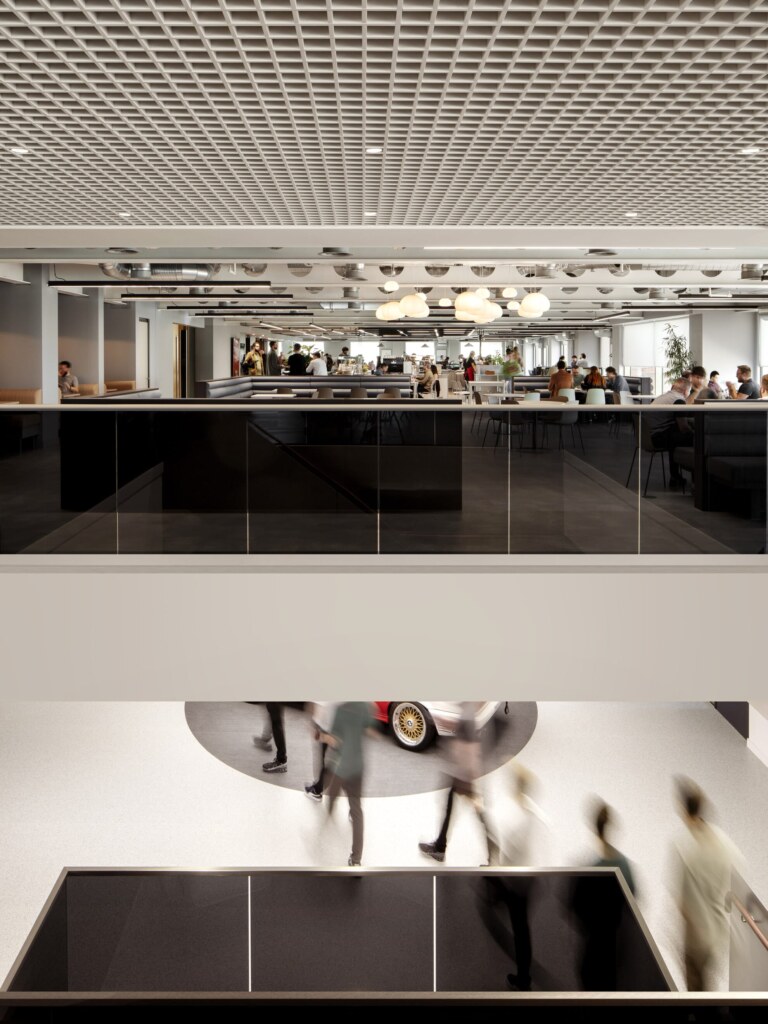
You might assume the answer is to build the largest possible office. However, oversizing creates its own problems, particularly when parts of the workplace are left underused. The goal is to create enough capacity and adaptability to respond to different outcomes.
This is where workplace strategy and space planning become valuable. Rather than simply calculating how many desks are required, businesses can consider how much space they really need. Doing so factors in how it will be used and how those requirements could change over time.
An office space calculator is a useful starting point, but it shouldn’t replace the longer-term thinking we’ve mentioned above. Remember, the right workplace needs to support the business as it grows.
-

-
2. Balance focus and collaboration
Most AI businesses bring together people with very different working requirements. For example:
- An engineer or data scientist spending significant periods working through complex problems that require concentration and minimal interruption.
- A product team moving between individual work, workshops and project meetings.
- Commercial and leadership teams putting a greater emphasis on conversations and presentations along with relationship-building.
- Treating all of these activities in the same way can create unnecessary friction.
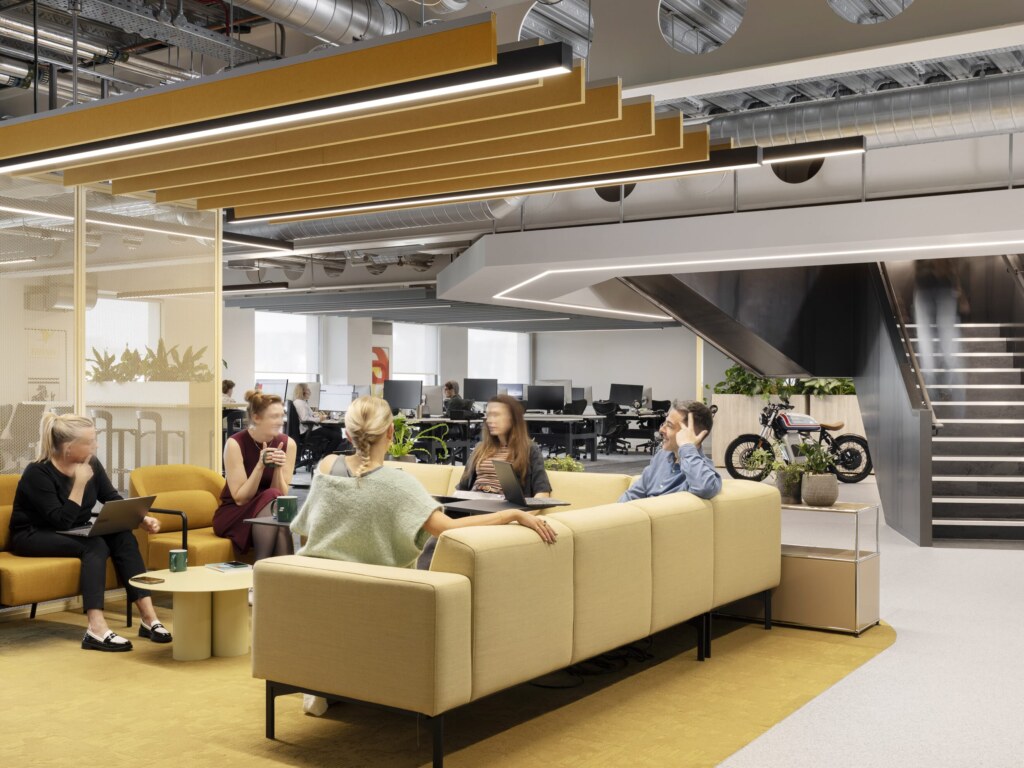
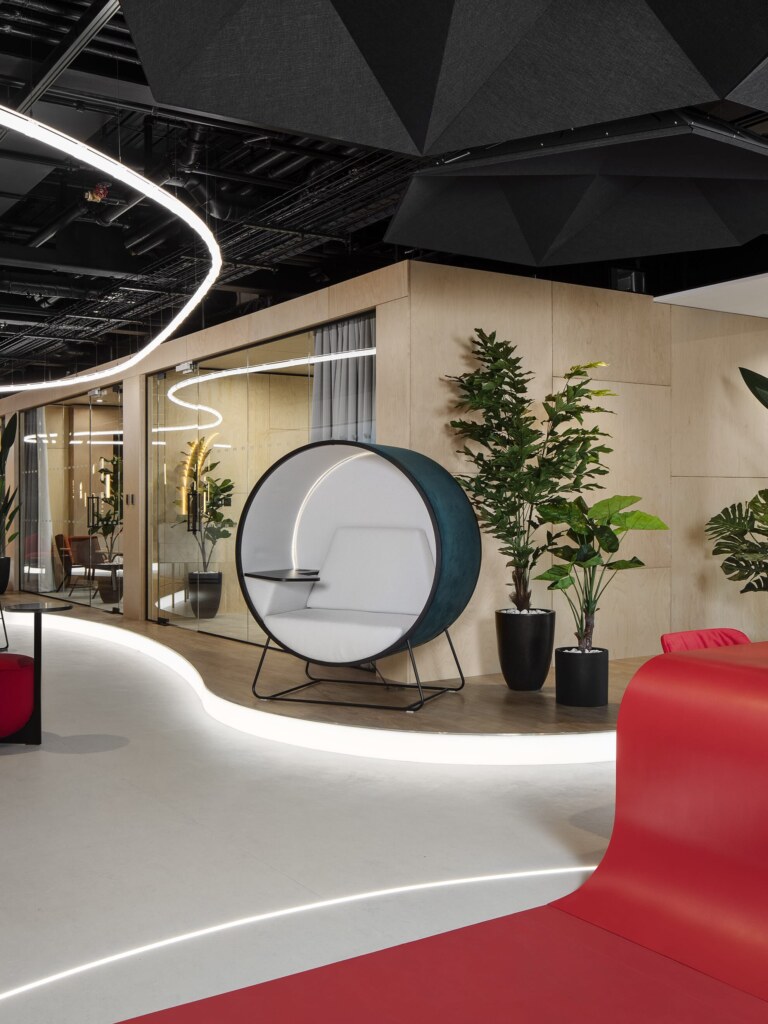
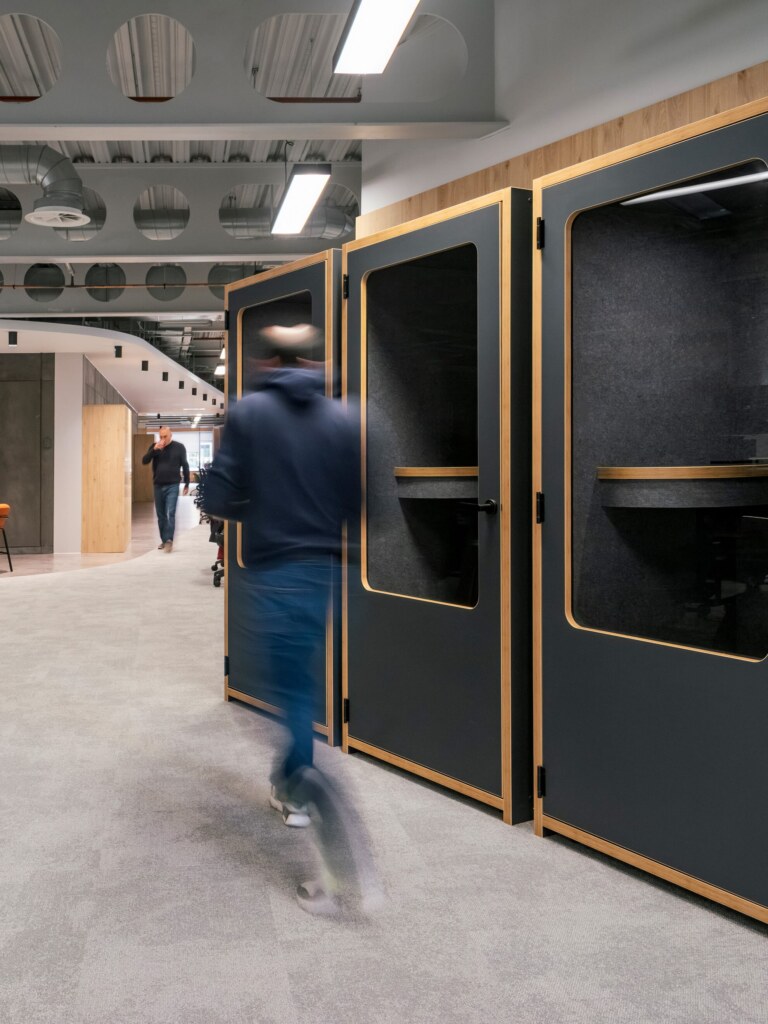
A successful workplace should provide a range of environments that support different modes of work. That might include:
- Areas for focused individual work
- Spaces for project teams
- Formal meeting rooms
- Informal collaboration settings
- Social areas where people can connect away from their immediate tasks
The important point is that these spaces shouldn’t exist as isolated categories. People need to move between them throughout the day.
The office should make that transition easy, giving employees enough choice to find the right environment for the task in front of them. That flexibility is particularly important for fast-growing AI companies, where teams and working patterns rarely stay fixed.
-
3. Build flexibility into the workplace
All too often, flexibility is used as a codeword for movable furniture. True workplace flexibility goes much further.
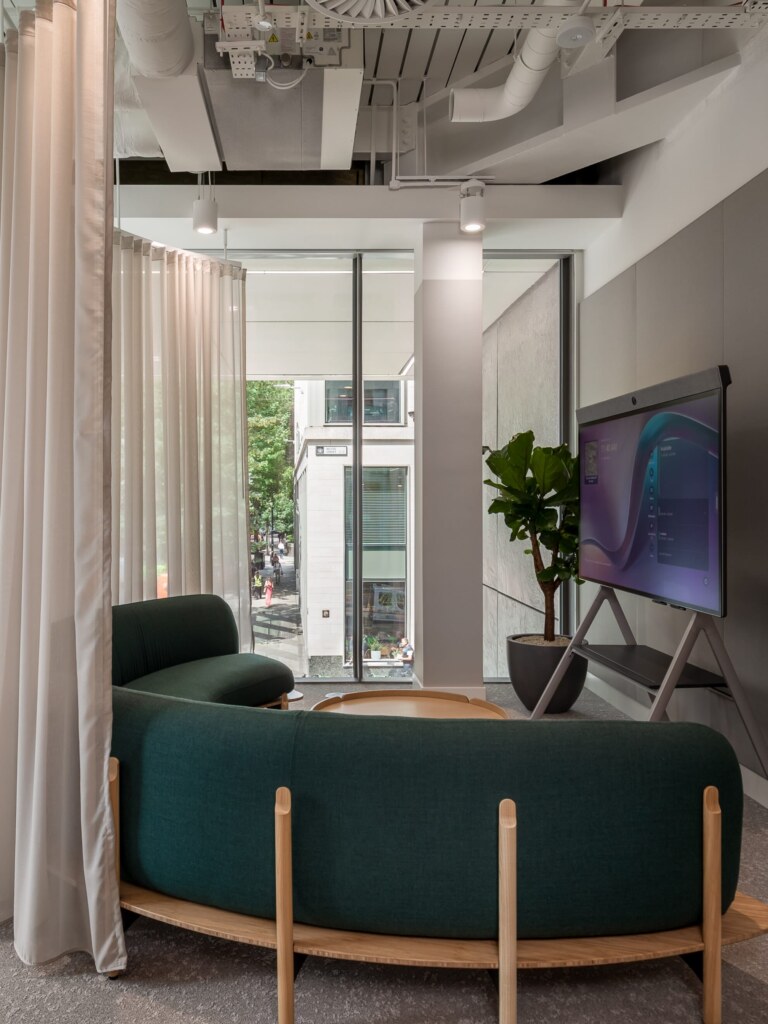
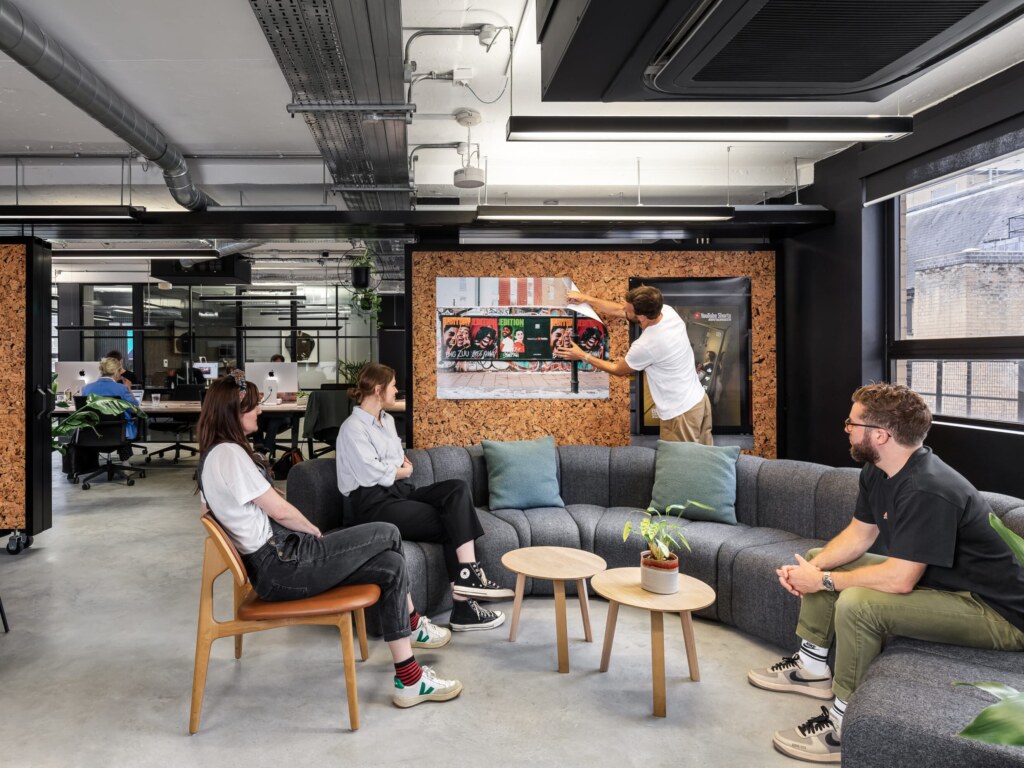
The ability to change the physical environment without undertaking another major redesign holds serious value for growing businesses. This includes adaptable layouts, modular furniture and multipurpose spaces, which all help a workplace respond to changing requirements. For example:
- A meeting room might be designed to support team workshops as well as formal meetings
- A collaboration area could accommodate project work, training or company-wide sessions
- Furniture and partitions can be selected with future reconfiguration in mind rather than treating the initial layout as permanent
-
-
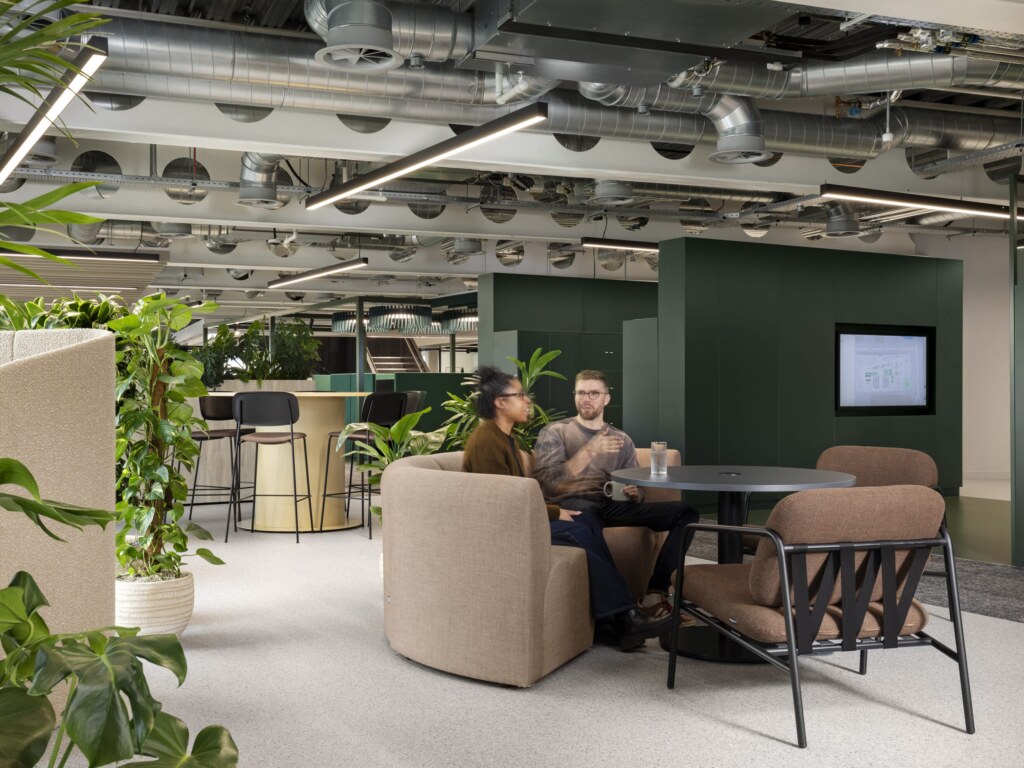
Infrastructure is just as important. Power, data, AV and connectivity need to support changes to the workplace rather than locking teams into a particular configuration.
This is why flexible office design should be considered at both a spatial and technical level. Aside from making today’s office seem flexible, the objective is to make tomorrow’s changes easier.
That adaptability can help extend the useful life of a workplace and reduce the need for repeated disruption. This is particularly relevant for AI businesses, where team structures and technology can evolve quickly.
-
-
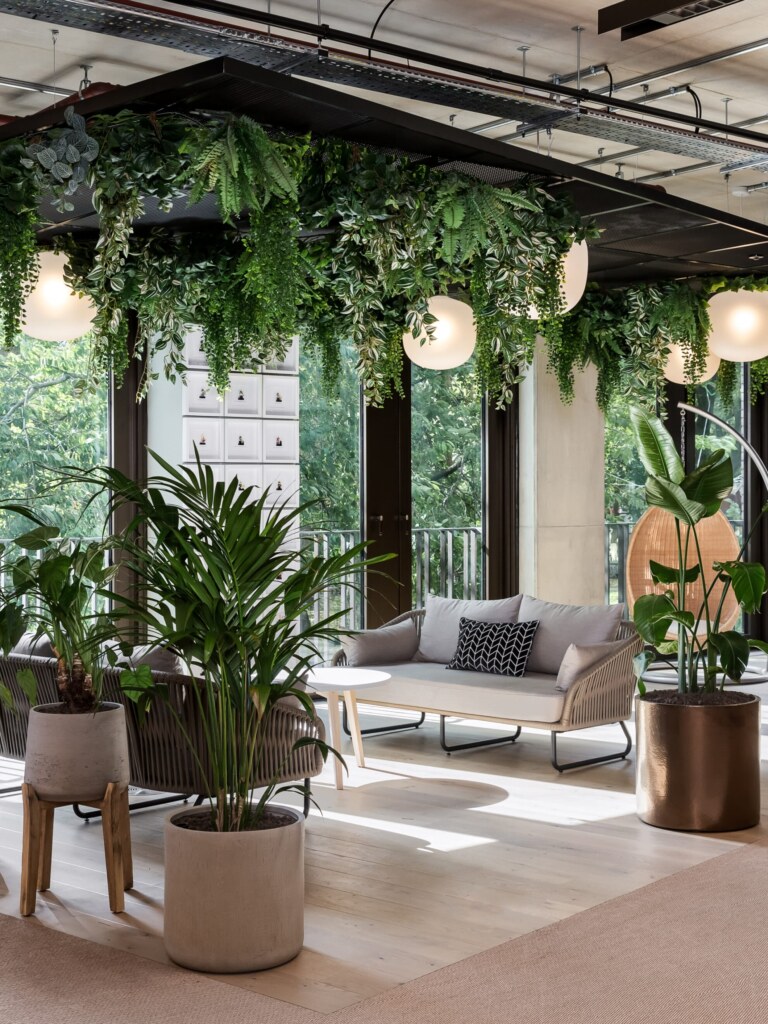
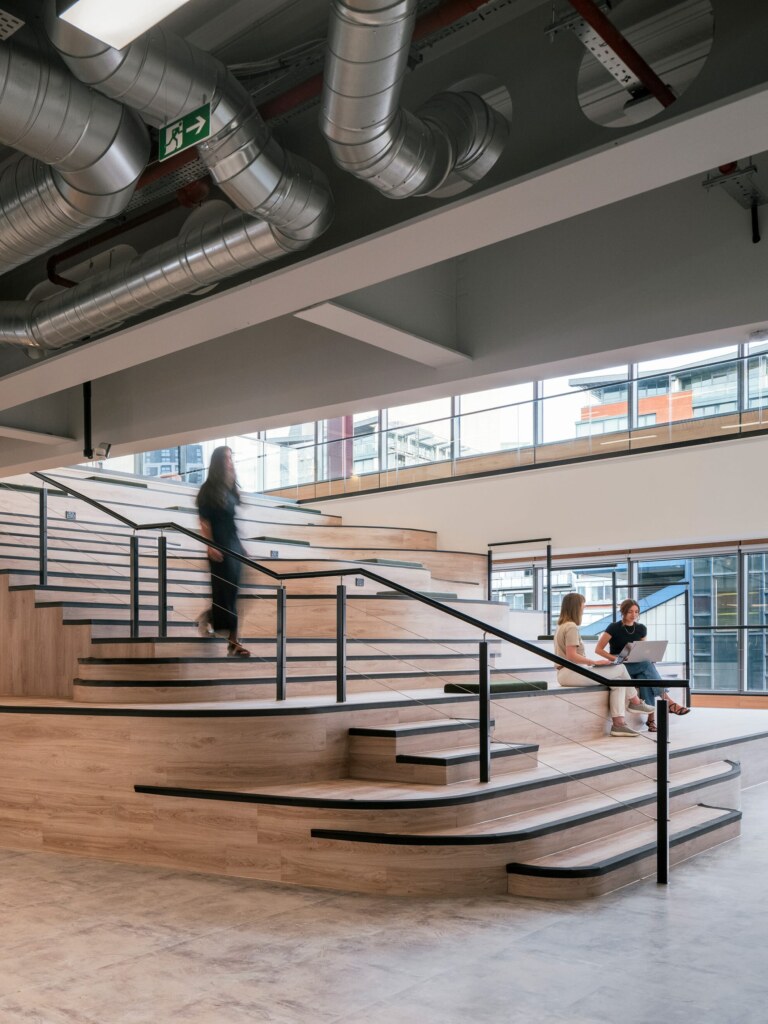
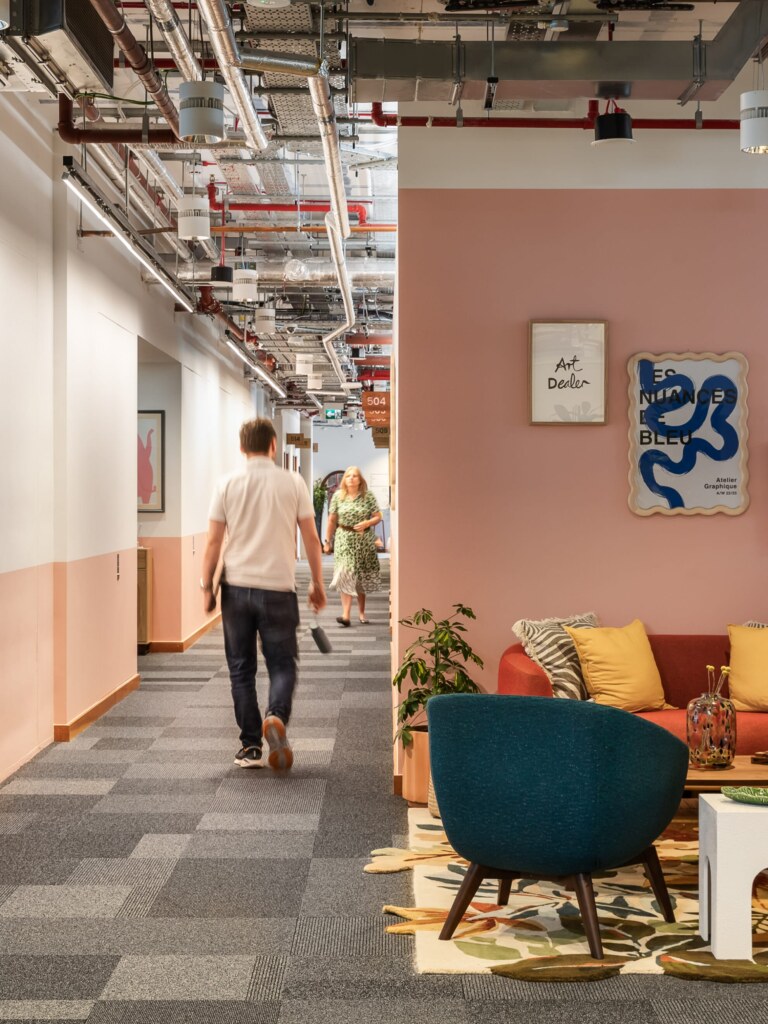
4. Make the workplace work harder for talent
AI companies compete for highly specialised talent, and the working environment is a key differentiator. In fact, 56% of employees said they would turn down a job offer if the workplace environment wasn’t up to their standards.
Of course, we’ve all seen offices that are filled with gimmicks or designed around the latest workplace trend. But what’s more important is understanding what employees actually value from being there.
It’s all about creating a positive employee experience, particularly in the age of hybrid working. In short, offices need to provide something that’s difficult to replicate at home.
Quality spaces for concentration matter, as do opportunities to build relationships through collaborating and learning from colleagues. Wellbeing and access to a variety of environments all play a part too, shaping how people experience their working day and what draws them back to the office by choice.
The key is to make those choices purposeful. A workplace designed around people’s real needs is more likely to support attraction and retention than one that simply tries to look like a technology workplace.
-
5. Create spaces that strengthen culture
Rapid growth brings another challenge: maintaining a sense of culture as more people join the organisation.
In a small company, culture can develop organically through everyday interactions. As headcount increases, those interactions become harder to maintain. New employees might only work a small proportion of their colleagues, while established teams can become increasingly focused on their own projects.
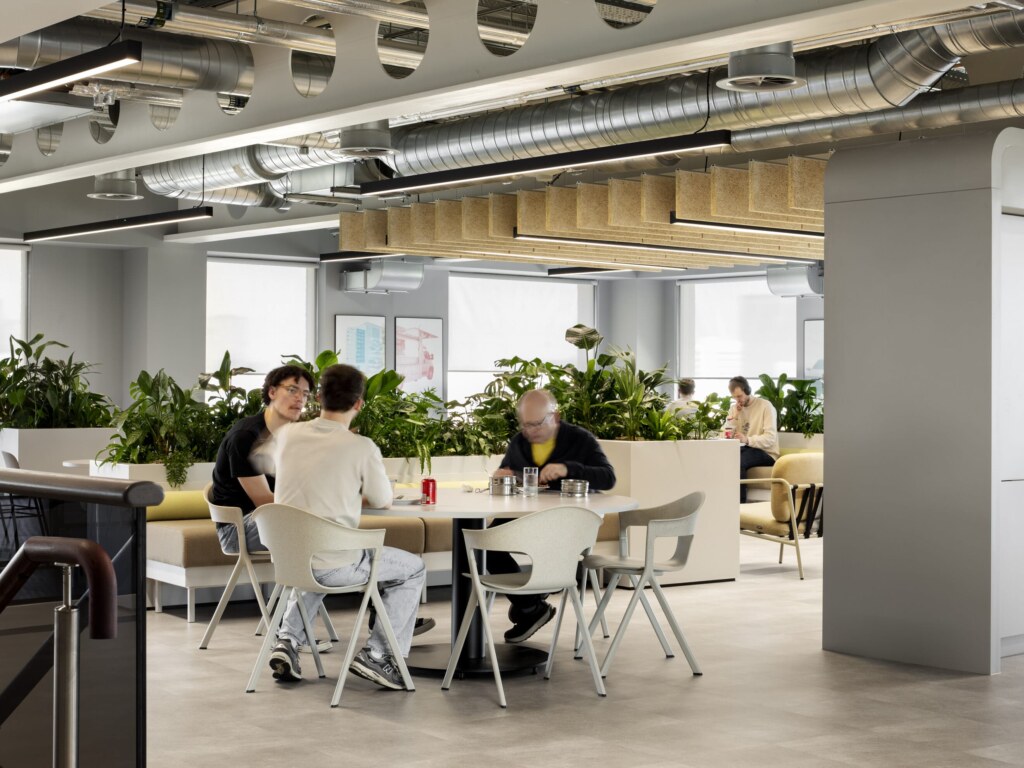
Fortunately, you can use the workplace to create opportunities for people to connect beyond their immediate teams.
-
-
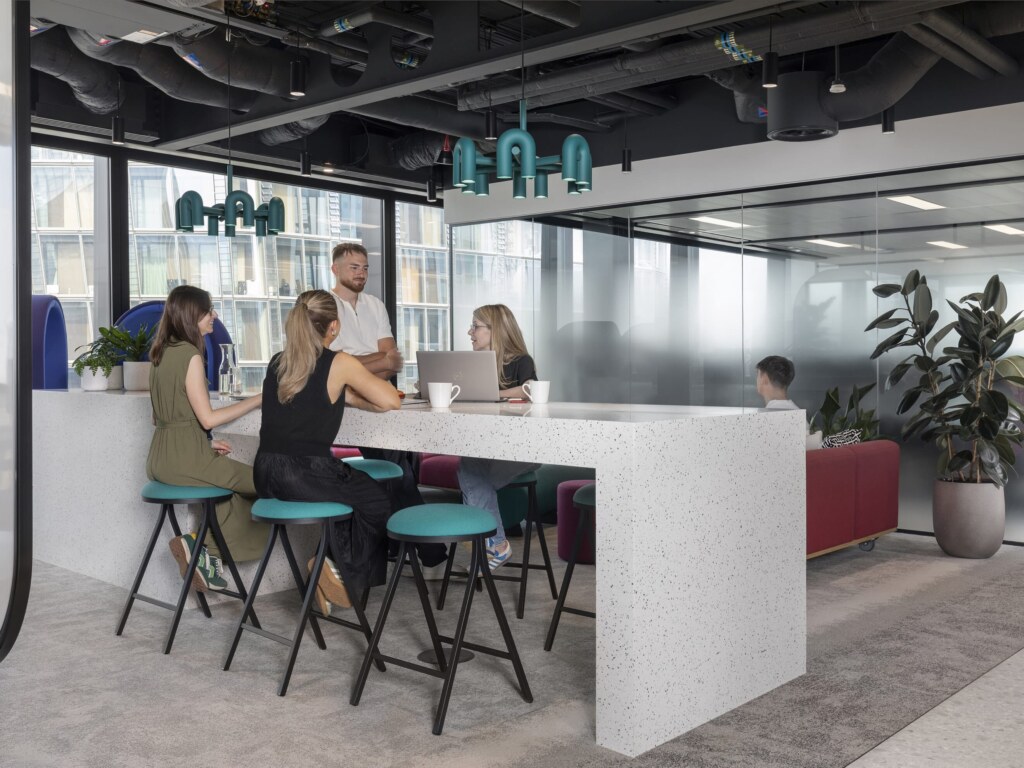
Social and collaborative spaces encourage conversations that wouldn’t necessarily happen through scheduled meetings. Additionally, you can place core spaces and amenities strategically to encourage greater movement. In doing so, you’re supporting behaviours that help culture develop. Think connection, knowledge sharing, collaboration and informal interaction.
That becomes particularly important as AI companies grow beyond their original team. A well-designed workplace will help new employees understand how the organisation works and give established employees more opportunities to connect with people outside their immediate circle.
-
-
6. Prioritise experience over desk density
At its most basic, workplace efficiency gets reduced to one question: how many desks can fit into the available space? However, the more useful question is what employees need the office to help them do.
If people come in to collaborate, meet clients, solve complex problems, learn from colleagues and build relationships, then those activities need to be reflected in the allocation of space.
Maximising desk numbers often comes at the expense of meeting, collaboration, focus and social environments. The result is a workplace that’s technically efficient but poorly suited to how people use it.
-
How much office space do you need?
Use Oktra’s Office Space Calculator to quickly estimate your ideal workspace size based on your team and requirements. Get a tailored estimate in just a few clicks and start planning a space that works for your business.
Get started -

-
Occupancy data can help inform this process, but it needs to be interpreted alongside employee behaviour and working patterns to influence the right balance. This includes peak attendance alongside different team requirements and the types of activities taking place.
This is where workplace consultancy adds useful insight. By understanding how an existing workplace operates and where its limitations lie, businesses can make more informed decisions about what space they truly need.
The answer could actually be fewer desks and more variety. Or it might be a different balance altogether. There’s no universal ratio that will work for every AI company.
-
7. Design for continued change
It’s important to remember that change is practically a constant feature for fast-growing AI companies.
Technology will develop. Products will evolve. Teams will restructure. New roles will emerge. Working patterns could change again. Even the way people use the office can shift as the organisation matures.
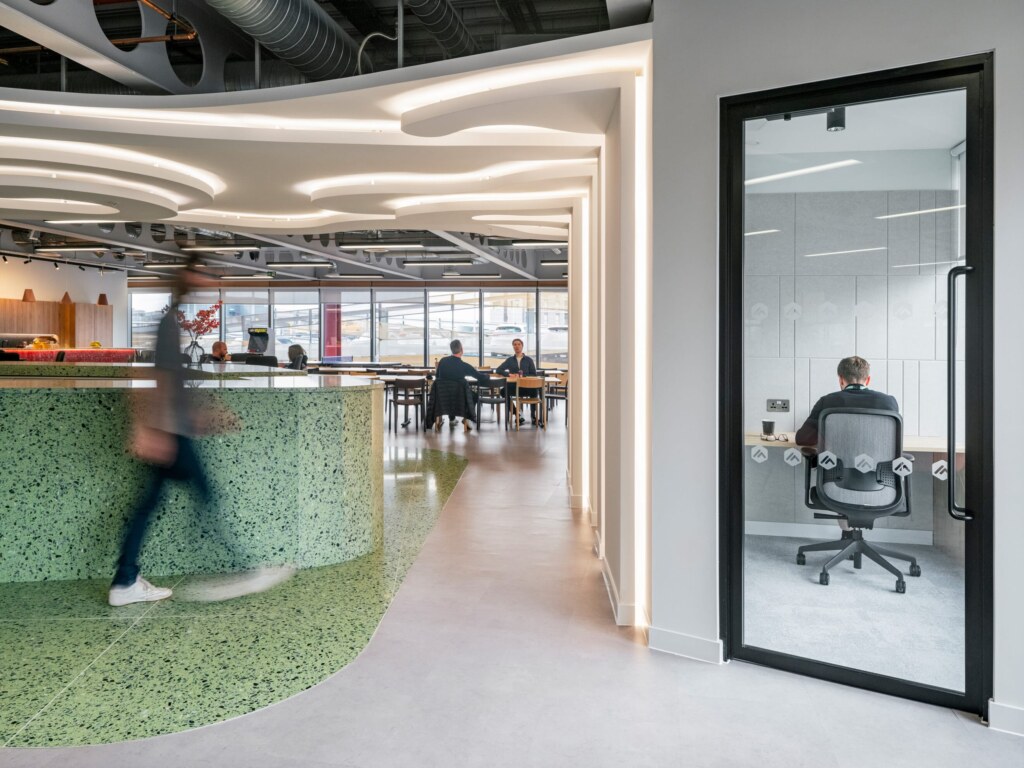
That makes future-proof office design less about predicting exactly what the workplace will look like in five years and more about creating an environment capable of responding when circumstances change.
-
-
That can include adaptable furniture and layouts, but it also means thinking about infrastructure, technology, space planning and your property strategy from the outset. Put simply, the most resilient workplaces give businesses options.
For example:
- Allowing a team area to become a larger project space
- Designing infrastructure that can support different configurations
- Creating multipurpose environments that can take on new roles as the business develops
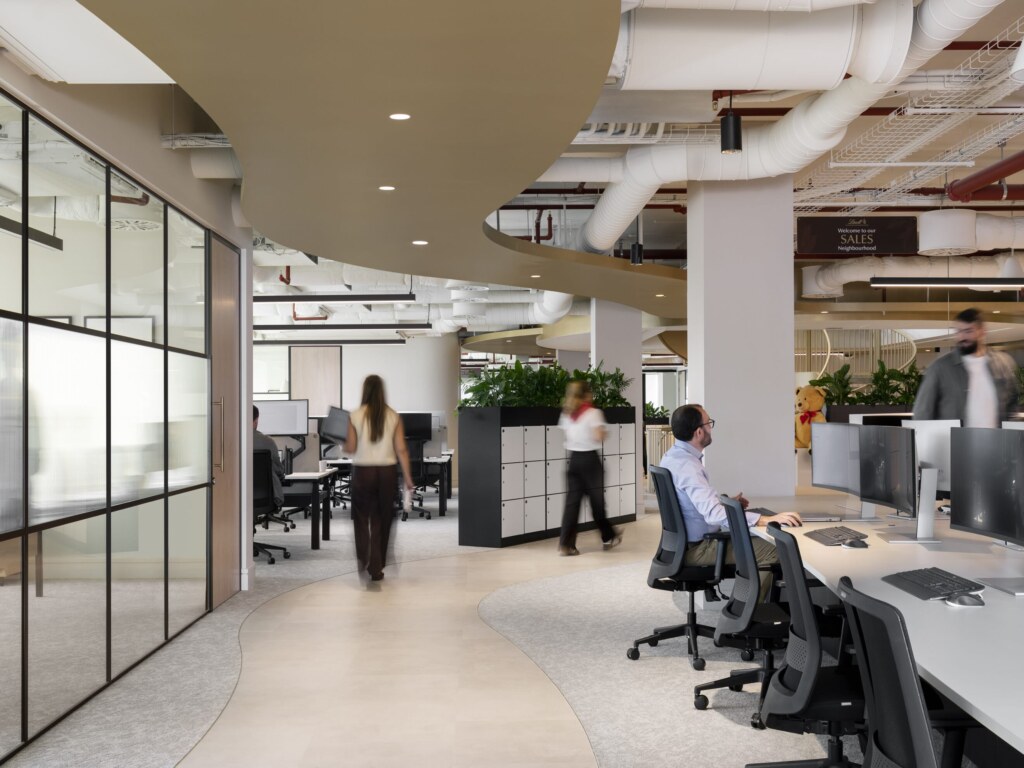
This is one reason workplace strategy should happen before design decisions are fixed. Understanding the likely direction of travel allows businesses to make choices that work today while retaining enough flexibility for tomorrow.
-
-
There’s no single blueprint for an AI workplace
Fast-growing AI companies have plenty in common, but that doesn’t mean they all need the same office.
The right workplace will depend on the company’s size, growth trajectory, working patterns, culture, technology and people. What matters is creating an environment that can support those characteristics without becoming a constraint as the business develops.
Rather than prescribing a particular layout, the seven priorities above are about asking the right questions:
- How quickly could we grow?
- What types of work need to happen here?
- Where do our people need focus and where do they need collaboration?
- How easily can our space adapt?
- What does our workplace offer specialist talent?
- How does the office support our culture?
- Are we planning for change rather than assuming we can predict it?
Getting those answers right can help businesses make better decisions about their next office, whether they’re moving out of flexible space into a permanent HQ or rethinking an existing workplace as the organisation grows.
-
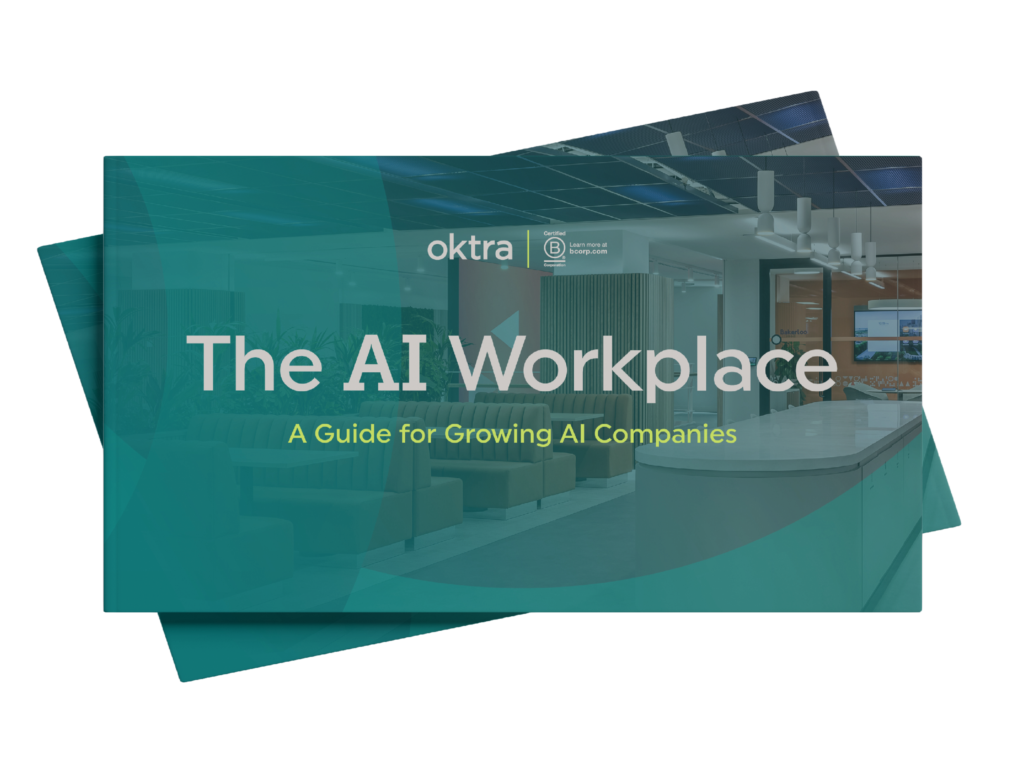
The Workplace Guide for Growing AI Companies
For a closer look at those decisions, download our guide to designing a workplace for AI companies, which explores the broader growth journey and the workplace trends emerging alongside the sector. We also cover the principles that can help organisations create workplaces capable of evolving as they scale.
Download -
-
Contact us
Get in touch to discuss your potential office space costs
020 7553 9500
info@oktra.co.uk
-
"*" indicates required fields
Related content

-
Want updates on similar new content? We’ll send you an email a month with new insights when you join our mailing list.
JOIN THE LIST
