

Share

min read

Senior Content Manager
Content specialist in office design and build.
-
Designing an effective office layout is a strategic decision that shapes how people work, connect and feel in the space around them. Layout governs movement, focus and collaboration, and influences everything from energy levels to productivity. As hybrid working continues to redefine office use, leaders are looking closely at how layout can help their teams get the most from the days they spend together.
Many organisations know their space could work harder but aren’t sure where to begin. The options can feel endless. Open plan or neighbourhoods? Fixed desks or flex? Large meeting rooms or smaller collaboration zones? Each choice has implications for behaviour, team dynamics and culture.
This guide brings together planning principles and modern layout ideas drawn from recent workplace projects. The aim is to help you understand what will have the greatest impact, avoid decisions that don’t match how your teams actually work and build a workspace that delivers long-term value.
-
How to choose the ideal office layout
Choosing the right office layout is about aligning space with strategy. For UK businesses planning refurbishments or moves, the layout should flexibly support current operations while making allowance for growth, hybrid ways of working and the behaviours you want to encourage.
Below are seven practical factors to consider, plus decision prompts to help you land on the right plan.
-

-
Headcount & growth forecasts
It’s only natural to start with the number of people in your office, both today and tomorrow:
- Start with an accurate headcount today, then model growth for 2-5 years.
- Use scenario planning, including best, expected and worst.
- Translate those numbers into dedicated desks, touchdown spaces and reserve capacity.
- If your headcount is expected to rise quickly, favour modular furniture and flexible zones rather than fixed cells.
-
Hybrid working patterns
Hybrid working changes the game, particularly in terms of headcount. Fortunately, there are some simple tricks that can help you plan for this working model:
- Map who is in the office and when, then design for peak occupancy rather than average occupancy.
- Introduce a mix of bookable desks, touchdown spaces and collaboration hubs.
- Consider hoteling systems and wayfinding that make it obvious where people should go on any given day.
-
-
Team adjacency needs
As the name suggests, team adjacency is about how physically close teams work. The aim is to create frictionless workflows, rather than adjacency for adjacency’s sake.
- Identify which teams need frequent face-to-face contact and cluster them near one another.
- Separate heads-down roles from high-collaboration teams.
- Use adjacency matrices during planning workshops with team leads. The idea is to map essential proximities and show which teams can be co-located or kept remote-friendly.
-
Space planning ratios
Adopting sensible space ratios early on will give you a realistic idea of the resources needed based on your headcount. These include:
- Desk-to-person ratios – 0.6-0.8 desks per employee is a good starting point for hybrid working environments.
- Meeting room minutes per employee – This varies depending on your sector and workforce.
- Circulation percentages – Typically ranging from 15-25%, this shows you the amount of circulation space needed compared to the base workspace area.
You can find out more in ‘The Complete Guide to Office Space Planning: Standards, Ratios & Tips’. Wherever possible, you should run layout ratios against actual activity data.
-
-
Acoustic and privacy considerations
Acoustics are the unsung hero of productivity. Almost a third (32%) of employees in our inclusivity survey said that excessive noise was a problem at work. Here are some solutions for efficient office layout planning:
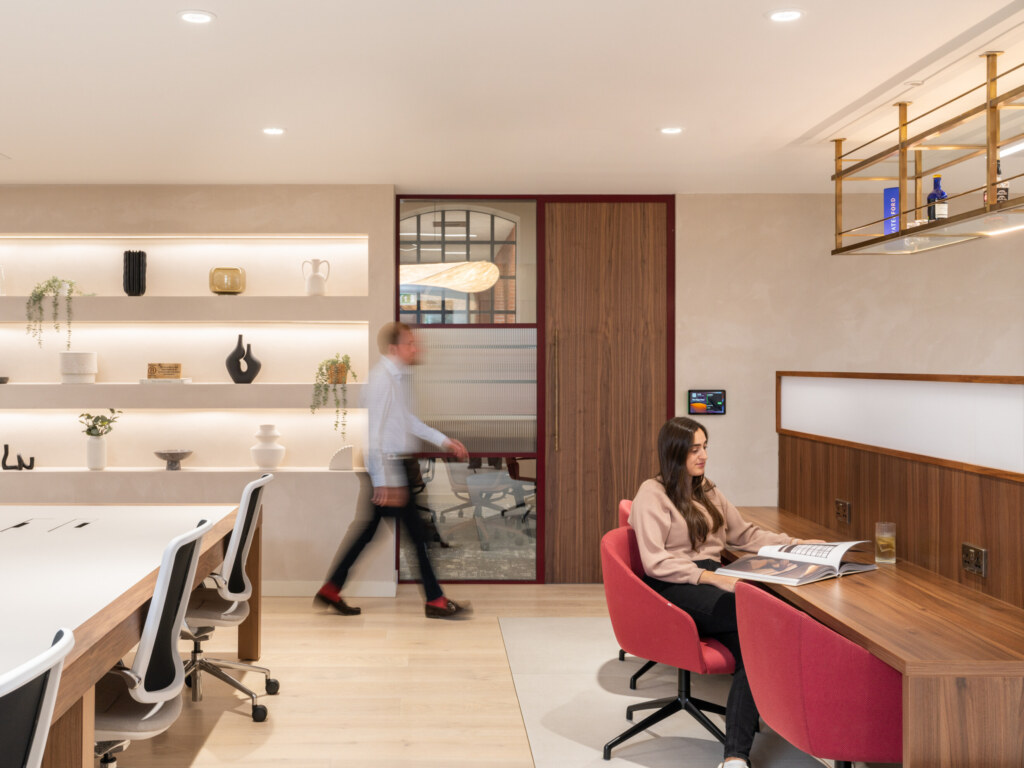
- Balance open-plan energy with private focus. Acoustic pods, bookable quiet rooms, soft furnishings and zoning can reduce noise bleed.
- For sensitive work, ensure data privacy by locating confidential teams in enclosed spaces.
- Use sound-absorbing materials like acoustic panelling and noise-friendly flooring.
- Adjacency planning can also be vital to maintain calmer areas in the office for quieter teams.
-
Brand experience and culture
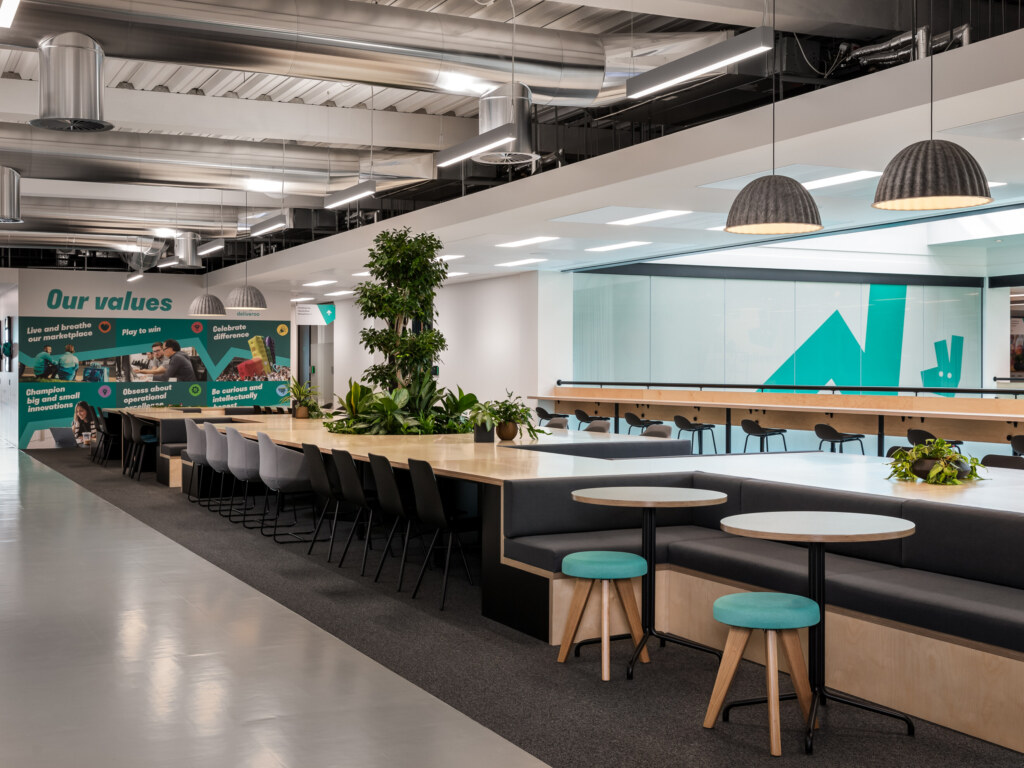
Your workplace is a physical brand statement, and you can use modern office layout ideas to reinforce your workplace culture. Open collaboration areas are ideal for transparent, agile cultures, for example, while soulful are best quiet zones for reflective, research-led teams.
Signature spaces can give staff a clear sense of your values. Think cafes, innovation labs and unique arrival areas. You can also align finishes, signage and circulation routes with your brand story.
-
-
Sustainability and wellbeing principles
Sustainable office design and workplace wellbeing are gaining traction in a variety of sectors. Maximising daylight access is a big factor for both. As well as having myriad wellbeing benefits, natural light will minimise your reliance on artificial lighting to reduce energy consumption. Using open floor plans around south-facing windows is a simple way to achieve this.
From a wellbeing standpoint, you can encourage movement by spreading out key amenities and strategically positioning teams throughout the office.
As for sustainability, it’s important to embed features like recycling stations from day one. This avoids them becoming an afterthought for your office layout design.
-
5 modern office layout ideas
Onto some specific ideas. Below, we’ll look at five contemporary layout concepts that you can adopt to support hybrid work, employee engagement and better workplace culture.
-
1. Activity-based working (ABW) layouts
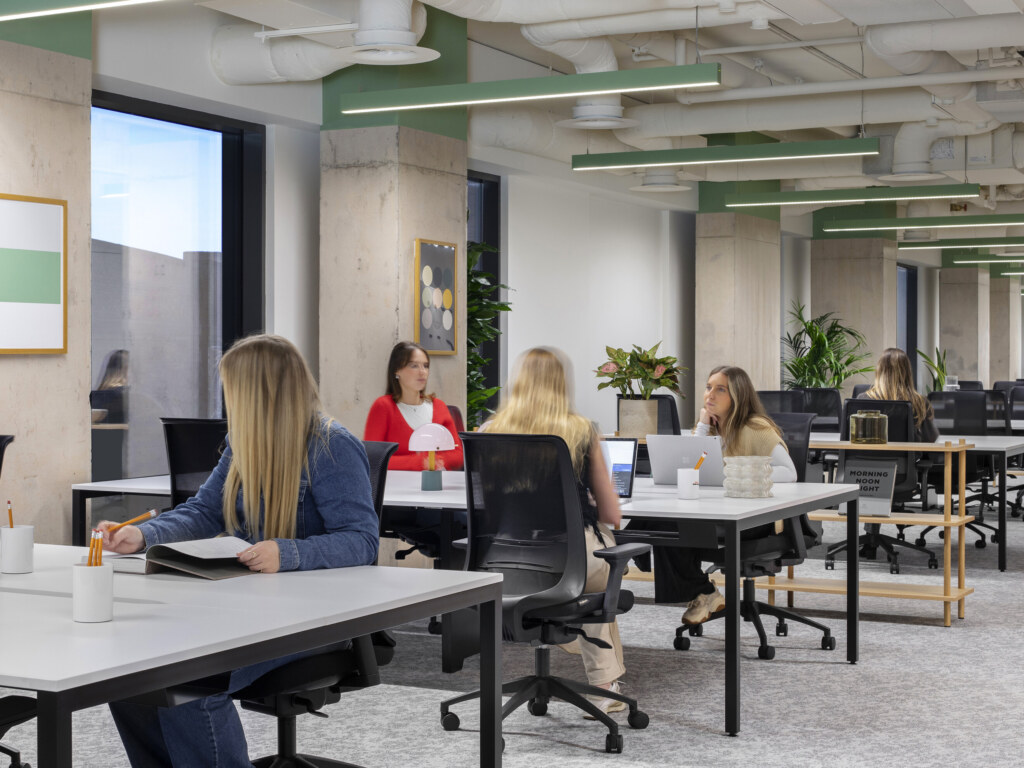
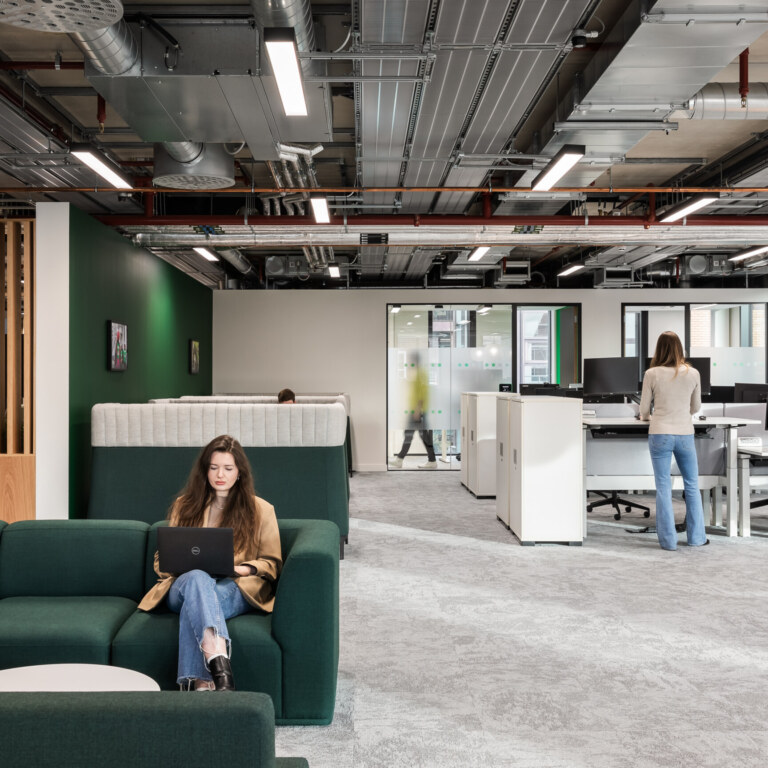
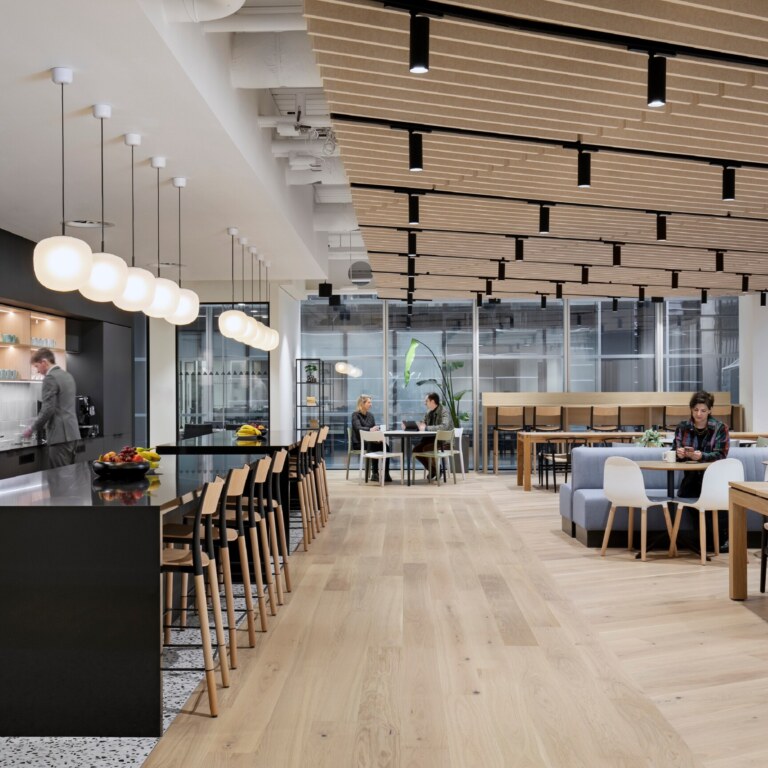
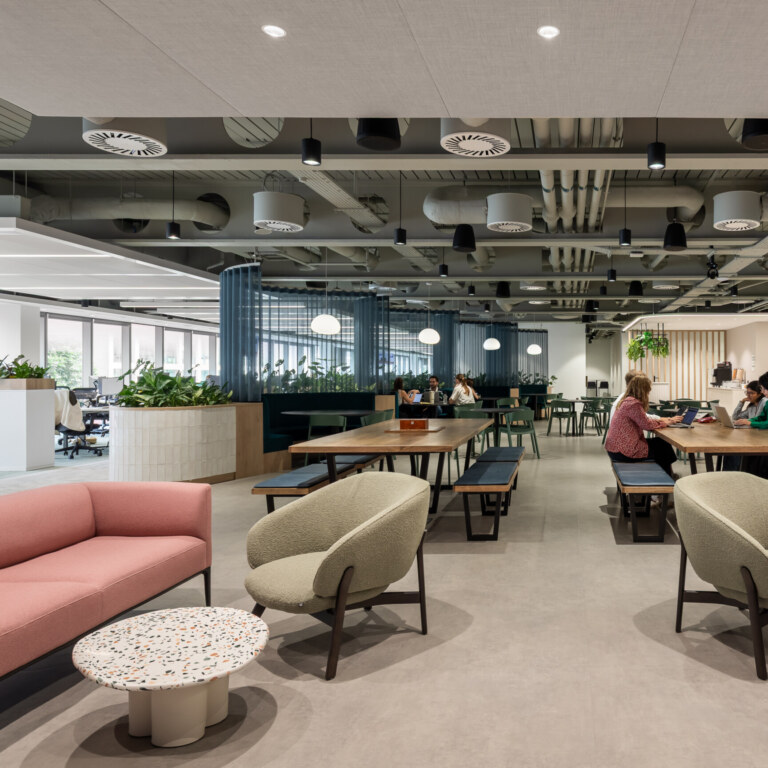
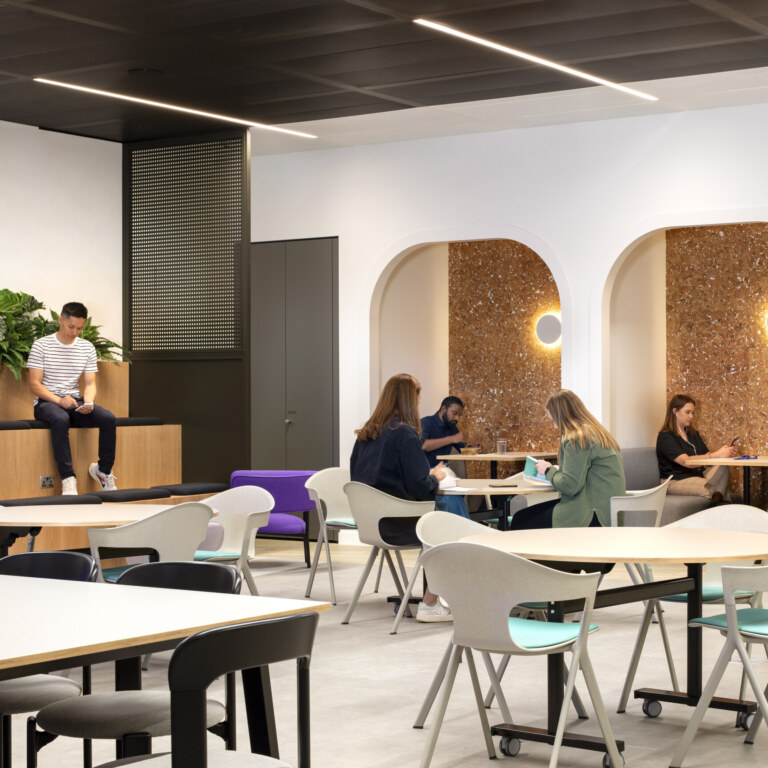
Activity-based working means providing a landscape of different workpoints, so employees can choose a space that fits each task. These include focus desks, collaboration tables, project zones, quiet corners, call booths and social areas.
Doing so reduces space friction, giving people the right setting at the right moment. It also increases autonomy and supports varied workstyles. Not to mention improving collaboration without sacrificing focus.
Works best for:
- Hybrid teams
- Project-heavy organisations
- Creative and knowledge-based roles
- Companies wanting flexibility without expanding floor area.
-
2. Neighbourhoods for hybrid teams
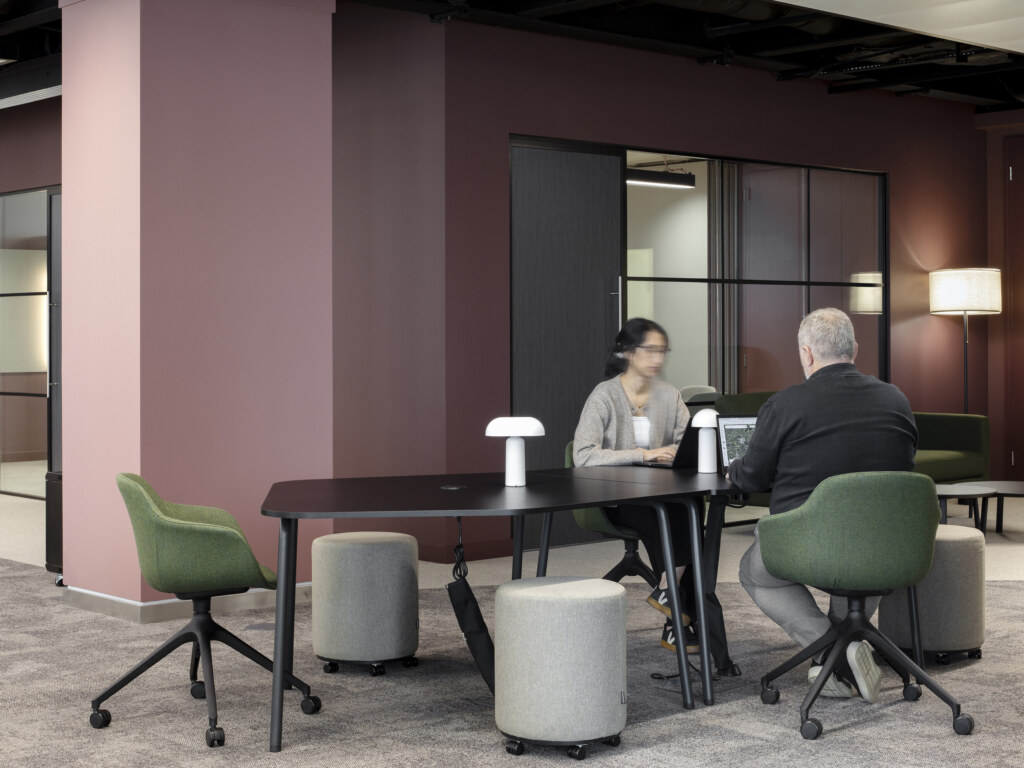
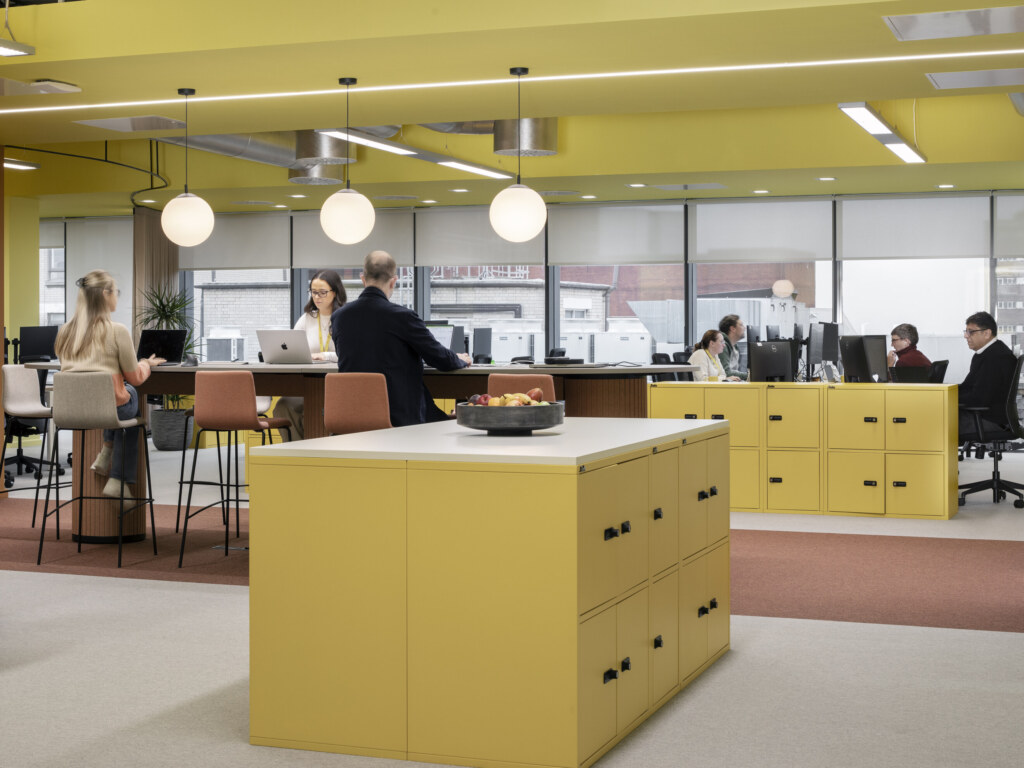
Neighbourhoods are clusters of semi-dedicated spaces for specific teams, which have shared desks, lockers, touchdown spots and small meeting areas.
They create the sense of a home base even in a hybrid model, which helps teams maintain an identity without any territorial desk ownership. In doing so, they can improve wayfinding and strengthen workplace culture.
Works best for:
- Growing organisations
- Cross-functional teams
- Businesses balancing in-office collaboration with flexible attendance
-
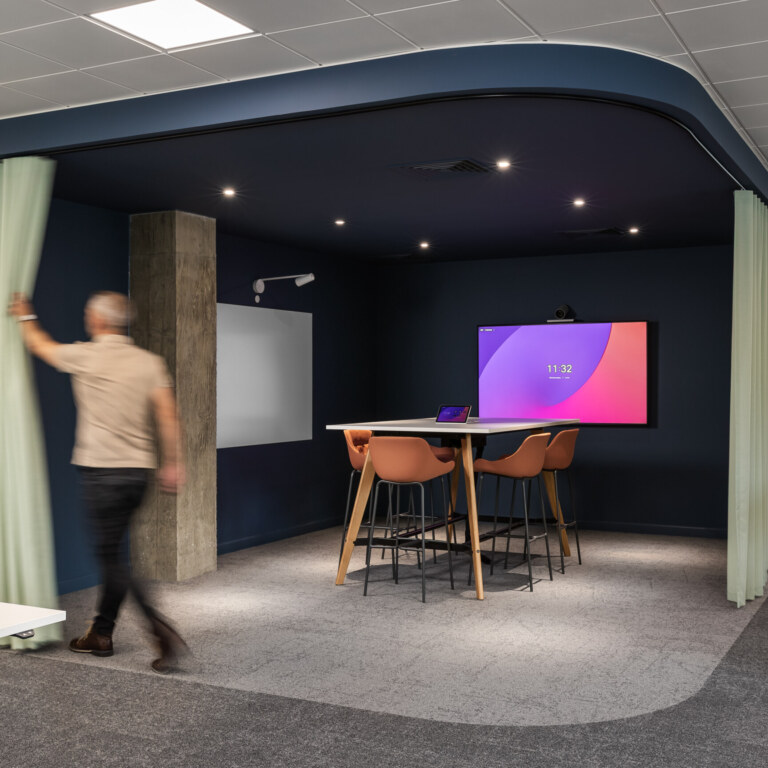
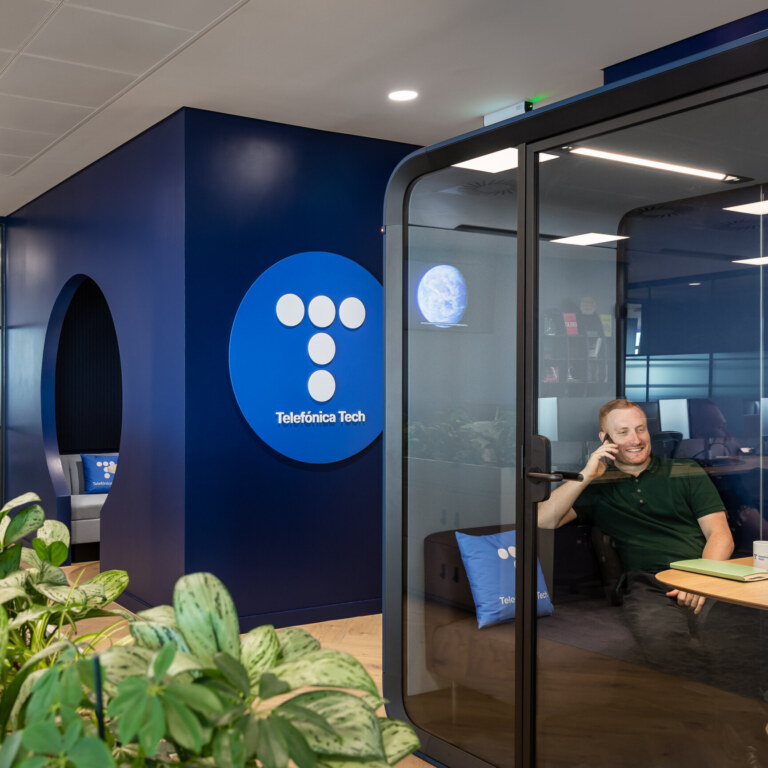
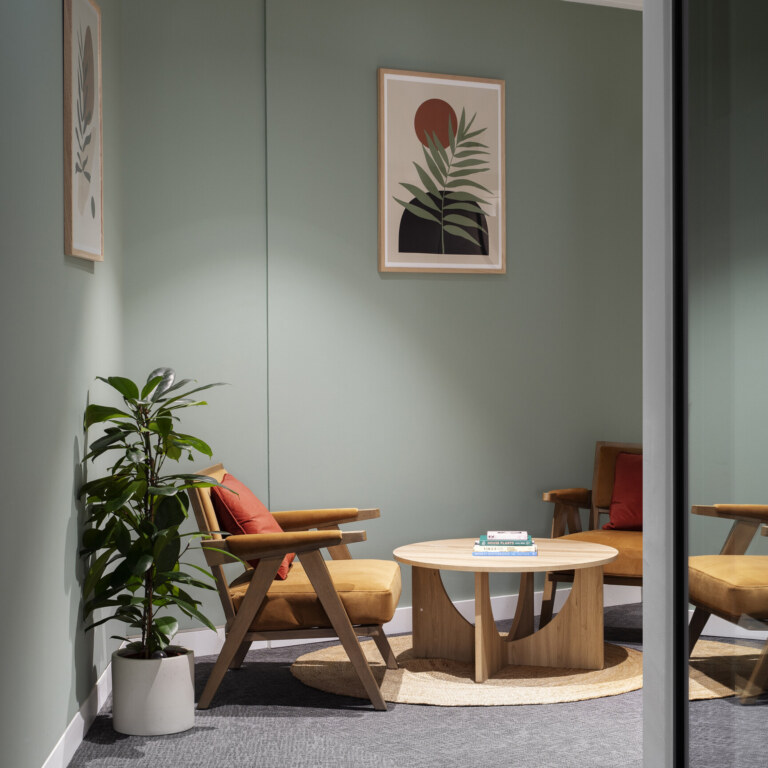
3. Focus rooms and acoustic pods
Focus rooms are small, enclosed spaces designed for deep concentration, private calls or sensitive conversations. Pods are similar but often smaller, sized for 1-4 people. They can also be modular and movable.
These spaces improve acoustics and reduce cognitive load. Providing quiet, interruption-free zones dramatically increases focus time and decreases stress. This is crucial for hybrid days when people come in specifically for high-value work.
Works best for:
- Roles requiring confidentiality, such as analysts, writers, legal teams and finance teams
- Anyone struggling with noise in open-plan environments.
-
4. Client welcome zones and showcase areas
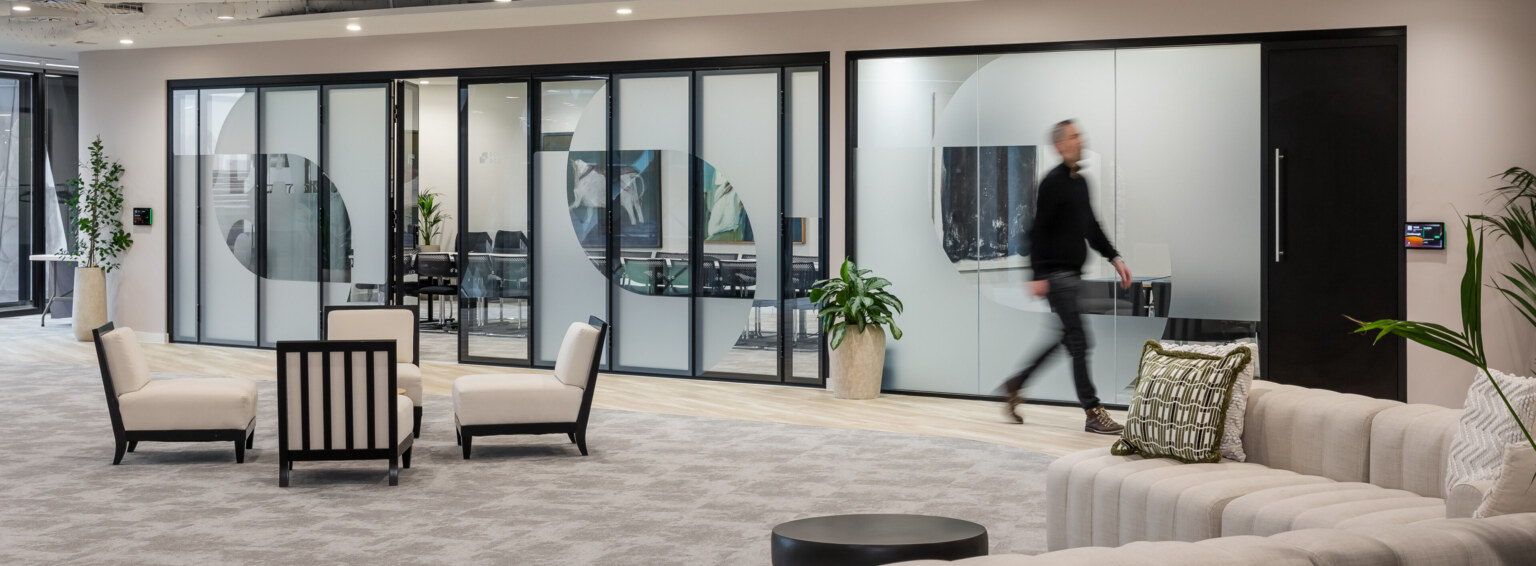
A well-designed welcome zone creates a strong first impression, freeing internal teams from ad-hoc hosting and reinforcing company culture.
Aim for a curated front-of-house environment that expresses your brand story. That could be reception lounges, product showcases, demo bars, branded galleries or hospitality-style meeting suites.
Done right, it signals professionalism, boosts confidence and supports commercial conversations.
Works best for:
- Client-facing organisations
- Scale-ups building brand credibility
- Firms hosting frequent partner or investor meetings.
-
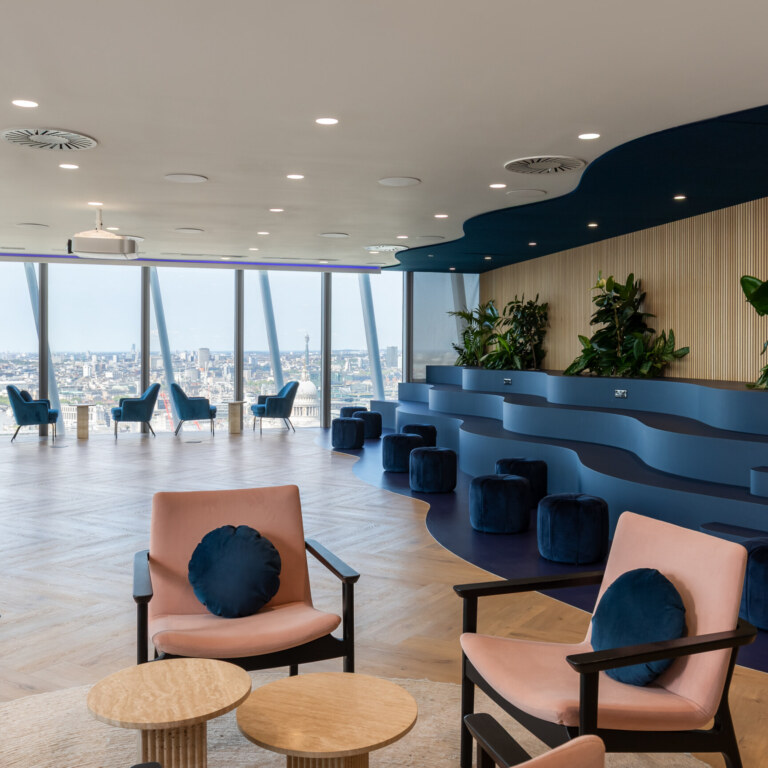
5. Bleacher seating and social hubs
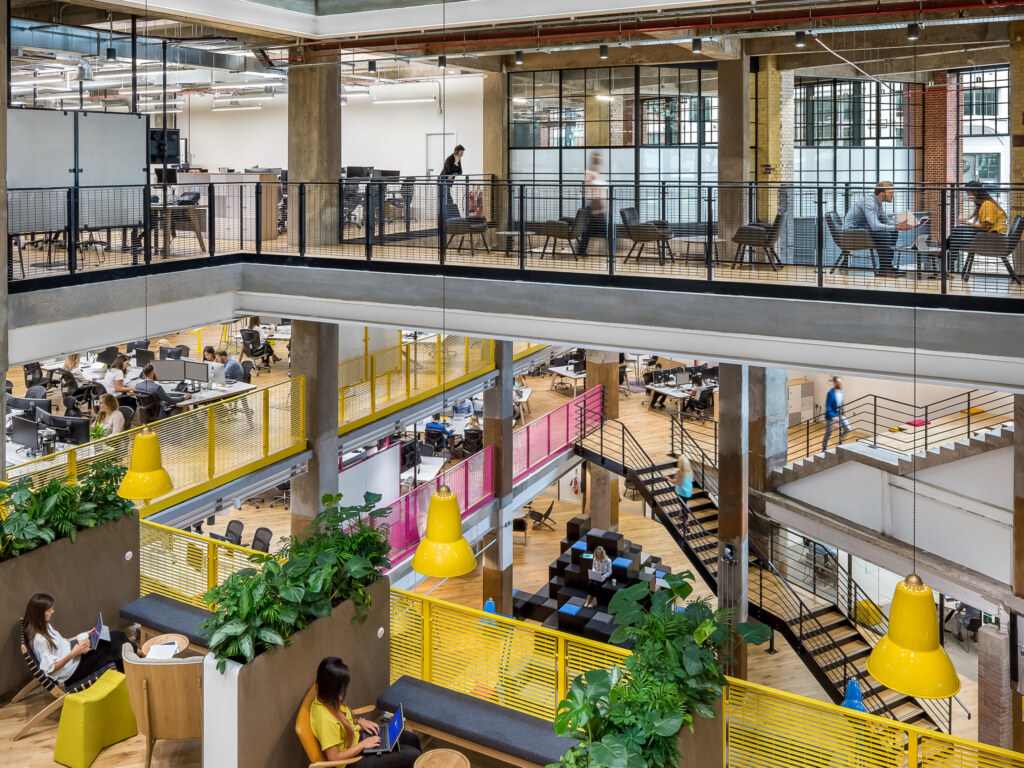
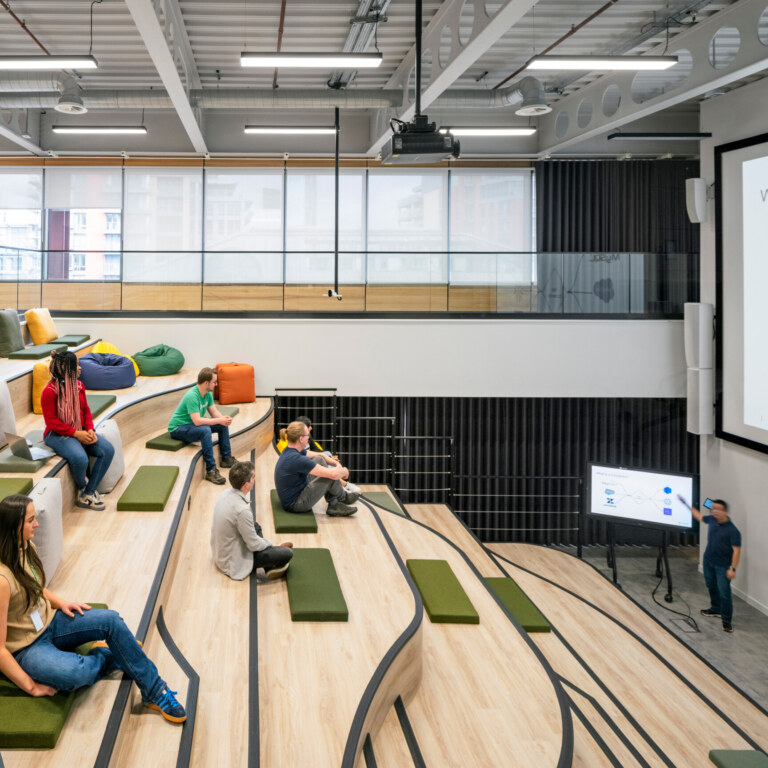
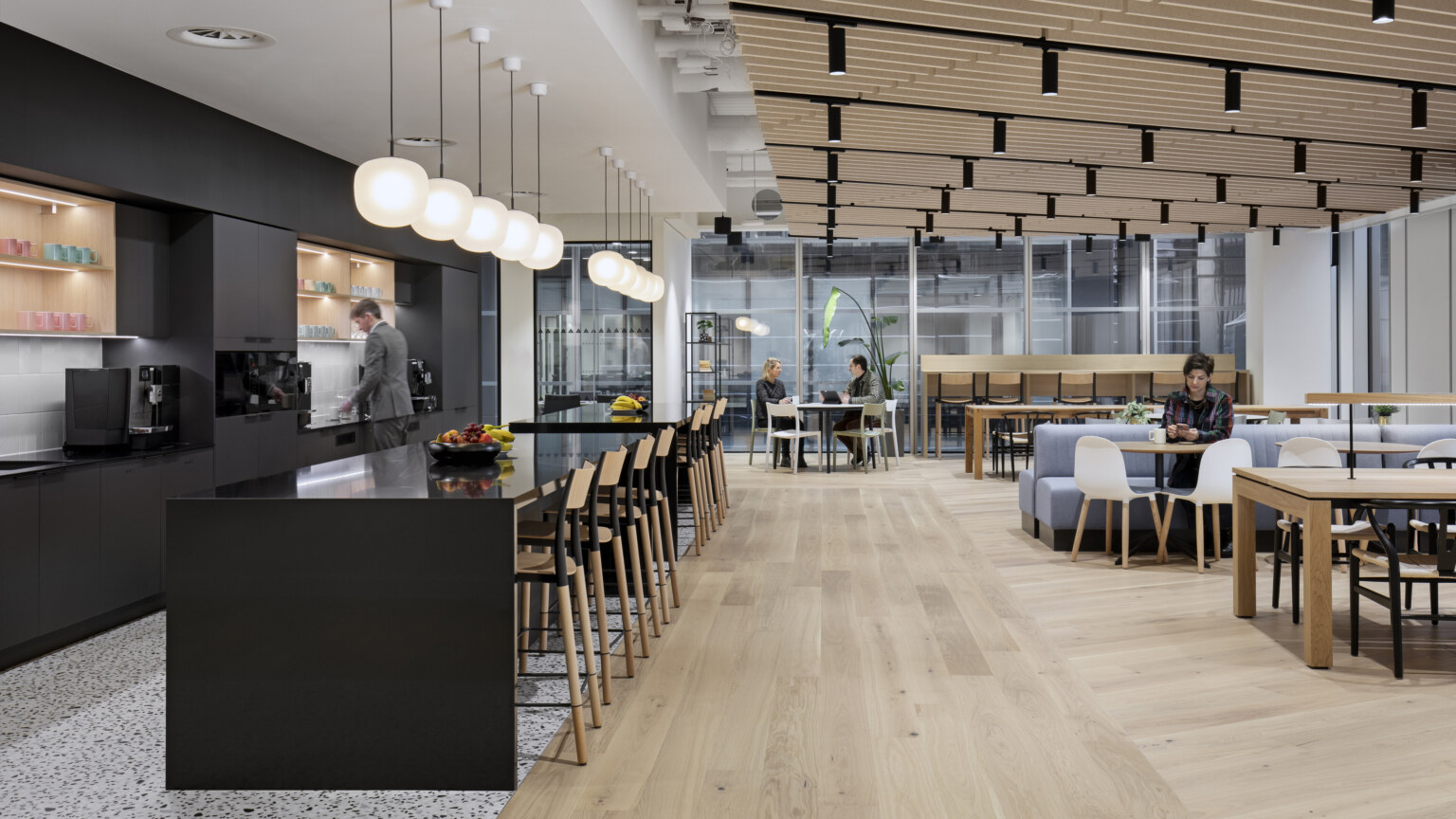
Bleachers and social hubs bring energy into the space. Think tiered seating, café-style hubs and open social spaces. They’re ideal for town halls, training sessions and team briefings as well as informal collaboration.
Multi-functional social hubs are included in ‘10 Office Design Ideas for a Future-Facing Workplace’. Above all, they make all-hands meetings effortless. They encourage spontaneous interaction and support stronger social bonds. All of which correlate with higher engagement and retention.
Works best for:
- Growing companies
- Creative agencies
- Tech teams
- Organisations investing in community, learning and whole-company communication
-
How to plan your office layout: step-by-step guide
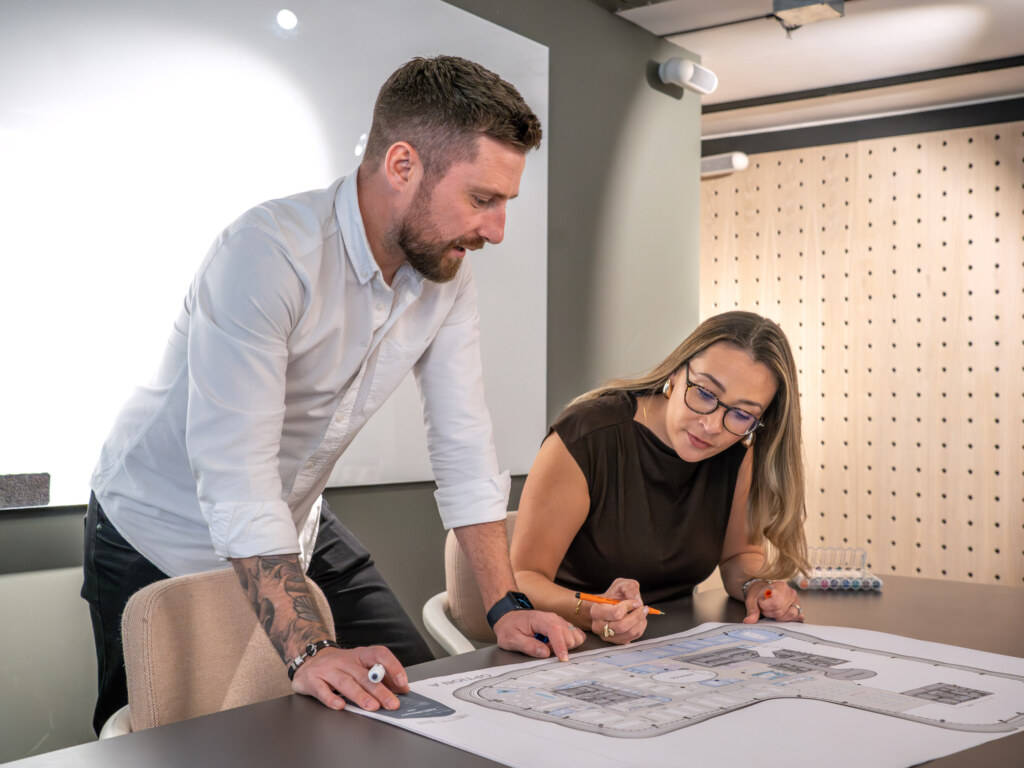
A well-planned office layout doesn’t happen by accident. It’s the result of a structured, evidence-based process.
This step-by-step guide is designed to help workplace leaders move from early-stage inspiration to a confident, investment-ready plan. Each step aligns with common workplace strategy frameworks and can be easily adapted for refurbishments, office moves or hybrid reconfigurations.
-
-
1. Define your goals
Before sketching floorplans, establish the business outcomes your new layout should support. Typical goals include:
- Improving collaboration
- Enhancing brand experience
- Supporting hybrid working
- Reducing real-estate costs
- Boosting employee wellbeing
It’s important to make these goals measurable if you can. For example, you might want to increase cross-team interactions by 20% or provide 30% more focus spaces. Having clear goals will help you evaluate every layout decision objectively.
-
2. Audit your existing space
Carry out a thorough assessment of your current workplace. Measure utilisation including peaks, dips and other patterns. You should identify bottlenecks and note which spaces are consistently under- or over-used. Additionally, observe noise levels, daylight access and circulation issues.
Above all else, this is about documenting what’s working, what’s not and why. This audit becomes your evidence base and prevents you from repeating existing inefficiencies in your new design.
-
-
3. Collect employee insights
Gather qualitative and quantitative input from your people. After all, they’re the experts in how work actually happens. Use surveys, interviews, focus groups or quick pulse polls. This will help you understand preferred working styles, pain points and desired amenities.
Related: Inclusive Office Design: How to Seek Employee Feedback
This is also a good opportunity to ask about hybrid routines, collaboration needs and any frustrations with the current workspace. To get a balanced picture, you’ll want to gain insights from different functions, seniority levels and even work patterns.
-
4. Map adjacencies and workflows
Translate your audit and insights into a clear picture of how teams interact.
Create an adjacency matrix to show which teams rely on each other daily, weekly or occasionally. Then map workflows that require physical proximity or specialist equipment.
This step is key to avoiding friction later. The best layouts deliberately position teams where they can operate most effectively without noise or interruption.
-
-
5. Establish zoning
Once you understand interactions, you can start zoning your floorplate. This essentially provides the skeleton of your future layout. Typical zones include:
- Focus areas
- Collaboration hubs
- Social and refresh spaces
- Meeting suites
- Specialist zones like labs, design libraries or phone booths
As mentioned earlier, it’s important to place active, noisy areas away from quiet zones. You should also consider sightlines, light levels, acoustic treatments and accessibility as part of your zoning plan.
-
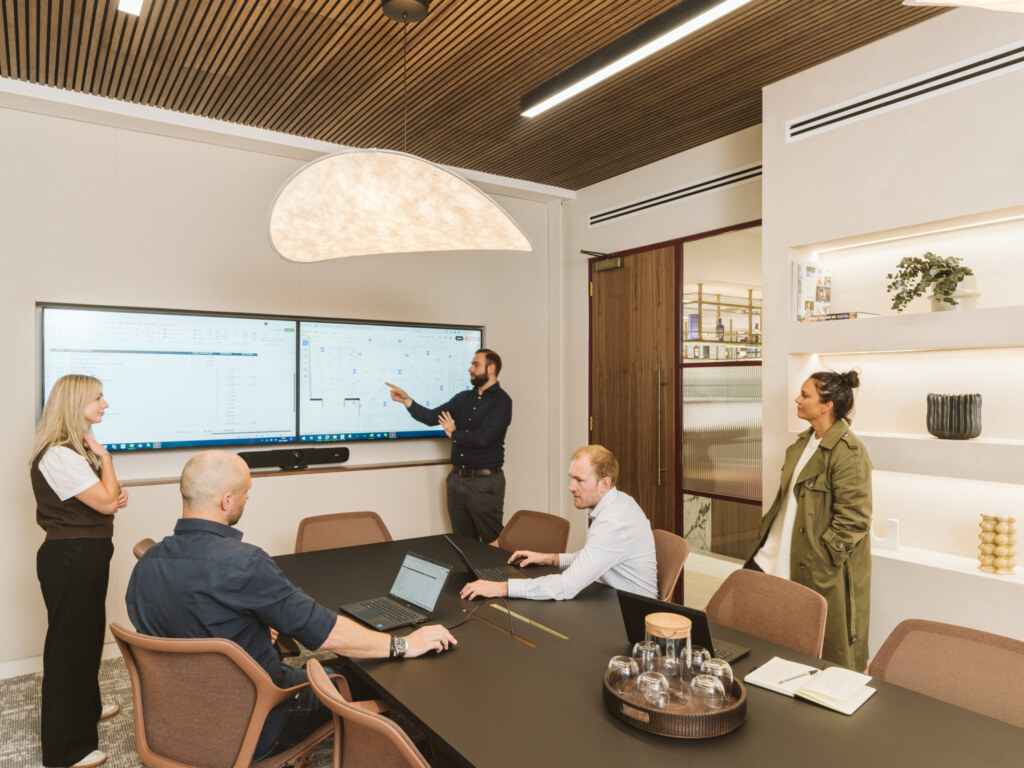
6. Plan meeting room ratios
How many meeting rooms do you need? And what kind of spaces are required?
Your audit data can provide insights here. You might find that people struggle to find small huddle rooms, for example, or that larger boardrooms are frequently empty.
You can use rule-of-thumb ratios as a baseline, then tweak them based on hybrid meeting patterns, video call frequency and client hosting needs. Don’t forget alternative collaboration spaces like soft-seating nooks and project tables, which can negate the need for some meeting rooms being used unnecessarily.
-
-
7. Prototype & test layouts
Develop two or three layout options and test them. This can be as simple as paper sketches or as detailed as digital twins and 3D walkthroughs. Share the options with stakeholders and employees for feedback. If possible, pilot a zone like a temporary collaboration area or a focus pod cluster. You can then monitor usage to validate assumptions before committing to construction.
-
8. Finalise with a workplace designer
Once you’ve validated the concept, partner with a workplace designer to refine specifications, furniture, materials and technical details. Designers bring expertise in ergonomics, compliance, acoustics and sustainability. Not to mention spotting potential issues long before build-out.
This step ensures your plan translates into a functional, future-proof workplace. If you’d like help translating your ideas into a professionally designed layout, a specialist workplace designer can guide you from concept to delivery.
-

-
-
Office layout FAQs
-
 How do you plan an office layout?
A structured, evidence-led process ensures your layout supports real behaviours, not assumptions. Start by defining your goals then audit your current space and gather employee insights. Map team adjacencies, establish zones for focus and collaboration and plan meeting room ratios before testing a few layout options and finalising with a workplace designer.
What makes a good office layout?
A good office layout balances collaboration, focus and flexibility. It aligns with your business goals, supports hybrid work patterns, reflects your brand culture and offers the right mix of spaces like quiet rooms and social hubs. It should also factor in acoustics, accessibility, wellbeing and future growth.
What’s the best office layout for productivity?
The most productive layouts blend focused spaces with easy access to collaboration zones. Activity-based working (ABW), neighbourhood models and layouts with ample quiet rooms typically perform best. Ultimately, the optimal layout is one that reduces friction (noise, distractions, bottlenecks) and gives employees control over how and where they work.
How do you design an office for hybrid teams?
Firstly, design around peak occupancy rather than average rates. You should provide a mix of bookable desks, touchdown points and collaboration areas, supported by neighbourhood zones to maintain team identity. High-quality video-enabled rooms are also a must, along with plenty of focus spaces for deep work on in-office days. Finally, clear wayfinding and storage can help hybrid teams navigate shared environments.
What should companies avoid when planning an office layout?
Common pitfalls include overestimating desk demand, underestimating meeting-room needs, placing noisy and quiet teams together, and treating acoustics as an afterthought. Skipping employee input or failing to test layouts early can also lead to costly redesigns. A data-informed process can help you avoid these mistakes.
-
 How do you plan an office layout?
Related content


-
Contact us
Speak to our workplace specialists
020 7553 9500
info@oktra.co.uk
-
"*" indicates required fields
-
Be the first to hear about new workplace trends when you join our mailing list.
