

Share

min read

Senior Content Manager
Content specialist in office design and build.
-
The static workplace is becoming a thing of the past. Hybrid work and shifting headcounts call for more adaptability. So do business uncertainty, growth and evolving team structures. But with the rising cost of fit out and relocation, a full overhaul isn’t practical every time your needs change.
All of these factors have forced organisations to rethink how their offices function. That’s why modular office design has moved from a niche concept to a strategic priority.
-
Traditional office layouts were typically designed around permanence. Think fixed partitions and uniform desk banks with spatial planning based on stable, long-term occupancy. But today’s businesses operate in shorter cycles. Teams expand and contract. Departments reorganise. Working patterns change. And a layout that works perfectly this year might create friction next year.
In short, organisations are increasingly recognising that static environments struggle to support dynamic businesses. As a result, flexible office design approaches are becoming invaluable as one of the top office design ideas.
This article explains what a modular office really is, how modular office design ideas work in practice and where modular approaches add the most value. We’ll also outline how to implement them properly without compromising design quality or long-term performance.
-
What is modular office design?
Put simply, modular office design is an approach to workplace planning that uses adaptable, interchangeable components to create spaces that can be reconfigured over time.
Think of it as a professional version of building blocks. Instead of constructing a layout that’s fixed and difficult to change, a modular office is designed using elements that can be rearranged, expanded or adapted without requiring a full strip-out and refit.
However, it’s important to clarify a common misconception…
-

-
Modular office furniture vs modular layouts
Many people assume that modular office design simply means using modular office furniture. This includes movable desks, stackable seating or reconfigurable tables, for example. While furniture plays a role, true modular design goes further. Here’s the difference:
- Modular office furniture – Refers to individual pieces that can be moved or reconfigured.
- Modular layouts – Cover spatial planning strategies that allow zones, team areas and circulation routes to evolve.
- Fully modular systems – May include demountable partitions, adaptable meeting rooms, integrated power tracks and flexible infrastructure that supports change at a structural level.
Modular furniture might provide better mobility. But with a modular office, you’re designing flexibility into the DNA of the workplace. By doing so, you’re anticipating change rather than letting it continually disrupt your work environment.
-
4 strategic benefits of modular office design
Modular office design is often associated with flexibility, but its impact extends across the entire workplace strategy. When approached with intent, it shapes how organisations manage growth, control long-term costs, support performance and create a more responsive employee experience. Here are four strategic benefits to modularity as a design principle.
-
-
1. Flexibility & change readiness
Adaptability is the clearest benefit of modular office design. Over time, your organisation could grow, restructure or adjust its hybrid policies. When that happens, you want a workplace that responds without major overheads.
Modular layouts make it easier to:
- Reconfigure collaboration areas into focus zones
- Expand team neighbourhoods
- Introduce new meeting formats with minimal disruption
Attendance fluctuates throughout the week in hybrid workspaces, typically peaking midweek. You need a space that facilitates peak attendance without becoming overcrowded, while also supporting quieter days without feeling underutilised.
An adaptable workplace design allows you to evolve your layout as working patterns develop, rather than committing based on circumstances that might not last.
-
2. Cost control over time
Modular systems require careful upfront planning. But they often reduce long-term expenditure. As mentioned above, traditional office design can create a cycle of expensive refits every few years. Walls are removed, new partitions are installed and infrastructure is relocated. This all comes at a significant cost, not to mention operational disruption.
By contrast, modular office design ideas focus on longevity. There’s less need for wholesale redesign when you have demountable elements, adaptable partitions and flexible planning grids. Instead of starting again, organisations can adjust what already exists.
This approach supports future-proof office design by protecting investment and extending the lifecycle of the workspace.
-

-
3. Productivity & collaboration
As well as flexibility and cost, modular design supports better performance. Hybrid workplaces must support a variety of work modes. Throughout the day, people move through deep focus, structured collaboration, informal interaction, virtual meetings and social connection. Static layouts often struggle to balance these competing needs.
Modular office design allows for clearer zoning and easier reconfiguration as work patterns shift. Teams can create collaboration clusters when required, then rebalance toward focus if project demands change.
In other words, modular approaches provide workspaces that align more closely with task requirements. This helps you reduce friction and improve day-to-day productivity.
-
4. Employee experience & ownership
As mentioned in our guide to office design and employee experience, modern employees expect a degree of autonomy in how and where they work. A modular office supports this by offering visible adaptability.
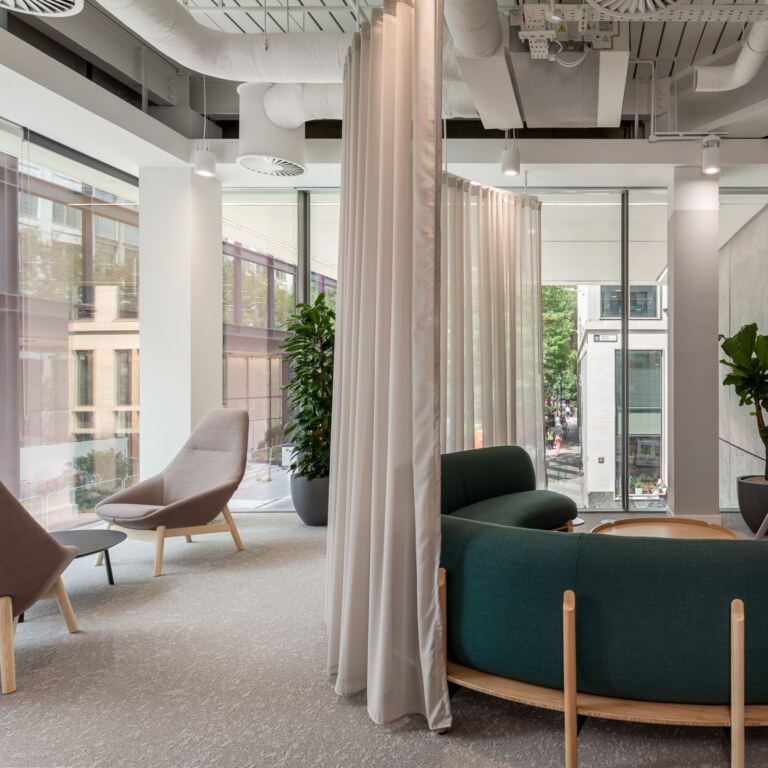
Allowing teams to reshape their workspace fosters a sense of ownership, creating spaces that feel responsive rather than imposed. This is crucial, with hybrid working as the norm and many businesses needing to create offices that justify presence. Employees need a reason to commute into the office rather than staying at home.
Gensler found that focusing on work was the top reason hybrid workers come into the office. Providing adaptable settings that support different personalities and preferences reinforces the idea that the workplace is a tool for performance, not just a location.
-
-
Planning a modular office: key considerations
The advantages of modular office design are clear for both employers and employees. But successful implementation requires strategic planning and design expertise, not just flexible furniture.
-
-
Understanding your workstyles
Before introducing modular elements, it’s important to be clear on how people work:
- What’s the balance between focus and collaboration?
- Which teams require high levels of interaction?
- Where are privacy needs most critical?
- When does social space play a vital role?
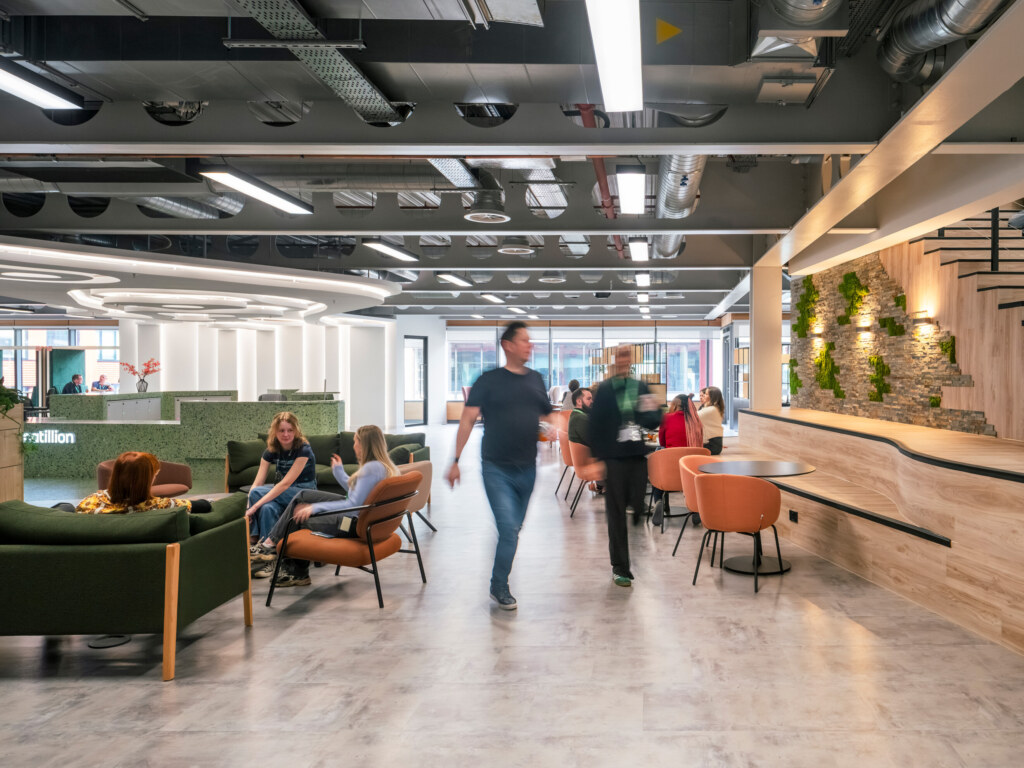
Avoiding one-size-fits-all layouts is central to adaptable workplace design. Modular systems should respond to real work patterns, not theoretical ideals. Without this understanding, flexibility can quickly become unfocused or ineffective.
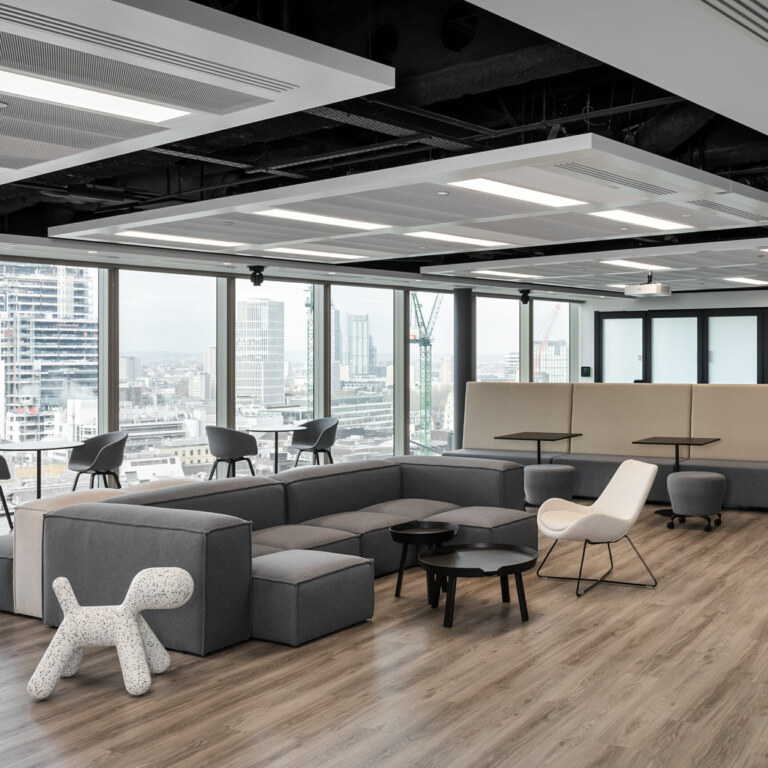
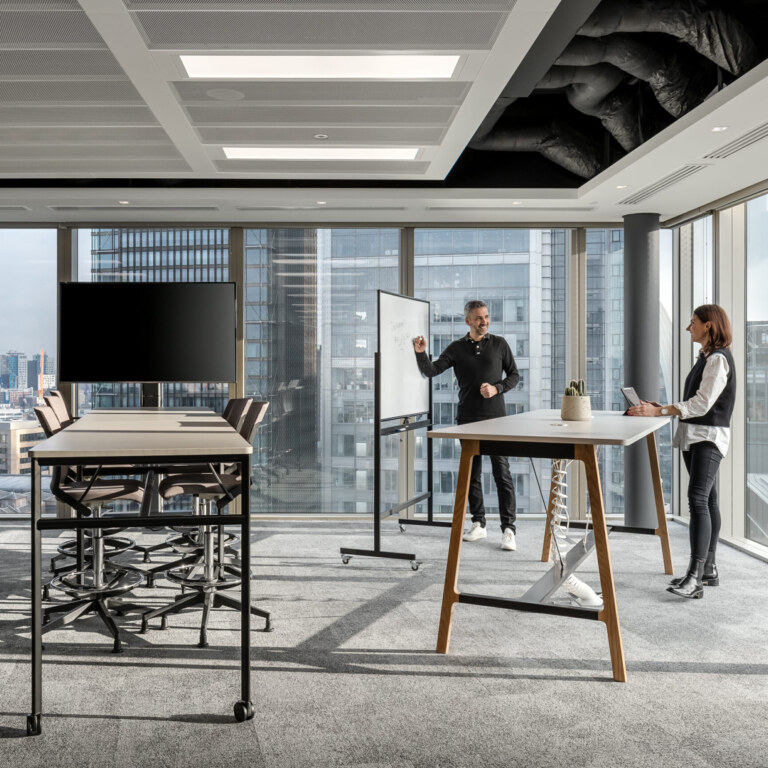
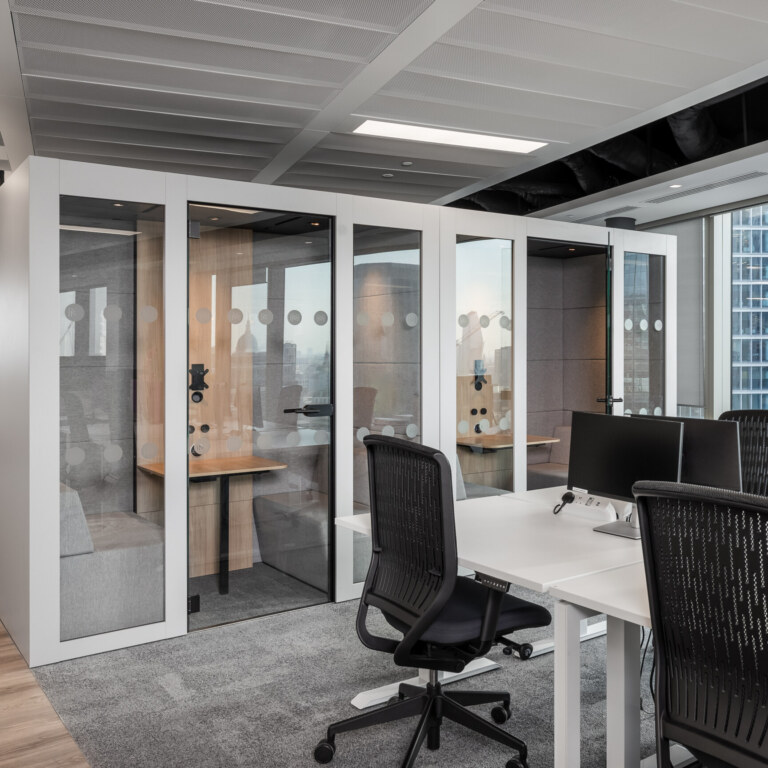
Take Moorhouse’s London office, for example, where four key zones reflect the company’s task-based working styles:
- Work Zone – Hot desks and quiet workspace for focused working
- Meet Zone – Five meeting rooms with a folding wall in the largest meeting room
- Flex Zone – Breakout and front-of-house area
- Grow Zone – Houses furniture and acts as an additional agile meeting space
-
Acoustics & privacy
One of the most common pitfalls in modular office environments is poor acoustic control.
Movable elements and open zones can create noise challenges if not carefully planned. In fact, excessive noise was mentioned by almost a third (32%) of employees in our inclusivity survey.
With this in mind, flexible layouts must be supported by an integrated acoustic strategy. That includes sound-absorbing materials, considered zoning and appropriate placement of high-energy areas. Don’t forget dedicated private areas too, particularly for hybrid meetings and confidential conversations.
Above all, modular design should be adaptable without any compromise on concentration or discretion.
-
Technology & infrastructure
True modular office design integrates infrastructure from the outset.
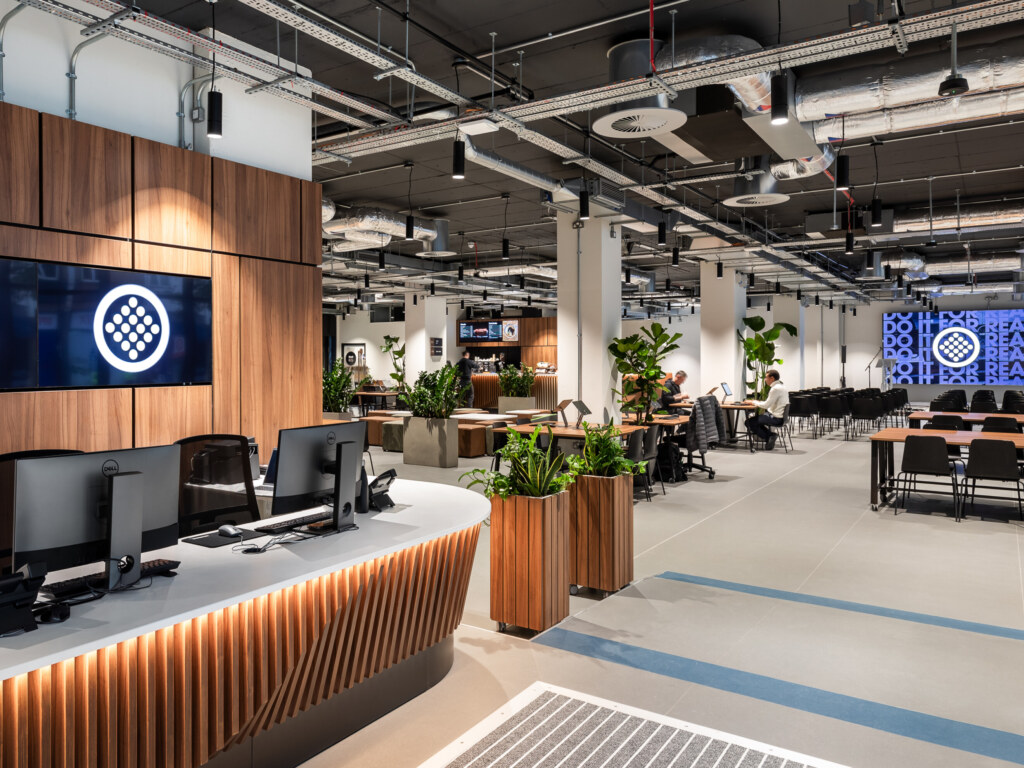
Power distribution, data access, AV systems and hybrid meeting technology must be planned with future reconfiguration in mind. Raised floors, ceiling grids and accessible service routes can enable change without complex rewiring, all of which are standard with Grade A office space.
Designing solely for today’s technology setup will limit your flexibility. But designing for change ensures the workplace can evolve alongside advancing technology.
-
-
Design integrity
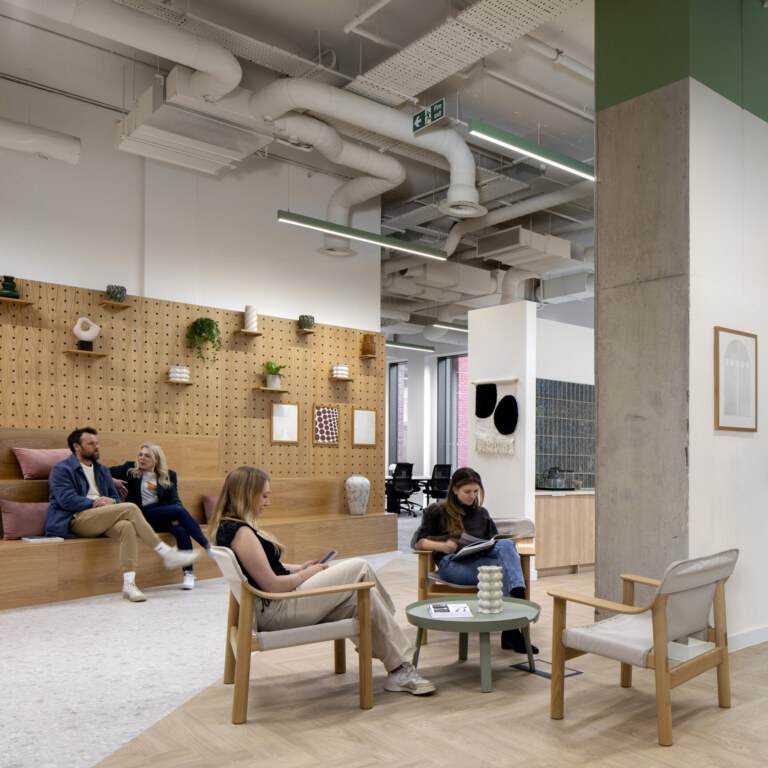
Finally, flexibility shouldn’t mean fragmentation. So, offices shouldn’t look modular to the naked eye.
A well-executed modular office maintains visual cohesion and clear spatial flow. Without careful design oversight, modular elements can feel temporary or disjointed.
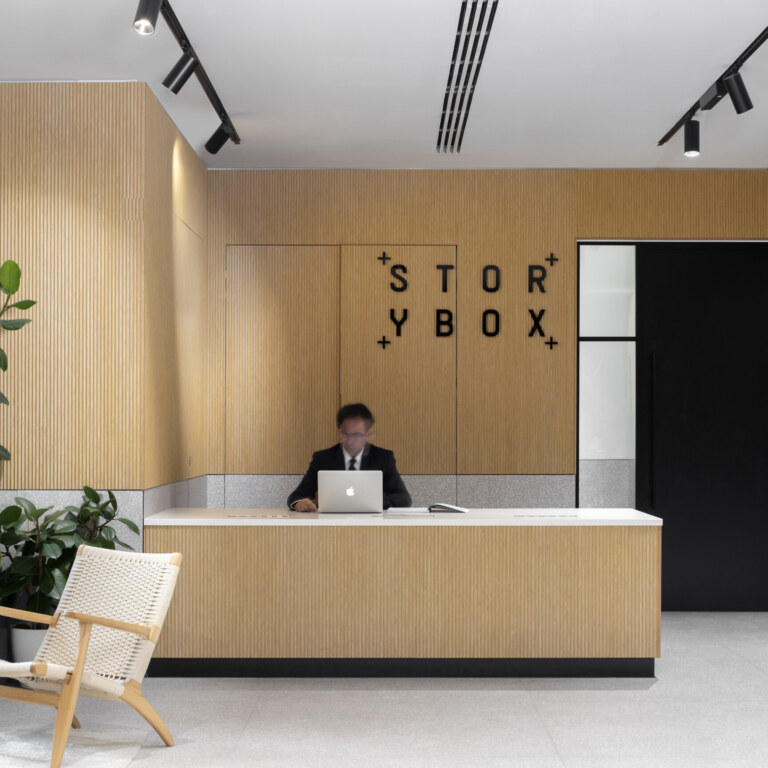
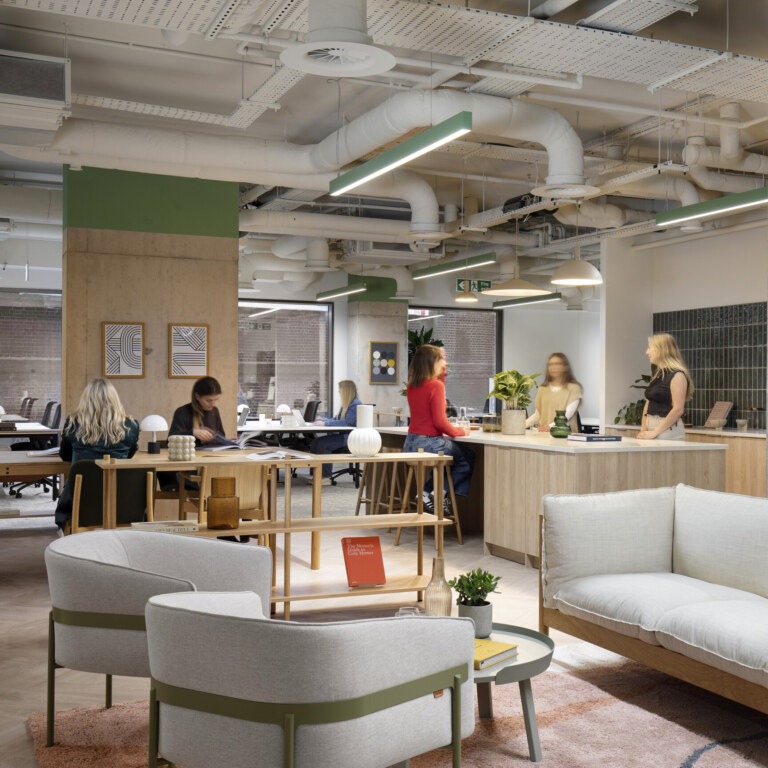
General Projects achieved this well on their Storybox project. The design has an intentional flow that enables tenants to move intuitively through the space. From the soft arrival zone to dynamic work areas, there’s a sense of balance and ease alongside a flexible formation.
Future-proof office design balances adaptability with identity. The workspace should still express brand, culture and professionalism, even as layouts shift over time.
This is where professional workplace expertise becomes essential. It ensures your flexibility is structured, not accidental.
-
Practical steps to implement modular office design
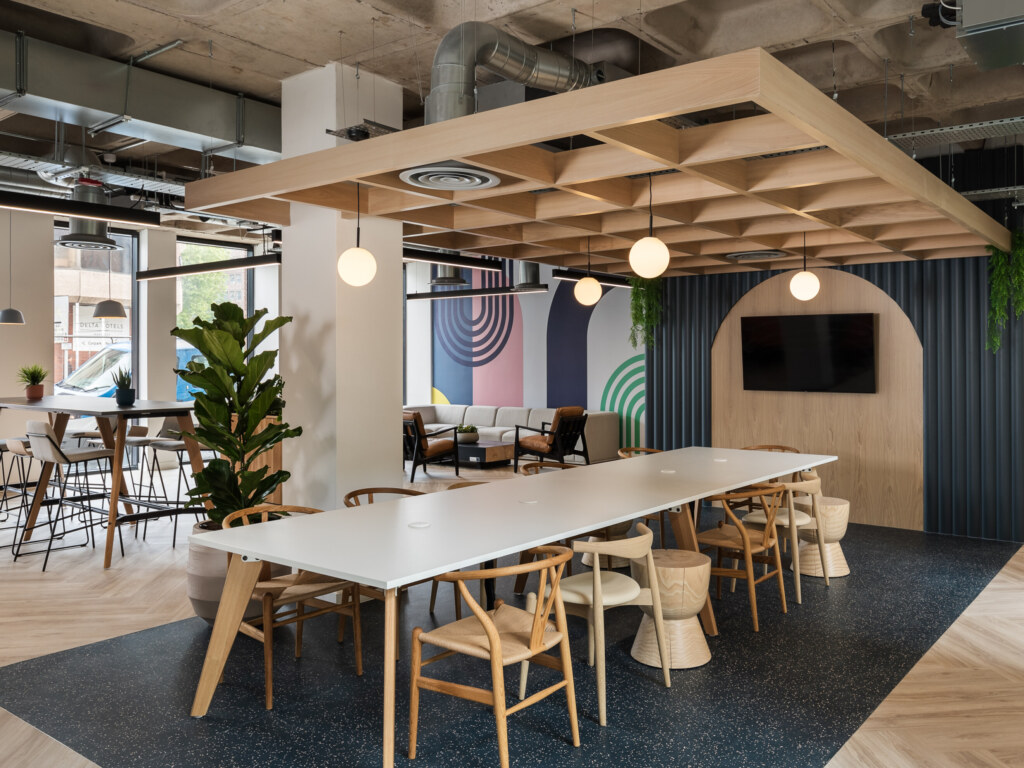
For organisations considering modular office design ideas, a structured approach ensures long-term success. Here are five steps we’ve pulled together from previous modular office design projects.
-
-
1. Audit your existing space and pain points
First, identify any areas that feel too rigid or are underperforming. Are meeting rooms overbooked? Are desks underused? Do teams struggle to collaborate effectively?
2. Define short- and long-term business needs
Consider likely headcount changes in the future along with hybrid policy evolution and growth scenarios. Modular design works best when it anticipates future shifts.
3. Involve employees early
Understanding how people experience the current workplace provides valuable insight too. Engagement also increases buy-in when new systems are introduced.
4. Test flexibility before committing
Pilot adaptable zones or introduce modular elements in phases. Observing how teams respond to smaller changes can inform your wider implementation.
5. Work with workplace specialists
Balancing flexibility, cost efficiency and design integrity requires experience. Specialists in adaptable workplace design can ensure that modular systems are integrated strategically. The result is a modular office that feels intentional and cohesive.
-
Preparing your workplace for flexibility
Modular office design is simply a strategic response to evolving ways of working.
Hybrid working environments have become embedded and businesses are operating with greater agility. That makes it increasingly valuable to be able to adapt space without major disruption. Modular design delivers this. It allows organisations to respond to change, control long-term costs and create workplaces that support both performance and experience.
The question is no longer whether flexibility matters, but how prepared your workplace is to accommodate it. If adaptability is a current or future priority, now is the time to assess your existing environment, review long-term workplace strategy and explore professional guidance before committing to fixed solutions.
-
-
Contact us
Get in touch to discuss your potential office space costs
020 7553 9500
info@oktra.co.uk
-
"*" indicates required fields
Related content

-
Want updates on similar new content? We’ll send you an email a month with new insights when you join our mailing list.
JOIN THE LIST
