


Share

8 min read

Senior Content Manager
Content specialist in office design and build.
-
The City of London is one of the world’s most concentrated financial centres. Within a single square mile, you’ll find the headquarters of global banks, law firms, insurers, asset managers and professional services firms that collectively shape international markets. That concentration is the defining feature of this submarket and everything else follows from it. Think the building stock, the rents, the transport infrastructure and the type of businesses that choose to be here.
All that said, the City has changed significantly in the past decade. New towers have reshaped the skyline. Sustainability credentials have become central to leasing decisions. The line between the City and its neighbours has also blurred as occupier profiles have broadened beyond financial services. That includes Shoreditch to the north-east and South Bank across the river.
If you’re considering office space in the City of London, this guide covers what you need to know. We’ll run through types of office space, key streets, transport connections and costs, along with some design and fit-out considerations that are specific to this market.
Table of contents:
-
Working in the City of London
The City functions differently to most other London office markets. The density of occupiers and the concentration of talent creates an ecosystem where proximity matters. Being in the City means being close to clients, competitors, regulators and professional networks that simply don’t exist at the same scale anywhere else in the UK.
That said, the City isn’t a one-dimensional area. The eastern cluster around Bishopsgate and Leadenhall has evolved into a genuine destination with restaurants, bars, public spaces and cultural programming that soften what was once a strictly nine-to-five district. Still, the western part of the City, around Cheapside and St Paul’s, retains a more corporate and formal character. But both have their place depending on your business type and the culture you want to project.
The commuter dynamics here are also worth understanding. The City draws heavily from the north-east, east and south-east of London, as well as from Hertfordshire, Essex and Kent via Liverpool Street and Fenchurch Street. That catchment is different to the West End or Canary Wharf, and it matters when you’re thinking about where your team actually lives.
One thing that has changed is the nature of occupiers. While financial services remain dominant, the City now hosts a wider range of businesses. So, technology firms, legal technology companies, insurance technology businesses and professional services organisations. Many of these would have defaulted to the West End or Shoreditch a decade ago. However, the new generation of buildings has made the City viable for a broader set of organisations than at any point in its commercial history.
-
Location, transport and key streets
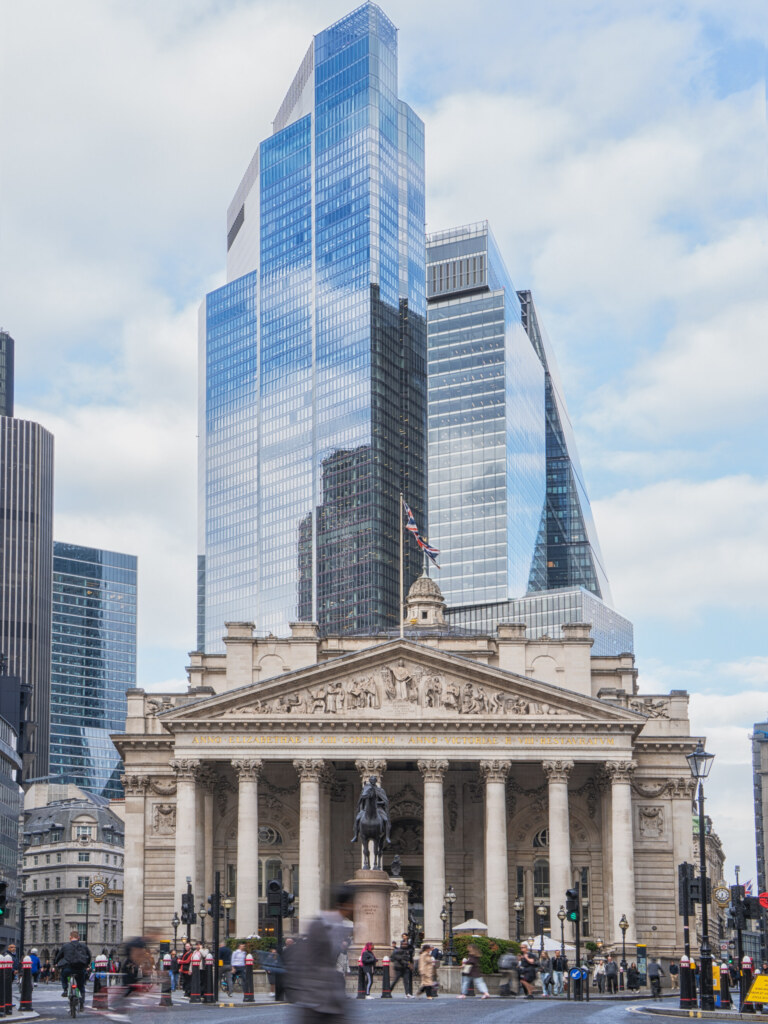
The City of London occupies the EC1 to EC4 postcode zone. It’s broadly bounded by Farringdon Road to the west, Bishopsgate to the east, London Wall to the north and the Thames to the south. Most of the active office market sits within EC2 and EC3, with the densest concentration of major buildings in the eastern cluster around Bishopsgate, Leadenhall and Fenchurch Street.
As with most areas, the market is organised around a handful of key streets and clusters:
- Bishopsgate is the main commercial spine running north-south, with several of the City’s most significant towers either fronting it or directly adjacent.
- Leadenhall Street and the surrounding lanes are home to the insurance and Lloyd’s of London market, along with some of the most architecturally distinctive buildings in the area.
- Cheapside and its surrounding streets (King William Street, Cannon Street) form the western commercial core, closer to Bank station and the financial heartland.
- London Wall connects the western City to the Barbican, offering mid-market office stock alongside newer developments.
- Gracechurch Street runs through the heart of the eastern City, connecting Bank to Fenchurch Street and passing through one of the denser parts of the retail and amenity offer.
-

-
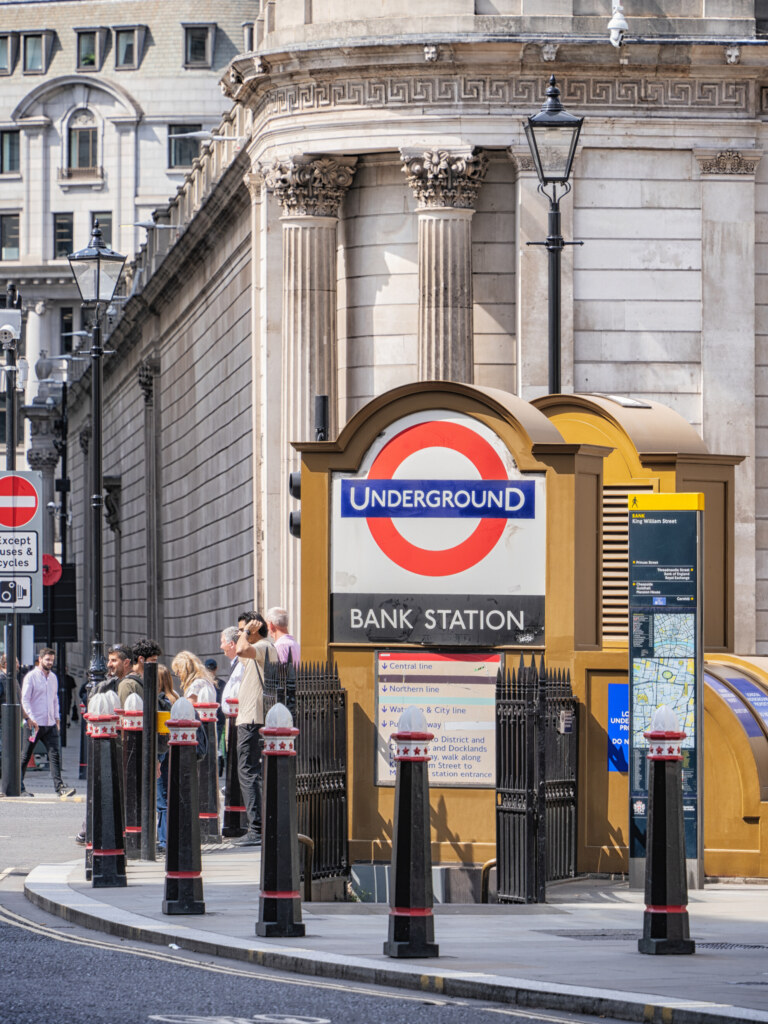
Transport connectivity is exceptional throughout the City, with no location more than a few minutes’ walk from a major station:
- Liverpool Street serves the Elizabeth line, Central, Circle, Hammersmith & City and Metropolitan lines. There are also National Rail services into Essex and Hertfordshire. The Elizabeth line has transformed journey times, with Bond Street in six minutes and Heathrow in 33 minutes.
- Bank and Monument serve the Central, Northern, Waterloo & City and District lines. It’s the most central interchange in the City with direct access to Waterloo, Canary Wharf and the West End.
- Moorgate gives you access to the Circle, Hammersmith & City, Metropolitan and Northern lines. There are also Thameslink services to Farringdon, Blackfriars, City Thameslink and beyond.
- Fenchurch Street serves C2C National Rail services to Barking, Grays and Southend-on-Sea. It’s one of the most heavily used commuter routes into the City.
- Cannon Street provides National Rail services to south-east London and Kent, as well as District and Circle line connections.
- Blackfriars serves Thameslink and the District and Circle lines, with direct services to Gatwick Airport and stations across the Thameslink network.
- Cycling infrastructure has improved significantly, with several protected routes running through the City and extensive cycle parking in most major buildings.
-
-
Types of office space in the City of London
The City of London offers one of the most diverse office markets in Europe. Alongside its landmark skyscrapers, you’ll find refurbished headquarters buildings, characterful heritage properties and a growing supply of flexible workspace. The right option depends on your priorities, whether that’s securing large floorplates, controlling occupancy costs, reinforcing your brand identity or maintaining flexibility as your business evolves. Understanding the different types of office space available is the best place to start your search.
-
Grade A towers and new-build developments
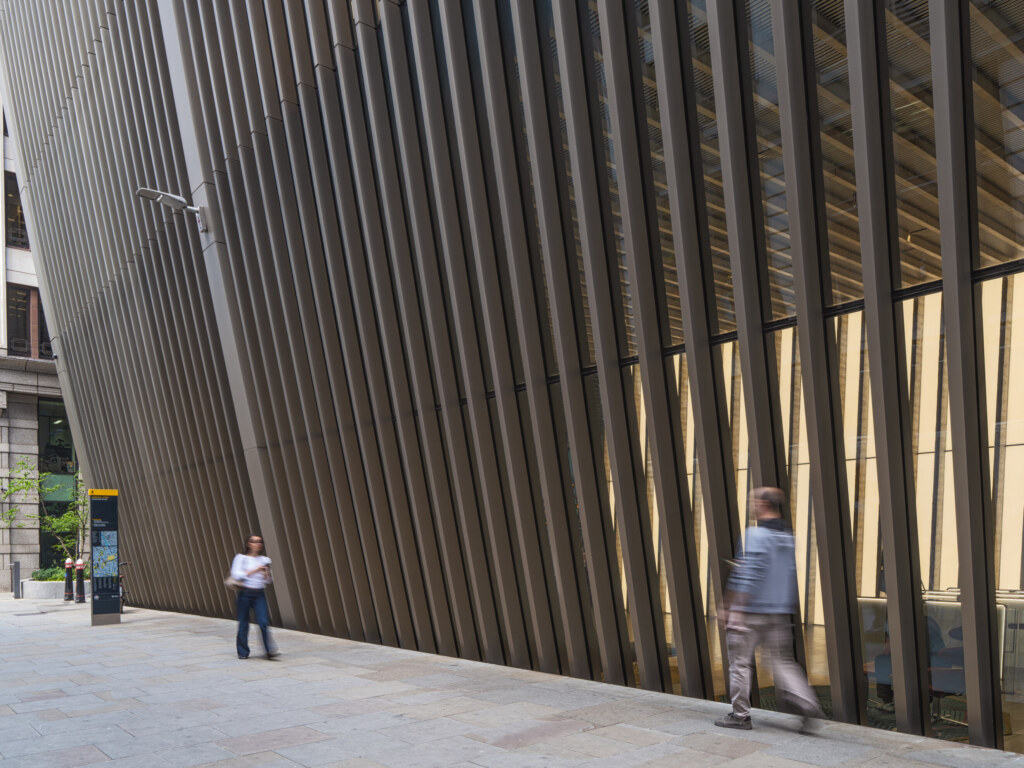
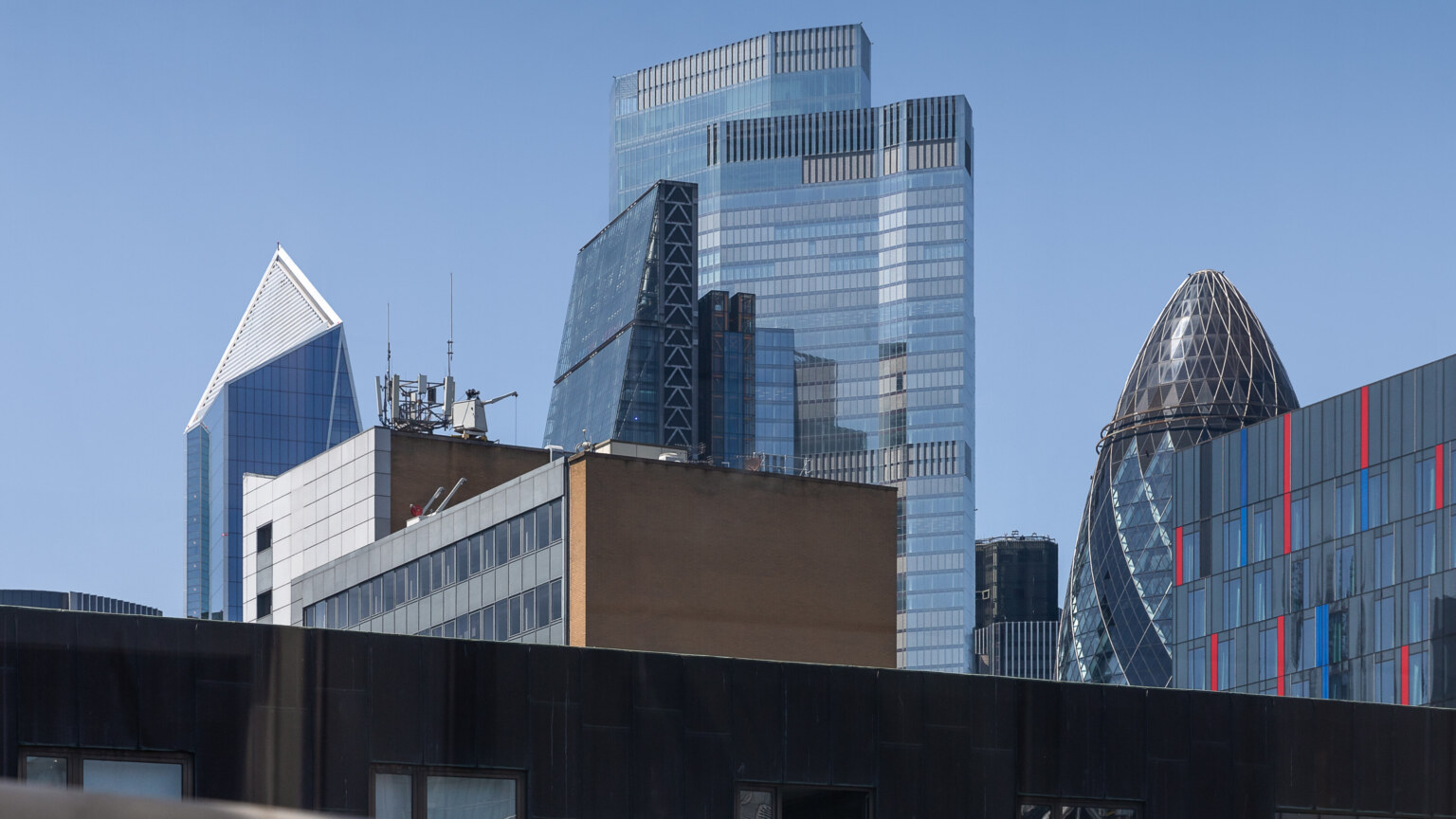
The City’s skyline has been transformed by a generation of towers that have arrived (or are arriving) at scale. Buildings like 22 Bishopsgate, 8 Bishopsgate and 40 Leadenhall represent the upper tier of the market. Expect large, efficient floorplates, best-in-class sustainability credentials, extensive end-of-trip facilities and digital infrastructure that meets the demands of data-intensive occupiers.
This segment suits established financial services firms and global professional services businesses that need scale and the capability to support complex operations. Rents are at the top of the market and space moves quickly on the best floors.
-

-
Refurbished and repositioned offices
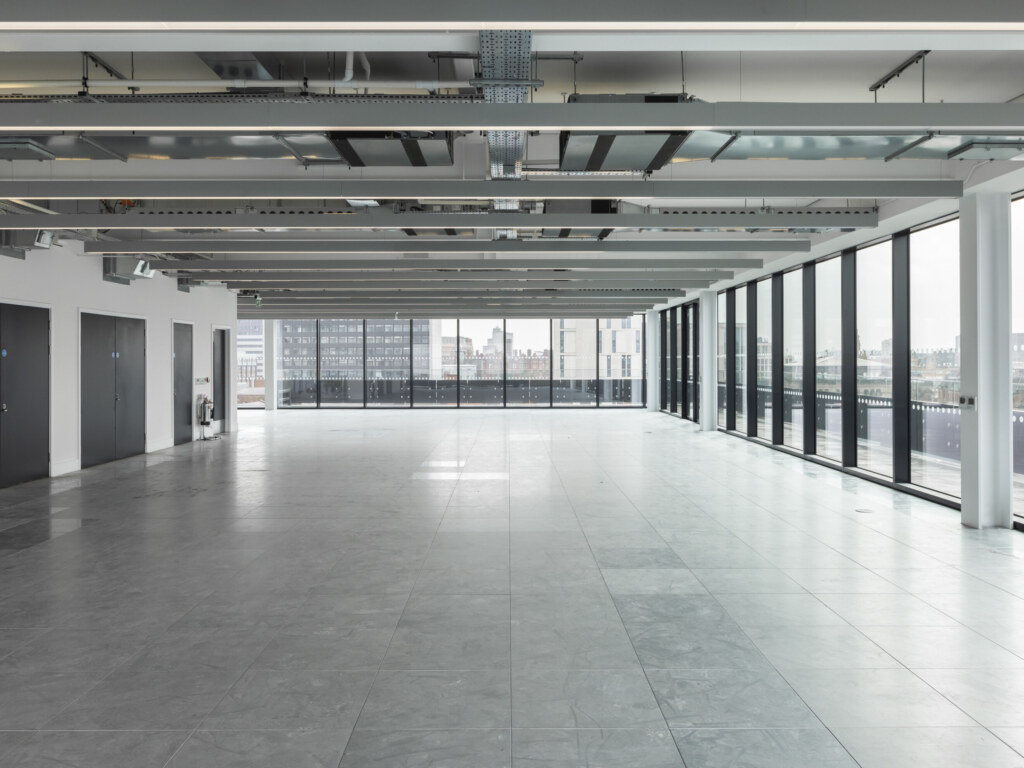
A substantial amount of City office stock comes from buildings that have been completely upgraded over the past decade. This mid-market category offers modern specification at competitive rents compared to new builds. It often delivers a more distinctive character than a standard glass tower too.
Specification varies quite a bit across this category. EPC ratings and service charges call for careful scrutiny, as older structures can carry higher running costs even after refurbishment. For mid-sized occupiers that want quality without the premium of a new build, this is typically the most productive area to explore.
-
-
Character and heritage buildings
You’ll also find a significant number of Victorian and Edwardian commercial buildings in the City, along with post-war offices that have been retained and upgraded. Many of these offer smaller floor plates and a distinctly different character to the glass towers. Think period facades, high ceilings and original features that modern buildings can’t replicate.
These buildings suit boutique professional services firms and specialist finance businesses, not to mention any organisation where workspace character reinforces your brand identity. Of course, supply is genuinely limited, and the best units are rarely available for long.
-

-
Serviced, managed and flexible offices
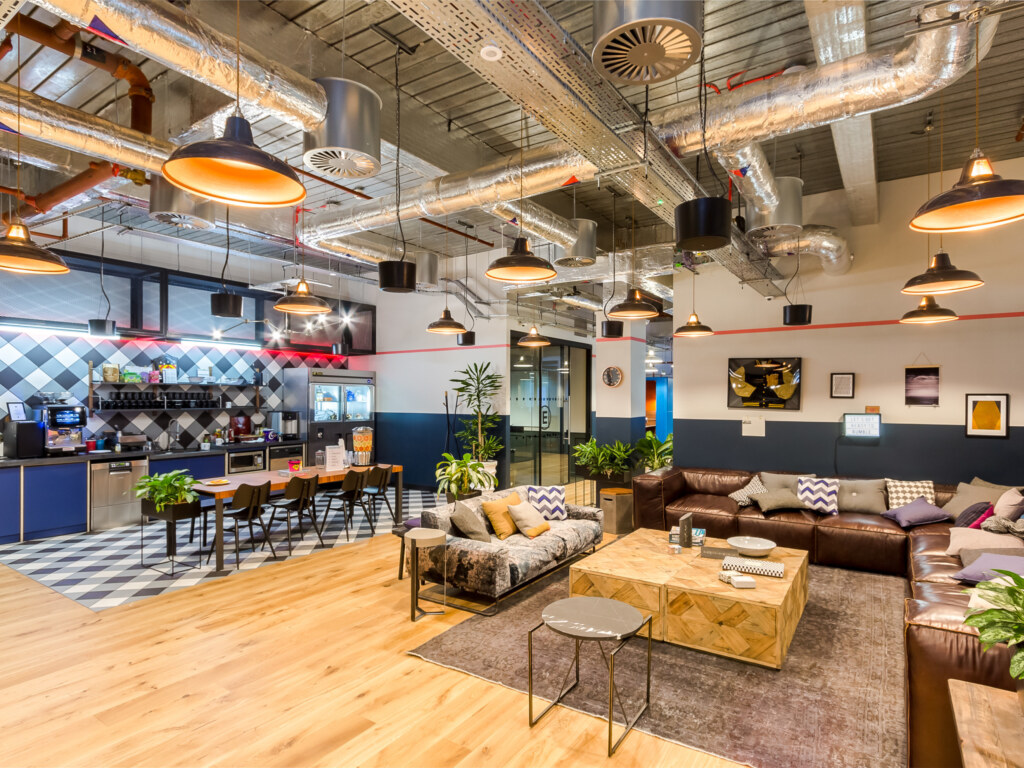
The City’s flexible office market has grown substantially, with major operators including WeWork, The Office Group, IWG and Spaces running multiple locations across EC2 and EC3. This segment suits businesses in early growth stages or those with variable headcount requirements. They’re also useful if you want to test a City address in the short-term.
All-inclusive pricing and short minimum terms give you simplicity and flexibility. At scale, however, the cost per desk is significantly higher than a traditional lease. You’ll also have less control over how the environment reflects your brand. Whether the flexibility premium is justified depends entirely on your circumstances and trajectory.
-
-
Five office buildings shaping the City of London
The City of London is home to some of the most ambitious office developments in Europe. Over the past decade, a wave of new towers and landmark refurbishments has reshaped the skyline, raising expectations around sustainability, amenities and workplace experience.
The buildings below showcase the breadth of what’s available across the market, from insurance-focused towers in EC3 to vertical business campuses on Bishopsgate, each illustrating a different aspect of how the City office market continues to evolve.

-
1) The Scalpel
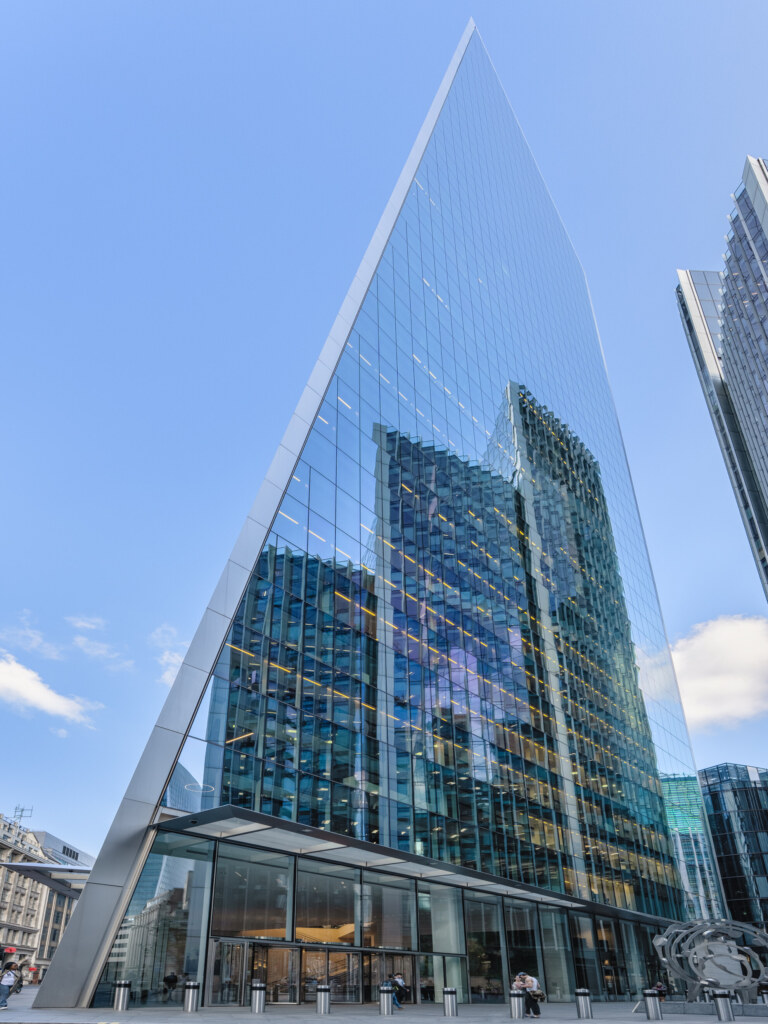
The Scalpel sits at the heart of the City’s insurance cluster. Completed in 2018, the 37-storey tower rises 623 feet above EC3 with a distinctive tapered profile and glass-clad exterior.
With just over 400,000 sq ft of net internal area and typical floorplates of around 11,000 sq ft, it’s a building for businesses that want a serious City address without the campus scale of the Bishopsgate towers.
Key facts
- Size: 402,960 sq ft NIA
- Floors: 37
- Completed: 2018
- Architect: Kohn Pedersen Fox Associates
- Owner: Ho Bee Land Limited
- Lease type: Traditional leasehold
- Accreditations: BREEAM Excellent
- CoStar est. rent: £79.50 – £115/sq ft
-
-
Why businesses choose it
- Prime EC3 location at the corner of Lime Street and Leadenhall Street, within the Lloyd’s of London insurance cluster and seconds from Fenchurch Street station
- A distinctive KPF-designed tower with a tapered glass façade that provides a strong visual identity and panoramic views from the upper floors
- Typical floorplates of around 11,000 sq ft suit businesses that want their own floor without the scale commitment of the larger Bishopsgate towers
- Triple-height reception creates a formal, high-quality arrival that holds its own alongside the adjacent landmark buildings
- Available floors spanning the 21st to 31st offer a range of rent points from £79.50 to £115/sq ft, with genuine flexibility depending on the height required
Occupiers
The Scalpel’s tenant base is a direct reflection of its EC3 location. WR Berkley, Convex, AXIS Capital and Chaucer are among the current occupiers. This concentration of specialist insurers and underwriters mirrors the Lloyd’s market geography outside.
Features
The Scalpel’s position within the Lloyd’s cluster is its defining commercial asset. The Gherkin is directly adjacent and the Lloyd’s building is a short walk. For businesses embedded in the London insurance market, this is as close to the centre of gravity as it’s possible to get in a relatively modern building.
-
2) 22 Bishopsgate
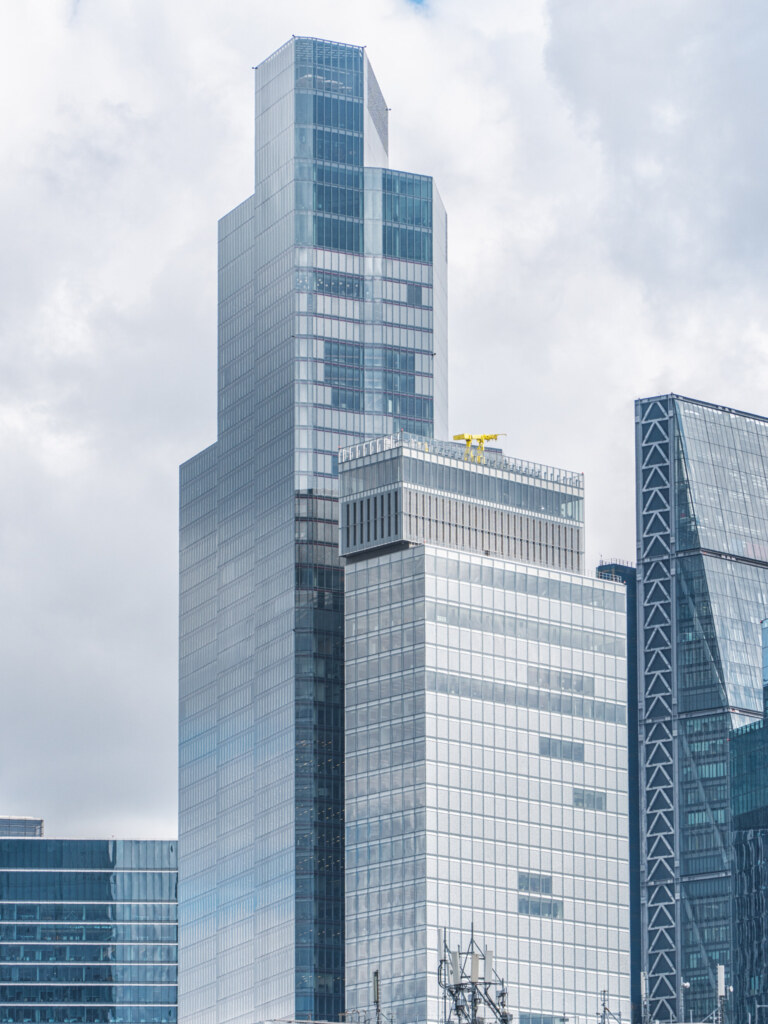
22 Bishopsgate is the largest office building in the City of London. Completed in 2020, the 62-storey tower at the top of Bishopsgate offers 1.4 million sq ft of Grade A space.
From the outset, this building was conceived as a vertical business campus rather than a conventional office tower. It has over 100,000 sq ft of amenity space with a gym, spa, cycle park, coworking areas and panoramic event venues.
Key facts
-
- Size: 1,436,034 sq ft NIA
- Floors: 62
- Completed: 2020
- Architect: PLP Architecture
- Developer: Lipton Rogers Development
- Owner: Temasek
- Lease type: Traditional leasehold and managed (NewFlex)
- Accreditations: BREEAM Excellent, WiredScore Platinum, WELL Building Standard
-
-
-
Why businesses choose it
- The largest office building in the City with typical floorplates of around 22,500 sq ft offering genuine scale for large, consolidated teams
- 100,000+ sq ft of amenity including a gym, spa, food hall, coworking spaces and event venues. A self-contained working environment that reduces reliance on the surrounding streets
- WiredScore Platinum and first-in-the-UK WELL Building Standard application reflect the building’s commitment to digital infrastructure and occupier wellbeing
- NewFlex operates managed workspace within the building, providing a flexible option alongside the tower’s traditional leases
- 100% leased since completion, with achieved rents reaching £122/sq ft on the upper floors
Occupiers
Apple occupies over 206,000 sq ft on a lease running to 2032, making it one of the largest single technology tenancies in the City. US law firms Skadden, Covington & Burling and Cooley account for a further 250,000 sq ft between them. William Blair and other financial services firms complete the tenant mix, showing how the building has successfully drawn a broader range of occupiers than a traditional City tower.
Features
The 20,000 sq ft food hall at 22 Bishopsgate is a genuine differentiator. Open to tenants on weekdays and the public on Saturdays, it functions as a ground-floor destination rather than a standard building café. That approach is relatively rare in the City.
-
3) 8 Bishopsgate
8 Bishopsgate opened in 2023, developed by Stanhope plc. The 51-storey tower rises 850 feet on the site of 6-8 Bishopsgate and 150 Leadenhall Street, with dual entrances onto both Bishopsgate and Leadenhall Street.
With 838,000 sq ft of net internal area and BREEAM Outstanding credentials, it sits at the top of the City market on sustainability. The building’s end-of-trip provision (961 cycle spaces, 768 lockers and 54 showers) reflects a genuine commitment to how people get to work rather than a gesture towards cycling infrastructure.
A top-floor public viewing gallery with private function rooms adds a dimension that few other buildings in this part of EC2 can offer.
Key facts
- Size: 838,080 sq ft NIA
- Floors: 51
- Completed: 2023
- Architect: Wilkinson Eyre Architects
- Developer: Stanhope plc
- Owner: Mitsubishi Estate London Ltd
- Lease type: Traditional leasehold
- Accreditations: BREEAM Outstanding
- CoStar est. rent: £79 – £97/sq ft
-

-
Why businesses choose it
- BREEAM Outstanding (the strongest sustainability rating available) at a scale of over 800,000 sq ft, making it one of the most credentialled large buildings in the City for occupiers with ESG reporting requirements
- 51 storeys with dual street-level entrances and a public viewing gallery at the top that gives the building a civic presence beyond its commercial function
- 961 cycle spaces, 768 lockers and 54 showers represent one of the most serious end-of-trip offers in the City
- Level 26 café and deli with a 7,630 sq ft communal terrace provides an amenity floor mid-building rather than concentrating the offer at ground level
- 99% leased since completion, with achieved rents reaching £147/sq ft on the upper floors, making it the leading benchmark for the Bishopsgate submarket
Occupiers
CFC, the specialist insurance and technology business, anchors the building with 87,900 sq ft on a lease running to January 2039. US law firms Proskauer, HFW and King & Spalding collectively occupy a further 175,000 sq ft, alongside reinsurer SCOR. That combination of insurance, legal and financial services tenants is characteristic of the eastern City cluster.
Features
The top-floor viewing gallery at 8 Bishopsgate is one of the more unusual features of any recent City development. Public viewing galleries are rare in this part of EC2, and the option to book private function rooms at height gives occupiers an event venue that’s genuinely distinct from a standard client entertainment offer.
The mid-building terrace at Level 26 is equally well considered. It distributes outdoor amenity across the building rather than concentrating it at roof level. This works better for everyday use, avoiding the bottleneck that a single rooftop terrace can create in a building of this size.
-
4) 70 St Mary Axe
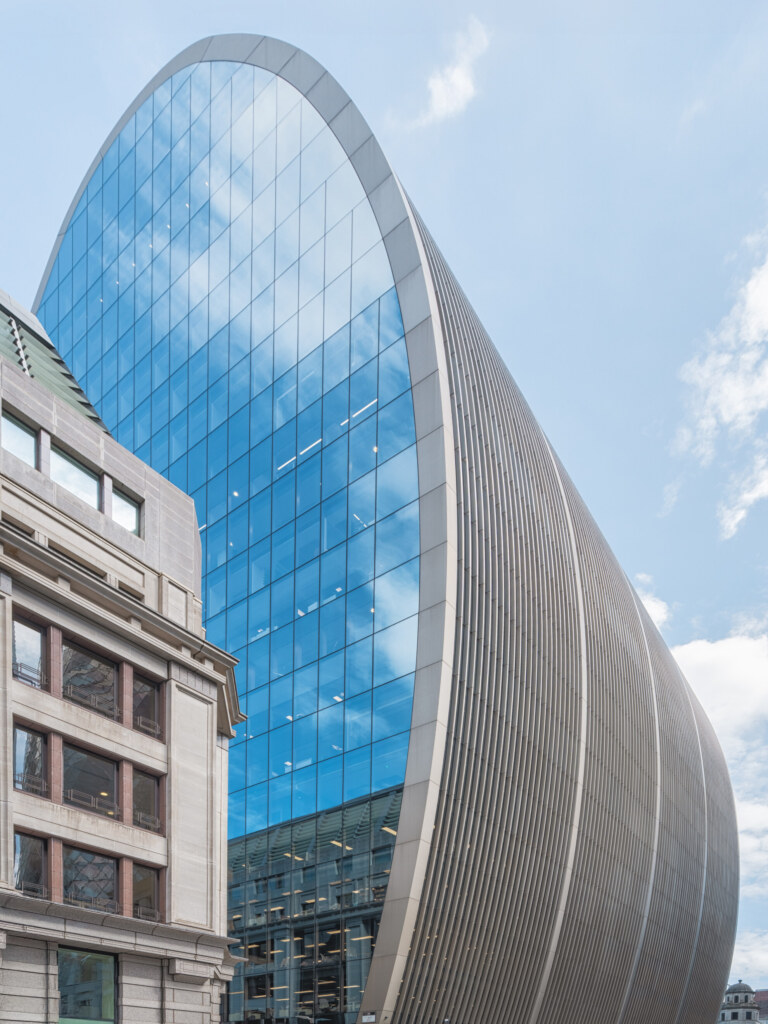
70 St Mary Axe occupies a prominent position in the City’s eastern cluster. The 22-floor building rises 90 metres with a 24-floor arrangement around a central core. It sits within a few minutes’ walk of Liverpool Street, Aldgate and Fenchurch Street, offering one of the strongest transport positions of any mid-sized building in the City.
At just over 305,000 sq ft, 70 St Mary Axe is a different proposition to the Bishopsgate towers. Typical floorplates of 12,500 sq ft suit businesses that want enough space for a meaningful team without the scale that comes with a larger building.
Key facts
- Size: 305,929 sq ft NIA
- Floors: 22
- Completed: 2019
- Architect: Foggo Associates
- Developer: Mace
- Owner: Hayfin
- Lease type: Traditional leasehold and managed (Industrious)
- Accreditations: BREEAM Excellent
- CoStar est. rent: £67 – £81/sq ft
-
-
Why businesses choose it
- Typical floorplates of 12,500 sq ft suit single-occupier floors for teams of 80 to 120 people, making it a great fit for professional services firms that want their own level without committing to a larger tower
- One of the best-connected mid-sized buildings in the City, with Liverpool Street (0.3 miles), Aldgate (0.3 miles) and Fenchurch Street (0.4 miles) all within a short walk
- Industrious operates managed workspace within the building on a lease running to September 2029, providing a flexible option alongside traditional leases
- BREEAM Excellent credentials and an atrium-led design with strong natural light throughout, alongside a building manager on site and full reception services
- Asking rents of £69.50/sq ft for traditional leases represent competitive value in a building that punches above its size in terms of specification and location
Occupiers
Sidley Austin anchors the building with 93,841 sq ft on a lease running to September 2036. This significant commitment from one of the world’s largest law firms reflects the building’s credibility as a legal and professional services address. The tenant mix also include planning consultancy Montagu Evans, data intelligence firm Clarivate and travel technology business Travelfusion.
Features
70 St Mary Axe’s atrium is the building’s defining interior feature. It draws natural light deep into the floorplates and creates a sense of openness that straightforward core-and-floor towers in this part of the City often lack. For businesses where the quality of the daily working environment matters, the atrium makes a meaningful difference to what’s achievable on each floor.
-
5) 40 Leadenhall
40 Leadenhall is the most significant new office development to arrive in the eastern City in recent years. Completed in 2024 on the corner of Leadenhall Street and Biliter Street, the 34-storey tower delivers 861,740 sq ft of Grade A space.
The building’s position in EC3 places it at the centre of the insurance, financial and professional services cluster. Make Architects’ design combines a striking public realm at street level with high-specification interiors. A BREEAM Platinum target positions it among the most ambitiously credentialled buildings in the current City pipeline.
Key facts
- Size: 861,740 sq ft NIA
- Floors: 34
- Completed: 2024
- Architect: Make Architects
- Developer: Nuveen
- Owner: M&G Investments
- Lease type: Traditional leasehold and managed (Huckletree)
- Accreditations: BREEAM Excellent (Platinum target)
- CoStar est. rent: £79 – £97/sq ft
-

-
Why businesses choose it
- Large, flexible floorplates averaging 37,960 sq ft are among the biggest in the eastern City cluster. They’re ideal for major professional services and financial firms that need scale on a single level
- 97.7% leased since completion, with achieved rents of £100/sq ft. Kirkland & Ellis anchors over 392,000 sq ft on a lease to October 2040, which is the longest major commitment in the EC3 market
- BREEAM Platinum target with rainwater harvesting, reflecting a building designed to the highest current standards of sustainability and occupier amenity
- Huckletree operates managed workspace across 48,000 sq ft, providing a flexible option within the building for smaller teams or businesses testing an EC3 address
- Prime position at the heart of the Lloyd’s and insurance cluster, seconds from Fenchurch Street and within a short walk of Aldgate and Monument
Occupiers
40 Leadenhall has attracted the exact profile of tenants its EC3 location was designed for. Kirkland & Ellis (one of the world’s largest law firms by revenue) takes the lion’s share at 392,178 sq ft. Chubb, Sompo and Acrisure bring a concentration of major insurance and risk businesses to the building that reinforces its position within the Lloyd’s cluster.
Features
The auditorium at 40 Leadenhall is a relatively uncommon amenity in a City office building. An in-house auditorium removes the need to hire external venues and keeps high-profile events within the building. Combined with the improvements to the public space at street level, the building has been designed to function as a destination address rather than simply a container for office floors.
-
Which companies choose the City of London?
The City of London attracts organisations that benefit from proximity to clients, partners, regulators and industry peers. While it’s best known as the UK’s financial centre, the occupier base extends far beyond banking and investment. Legal firms, insurers, technology businesses and specialist consultancies all choose the City because of the concentration of expertise, infrastructure and commercial opportunity found within a relatively compact area. Understanding who occupies the City helps explain why demand for office space here remains so resilient.
-
Financial services
Financial services firms are the City’s defining occupier group. And they have been for centuries. Global banks, investment managers, hedge funds, private equity firms and trading businesses cluster here for the ecosystem as much as the real estate. The concentration of counterparties, regulators, professional advisers and market infrastructure in a single square mile creates a network density that no other location in the UK can offer.
For financial businesses, a City address is often a commercial requirement rather than a preference. Clients expect it, to start with. But regulators are also here and the talent pool is seriously deep. The nature of that talent tends to value proximity to the market above all else. Remember, they’re experienced, financially literate and often highly compensated.
-
-
Legal and professional services
The City is home to the highest concentration of major law firms in the UK. Magic Circle firms and US law firms operating from London have long anchored their UK operations here. Proximity to financial services clients is the primary driver. That’s paired with the City’s established position as a centre for commercial dispute resolution and regulatory work as well as transactional advice.
This occupier group has also been among the most active in leasing new-build Grade A space over the past five years. There’s been a number of high-profile relocations from older stock to buildings like 22 Bishopsgate and the Leadenhall cluster.
-

-
Insurance and Lloyd’s market
The Lloyd’s of London insurance market operates from its iconic Richard Rogers building on Lime Street. That draws a dense cluster of insurers, brokers, reinsurers and specialist underwriters to the surrounding streets.
This market has a geography of its own. The proximity of underwriters, brokers and claims professionals in the EC3 postcode underpins the face-to-face trading culture that defines how the London market works. For businesses operating in this sector, being within the EC3 cluster is often necessary rather than being a lifestyle choice.
-

-
Technology and legal technology
The technology sector is a growing presence in the City. Several major global technology firms have established City offices to serve financial services clients. There are also lots of legal technology, regulatory technology and insurance technology businesses that need to be close to their end markets.
The new generation of buildings has made the City more viable for technology occupiers, with smart building infrastructure and high-quality digital connectivity. They’re complemented by modern floorplates that support the operational requirements of data-intensive organisations.
For technology businesses that derive significant revenue from financial services clients, a City address can meaningfully reinforce commercial credibility in a way that a Shoreditch or Southbank location doesn’t.
-

-
Boutique and specialist businesses
Beyond the major occupier groups, the City houses a significant number of boutique advisory firms, specialist finance businesses, executive search practices, management consultancies and professional services organisations that value proximity to clients above all else.
These businesses often occupy smaller floors in refurbished or character buildings, where the City address delivers commercial credibility without the rent levels of a new-build tower.
-
-
Key considerations
The City of London offers some of the highest-quality office space in Europe, but finding the right building requires more than comparing rents and availability schedules. Location within the City, sustainability requirements, future development activity and the practical demands of your workplace strategy can all have a significant impact on the success of a move. Considering these factors early will help you narrow the market and identify space that supports both your operational needs and long-term business objectives.
Understand the eastern and western City
The City isn’t uniform. There’s an eastern cluster around Bishopsgate, Leadenhall and Fenchurch Street. This where the newest towers are concentrated and where the most active leasing market sits. The western City around Cheapside and Cannon Street is more traditional and corporate in character, with a different mix of building ages and specifications. Being clear about which end of the market suits your business will sharpen your shortlist considerably. That includes building type and transport catchment along with the neighbours you’ll have in different areas.
Sustainability credentials are now a baseline requirement
The City has seen a dramatic shift in occupier expectations around sustainability over the past five years. Best-in-class buildings now offer BREEAM Outstanding or Excellent, NABERS ratings, EPC A and net zero commitments. For businesses with ESG reporting requirements, the sustainability credentials of the building have moved from a nice-to-have to a core selection criterion. That bar now applies to most regulated financial services firms. As a result, older stock that hasn’t been upgraded is beginning to face genuine leasing challenges.
The development pipeline is one of the most active in London
Several significant buildings have completed in recent years and more are in the pipeline. 8 Bishopsgate opened in 2023 and is now largely let, while 40 Leadenhall is the most anticipated current development.
The pipeline means the supply of best-in-class space will continue to evolve, with implications for rental levels and the competitive position of older stock. If you’re taking a longer lease, it’s worth mapping out where the pipeline will land and how it might affect your building’s position.
-
Office space calculator
Not sure how much space you need? Use Oktra’s office space calculator or read our guide to office space requirements to estimate the right footprint for your team before you start shortlisting buildings.
Try it out -


-
Costs: premium, but justified for the right business
Headline rents for Grade A space in the City of London typically range from £80 to £110 per sq ft per annum. Of course, the best floors in the most prestigious new-build towers will command more. Service charges are typically £12 to £18 per sq ft and business rates run at roughly 45 to 55% of headline rent. So, total occupancy cost is often 35 to 45% above the quoted headline rent.
As you’d expect, the City is more expensive than London Bridge or Shoreditch and commands a premium over Canary Wharf. Whether that premium is justified depends on what you need the address to do for your business. A full breakdown of London office costs by submarket is available in Oktra’s London cost guide.
Fit-out in the City has its own demands
City office fit-outs often need to accommodate a different brief to creative or technology markets. Financial services organisations usually require trading floors, server rooms, extensive meeting suite infrastructure and security systems that need careful planning. The Cat A to Cat B process in a new City tower requires a deep understanding of the base build and the building’s MEP infrastructure. In older refurbished stock, the constraints can be more significant still.
Need to understand how much space your team needs? Oktra’s office space guide and office space calculator can help you estimate a sensible footprint before you begin shortlisting buildings.
-
The cost of London office space
If you’re comparing the City against locations like Canary Wharf, London Bridge or the West End, our latest London Office Rent Report provides a detailed breakdown of rental trends, occupancy costs and market activity across the capital.
Download now -
-
Alternative areas to the City of London for office space
The City won’t suit every business. Several neighbouring markets offer different trade-offs worth considering.
Canary Wharf is the obvious financial services alternative. It has larger floor plates and lower rents with excellent transport connectivity via the Jubilee line and the Elizabeth line. It’s often the right choice for businesses that need scale and aren’t dependent on proximity to Lloyd’s or the Bank of England.
London Bridge sits directly across the river and offers City-adjacent positioning at rents that are typically 15 to 25% lower than the EC core. This is a strong option for businesses that value the City catchment without paying City prices.
Shoreditch is a 10-minute walk from Liverpool Street and draws a growing number of technology and professional services businesses that want City adjacency with a different culture and a lower rent.
On the City’s western edge, Clerkenwell and Farringdon offer a creative character alongside strong transport connections via Farringdon station, which now serves the Elizabeth line, Thameslink and the Circle, Hammersmith & City and Metropolitan lines.
Not settled on a location yet? Oktra’s London area selection guide maps out how the main office markets differ by sector, character and cost – so you can compare your options before committing to a shortlist.
-
-
City of London office space FAQs
-
 Is the City of London right for financial services businesses?
Yes, for most. The City is the UK’s primary financial centre and has been for centuries. The concentration of banks, asset managers, insurers, law firms and professional services businesses creates an ecosystem of counterparties, regulators and advisers that no other location replicates. The City remains a natural choice for businesses that need to be close to that network, whether it’s for client access, regulatory engagement or talent.
What types of office buildings are available in the City of London?
The City offers four main categories:
- Grade A towers and new-build developments like 22 Bishopsgate, 8 Bishopsgate and 40 Leadenhall. These represent the top of the market.
- Refurbished and repositioned offices, which offer modern specification at more competitive rents.
- Character and heritage buildings suited to boutique firms, including Victorian and Edwardian commercial stock.
- Managed and flexible spaces from operators like WeWork, The Office Group, IWG and Spaces.
Can I rent office space in the City of London on a short-term basis?
Yes. The City has a well-established flexible office market. Major operators run multiple locations across EC2 and EC3. The likes of WeWork, The Office Group, IWG and Regus offer private and shared offices on licences with minimum terms typically from three months. This is a practical option for businesses testing a City address or those with variable headcount requirements.
How much does office space in the City of London cost?
Grade A headline rents typically range from £80 to £110 per sq ft per annum for traditional leases, with the best floors in the newest towers commanding more. Serviced office space runs at approximately £600 to £800 per desk per month depending on location and specification within the City.
Total occupancy cost (including service charges and business rates) is usually 35 to 45% above the quoted headline rent. A full breakdown is available in Oktra’s London office cost guide.
Which companies are based in the City of London?
The City houses a dense concentration of global financial services firms, major law firms, insurance businesses and professional services organisations. The Lloyd’s of London market anchors EC3. Major banks including Barclays, NatWest and HSBC have significant City operations, alongside global asset managers and private equity firms. A growing number of technology businesses have also established City offices in recent years, particularly those serving financial services clients.
What is the City of London like for commuting?
Transport connectivity is outstanding. The City is served by:
- Liverpool Street (Elizabeth line, Central, Circle, Hammersmith & City, Metropolitan lines and National Rail)
- Bank/Monument (Central, Northern, Waterloo & City, District lines)
- Moorgate (Circle, Hammersmith & City, Metropolitan, Northern lines and Thameslink)
- Cannon Street (District, Circle lines and National Rail to Kent)
- Fenchurch Street (C2C National Rail to Essex)
- Blackfriars (District, Circle and Thameslink)
- And numerous other stations within a short walk.
The Elizabeth line has significantly improved east-west journey times, connecting the City directly to Heathrow as well as the West End and Canary Wharf.
-
 Is the City of London right for financial services businesses?
-
Contact us
Get in touch to discuss your potential office space costs
020 7553 9500
info@oktra.co.uk
-
"*" indicates required fields
Related content

-
Want updates on similar new content? We’ll send you an email a month with new insights when you join our mailing list.
JOIN THE LIST
