

Share

10 min read

Senior Content Manager
Content specialist in office design and build.
-
Shoreditch sits at the border of EC1 and EC2, where East London meets the City’s edge. It’s become one of the most active office markets in London, and with good reason. It combines creative energy with proximity to the capital’s financial core, without City formality or West End pricing.
When it comes to office space, Shoreditch is a natural fit for tech firms, creative agencies, fintech scale-ups and media companies. But it’s not right for every business.
Thinking about an office in Shoreditch? This guide will help you decide if it’s the right fit for your business. We’ll cover everything from the building stock and transport links to costs and some key design and fit-out questions.
Table of contents:
-
Working in Shoreditch
Shoreditch has a different rhythm to the City. It’s perfect if you want close proximity to peers in adjacent industries, and also sits within the Silicon Roundabout catchment – which has a deep and active local talent market.
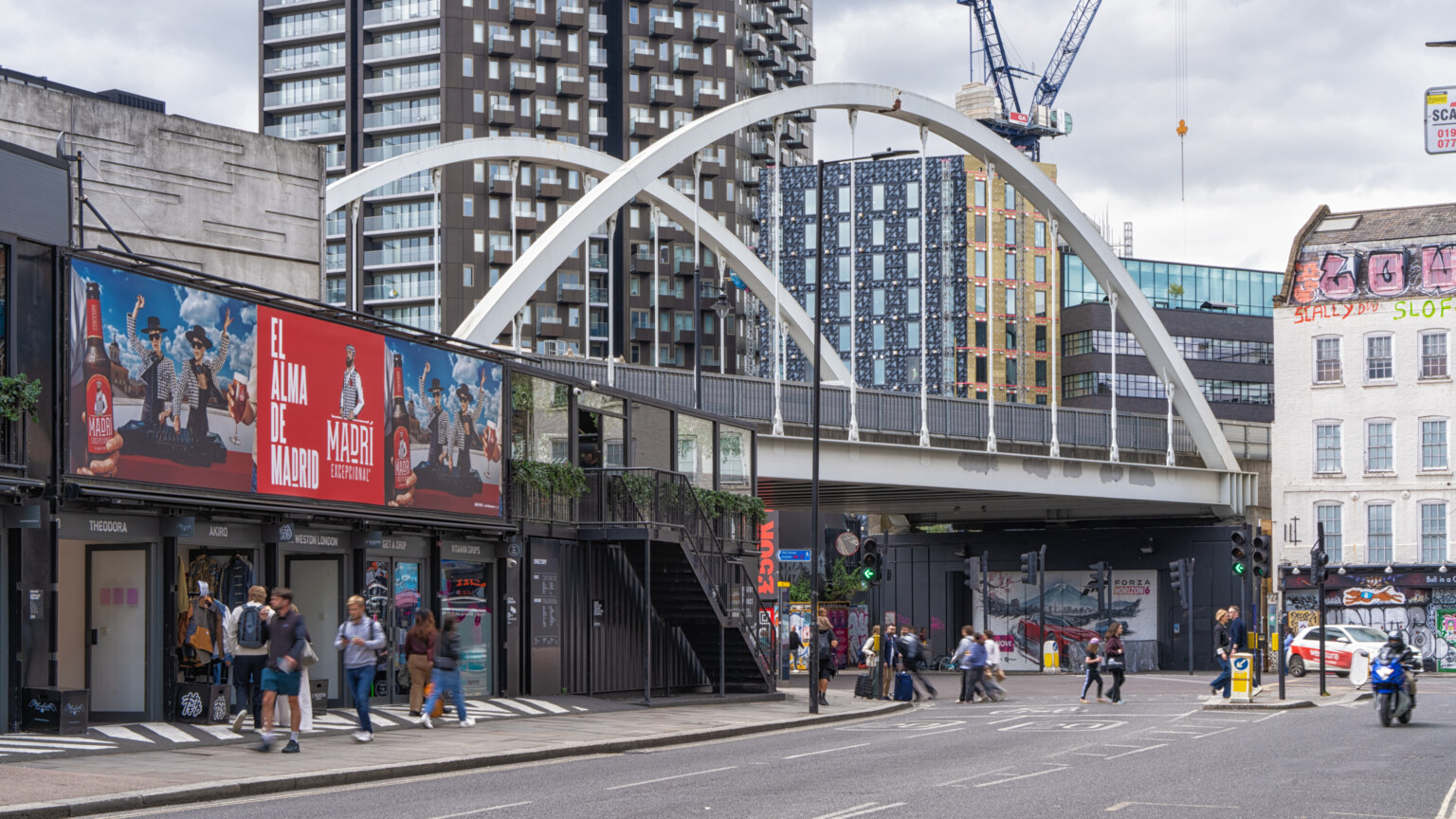
The energetic main corridors around Shoreditch High Street and Great Eastern Street are packed with coffee shops and lunch options, offering some of London’s best informal meeting spots. Elsewhere, Rivington Street and Curtain Road have a more studio-like character.
A Shoreditch address sends a signal too. It reads as innovation-forward, design-aware and culturally credible. That alone can actively attract talent for most creative and fintech businesses, particularly among younger workforces. For businesses in more traditional sectors, a City or West End address typically carries more commercial weight with clients.
-
Location, transport and key streets
Shoreditch covers roughly one square mile, spanning postcodes EC2A, EC1V and E1. It borders the City of London to the south, Clerkenwell to the west, Bethnal Green to the east and Hoxton to the north.
Shoreditch’s office market centres on a handful of key streets. Shoreditch High Street forms the main spine, with Great Eastern Street connecting east–west. Curtain Road and Rivington Street offer a more creative feel, while Worship Street provides more corporate space near the City. Sitting at the western edge, Old Street anchors the area with larger, tech-focused buildings.
There are several major office streets to consider:
- Shoreditch High Street
- Great Eastern Street
- Curtain Road
- Worship Street
- Rivington Street
- Old Street
-

-
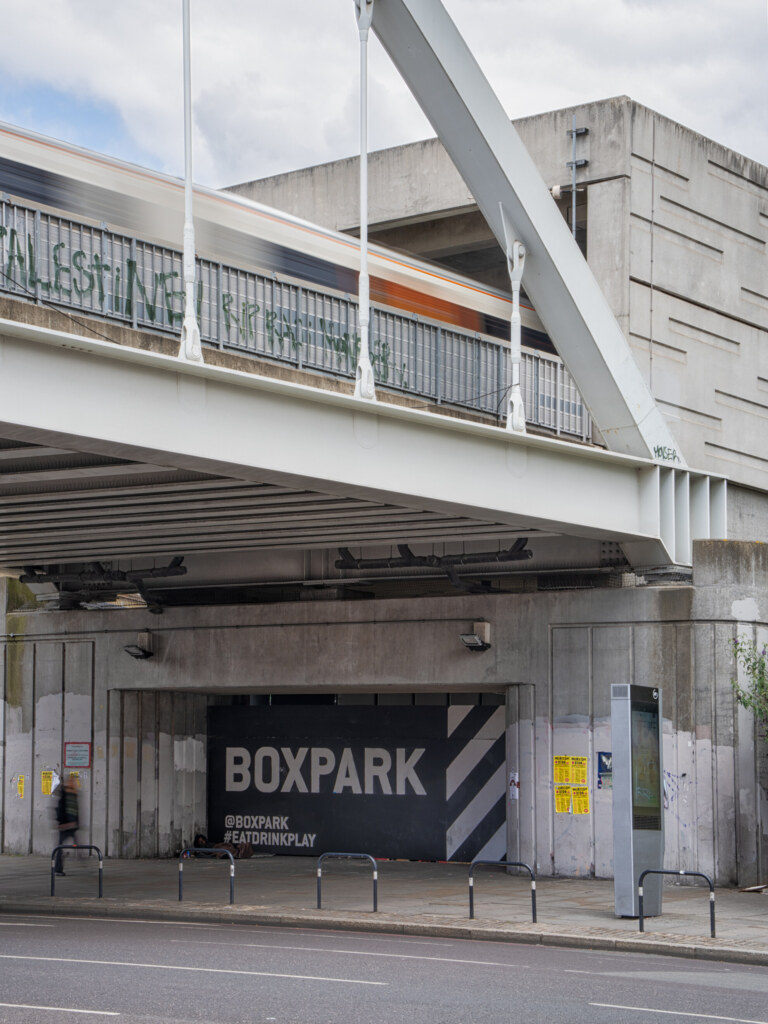
Wherever you choose, transport connections are strong:
- Shoreditch High Street Overground provides direct connections to Hackney, Canada Water and Whitechapel.
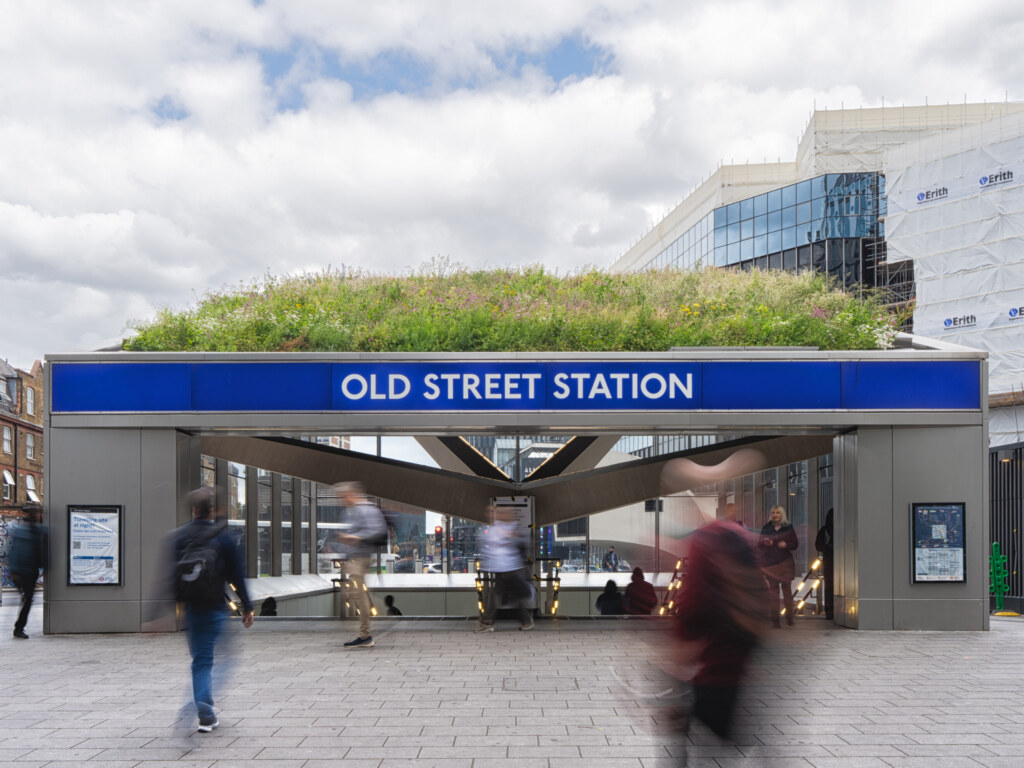
- Old Street station (Northern line and National Rail) is a 10-minute walk with direct links to Bank, King’s Cross and Angel.
- Liverpool Street is also a 10-minute walk and offers six lines including the Elizabeth line, which connects to Bond Street in 7 minutes, Canary Wharf in 6 minutes and Heathrow in 33 minutes.
- Moorgate is 12 minutes away on foot.
- Cycling is well-supported, with multiple Santander Cycle docking stations nearby and Rivington Street recognised as one of London’s first ultra-low emission streets.
-

-
Types of office space in Shoreditch
Office space in Shoreditch is available across a range of tenure and lease types, catering to different business needs and levels of flexibility. Traditional leases typically offer longer terms, greater control over the workspace, and the lowest cost per square foot for larger occupiers.
Serviced and managed offices provide fully fitted, all-inclusive solutions that often include furniture, broadband, and other amenities, allowing businesses to move in quickly with minimal setup, while coworking spaces and private offices represent variations of the the same model, ranging from individual desks in shared environments to fully private floors.
Below is a more detailed review of Shoreditch’s office stock.
-
Warehouse and character buildings
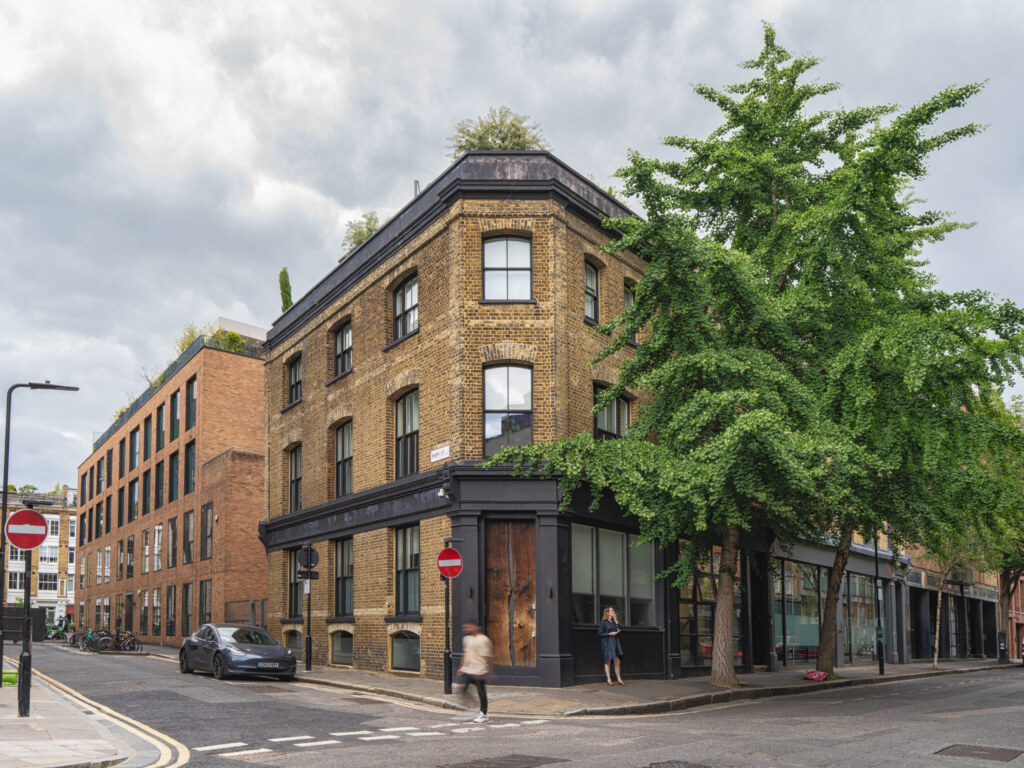
A number of Victorian and Edwardian industrial buildings have been converted into open-plan office space with exposed brick, concrete columns, high ceilings and original features. You’ll find many along Curtain Road and Great Eastern Street, where the former furniture trade left a legacy of imposing warehouse stock. This is the most distinctive and sought-after building type in the area, and supply is naturally limited.
It suits businesses where workspace identity matters. So, creative agencies, media companies, design-led organisations and tech firms that want an environment that reflects their culture. However, it’s worth noting that older fabric can mean variable energy performance and limited natural light on some floors.
-
-
New-build Grade A
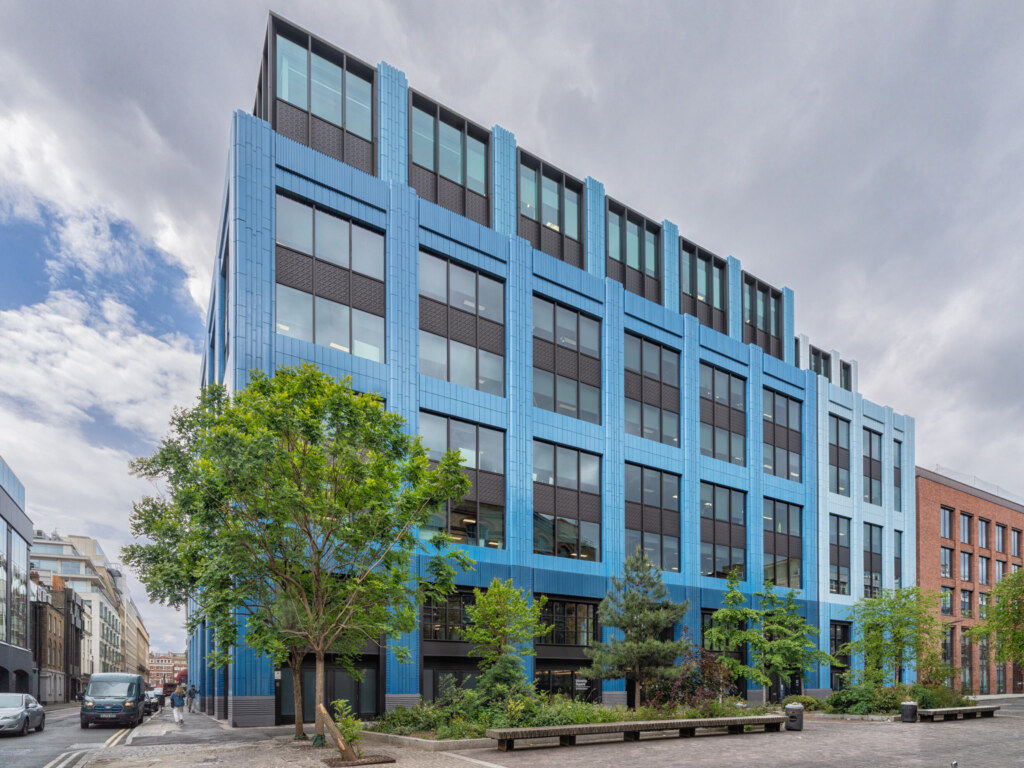
Buildings like Worship Square have set a new sustainability benchmark for the area, combining BREEAM Outstanding credentials, WELL Platinum certification, EPC A ratings and smart building technology across large, flexible floorplates.
This growing segment suits established businesses and scale-ups with serious ESG commitments or corporate reporting requirements. The trade-off is premium rent and (in some cases) less of the industrial character that defines Shoreditch.
-
-
Retrofitted and refurbished offices
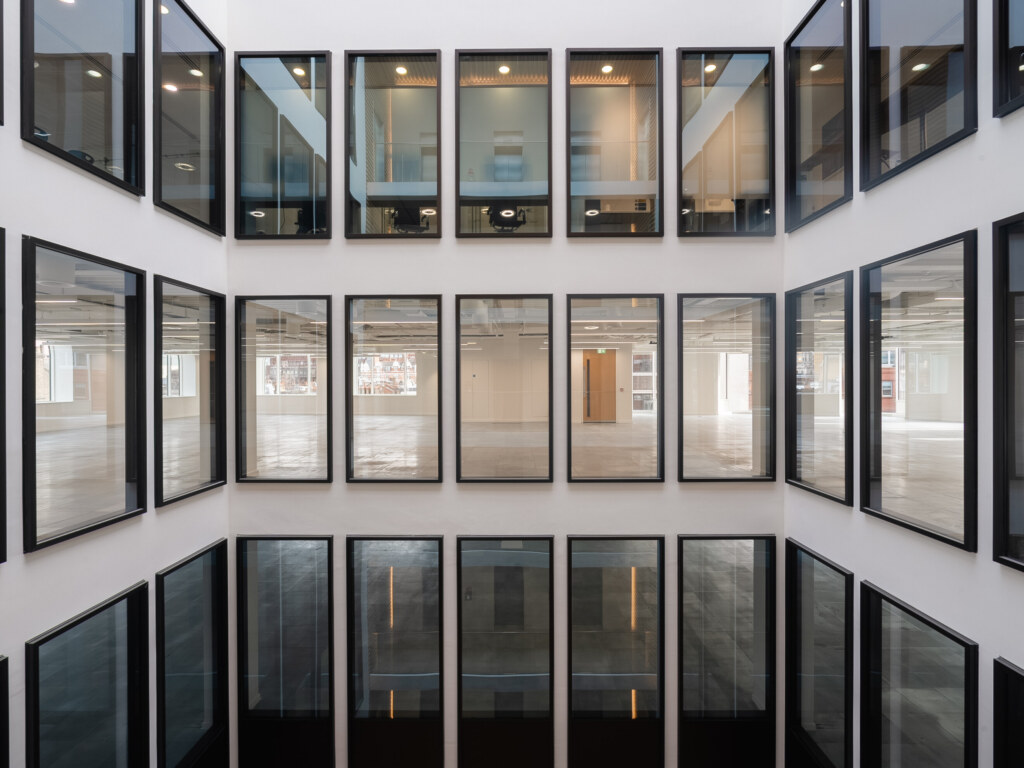
Some buildings have been upgraded to modern specification while retaining their industrial aesthetic, with White Collar Factory the most prominent example.
This mid-market is often the sweet spot for growing businesses that want quality and character without the cost of a new build. Specification can vary widely across this category, so it’s worth reviewing EPC ratings and service charges carefully before committing.
-
-
Serviced, managed and flexible offices
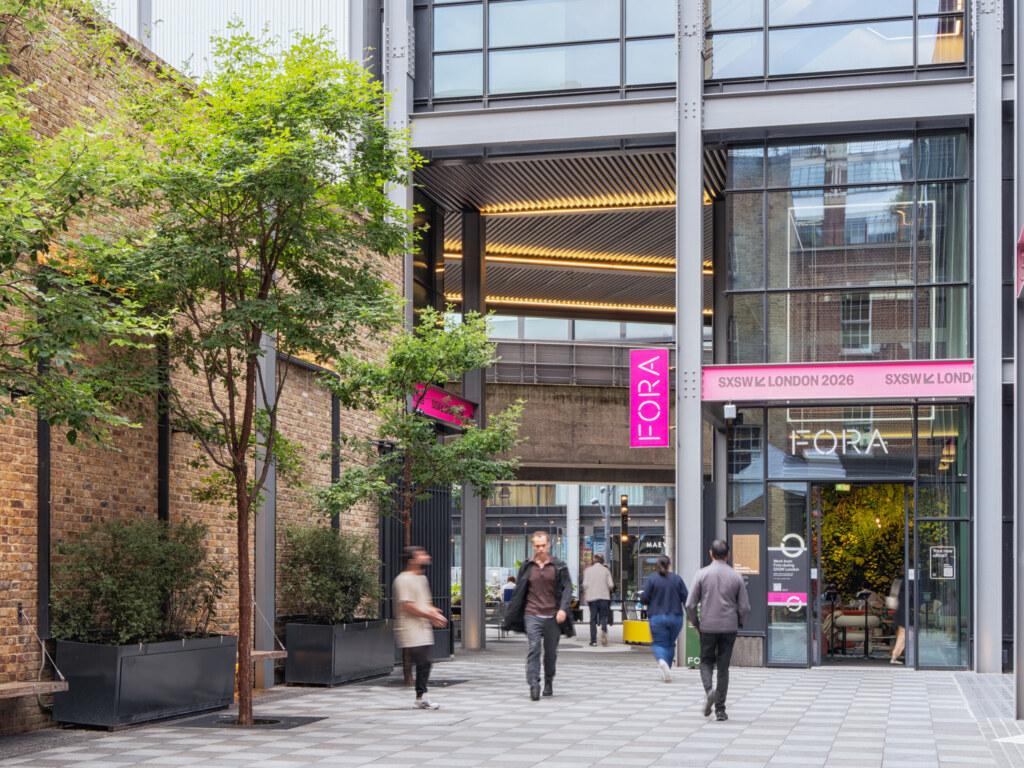
Shoreditch has one of London’s strongest flexible office markets. WeWork has multiple locations in the area, including Mark Square and Shoreditch Exchange, and Fora operates from the Black and White Building on Worship Street. Mindspace and Huckletree also have a presence here.
With these, you get all-inclusive pricing, no Cat B fit-out required and minimum terms typically from three months. This option might be the right choice for businesses in growth mode and those with uncertain headcount trajectories, or those looking to rent office space on a short-term basis before deciding on a longer lease.
The cost per desk is higher than a traditional lease at scale and you have less control over how the environment looks and feels. But for the right business at the right stage, the flexibility justifies the premium.
-
-
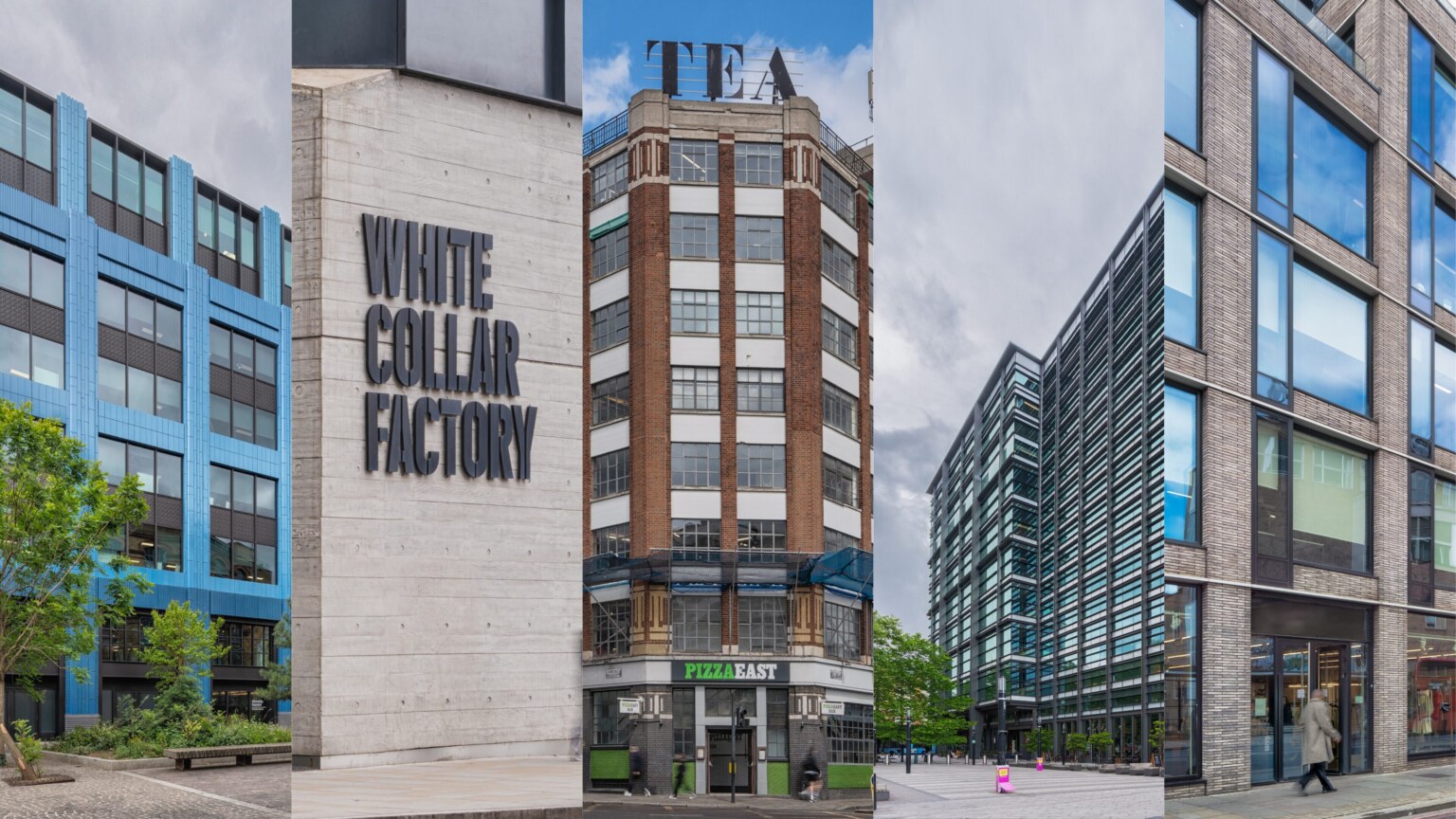
5 key office buildings in Shoreditch
Shoreditch’s office market has evolved significantly over the past decade, with a wave of new developments raising the standard for sustainability, workplace amenities and building technology. While the area’s industrial heritage remains a key part of its appeal, modern Grade A schemes now sit alongside converted warehouses and creative workspaces. The five buildings below highlight some of the most notable offices shaping Shoreditch’s commercial real estate landscape today.
-
1) White Collar Factory
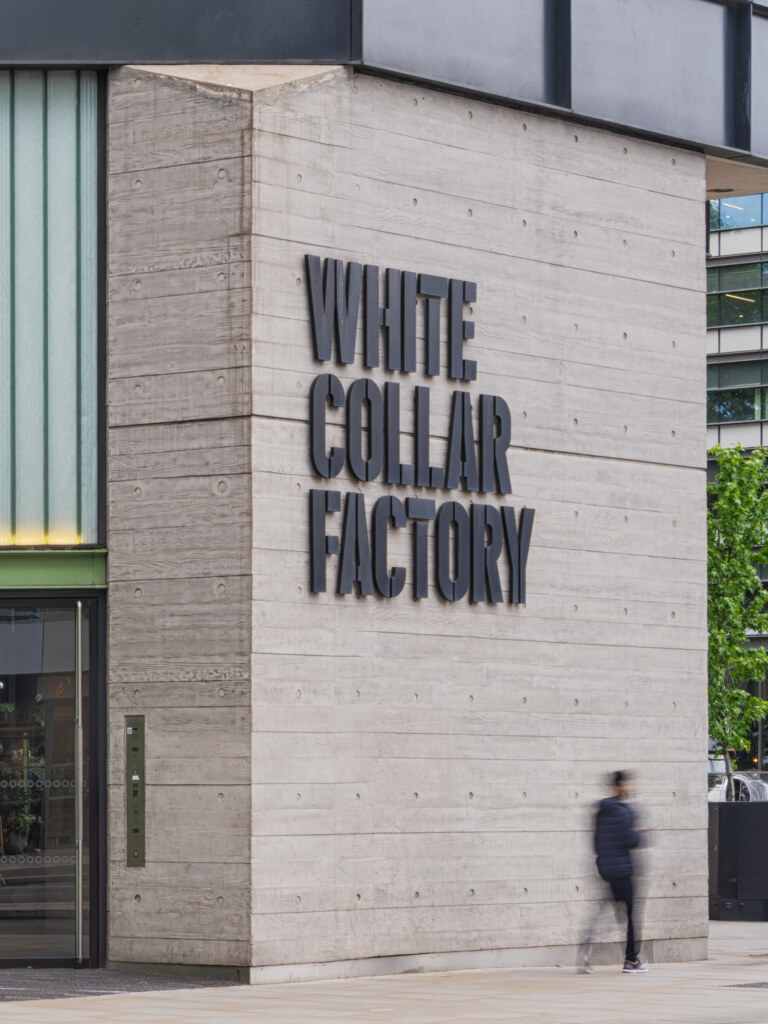
White Collar Factory began as a research question rather than a building. In 2008, Derwent London asked architects and engineers to rethink what the next generation of London offices should look like. Completed in 2017 at Old Street Roundabout, the answer was a 16-storey tower built around the logic of 19th-century factory buildings. Think generous floor-to-ceiling heights, long-span flexible floorplates, operable windows, exposed concrete structure and natural ventilation.
The campus extends to six buildings, set around a new public courtyard called Old Street Yard, and is now considered one of the most influential office buildings of the last decade in London – widely credited with changing expectations of what a modern office should offer. Adobe, Accenture and Capital One occupy floors in the tower, while Fora operates flexible workspace within the building.
Key facts
- Size: 237,000 sq ft (tower); plus 41,360 sq ft in campus buildings
- Floors: 16 (tower)
- Completed: 2017
- Architect: Allford Hall Monaghan Morris
- Developer: Derwent London
- Lease type: Traditional leasehold and managed (Fora)
- Accreditations: BREEAM Outstanding, LEED Platinum, SmartScore Platinum
-
-
Why businesses choose it
- BREEAM Outstanding and LEED Platinum credentials at a scale few buildings in the area can match (237,000 sq ft to be precise)
- 3.5-metre floor-to-ceiling heights and operable windows create a genuinely different working environment to a conventional sealed office
- SmartScore Platinum certification confirms best-in-class digital infrastructure
- Old Street campus location anchors the business in Silicon Roundabout, the densest tech cluster in Europe
- Rooftop running track and 277-space underground cycle hub signal a serious investment in employee experience
Features
The 150-metre outdoor running track on the roof of the 16-storey tower remains one of the most audacious occupier amenities in London. Above all, it’s a genuine statement about what employee wellbeing looks like when it’s taken seriously at the design stage rather than added as an afterthought. Available to all building occupiers, the track offers panoramic views of the London skyline.
Occupiers
Established professional services and financial technology businesses that want scale and sustainability credentials. Notable tenants include Adobe, Accenture, Capital One and Box.com.
-
2) The Tea Building
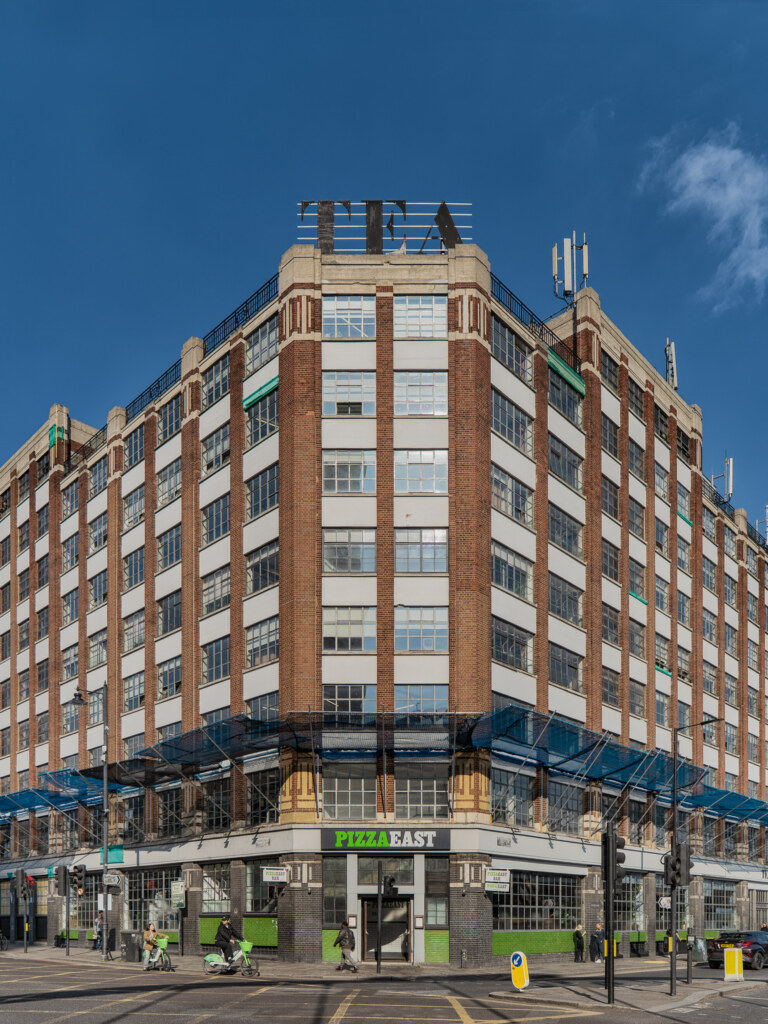
The Tea Building has been a fixture on Shoreditch High Street since 1933, when it was built as a factory and depot for Lipton’s Tea. Derwent London acquired it in 2001 and has gradually transformed it into one of the area’s most established creative addresses.
A partial renovation in 2022 refreshed the building while keeping its defining industrial character intact. Whitewashed brick, Crittall-style steel windows and exposed ceilings give it a materiality that can’t be replicated in a new build. The remodelled lobby now connects Bethnal Green Road with Redchurch Street, threading the building into the surrounding street life.
Key facts
-
- Size: 123,045 sq ft
- Floors: 9
- Completed: 1933 / Renovated: 2022
- Architect: Allford Hall Monaghan Morris
- Developer: Derwent London
- Lease type: Traditional leasehold
- Accreditations: Wired Certified Gold
-
-
-
Why businesses choose it
- BREEAM Outstanding and LEED Platinum credentials at a scale few buildings in the area can match (237,000 sq ft to be precise)
- 3.5-metre floor-to-ceiling heights and operable windows create a genuinely different working environment to a conventional sealed office
- SmartScore Platinum certification confirms best-in-class digital infrastructure
- Old Street campus location anchors the business in Silicon Roundabout, the densest tech cluster in Europe
- Rooftop running track and 277-space underground cycle hub signal a serious investment in employee experience
Features
The 150-metre outdoor running track on the roof of the 16-storey tower remains one of the most audacious occupier amenities in London. Above all, it’s a genuine statement about what employee wellbeing looks like when it’s taken seriously at the design stage rather than added as an afterthought. Available to all building occupiers, the track offers panoramic views of the London skyline.
Occupiers
Established professional services and financial technology businesses that want scale and sustainability credentials. Notable tenants include Adobe, Accenture, Capital One and Box.com.
-
3) Worship Square
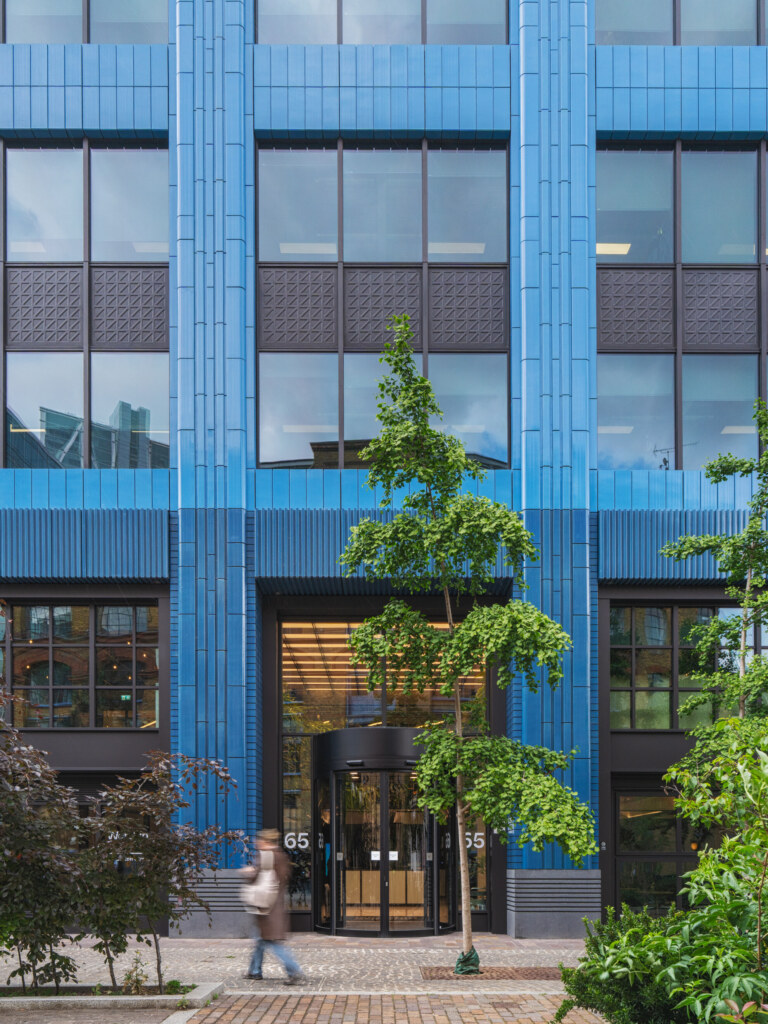
Worship Square is the most significant new office building to arrive in Shoreditch in the past decade. Completed in 2024 and designed by Make Architects for developer HB Reavis, the 12-storey building on Clifton Street has set a new sustainability benchmark for the area. BREEAM Outstanding, WELL Platinum, EPC A and Net Zero Carbon in both construction and operation put it at the top of the Shoreditch market on ESG credentials.
The building sold in November 2025 for £178 million. Wise anchors the building with 83,825 sq ft on a lease running to 2039. That long-term commitment reflects the confidence well-capitalised technology businesses have in Shoreditch as a permanent base.
Key facts
- Size: 142,800 sq ft
- Floors: 12
- Completed: 2024
- Architect: Make Architects
- Developer: HB Reavis
- Owner: Hines Global Income Trust
- Lease type: Traditional leasehold and managed (HubHub)
- Accreditations: BREEAM Outstanding, WELL Platinum, EPC A, Net Zero Carbon
-
-
Why businesses choose it
- Best-in-class sustainability credentials in the Shoreditch market: BREEAM Outstanding, WELL Platinum, EPC A, Net Zero Carbon in construction and operation
- Wise’s 83,825 sq ft anchor tenancy to May 2039 is among the most significant long-term commitments made in this submarket in recent years
- Terraces and communal outdoor space on the upper floors are an amenity that most of the area’s older stock simply can’t offer
- HubHub operates flexible workspace within the building for teams from one to 56 people, providing a managed option at the same address
- Concierge, Brompton bike hire, fitness studio and a dedicated building app reflect the day-to-day expectations of the businesses it targ
Occupiers
Worship Square has attracted exactly the kind of tenants its specification was designed for. Wise anchors the building, with economics consultancy Frontier Economics occupying a further 33,020 sq ft. The combination of a global fintech and a high-end professional services firm in the same building illustrates the range of businesses the new-build Grade A segment in Shoreditch now attracts.
Features
The rooftop terraces and communal upper-floor space give Worship Square something Shoreditch’s older stock rarely delivers: genuine outdoor space at height, with views across the City fringe. Combined with the fitness studio and concierge, they reflect a considered approach to daily working life rather than amenities added as an afterthought.
-
4) 168-178 Shoreditch High Street
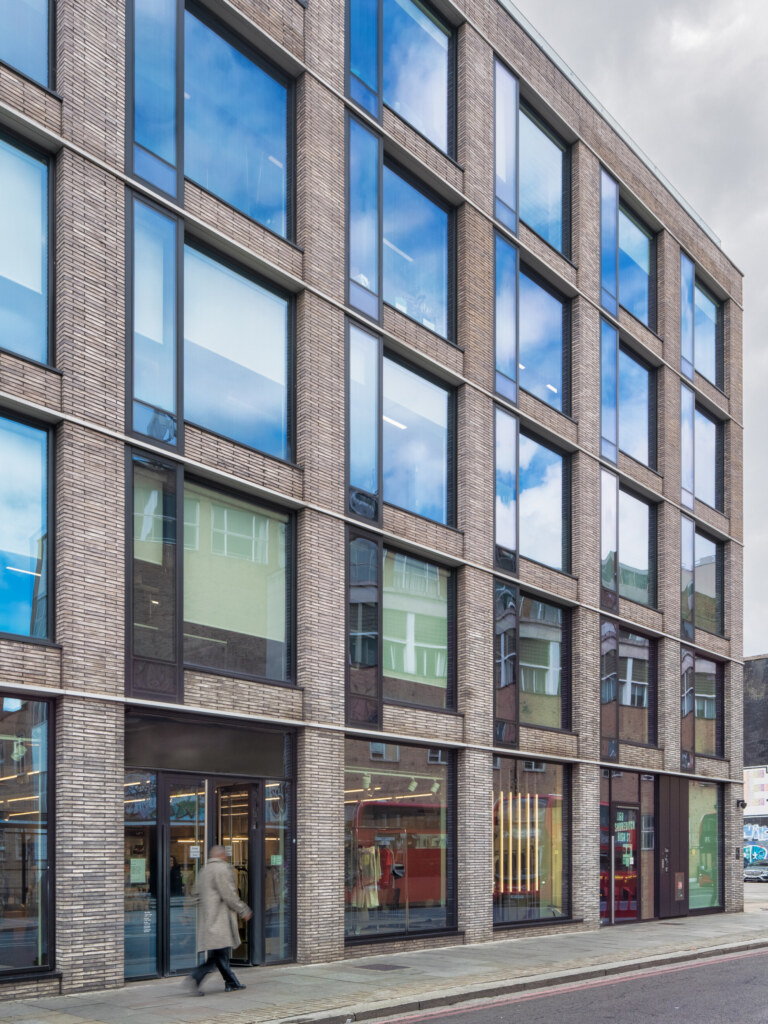
Not every business in Shoreditch needs a campus-scale building. Completed in 2019 and owned by Max Barney Estate, 168–178 Shoreditch High Street is a well-specified seven-storey building at one of the main street’s most prominent positions.
At over 32,000 sq ft with typical floorplates of around 4,000 sq ft, it suits businesses that want a credible Shoreditch address and quality finishes without the scale or lease commitment of a larger tower. With retail and office accommodation across the ground floor, the building stays connected to the life of the street rather than turning inward like a single-occupier development.
Key facts
- Size: 32,428 sq ft
- Floors: 7
- Completed: 2019
- Owner: Max Barney Estate
- Lease type: Traditional leasehold
-
-
Why businesses choose it
- A prime Shoreditch High Street address on a manageable scale, with floorplates suited to teams of roughly 20 to 50 people
- Roof terrace and sky terrace are a meaningful differentiator at this building size
- Mixed tenant base of creative, professional services and retail brands reflects the breadth of the Shoreditch market
- Third-floor availability at £65/sq ft offers a straightforward option with strong connectivity to Old Street and Liverpool Street
Occupiers
168-178 Shoreditch High Street is the base for a practical mix of architecture, marketing and professional services businesses, including TateHindle, Space & Time and Kreeston Reeves. The building suits boutique firms that want a credible, well-located base without committing to a large floorplate.
Features
The combination of roof terrace and sky terrace at this scale is relatively rare in Shoreditch. For smaller teams where the working environment matters as much as the desk count, that outdoor access at height is a genuine differentiator that most buildings of comparable size can’t offer.
-
5) The Tower at The Bower
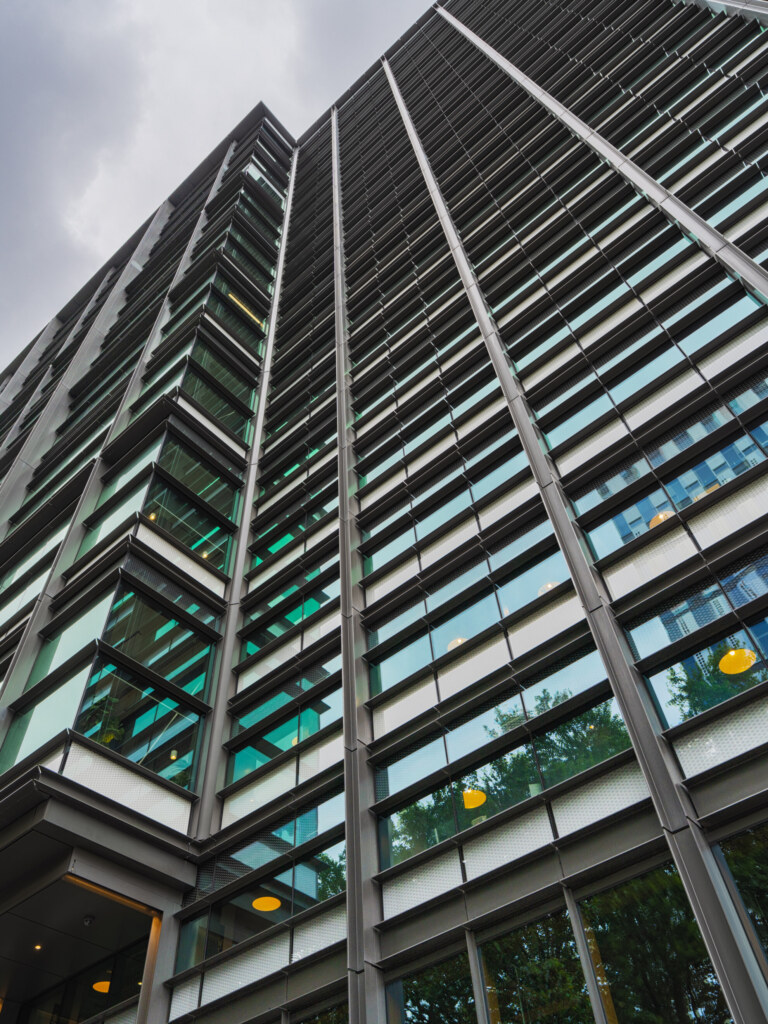
The Bower is one of the more ambitious developments on the Old Street corridor. Completed in 2018 by Helical plc and designed by AHMM, The Tower is an 18-storey building at 207 Old Street that deliberately bridges Shoreditch’s creative character and corporate scale.
Industrial aesthetic and exposed features sit alongside a 180-foot tower and a lobby installation by Jason Bruges Studio. This combination was designed to make tech giants and advertising agencies as comfortable here as financial and legal specialists.
Key facts
- Size: 188,841 sq ft
- Floors: 18
- Completed: 2018
- Architect: Allford Hall Monaghan Morris
- Developer/Owner: Helical plc
- Lease type: Traditional leasehold
- Accreditations: BREEAM Excellent, WiredScore Platinum, EPC B
-
-
Why businesses choose it
- 18 storeys with cityscape views from upper floors and available space from the 3rd to 15th at £69.50–£85/sq ft
- BREEAM Excellent, WiredScore Platinum and EPC B across a building of genuine scale
- The Mews campus provides around 21,000 sq ft of curated retail and restaurant amenity in a pedestrianised setting. A meaningful advantage over standalone buildings
- 400 bike racks, 20 showers and 192 lockers represent one of the most serious end-of-trip facilities in the Shoreditch market
Occupiers
A cross-section of technology and data-driven businesses including Fresha, security technology company Verkada and intelligence firm Recorded Future. The mix reflects the building’s ambition to accommodate both creative and more corporate occupiers within the same address.
Features
The Mews at The Bower is a pedestrianised, landscaped quarter running through the campus. It functions as a curated neighbourhood within a neighbourhood. For Tower occupiers, it means daily access to restaurants, cafes and retail without stepping onto the main road. It also provides a working environment that feels more like a campus than a single building on a busy junction.
-
Which companies choose Shoreditch?
Shoreditch attracts businesses that place a high value on innovation, creativity and access to talent. While the area has long been associated with technology startups and creative agencies, its occupier base has broadened considerably over the past decade. Today, you’ll find everything from global technology firms and venture-backed scale-ups to specialist consultancies and media businesses, all drawn by Shoreditch’s distinctive culture, flexible workspace options and proximity to both the City and East London’s talent pool.
-
Technology and SaaS
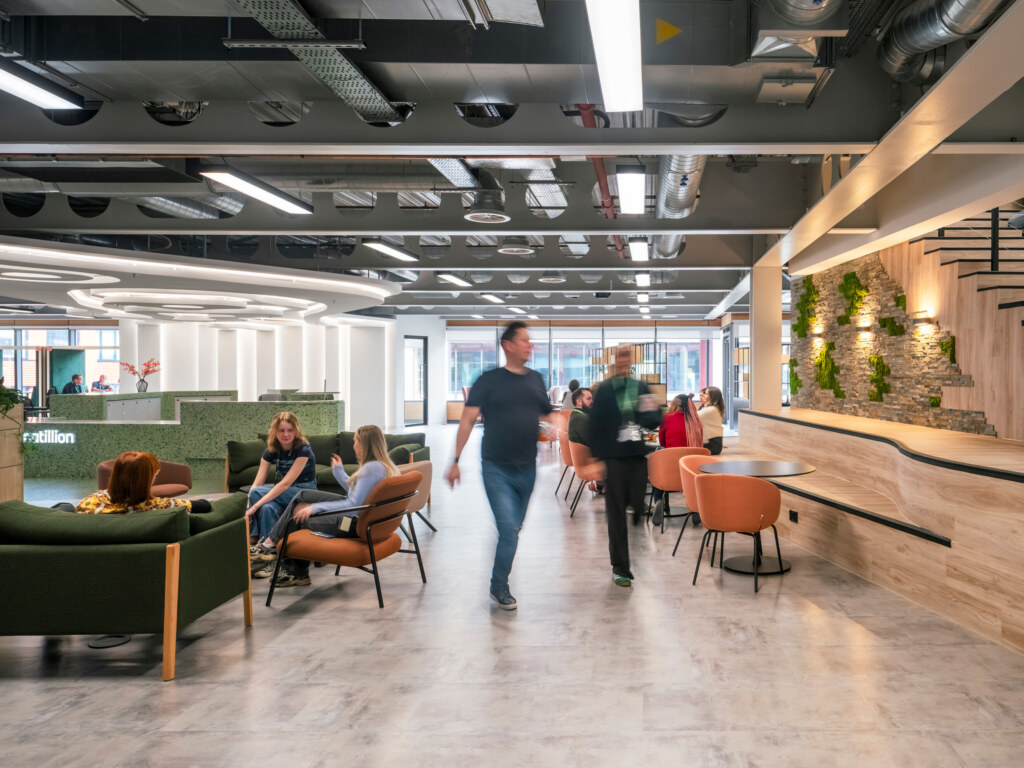
Technology businesses are the dominant occupier type in Shoreditch, with Wise’s global headquarters at Worship Square and Amazon’s UK HQ sits nearby at Principal Place.
The area is adjacent to Silicon Roundabout, Europe’s densest cluster of technology businesses. As a result, its peer network, hiring pool and proximity to investors and clients all reinforce each other.
Tech firms typically prefer flexible managed offices when scaling or new-build Grade A with large floorplates once they have established headcount. The area’s culture is a genuine recruitment tool too.
-
-
Creative and media
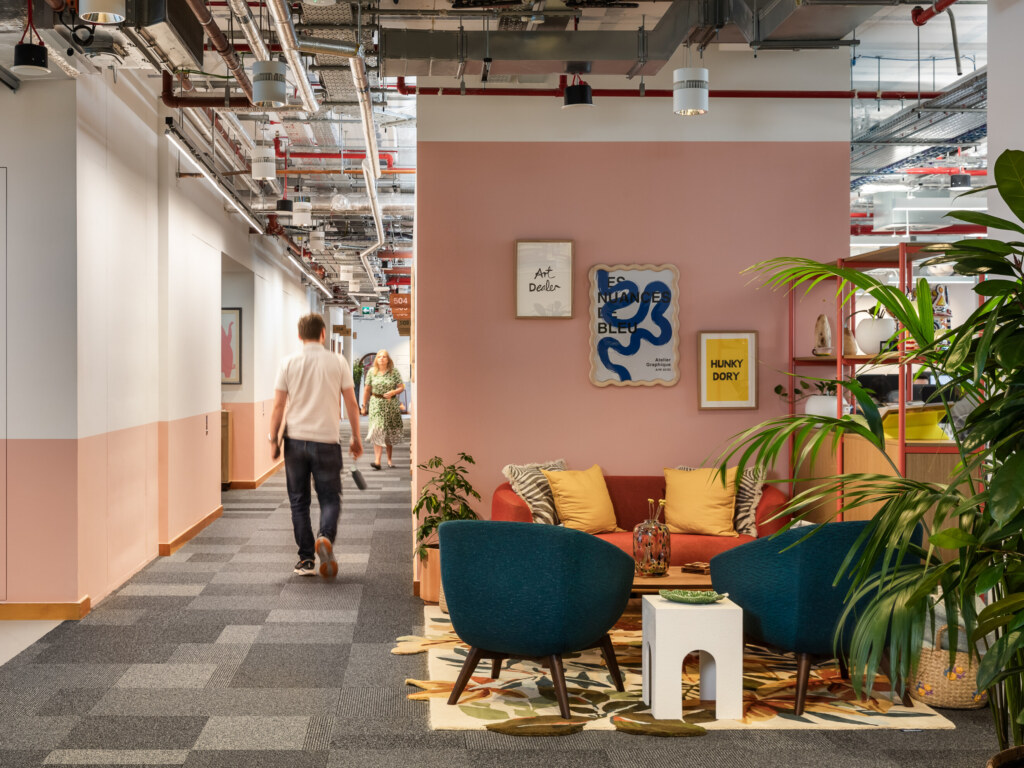
Creative agencies and media businesses are the other defining occupier group in Shoreditch. The area’s warehouse stock works well with creative brand identities. Put simply, exposed brick, high ceilings and industrial character communicate something that a glass-fronted corporate building simply can’t.
Businesses like Mother and Jones Knowles Ritchie have built their studio cultures around buildings like the Tea Building. For creative businesses, the workspace is an integral part of the talent proposition and the client experience.
-
-
Fintech and scale-ups
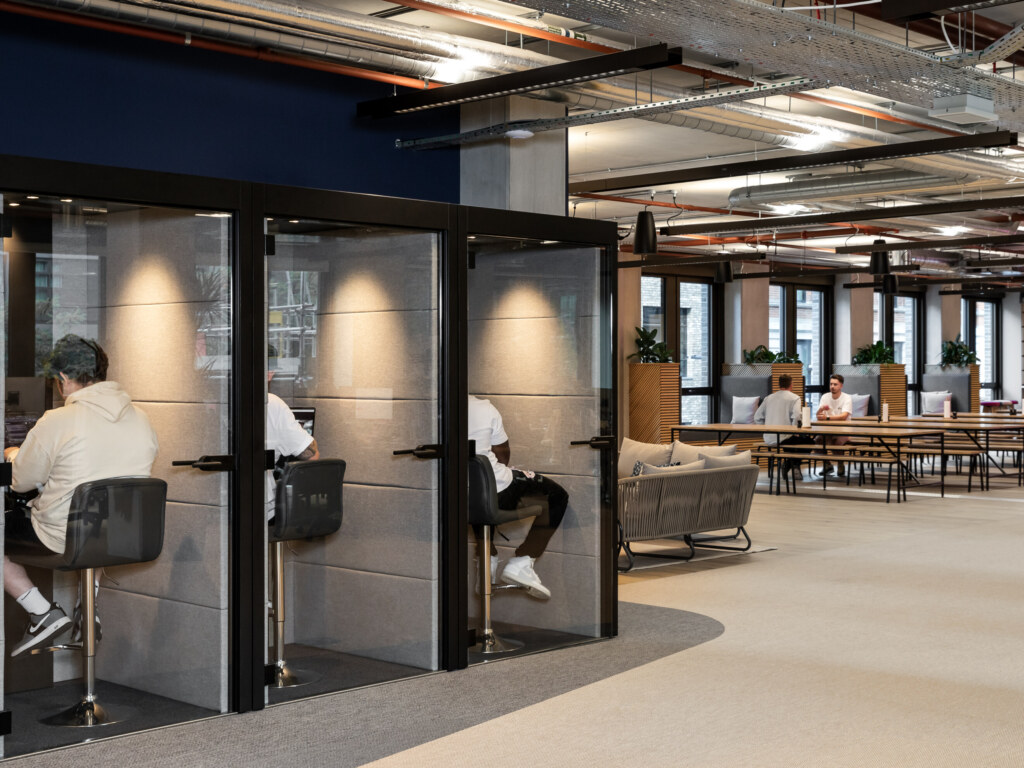
Shoreditch has a growing fintech cluster too, driven by the combination of City adjacency and a more flexible, innovative culture than the Square Mile. If you want to attract tech talent but stay close to City clients, Shoreditch is a natural solution.
Flexible terms suit the uncertainty of growth-stage businesses. The concentration of ESG-credentialled buildings is also increasingly relevant to fintech firms with their own sustainability reporting requirements.
-
-
Professional services
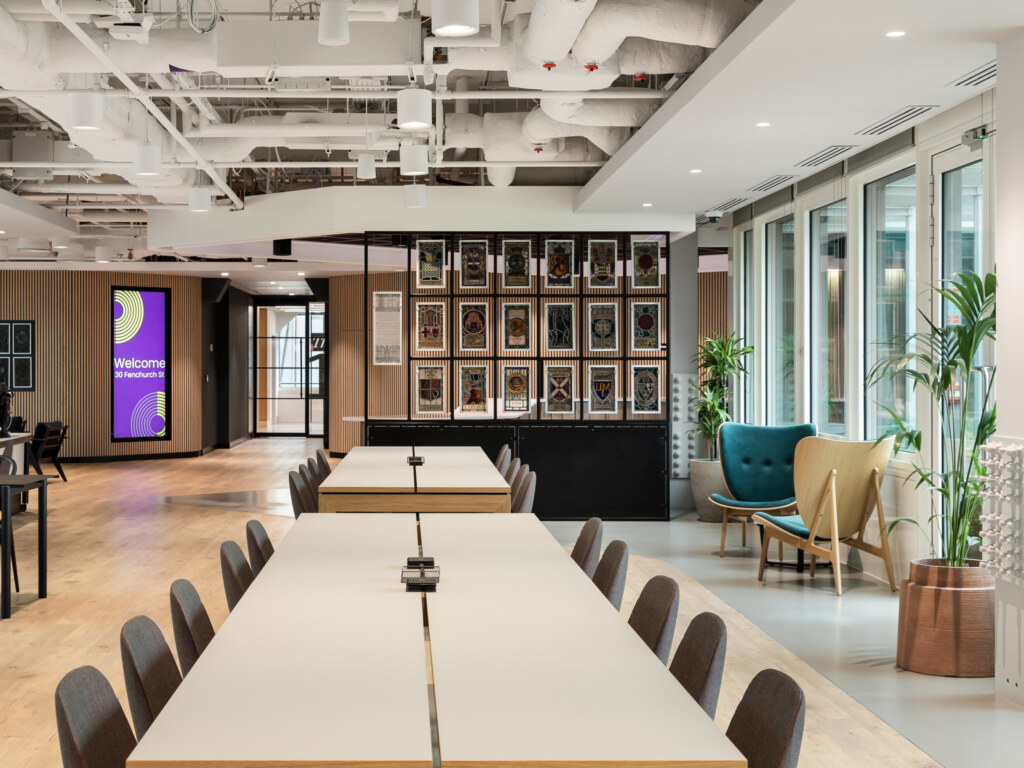
A growing but more selective presence comes from boutique consultancies, strategy firms and specialist professional services businesses. They’re increasingly choosing Shoreditch for the talent market plus the cost differential relative to the City.
Obviously, the City or West End remain a more natural choice for traditional law firms and corporate finance businesses, as the formal address can reinforce your credibility.
-
-
Key considerations
Shoreditch offers a distinctive workplace environment that few London submarkets can replicate, but it also comes with its own practical considerations. Transport connectivity, building constraints and the availability of high-quality space can all influence the success of an office search. Understanding how these factors align with your growth plans, workplace requirements and budget will help you determine whether Shoreditch is the right fit for your business.
Transport
Transport is one of the first things to scrutinise when considering Shoreditch. There’s no Underground station in the area itself. The nearest are Liverpool Street and Old Street, both a 10-15 minute walk away. The Overground performs better, with Shoreditch High Street and Hoxton stations offering good connections east and south.
However, if your team is spread across west London or the outer suburbs, factor journey times in carefully before committing to a building.
Growth headroom and space constraints
The warehouse stock that defines Shoreditch is finite. And, by definition, it’s inflexible. Unusual floorplates, split-level layouts and limited floor-to-ceiling heights in older buildings can constrain dense fit-outs and complex infrastructure requirements.
If you’re expecting significant headcount growth over your lease term, it’s worth assessing whether the building can flex alongside you. In some cases, a managed office with a built-in expansion clause is more rational than a traditional lease in a building with limited headroom.
-
Office space calculator
Not sure how much space you need? Use Oktra’s office space calculator or read our guide to office space requirements to estimate the right footprint for your team before you start shortlisting buildings.
Try it out -


-
Supply is tighter than it looks
As you can imagine, best-in-class space moves quickly in Shoreditch. The vacancy rate for Grade A in the Tech Belt is low and new completions are limited. If you’re looking for a direct lease on quality space, you’ll want to plan 12 to 18 months ahead. Or even earlier if you’re targeting specific buildings.
Cost: competitive, but not cheap
Headline rents for Grade A space in Shoreditch and the Old Street corridor typically run between £75 and £82.50 per sq ft per annum. That’s noticeably lower than the City core and significantly below the West End. However, service charges (typically £10 to £15 per sq ft) and business rates (typically 45 to 55% of headline rent) should be factored in from the outset.
Total occupancy cost is often 30 to 40% above the quoted headline rent. For a full picture of London office costs by submarket, see Oktra’s London cost guide.
-
The cost of London office space
The best office space in Shoreditch is often in short supply, particularly for businesses looking to balance workplace quality with cost. Download our latest London Office Rent Report for a detailed view of rental levels, occupancy costs and market dynamics across London’s submarkets.
Download now -
-
Alternative areas to Shoreditch for office space
Shoreditch is practically perfect for certain kinds of businesses. We’re talking about those that are innovative, design-aware and talent-focused, but also willing to commit to the planning required to secure good space in this market.
For businesses at the right stage, it’s one of the most rewarding locations in London to build a team and a culture. Oktra has been working in this submarket for over two decades, so we know what the buildings demand and what the best outcomes look like.
That said, if Shoreditch doesn’t quite work, several neighbouring areas are worth considering.
Clerkenwell offers a similar creative character with quieter streets and stronger City proximity. It’s a good option for businesses that want Shoreditch’s aesthetic with more formal accessibility.
Bethnal Green and Hackney provide more space at lower rents for businesses willing to trade some connectivity for headroom.
And of course, the City of London remains the right choice where formal address, large contiguous floorplates or direct financial sector adjacency are non-negotiable.
Still weighing up locations? Our guide to choosing the right part of London breaks down which areas suit which sectors, from the City’s financial core to Shoreditch’s tech cluster and beyond.
-
-
Shoreditch office space FAQs
-
 Is Shoreditch a good area for growing businesses?
Yes, but with some caveats. A strong talent market, flexible space options, City proximity and excellent transport links make Shoreditch well-suited to scale-ups and growth-stage businesses. However, best-in-class space is limited and it moves quickly. Plan 12 to 18 months ahead for a direct lease on quality space, and consider whether the building can flex with your headcount before committing.
What types of office buildings are most common in Shoreditch?
Shoreditch offers four main categories:
- Warehouse and character conversions, which are the dominant and most sought-after building type.
- New-build Grade A developments, led by buildings like Worship Square.
- Retrofitted and refurbished offices, which represent the mid-market.
- Managed and flexible spaces from operators including Fora and The Office Group.
Can I rent office space in Shoreditch on a short-term basis?
Yes. Shoreditch has a good range of serviced and flexible offices available on short-term agreements (minimum terms are three months with most operators). Providers like Fora and The Office Group offer private and shared offices to let on flexible licences, with all-inclusive pricing and no fit-out requirement.
How much does office space in Shoreditch cost?
Grade A headline rents typically range from £75 to £82.50 per sq ft per annum for traditional leases. Serviced office space averages around £500 to £550 per desk per month.
Total occupancy cost (including service charge and business rates) is typically 30 to 40% above the headline rent. For a full breakdown by tenure type and building grade, read Oktra’s London office cost guide.
What is Shoreditch like for commuting?
It’s very well connected. Shoreditch High Street Overground is on the doorstep with Old Street (Northern line) and Liverpool Street (Elizabeth line) both a 10-minute walk away. The Elizabeth line has significantly improved cross-London journey times from Shoreditch, with Canary Wharf six minutes away and seven minutes for Bond Street.
-
 Is Shoreditch a good area for growing businesses?
-
Contact us
Get in touch to discuss your potential office space costs
020 7553 9500
info@oktra.co.uk
-
"*" indicates required fields
Related content

-
Want updates on similar new content? We’ll send you an email a month with new insights when you join our mailing list.
JOIN THE LIST
