

Share

min read

Senior Content Manager
Content specialist in office design and build.
-
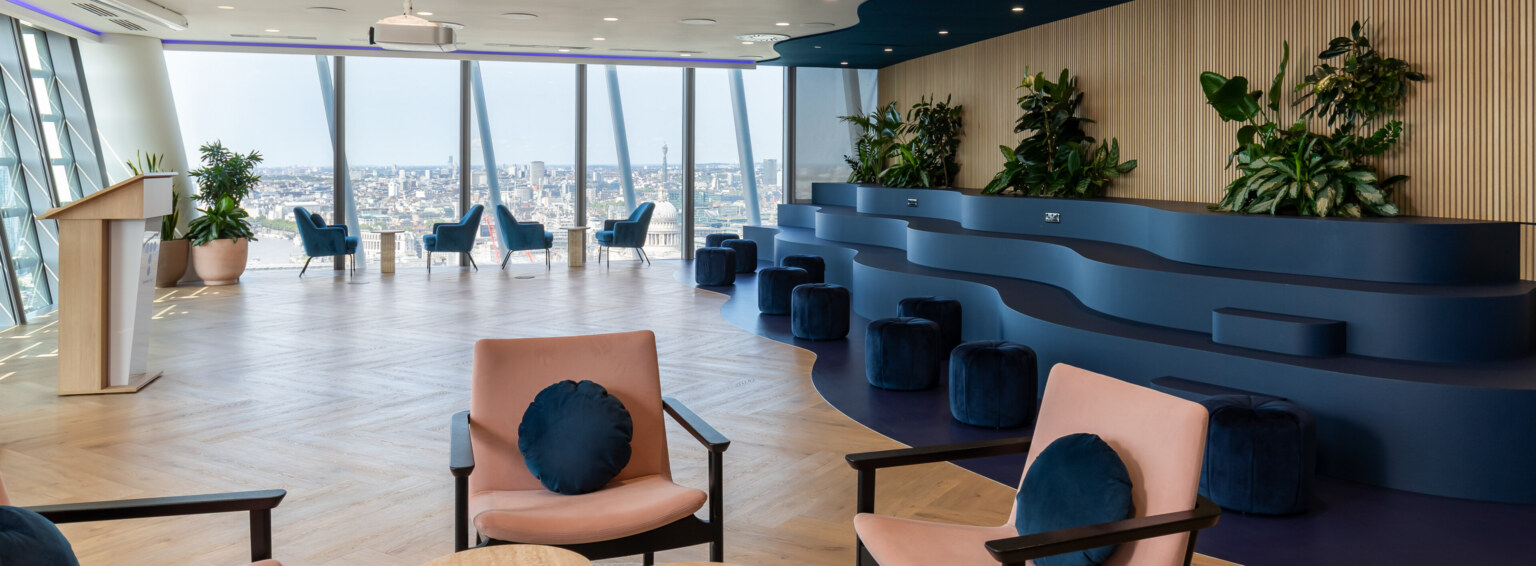
The role of the office is shifting again in 2026, not because hybrid working is new but because people’s expectations of what a workplace should enable have matured. Businesses aren’t just using design to attract people anymore; they’re seeing it as a way to build trust in the workplace. A well-designed office gives people confidence in their environment, control over how they work, and a clear understanding of what different spaces are for.
That shift is reshaping every stage of workplace briefing and design. Leaders want spaces that reflect culture with more depth, while employees want environments that feel intuitive, comfortable, and easy to navigate. Design has become inseparable from behaviour: how people move, how they focus, how they manage energy, and how they choose to interact.
Across our recent projects, we’re seeing the same themes emerge. Teams are asking for greater autonomy. Social spaces are being pushed to do more than host coffee breaks. Client-facing and shared spaces are becoming more purposeful, supporting a wider range of activities throughout the day. And businesses want the ability to adapt without major disruption or cost.
This year’s trends reflect that evolution. They point to a workplace landscape where choice is meaningful, inclusivity is proactive, and environments are designed to give people the confidence to use the space well. These are the office design trends shaping 2026.
-
Top Office Design Trends in 2026
When thinking about this year’s trends, the team and I looked back at the predictions from the previous year to see how many were realised in the projects we’d worked and supported on. The list below is a blend of existing trends that have evolved over the last 12 months, and emerging trends that we anticipate will take shape in 2026. These are:
-
1. Providing comfort and control
Comfort has become one of the most powerful trust signals in the workplace. It centres on giving people genuine autonomy over their environment so they can work in a way that feels right for them. When employees can adjust noise levels, light, temperature, posture and proximity to others, they feel more confident using the office for the work that matters.
-
Many retreat spaces, such as wellness rooms, fail because they’re treated as an aesthetic feature rather than a behavioural tool. They’re tucked into leftover corners, placed too close to busy areas or designed without a clear understanding of who will actually use them. When these spaces don’t feel protected or purposeful, teams avoid them – and that reinforces the idea that the office can’t support focused or restorative work.
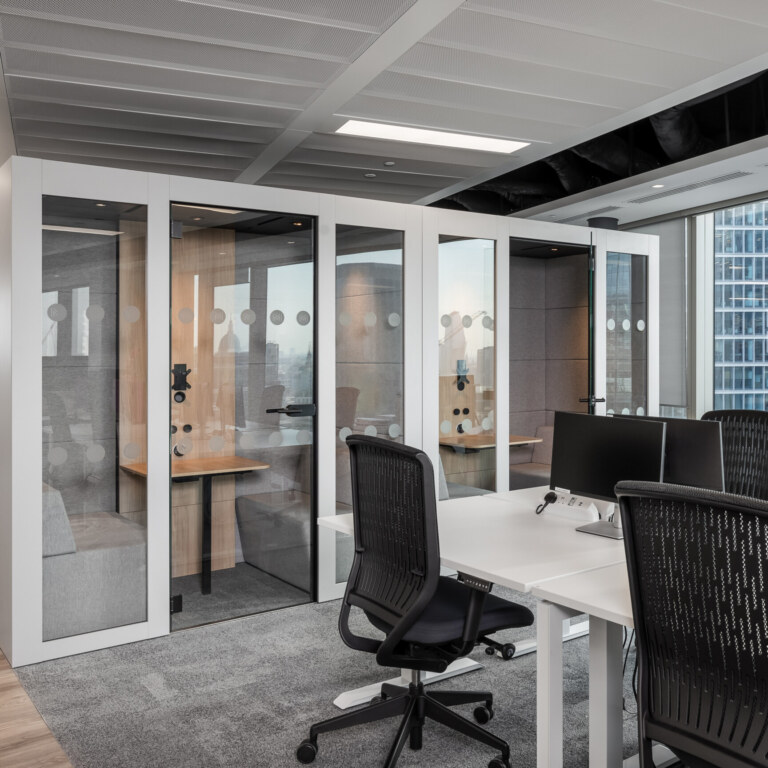
A more effective approach is to design a spectrum of low-stimulation, high-control environments across the floorplate. That might include a small library space, enclosed focus pods, quiet nooks that feel visually sheltered or even a well-located booth with task lighting and acoustic separation. Each should have clear behavioural cues, strong environmental control and a layout that genuinely separates it from high‑traffic zones.
-

-
In practice: designing for comfort and control
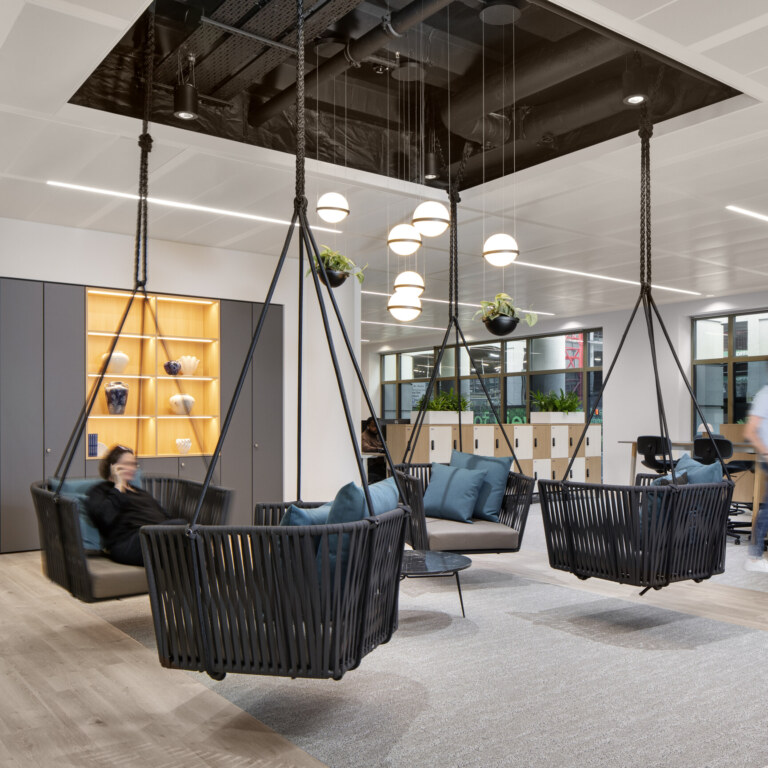
Paysafe’s London office demonstrates how powerful this can be in practice. Their workplace includes a dedicated quiet zone marked by curved wooden slats that define the boundary of the space without fully closing it off. This gives people the option to move away from the main desking area while still feeling connected to the wider floor.
The quiet zone mirrors the functionality of a typical workstation, but it offers far greater control. Users can adjust lighting and temperature to suit their needs, and the acoustic treatment helps to soften sound from the core working areas. These elements work together to give employees more agency over their environment, supporting focus, comfort and the confidence to choose the space that best suits their task at hand.


-
2. Encouraging movement
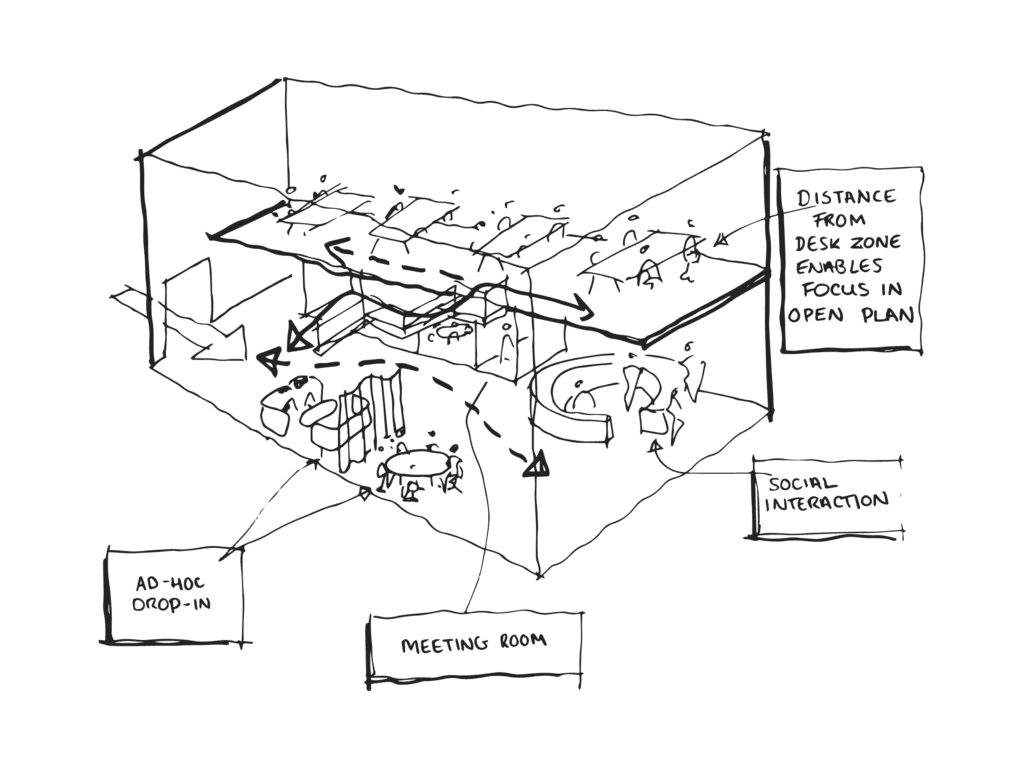
The aim of encouraging movement is to avoid ‘nesting’, where staff remain in their assigned areas of the office, often creating a silo. When encouraging employees to utilise and pass through more of the office space, interactions and chance meetings with others in the office become more common.
-
Strategically placing different departments or teams can promote cross-disciplinary interactions and discourage people feeling isolated in one specific part of the office. When this idea of moving between zones or floors within an office building is executed properly then you can create a diverse and interesting landscape.
By pulling people away from their designated areas or where people typically work, these workspaces become more effective and allow people to focus on that specific task. Positioning certain amenities and spaces further away than what they’re used to incentivises people to move through the office and improves collaboration and socialising. This ultimately helps to enhance productivity and the quality of interactions, making time in the office more purposeful.
-
-
In practice: encouraging movement in the workplace
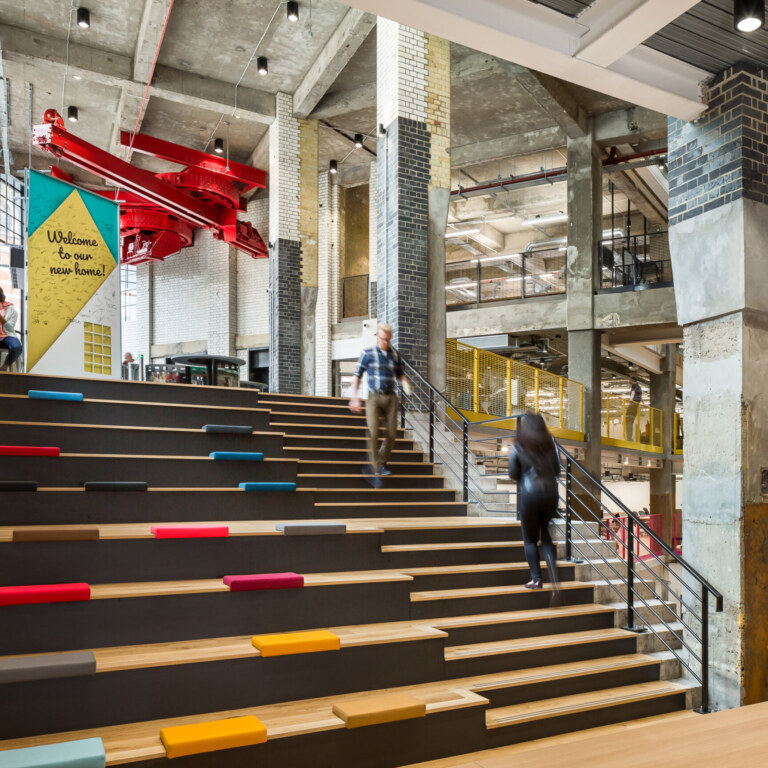
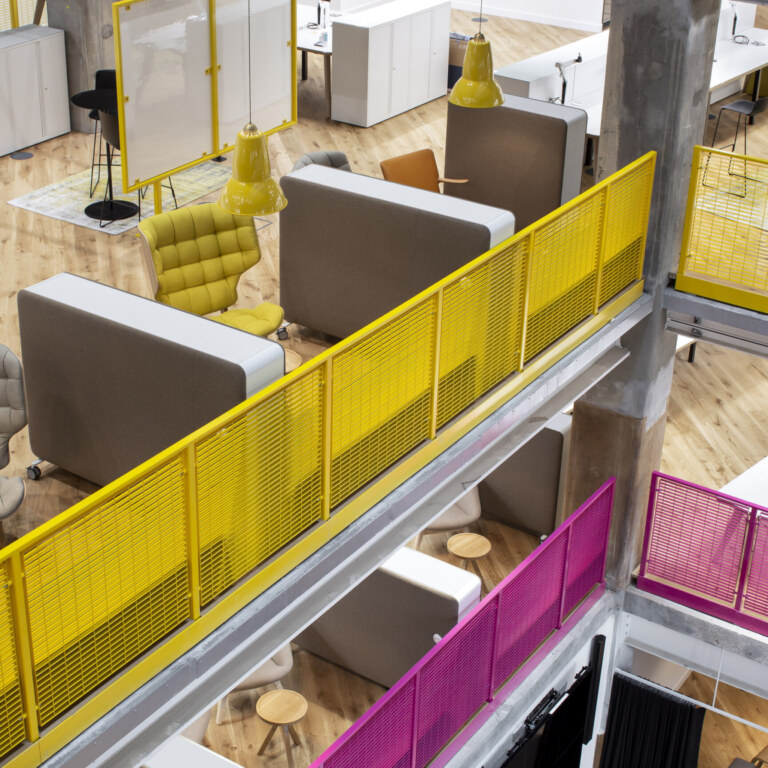
Photobox’s London HQ is a clear example of how this design principle can come to life. Their office spans four floors, each with a distinct purpose, and the basement operates as the main social hub visible from all levels above. By intentionally avoiding a full set of amenities on every floor, the design encourages people to travel between levels throughout the day. Additional internal staircases were introduced to strengthen connectivity and make these journeys feel intuitive rather than effortful.
This approach breaks the habit of nesting by giving people meaningful reasons to explore the space. It also helps social areas work harder, supporting everything from quick catch‑ups to larger gatherings, without falling into the trap of being purely decorative. Movement becomes part of the workday, which strengthens culture, improves communication and makes time in the office more purposeful.

-
3. Embedding inclusivity
Inclusivity in today’s workplace is centred on design equity, ensuring everyone has the autonomy, clarity and confidence to use the workplace in a way that supports their needs. Rather than relying on a single ‘inclusive room’, a holistic approach now considers sensory experience, spatial cues, wayfinding, environmental control and the psychological comfort that comes from having genuine choice.
A common challenge we see is the assumption that anyone needing quieter or lower‑stimulus space can simply use a closed‑door room. In reality, these rooms are often too formal, too exposed or too limited in number. People who prefer solitude or calmer environments need a wider range of settings: sheltered soft‑seating, quiet corners with predictable acoustics, window‑side spots away from circulation routes or seating that allows them to face away from movement.
-
The Inclusive Workplace Design Report
The Inclusive Workplace Design Report reveals insights from 1,000 full-time employees on how workplace design impacts productivity, engagement and overall job satisfaction. Download your copy to learn how to make your office truly inclusive.
DOWNLOAD -

-
In practice: a holistic approach to inclusivity
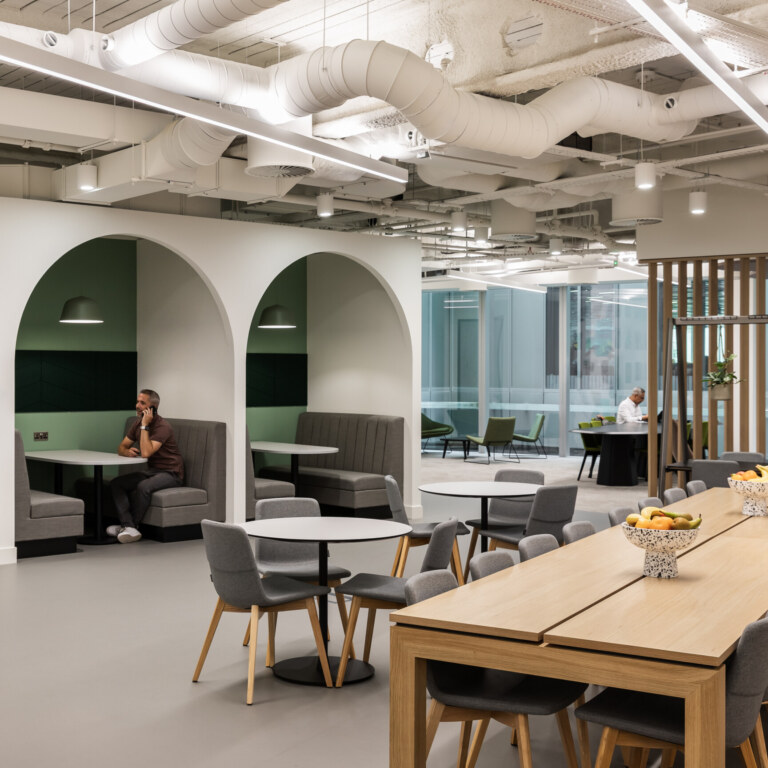
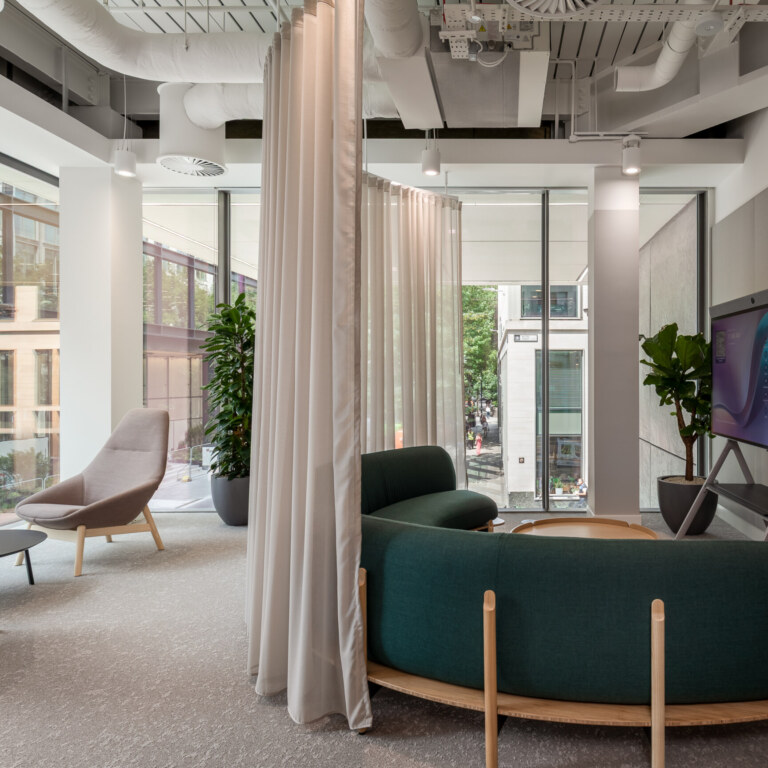
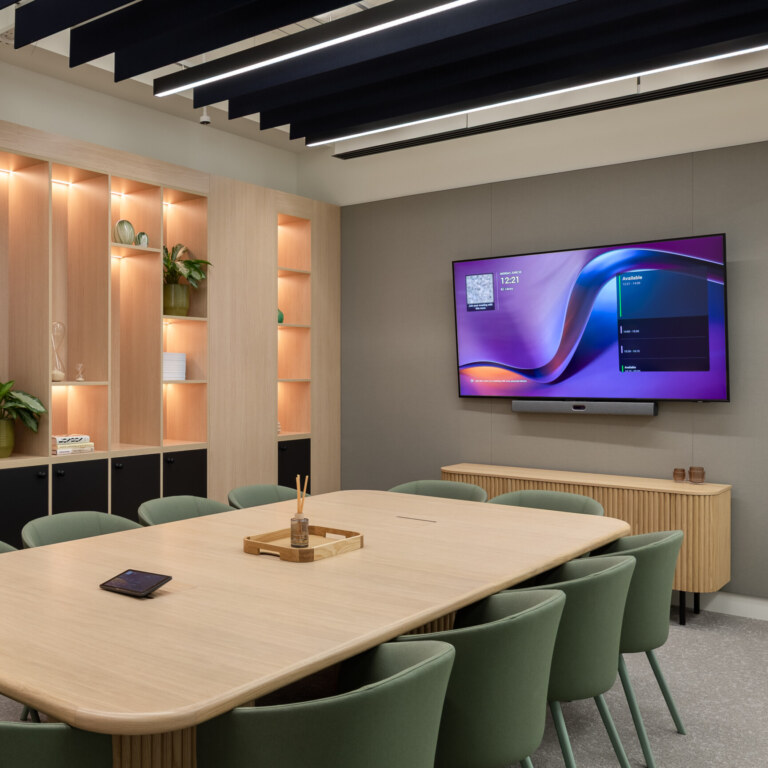
PRI’s London office demonstrates how inclusive design becomes stronger when shaped directly by users. Through a workplace consultancy process that engaged employee networks across disability, LGBTQ+, sustainability and wellbeing groups, PRI built a deep understanding of the diverse sensory and functional needs within their organisation. These conversations informed practical decisions, from the placement of quiet zones and the design of the wellness room to lighting tone, acoustic separation and the zoning that helps people navigate the space with confidence.
This level of engagement created a workplace where inclusive features feel natural rather than supplementary. Clear spatial cues, adjustable lighting, sit‑stand desking for all and a variety of sensory environments help users understand where they can work and how each space supports them. Design equity removes friction, strengthens belonging and ensures the workplace works for everyone, not just those with specific needs.
-
4. Elevating experience through activation
Designing a great workspace is only the starting point; the real impact comes from how that space is brought to life every day. There has been a recent shift towards organisations recognising that even the most thoughtfully designed environments need ongoing cultural reinforcement to work as intended. Social hubs, focus zones, collaboration areas and libraries often fall short not because the design is flawed, but because people aren’t sure how or when they should use them.
-
Activation closes this gap. It’s the blend of behavioural guidance, clear cues, soft etiquette and light-touch programming that helps people feel confident using the full variety of spaces. The aim isn’t to enforce strict rules, but to build shared understanding. A quiet zone feels calm because people know what it’s for. A teapoint becomes a natural gathering spot. A workshop area gets used for quick problem‑solving sessions instead of sitting empty.
Activation can take many forms. Some clients develop an internal programme of events to help people build new routines. Others use simple visual prompts, naming conventions or soft zoning cues to signal how a space should feel. Workplace inductions are becoming more important too, especially in hybrid settings where employees spend fewer days on-site and need stronger orientation.
-
-
In practice: how to activate spaces
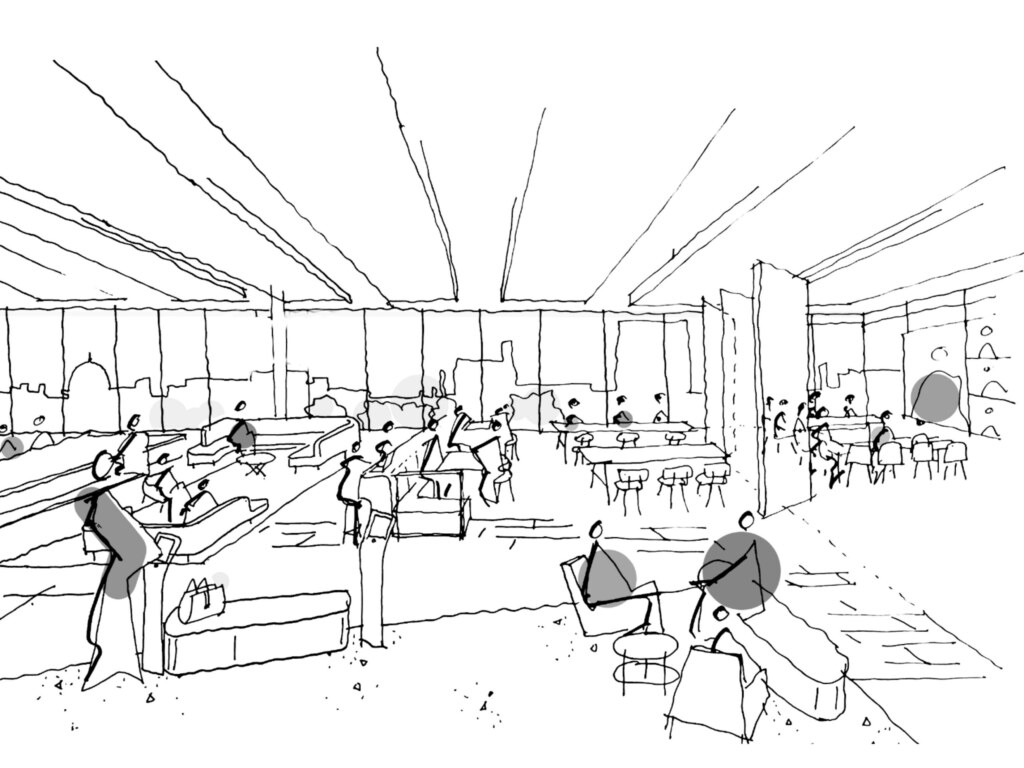
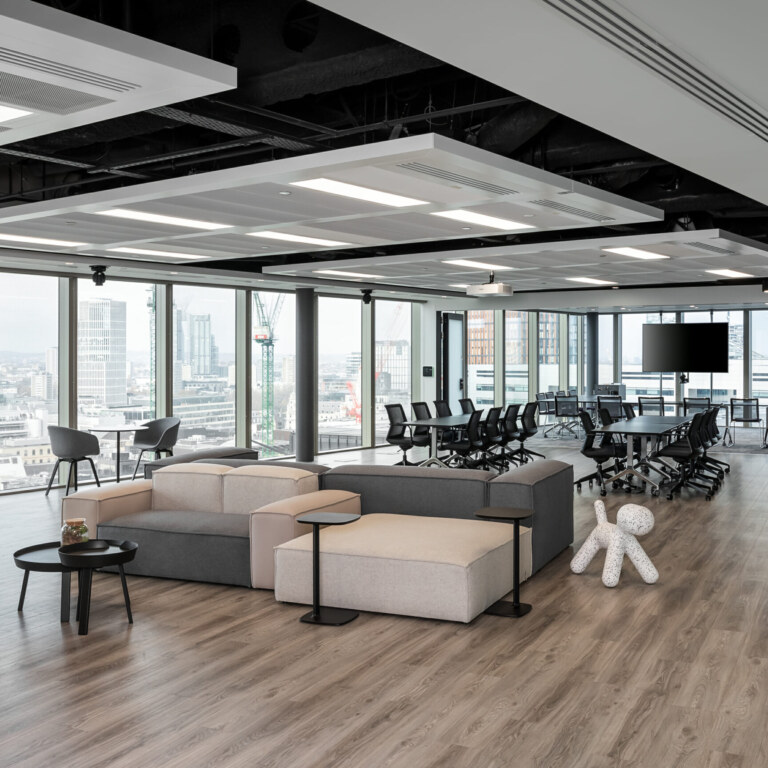
Moorhouse’s London office shows how activation can shape everyday behaviour. Their space was designed around a central spine of collaborative settings, but it’s the cultural onboarding and gentle behavioural cues that make these areas truly work. Teams are encouraged to use the forum-style seating for stand-ups and drop‑ins, while the open workshop benches became a natural home for project work.
Because people understand the purpose of each zone from day one, the space quickly developed its own rhythm. Activation turns design intent into lived experience, transforming a floorplan into a workplace that feels intuitive, energising and genuinely supportive.

-
5. Building for adaption
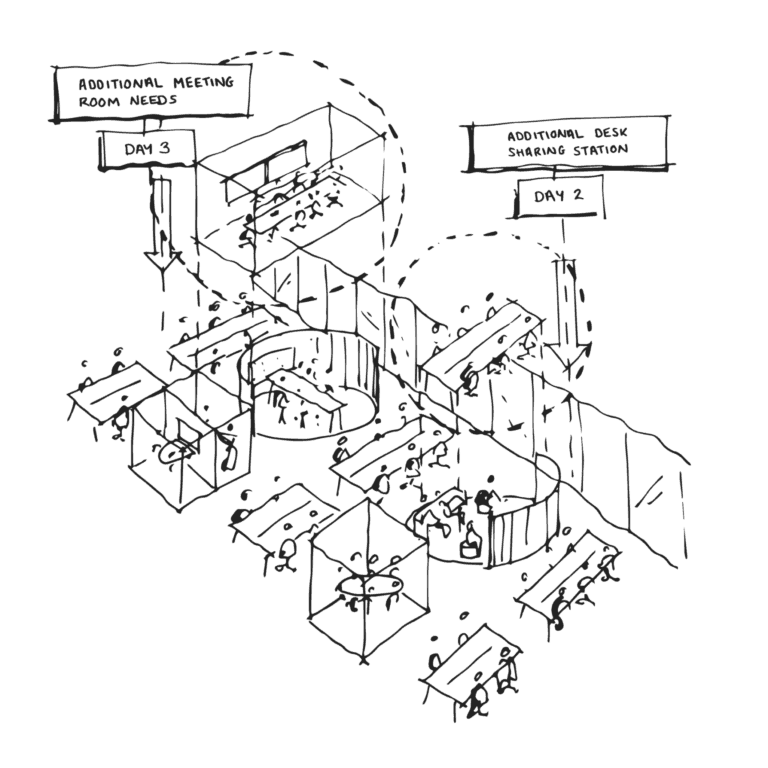
Adaptability has become one of the clearest indicators of workplace resilience. Businesses now want environments that can evolve without major disruption – not just through flexible furniture, but through the underlying logic of the floorplate. “Day One thinking” supports this by anticipating how teams, policies and working patterns may shift over time, and removing barriers that make those changes costly or complex.
-
Where building for adaption often breaks down is at the infrastructure level. Fixed desk clusters, limited power distribution, narrow circulation routes or heavily bespoke joinery can lock a workplace into a single mode of use. When hybrid patterns fluctuate or teams restructure, these constraints make even small adjustments difficult.
Good Day One thinking builds flexibility into the bones of the space. This might include planning cable routes to support multiple desk configurations, maintaining consistent circulation lines even as neighbourhoods evolve, or choosing modular elements that can expand or contract as teams grow.
-
-
In practice: adaptable workplaces
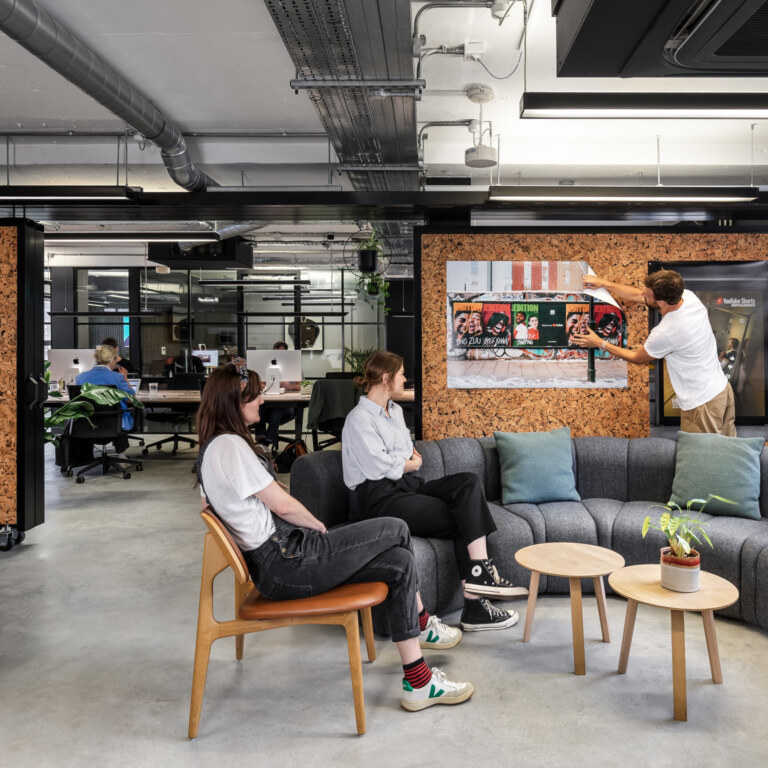
YouTube’s Creative Studio is a strong example of how this can work in practice. Their workspace is built around highly adaptable production, editing and collaboration areas that shift depending on campaign cycles and content needs. Modular furniture, mobile equipment, and flexible lighting rigs allow the team to reconfigure the environment quickly without specialist support. This adaptability gives YouTube the freedom to test new workflows, adjust room functions and scale creative activity without major intervention.
When a workplace can flex without disruption, teams feel more supported and businesses can make decisions with greater confidence. Adaptability becomes part of the workplace culture – a signal that the space is designed to grow with the organisation rather than hold it in place.
-
The High-Performance Workplace Guide
With user needs continuing to evolve alongside the future of work, creating an environment that engages employees has become a huge challenge for businesses.
Download our guide to designing high-performance environments, with best practice examples and tips to consider.
DOWNLOAD -

-
The workplace in 2026 will be defined by a shift in expectations. People want environments that feel supportive, intuitive and trustworthy, and businesses need spaces that can adapt as quickly as their teams and priorities evolve. The trends shaping this year all point toward the same goal: workplaces designed around behaviour, autonomy and long‑term relevance.
Comfort and control help people manage their energy. Movement and multi‑use areas strengthen culture and connection. Inclusive, equitable environments ensure everyone can navigate the space with confidence. Activation brings design intent to life, while strong Day One thinking protects the business against unnecessary disruption.
When these principles work together, the workplace becomes more than a setting – it becomes an active partner in performance. Organisations that invest in environments shaped around real behaviour and genuine user needs will feel the benefit through stronger engagement, clearer culture and a space that remains resilient for years to come.
-
Speak to our design experts
Discover the benefits of upgrading your office design
020 7553 9500
info@oktra.co.uk
-
Related content
-
Find out more
Articles | 9 min read
Inclusive Office Design: A Practical Guide to Creating Workspaces for All
-
Find out more
Articles | 10 min read
Noise, Focus and Flexibility: Designing Workplaces That Work for Everyone
-
Find out more
Articles | 9 min read
Corporate Office Interior Design: 7 Inspiring Trends Shaping the Future Workplace
-
Want updates on similar new content? We’ll send you an email a month with new insights when you join our mailing list.
JOIN THE MAILING LIST