Share

min read
-
Finding available office space in London can be relatively easy. But deciding which space is right for your business is usually a lot harder.
London has a huge range of offices, from characterful buildings in established creative districts to large Grade A developments designed for major occupiers. So, the challenge certainly goes beyond finding something that fits your budget or has enough desks.
Your choice of location and building can affect commuting, recruitment, client experience, workplace design, future growth and the overall cost of occupation. With that in mind, the best office search starts before you’ve begun looking at properties.
Rather than asking which London area is “best”, it’s more useful to ask which factors matter most to your business. You can then use those priorities to narrow down your options, as we’ll guide you through below.
Table of contents:
- 1. What should you consider when choosing office space in London?
- 2. Understanding London’s office submarkets
- 3. Which London office location is right for your business?
- 4. London office location guides
- 5. What type of office building should you choose?
- 6. How much does London office space really cost?
- 7. What to consider before signing a lease
- 8. What happens after you choose your office?
- 9. Find the right London office for your business
- 10. FAQs

-
What should you consider when choosing office space in London?
As we’ve touched upon above, there’s no single “best location” for every business. A financial services firm, a technology scale-up and a creative agency will probably have very different reasons for choosing London along with different requirements from their office.
Before looking at individual properties, here are six factors to take into account.
1. People and commuting
Where your employees live and how they travel should be central to your decision, not to mention where you need to recruit.
A well-connected location can make commuting easier and give you access to a wider talent pool. But certain areas might also appeal to different types of workers.
One example is a business competing for technology and digital talent, which could benefit from being close to established tech communities. On the other hand, professional services firms might prioritise access to the City, where lots of London’s financial and professional services talent is concentrated.
It’s worth looking beyond your current workforce too. If you expect to grow, consider where future employees are likely to come from and whether the location will stay attractive as your team changes.
2. Clients and business networks
Your office also forms part of how your business presents itself. And different addresses send different messages.
A prestigious central London address can bring reputation and credibility to a client-facing professional services firm. In contrast, technology or creative business might get more from an area with a strong sense of community and a culture that reflects its brand.
In short, prestige alone isn’t a reason to choose an address. Think about what it needs to say to the people who matter most. That could be clients, partners, your own team or a combination of all three.
3. Cost and total occupation
Headline rent is only one part of the cost of occupying an office.
Service charges, business rates, fit out, furniture, technology and ongoing operational costs can all affect the overall cost of a workplace. And a building with a lower rent isn’t necessarily the cheaper option once the full occupation cost is taken into account.
The same applies to flexibility. A serviced or managed office will have a different cost profile from a conventional lease, but the right choice depends on factors such as:
- Headcount
- Timescale
- How much control you need over the space
-
The office fit out guide
Whether you’re seasoned in the fit out process or this is your first project, our step-by-step office fit out guide provides an overview of this complex journey.
Download -


-
4. Building quality and suitability
It’s important to note that two offices in the same area can provide very different working environments.
Look at the building itself rather than judging a property by its location and floor area alone. The following factors all influence the kind of workspace you can create:
- Floorplate size and depth
- Natural light
- Core position
- Ceiling heights
- Building services
- Arrival experience
- Sustainability
- The condition of the space
Some buildings look suitable on paper but then prove difficult to plan efficiently once you start factoring in the spaces your business needs.
5. Flexibility and future growth
Your office needs to work for the business you expect to have as well as the business you have today.
If your headcount is likely to grow, check whether the building has room to expand into, or if there are suitable options nearby. It’s also worth thinking about how you’d scale back without being left paying for space you don’t need.
This is particularly important for growing businesses. The right office for 40 people could be completely wrong when you expand to 120.
6. Workplace experience and brand
Finally, consider what you want people to experience when they use the office. That includes employees and clients plus any other visitors.
The character of the building, its amenities, layout and relationship with the surrounding area can all contribute to the experience of being there.
None of these factors works in isolation though. The strongest office decisions come when you weigh them against each other and decide where you’re prepared to compromise.
Understanding London’s office submarkets
It’s easy to think of London as one office market. But in reality, it’s a collection of distinct submarkets, each with its own mix of businesses, building stock, transport connections, character and cost profile.
While that does give you plenty of choice, it also makes the search more complicated.
The City offers a deep pool of professional services occupiers, for example, with large floorplates and excellent transport connections. Shoreditch has a strong technology and creative identity, while Mayfair offers a prestigious address that can carry real weight with clients. Canary Wharf is different again, with campus-scale developments and some of London’s largest floorplates.
Other key markets include Holborn, King’s Cross, London Bridge, Paddington, Soho and Victoria, each with its own balance of people, clients, buildings, cost and connectivity.
Rather than trying to rank these areas from best to worst, start by identifying which characteristics matter most to your business.
Which London office location is right for your business?
Once you understand what matters to your business, you can start narrowing down the locations that are most likely to work. Here are a few priorities mapped to locations, but you can also dive into a full guide for each submarket below.
Priority Key locations Financial and professional services networks City, Holborn, Mayfair Technology and innovation talent King’s Cross, Shoreditch Prestige and client experience Mayfair, City, Soho, Victoria Strong national or international connectivity Paddington, King’s Cross, City Creative character and street-level culture Soho, Shoreditch Large, modern floorplates Canary Wharf, City, Paddington, King’s Cross Access to a broad central London talent pool City, Holborn, London Bridge, Soho Crucially, this is just a starting point. A location that looks ideal against one criterion could introduce a compromise elsewhere, so this isn’t a good way to rank submarkets.
Take Mayfair as an example, which provides an exceptional address at a higher cost, with larger floorplates harder to find.
The same principle applies to transport. Areas can be well connected overall but still be less convenient for your particular workforce. It depends on where people live.
This is why it’s useful to narrow your search to two or three areas rather than committing to one straight away.
Our London Office Location Guide can help you compare the main submarkets against the factors that matter to your business, before you start looking at individual buildings.London office location guides
London’s office market is made up of distinct neighbourhoods, each offering different advantages for businesses. From established financial districts to emerging technology hubs, understanding what makes each location unique is an important first step in finding the right office space.
Below, we’ve put together a guide for some of the city’s key office locations to help you understand what each could offer your business.
Already established the location that’s right for your business? Jump ahead to the next section on the different types of buildings the city has to offer.
-
-
Office Space in the City of London
London’s financial heartland, the City combines prestigious commercial towers, historic architecture and exceptional connectivity. Home to leading financial institutions, law firms and professional services businesses, the Square Mile offers an established business environment with a diverse range of modern office spaces.
-
-
-
-
-
Office Space in Soho
At the heart of London’s West End, Soho combines a thriving creative community with an unmistakable cultural identity. Popular with media, advertising and entertainment businesses, its historic streets, independent amenities and characterful office spaces offer a distinctive alternative to traditional corporate districts.
-
-
-

-
-
Office Space in Mayfair
One of London’s most prestigious business addresses, Mayfair attracts investment firms, private equity businesses and luxury brands. Combining elegant historic buildings with contemporary offices, the neighbourhood offers an exclusive working environment where reputation, client experience and location are central to its appeal.
-
-
-
-
-
Office Space in Holborn
Connecting the City and West End, Holborn combines a strong legal and professional services heritage with an increasingly diverse business community. Its central location, historic character and mix of contemporary and traditional offices make it an attractive choice for businesses seeking connectivity and flexibility.
-
-
-

-
-
Office Space in London Bridge
London Bridge combines a thriving commercial district with a distinctive riverside setting. With landmark office developments, excellent transport connections and a vibrant local culture, the area attracts businesses seeking a dynamic workplace environment beyond the traditional City.
-
-
-

-
-
Office Space in Shoreditch
A leading destination for technology, creative and digital businesses, Shoreditch is known for its independent character and innovative spirit. Its mix of converted industrial buildings, contemporary offices and vibrant street culture appeals to organisations looking for a distinctive, collaborative working environment.
-
-
-
-
-
Office Space in King’s Cross
A major hub for technology, artificial intelligence and life sciences, King’s Cross combines ambitious regeneration with exceptional connectivity. Its mix of contemporary offices, restored industrial buildings and proximity to leading academic institutions creates a thriving environment for innovation-led businesses.
-
-
-
-
-
Office Space in Canary Wharf
Known for its modern commercial towers and waterfront setting, Canary Wharf is evolving into a diverse business destination. With expansive office spaces, excellent transport connections and growing lifestyle amenities, the district attracts businesses seeking a contemporary workplace environment.
-
-
-

-
-
Office Space in Victoria
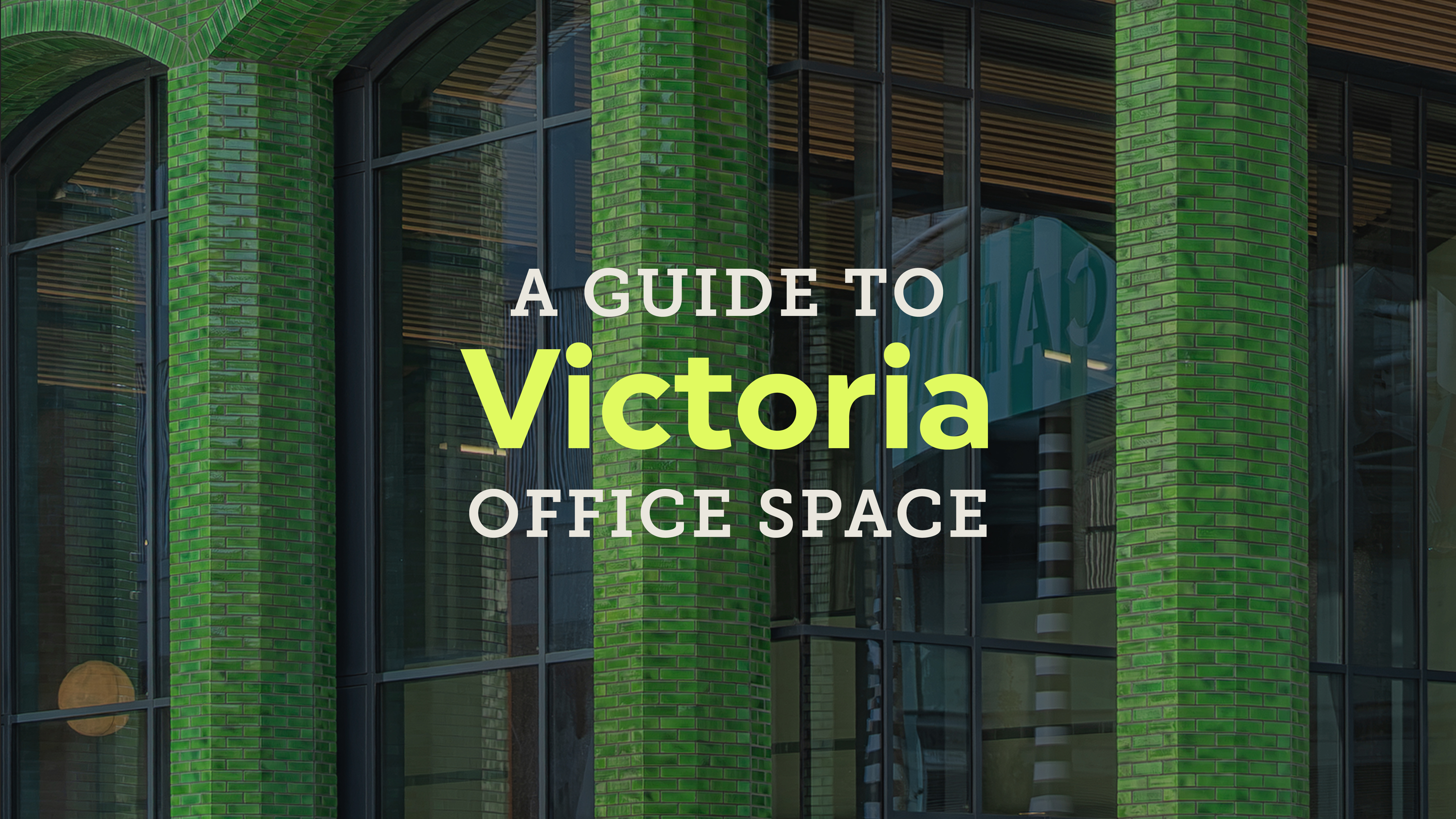
Victoria combines excellent transport connections with a prestigious central London address. Popular with professional services firms, consultancies and government-adjacent organisations, the area has been transformed by modern office developments, ambitious refurbishments and an increasingly vibrant mix of amenities.
-
-
-
-
What type of office building should you choose?
Choosing an area is just the beginning. The building you select within that area can have just as much influence on the workplace you create.
There are several broad types of London office building, each with different advantages and constraints.
New-build Grade A offices
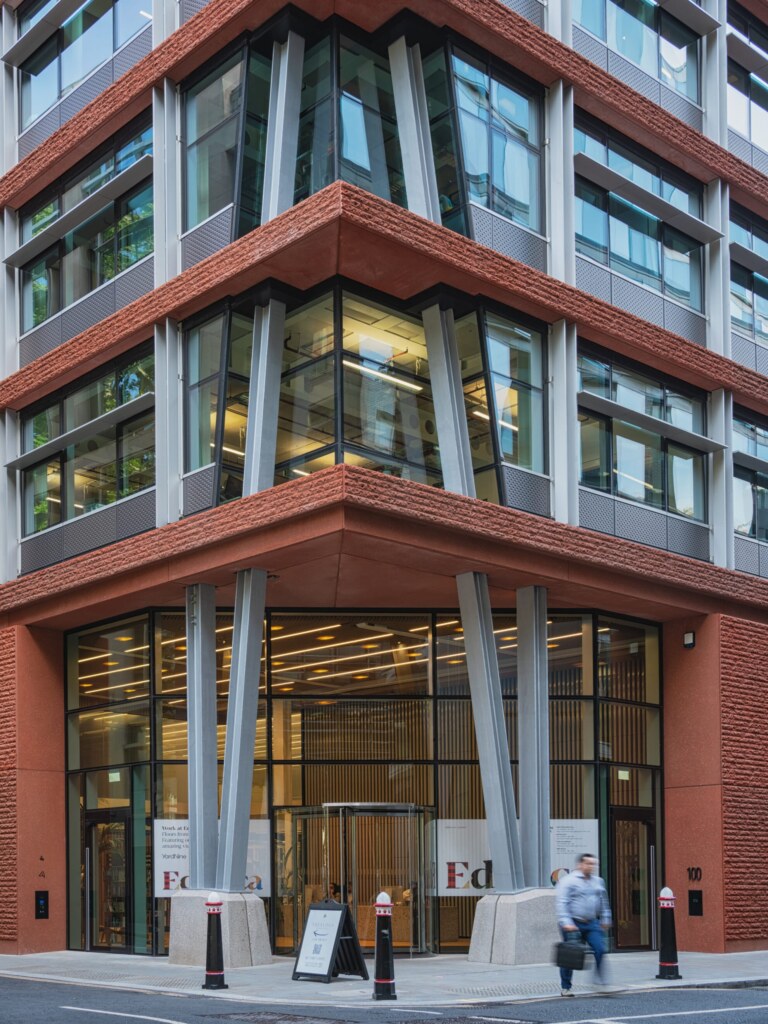
Modern Grade A buildings typically provide high-quality services, strong sustainability credentials, contemporary amenities and efficient floorplates.
They’re particularly well-suited to businesses that want a polished workplace and the infrastructure to support modern working practices. However, that quality and specification usually come with a higher headline cost.
Refurbished or repositioned buildings
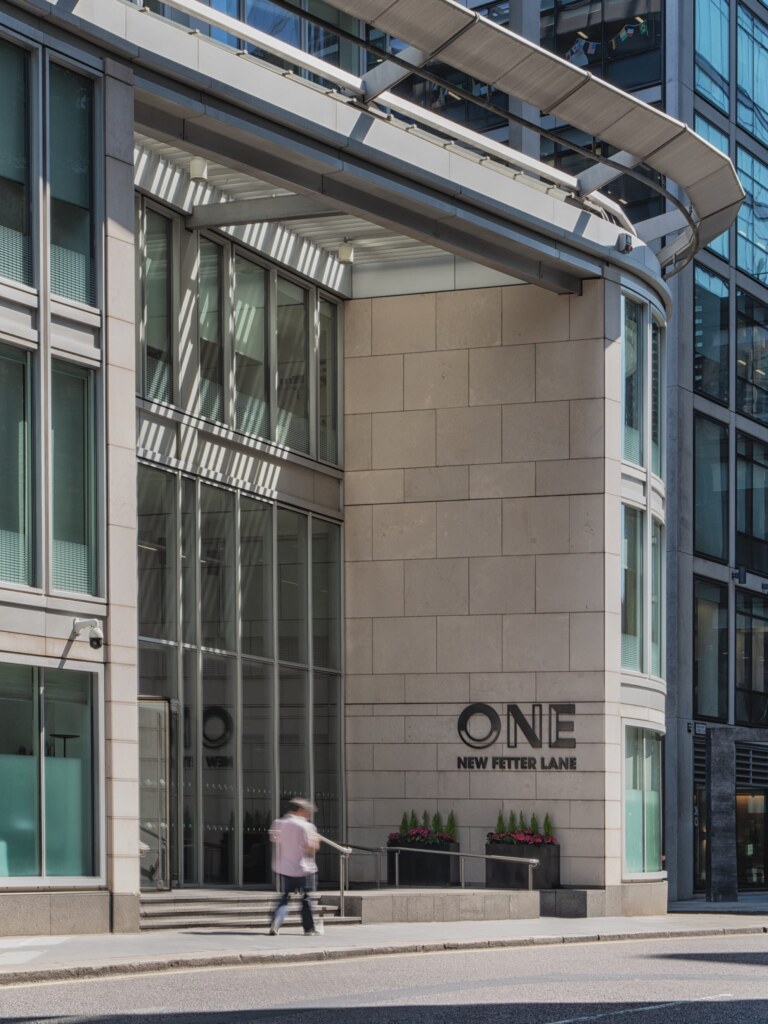
A refurbished building is a good balance between modern performance and a more established building character.
The key question is what has been improved. Look beyond the finished reception and assess the floorplate, building services, natural light, sustainability and the practical constraints that could affect your fit out.
Heritage and character buildings
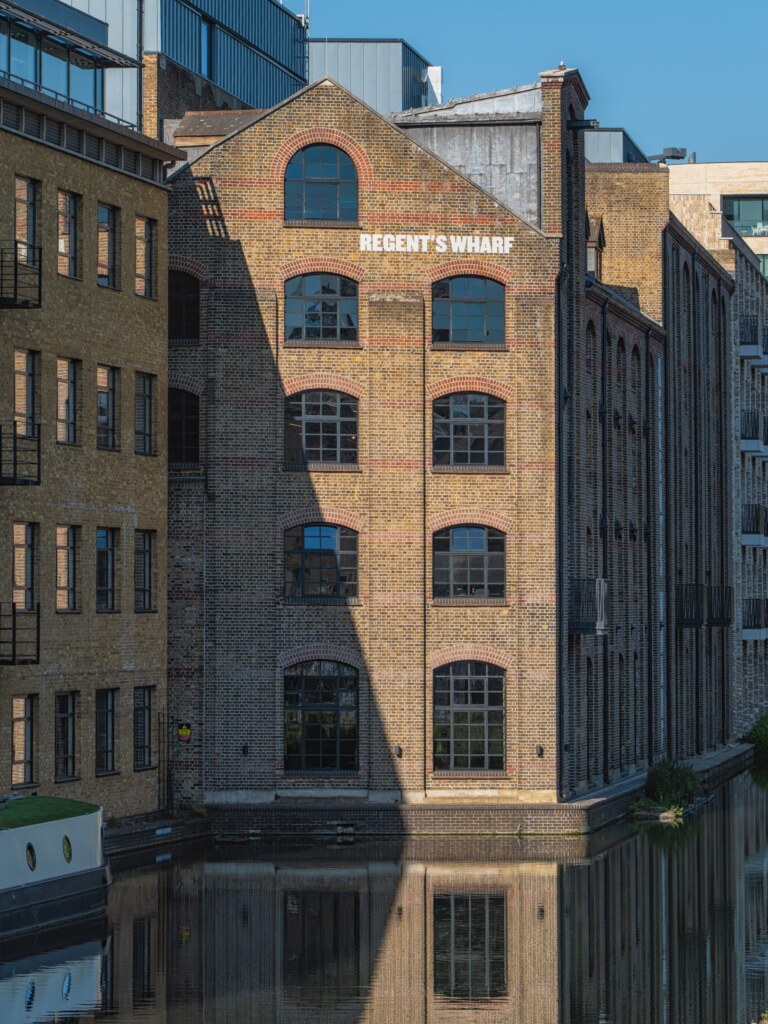
Older buildings give you distinctive architecture and a strong sense of identity that’s difficult to replicate in a new development.
If brand culture and employee experience are important to your business, that character can be a significant advantage. But it’s important to understand the limitations of the building and what changes can realistically be made.
-
Mixed-use developments
Mixed-use schemes are defined by a wider ecosystem around the workplace, including amenities, retail, hospitality and other services close by.
This can be great if you’re thinking about the overall employee experience rather than the office in isolation.
Flexible and managed offices
Flexible and managed spaces generally offer speed and convenience with more flexibility around commitment. They’re especially useful for businesses with changing headcounts or shorter-term requirements.
However, the right solution depends on how much control you need over the workplace and whether the space needs to evolve with the business.
The important thing is to assess the building type in relation to your workplace requirements. Aside from looking and feeling right on a viewing, a property needs to give you the physical conditions to create the environment your business needs.
-
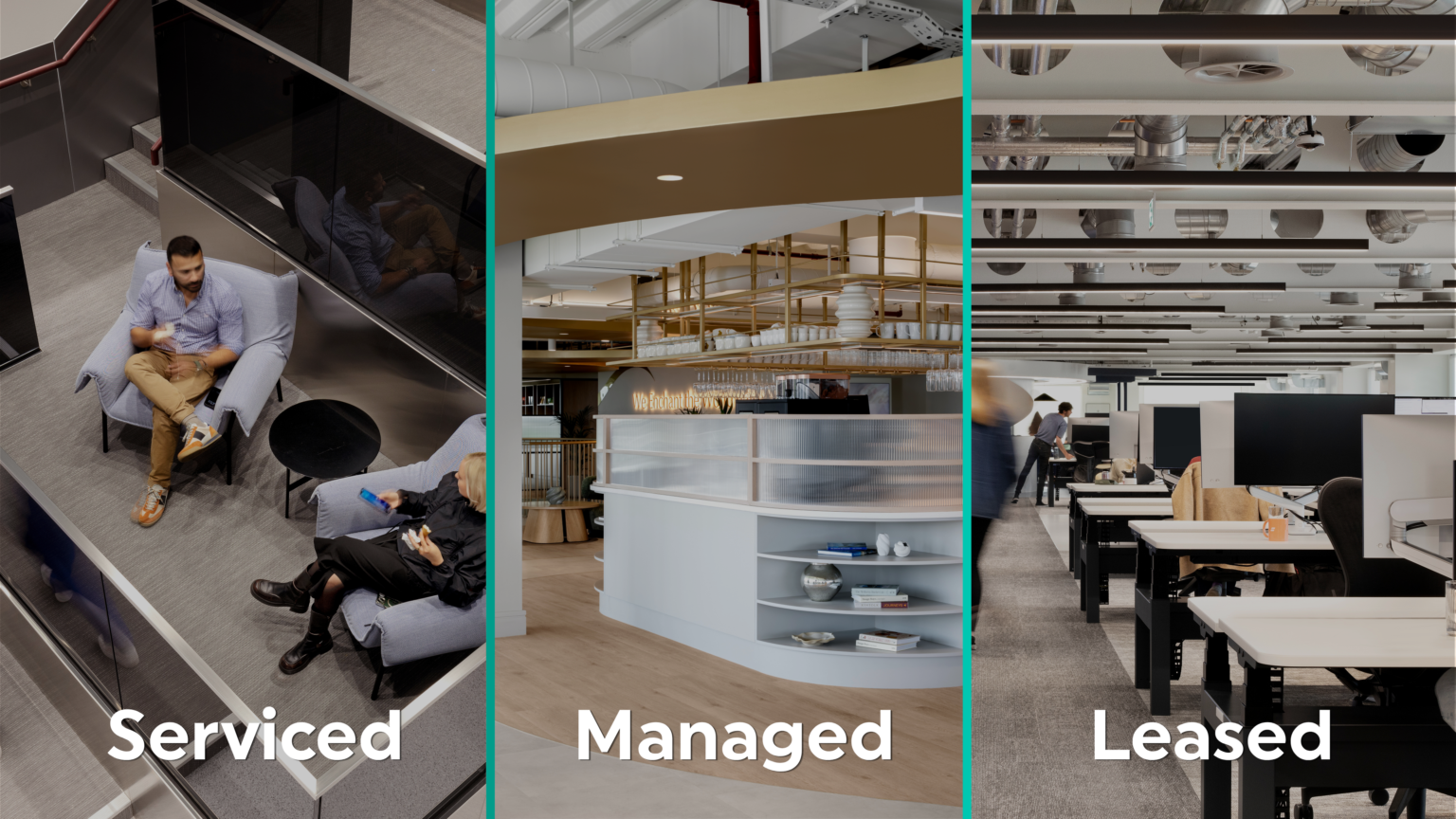
What type of space is right for your business?
Learn more about the different types of office space available to your business across London. This article breaks down the key benefits and limitations of serviced, managed and leased workspaces.
Read more -

-
How much does London office space really cost?
It’s easy to start an office search by comparing rent per square foot. It’s much harder to understand what a workplace will really cost.
Your total occupation cost can include:
- Rent
- Business rates
- Service charges
- Fit-out
- Furniture
- Technology and infrastructure
- Ongoing operational costs
As you can see, the cost of the space itself is only one part of the equation.
You should also consider the amount of space you truly need. An office that seems cheaper because of a lower rent could become less attractive if its floorplate creates inefficiencies or requires a more expensive fit-out.
For a more detailed look at the different costs involved, see our guide to the cost of office space in London.
-
The cost of office space in London
Take a closer look at the cost of office space across London’s different submarkets in our guide, which breaks down how much you can expect to pay per sq ft for Grade A and Grade B options across the city.
Download -
-
What to consider before signing a lease
One of the biggest mistakes you can make is treating the office search and workplace design as two completely separate decisions. After all, a building can look excellent on paper and still be a poor fit for the way your business operates.
Before committing to a property, think about how the space needs to function.
- How many people will use it?
- How is that likely to change over the next two years?
- How much of the workforce will work remotely?
- What types of meetings take place?
- How much space is needed for collaboration, focused work, informal interaction and private conversations?
Then consider how those requirements translate into the physical building.
Look beyond floor area
A large floorplate doesn’t automatically deliver an efficient workplace. The position of the core and the depth of the floor can both affect office space planning, as can natural light and existing services.
This is where a test fit can be valuable. Rather than simply asking whether enough desks can physically fit into a property, a test fit explores how the workplace could be arranged around your requirements. It answers questions such as:
- Does the floorplate support the required mix of work settings?
- Is there enough capacity for future growth?
- Can meeting and collaboration spaces be provided without compromising other areas?
- Are there parts of the floor that are difficult to use effectively?
- Will the building support the workplace experience you want to create?
- Are there fit-out constraints that could affect cost or design?
An office space calculator can also help with an initial estimate of how much space you need, but the number of desks is only the starting point.
The earlier workplace strategy and property decisions are considered together, the more informed the office search becomes. This approach also allows you to identify potential issues before you commit to a building.
-
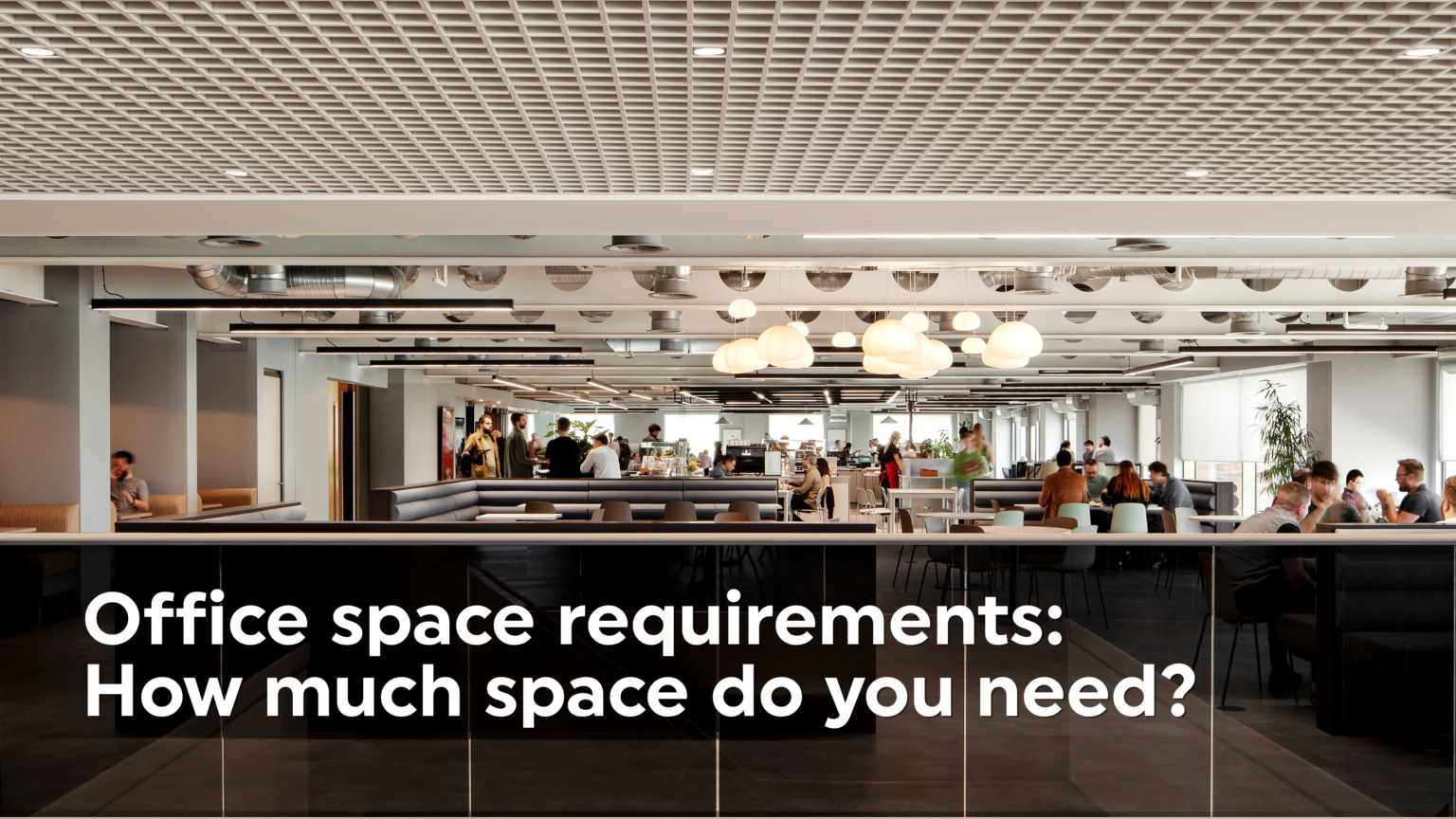
How much space does your business need?
Determining how much office space your business needs is one of the most important early decisions in any relocation or refurbishment project. For a deep dive into what impacts how much space you need, what types of space you need to account for, and the role of hybrid working on requirements, take a look at our guide.
Read more -
-
What happens after you choose your office?
It might feel like choosing an office is the last step in some ways, but it’s actually one stage in a wider workplace journey. A typical office relocation process might look like this:
- Define your workplace requirements
- Estimate space needs
- Identify suitable locations
- Shortlist buildings
- Assess and test fit
- Secure the property
- Develop the workplace strategy
- Design and fit out
- Move in
Each stage informs the next. That’s why decisions made during the property search can have consequences long after the lease is signed:
- The location affects your people and clients
- The building affects what can be designed
- The floorplate affects how efficiently the workplace can operate
- And the amount and type of space you commit to affects your ability to grow or adapt
-
The office move guide and checklist
Planning an office move? Our comprehensive relocation guide and checklist details how to define your objectives and space requirements, calculating your relocation budget and cost, and what to consider when searching for a property.
Download -
-
Find the right London office for your business
Above all, the best London office is the one that supports what your business is trying to achieve. Start by defining your priorities. Think about your people, clients, costs, building requirements, future growth and workplace experience. Use those priorities to narrow down the London submarkets that make sense, then assess individual buildings against the workplace you need to create.
If you’re at the stage of comparing different locations across the city, our London Office Location Guides are a helpful next step. They bring together the key characteristics of ten major office submarkets, helping you compare their relative strengths and identify the areas worth exploring in more detail.
From there, you can move from “which area?” to “which building?” – and ultimately to “what workplace can we create here?”
That shift in perspective could be the difference between simply finding office space and finding the right office for your business to thrive in.
-
-
London office space FAQs
-
 What is the best area in London for office space?
The best area for office space in London depends on your business’s priorities. The City and Canary Wharf are established locations for financial and professional services, while King’s Cross and Shoreditch have strong technology and creative communities. Mayfair offers a prestigious business address, whereas Paddington provides excellent national transport connections. Consider your workforce, clients, budget and building requirements before deciding which location is right for you.
What should you look for when renting office space in London?
When renting office space in London, consider more than location and rental costs. Assess transport connections, building quality, floorplate efficiency, natural light, amenities and sustainability credentials. You should also consider whether the space supports your working patterns and future growth. Understanding these requirements before viewing properties will help you identify offices that genuinely suit your business.
How much does it cost to rent office space in London?
The cost of renting office space in London varies significantly depending on the location, building quality, size and type of lease. However, headline rent is only part of the equation. Businesses should also budget for business rates, service charges, office fit-out, furniture, technology and ongoing operational expenses. Comparing the total cost of occupation provides a more accurate picture of affordability than rental rates alone.
What is the difference between Grade A and refurbished office space?
Grade A offices generally offer modern building services, efficient floorplates, contemporary amenities and strong sustainability credentials. Refurbished offices can provide similar benefits while retaining the character of an established building. However, the quality and extent of refurbishment can vary considerably. When comparing the two, consider the building’s infrastructure, workplace flexibility, fit-out requirements and total occupation costs rather than appearance alone.
What should businesses consider before signing an office lease?
Before signing an office lease, businesses should establish whether the property can accommodate their operational and workplace requirements. Consider headcount, future growth, hybrid working patterns, meeting spaces and the building’s physical limitations. Undertaking a workplace assessment or test fit before committing can help identify potential layout constraints, inefficient space and fit-out challenges that might otherwise become expensive problems later.
How do you compare different office locations in London?
Start by identifying the factors that matter most to your business, such as employee commuting, access to clients, local business communities, building availability and overall cost. Use these priorities to shortlist two or three London submarkets rather than focusing on a single location immediately. Comparing their relative strengths and compromises will help you narrow your search before assessing individual office buildings.
-
 What is the best area in London for office space?