Share

min read

Senior Content Manager
Content specialist in office design and build.
-
Office design has a significant impact on the performance of your business. It affects employee productivity, engagement and collaboration, not to mention shaping the way customers and potential clients see your business.
That’s especially true in 2026, as workplaces undergo rapid transformation. Office design is evolving faster than ever. As hybrid working becomes the norm, businesses are rethinking how their spaces support productivity, collaboration and employee wellbeing. At the same time, ESG priorities are reshaping expectations around sustainability and long-term efficiency. The result is a new wave of modern office design ideas.
Whether you’re refreshing a small office, adapting to a hybrid workplace design model or exploring the benefits of biophilic and sustainable environments, the opportunities to create a smarter, more engaging workspace have never been greater.
-
Looking for inspiration? This guide explores office design ideas for 2026, combining practical layouts with forward-thinking concepts. From agile work zones and space-saving solutions to greenery-led interiors and circular design principles, here are the real-world examples that show how form and function can work seamlessly together.
Table of contents
-

-
Office layout ideas for modern workplaces
A good office layout sets the tone for how people work, move and connect. The aim isn’t to create something that simply looks polished, it’s to build a space that helps your teams focus, collaborate and adapt throughout the day.
As hybrid patterns settle in, we’re seeing more businesses shift towards layouts that offer genuine choice. This might mean quieter corners for deep work, open areas for quick interaction or plenty of room to adjust as teams grow or priorities change. When a layout is planned with this kind of flexibility in mind, you make better use of your footprint and give people an environment that actually supports the way they work.
-
Embrace agility through modularity
Agile working is a model that facilitates flexible working hours and hybrid working practices (from different locations). It gives employees more freedom with when, where and how they work, but the right environment is required to enable this to happen.
Agile workspace design is what makes this model possible, with workspaces that embrace agility rising in popularity. That’s for good reason, too; agile workspace design makes businesses more adaptable, enhances collaboration, boosts productivity and can even improve staff retention by providing teams with greater choice throughout their day.
-
-
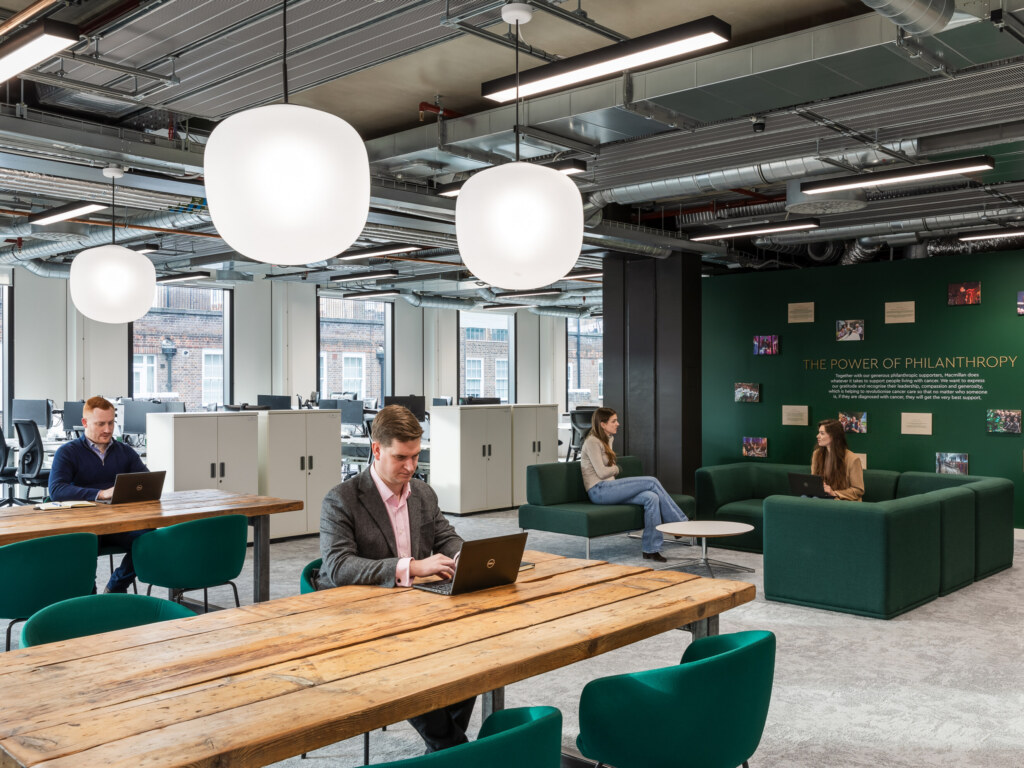
Modularity is a key concept of workspace design that incorporates an agile approach. This refers to having multiple separate parts which combine to comprise your office as a whole. Reconfigurable spaces and adaptive furniture allow for easy adjustments to changing needs, while also accommodating larger groups to come together for collaboration sessions or a business’s programme of events. As a result, you can include a variety of settings to give staff a choice of different working environments.
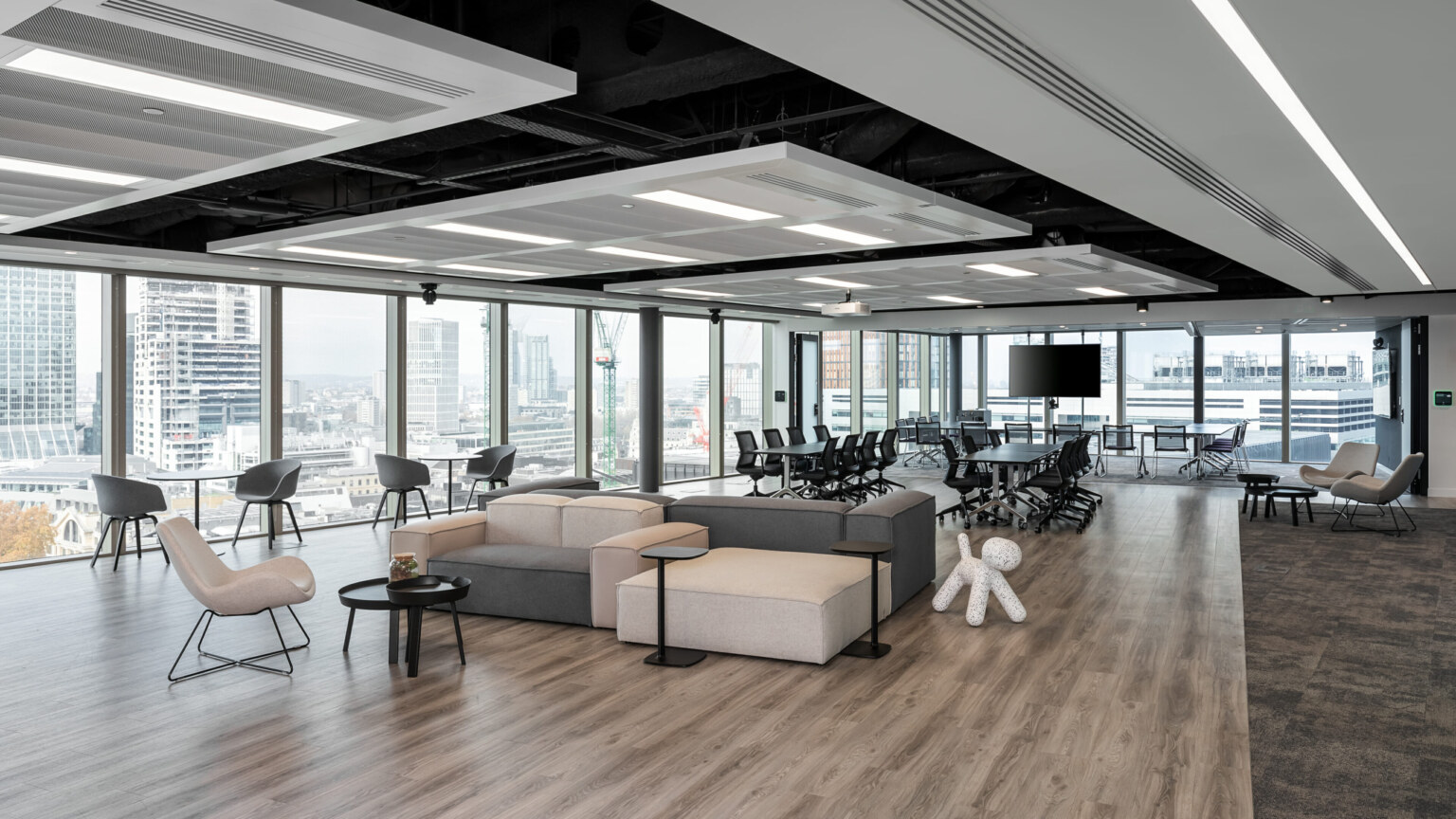
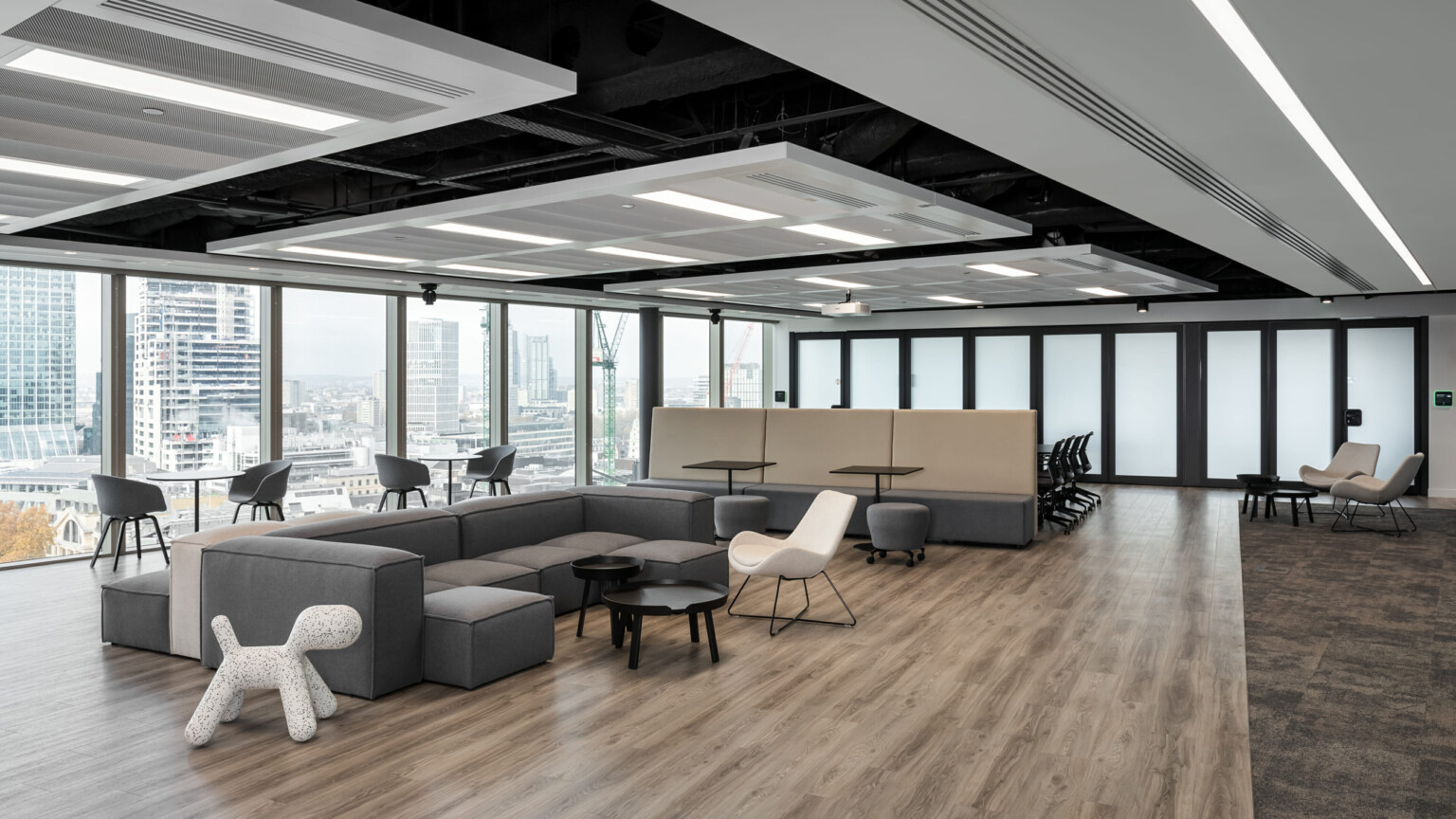
Take the Moorhouse office, for example, where the square floorplate is divided into four main zones. Each has a distinct function:
- Work – hot desks and quiet workspace for focused working.
- Meet – five meeting rooms with a folding wall in the largest room.
- Flex – a front-of-house area that becomes a breakout area when the above wall is folded away.
- Grow – an additional meeting space or touchdown station that can house furniture.
Moorhouse’s office caters to different ways of working, accommodating employees who work from the office full time as well as hybrid workers. It offers a choice of environments for different projects and working styles, while serving as a multi-functional social space that brings people together.
-
Encourage movement through configuration
Encouraging movement is one of the biggest office design trends currently. The aim is to prevent employees from staying in assigned areas of the office, which creates silos where knowledge is not shared across a business. This is also known as ‘nesting’, and it causes problems socially as well as professionally.
To encourage movement in 2026, businesses can strategically space different teams, departments and facilities to promote cross-disciplinary interactions.
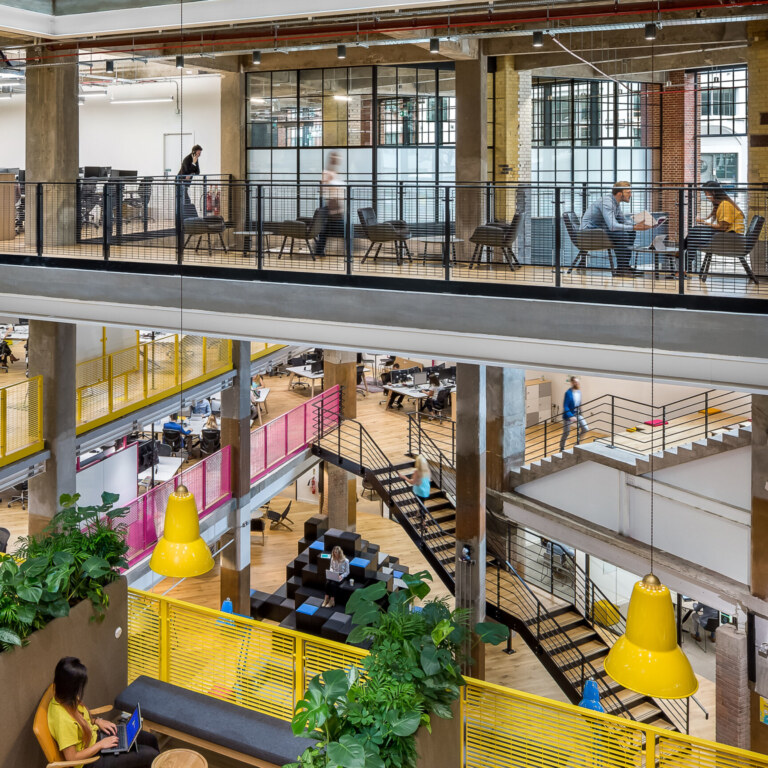
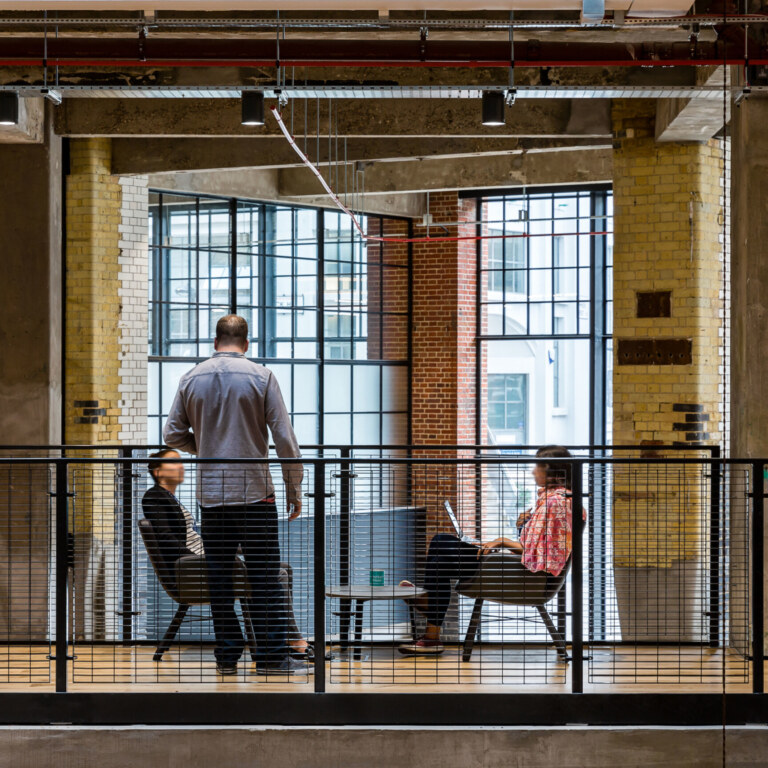
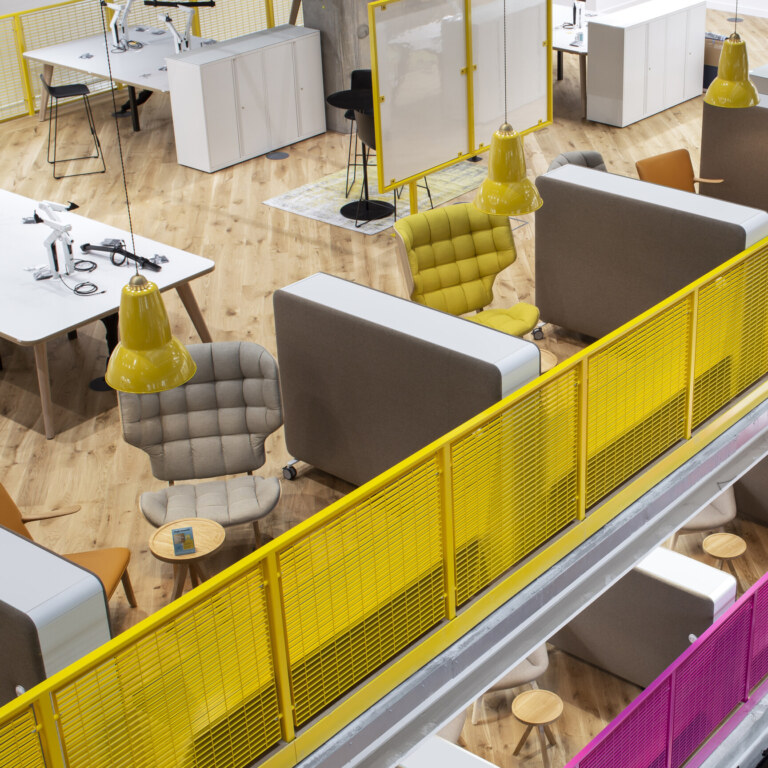
Take Photobox, for example. Their space is split across multiple floors, but the office is intentionally designed so people do not have everything on each floor. The result is that employees need to move around. That might be heading to the social space on the ground floor or finding new pockets around the office for ad-hoc meetings.
-
Use space-saving solutions for small offices
Small offices often need to work harder, delivering maximum functionality within limited square footage. Smart, space-efficient solutions can transform compact workspaces into high-performing environments without sacrificing comfort or flexibility. Some small office design ideas include:
- Wall-mounted foldaway desks provide an easy way to convert quiet corners into additional task areas.
- Sliding or retractable partitions make it possible to create meeting rooms or private focus zones on demand.
- Vertical storage towers help free up valuable floor space, allowing teams to keep essential items accessible without cluttering work areas.
Dual-purpose furniture is another powerful tool for smaller workplaces. Benches with integrated power and storage, for example, can serve as collaborative seating, touchdown points, and equipment hubs all at once.
A great illustration of this approach can be seen at Barratt Homes’ Guildford office. The board room is equipped with a flexible folding table, so it can double as a training room when needed. It shows how flexible thinking can unlock extra space where you least expect it.
-
Create a journey with wayfinding
If you want to move people through your office space, wayfinding is another fantastic source of office inspiration. It creates a clear user journey through your space for visitors or employees.
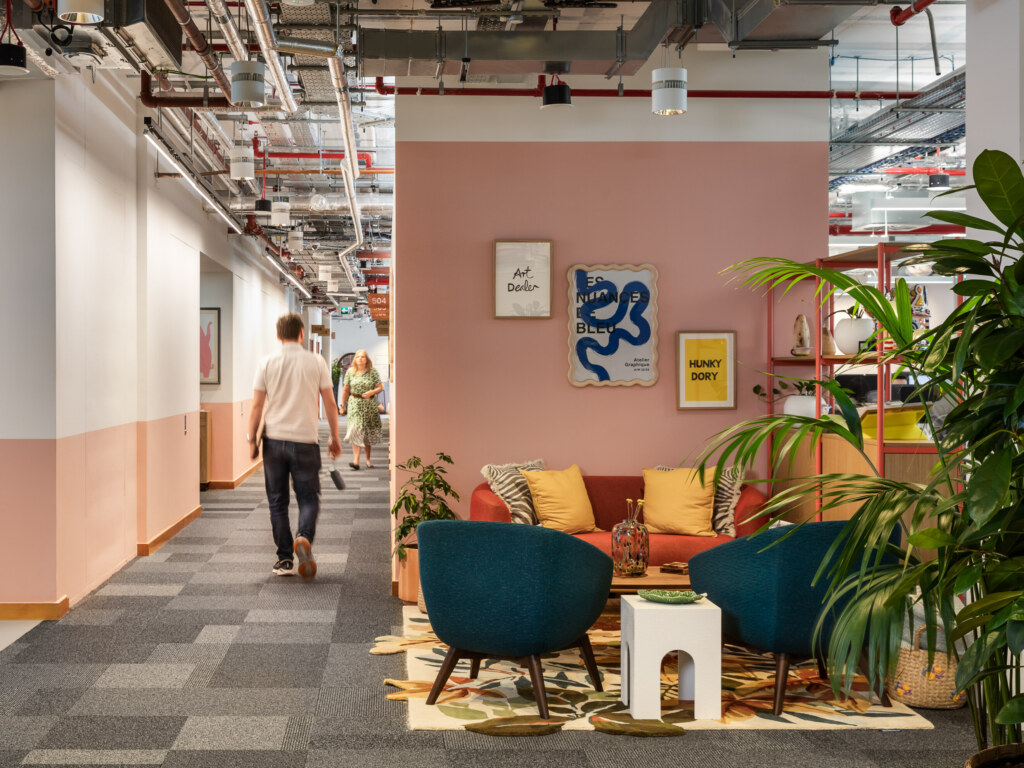
Wayfinding can be implemented using subtle details like colour. Take a look at the Toyota Connected office, for instance, which uses different coloured threads to guide people through their user experience.
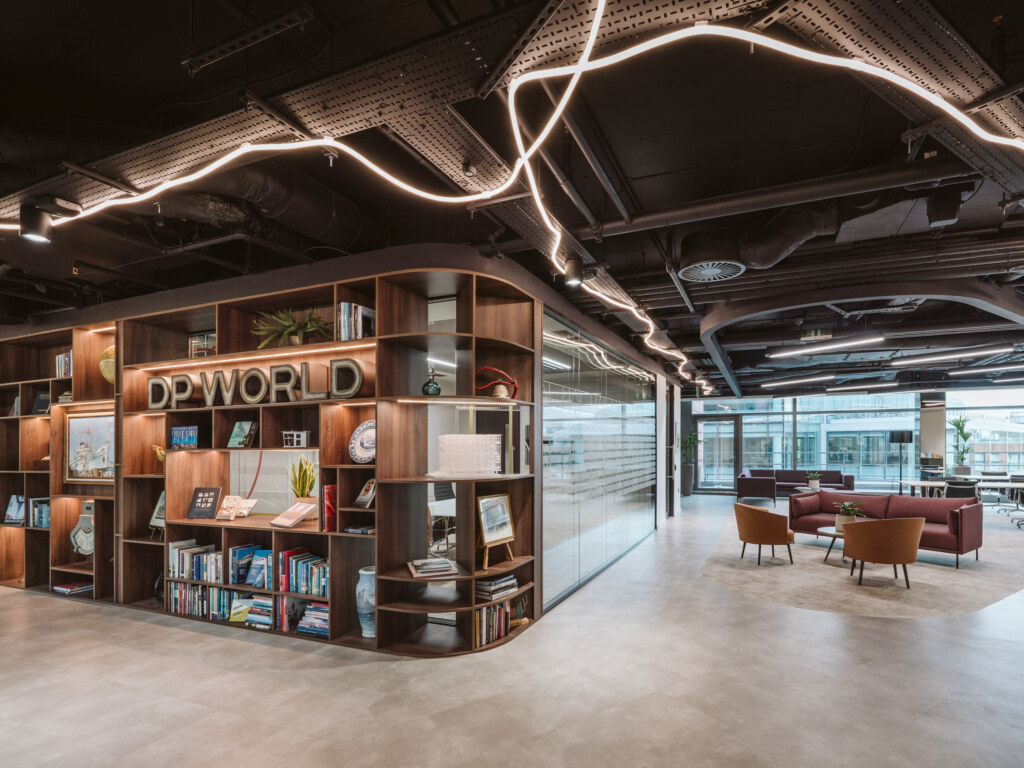
LED lighting is another option, as seen at DP World’s office. A continuous strip of lighting supports guests as they navigate the space, from the waiting area and business lounge through the office, where models and artwork tell them more about the brand and its history.
-
-
Build activity-based working (ABW) zones
Activity-based working (ABW) takes flexibility one step further by offering employees a curated range of environments designed to support specific tasks. From quiet focus pods and small libraries to brainstorming lounges, maker spaces, phone booths and informal huddle rooms, ABW acknowledges that no single setting can meet every need.
This variety empowers employees to choose the environment that fits their work style and the task at hand, improving both comfort and productivity. Another benefit is that ABW significantly reduces the reliance on fixed, individual desks. As a result, businesses can utilise their floorplate more efficiently, dedicating more space to shared functions and collaborative zones without expanding their footprint.
This kind of zoning doesn’t always require walls. Acoustic design elements can be used to subtly shape the flow and function of a space while preserving openness. Flooring changes, ceiling baffles, sound-absorbing panels and acoustic curtains can be strategically placed to create quiet areas, semi-private meeting spots or soft boundaries between departments.
-
These acoustic cues help mitigate noise issues commonly associated with open-plan environments, improving the overall experience for employees. By defining zones through sound control rather than physical barriers, businesses maintain flexibility while offering greater comfort and privacy, which are two key components of modern office design.
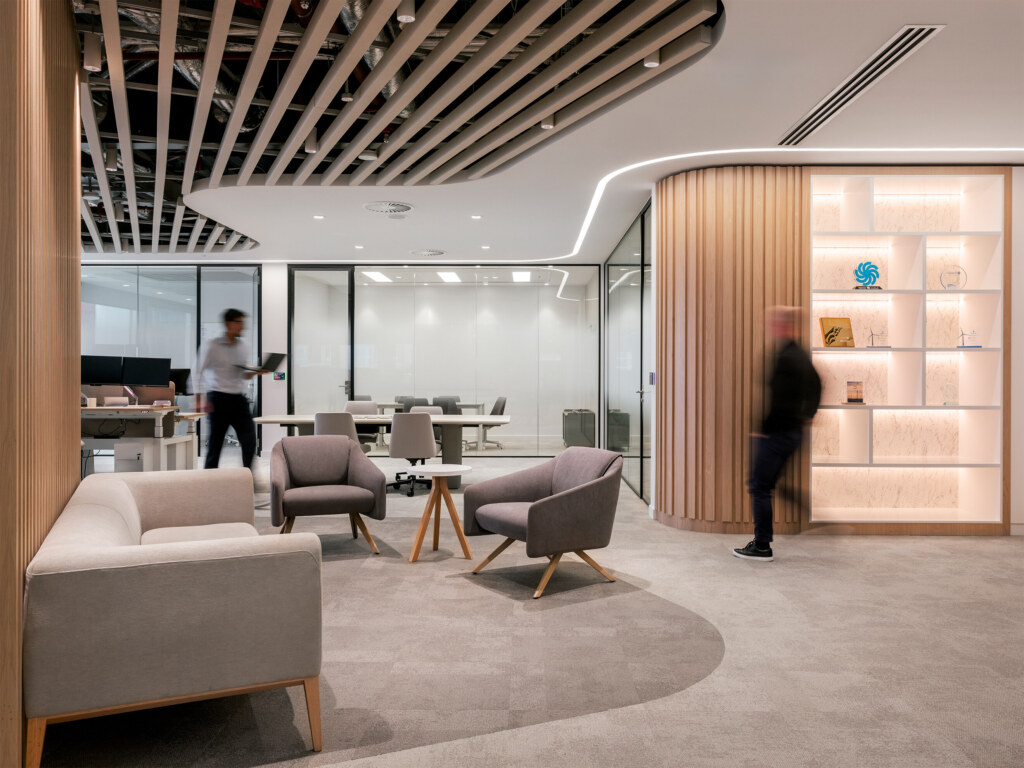
Masdar’s London office does this well with ceiling baffles to enhance the space’s acoustic performance. That’s paired with slat slab partitions to ensure confidentiality and reduce noise reverberation. The result is a better-quality working and meeting environment.
-
-
Disrupt traditional habits to spark meaningful interactions
Most offices are shaped by the same daily rhythms: people arrive, walk the same routes, sit in the same spots and leave along the same path. These patterns feel efficient, but they often limit cross-team interaction and can unintentionally reinforce siloes. Thoughtfully disrupting those ingrained habits is one of the simplest ways to bring more energy, diversity and movement into a workspace.
This starts with rethinking how people flow through the office. Instead of long, linear corridors or predictable destinations, layouts can encourage natural exploration: meeting rooms positioned as islands rather than a block against a wall, circulation routes that open into communal touchpoints, or strategic “pause moments” that invite teams to linger rather than pass through.
-
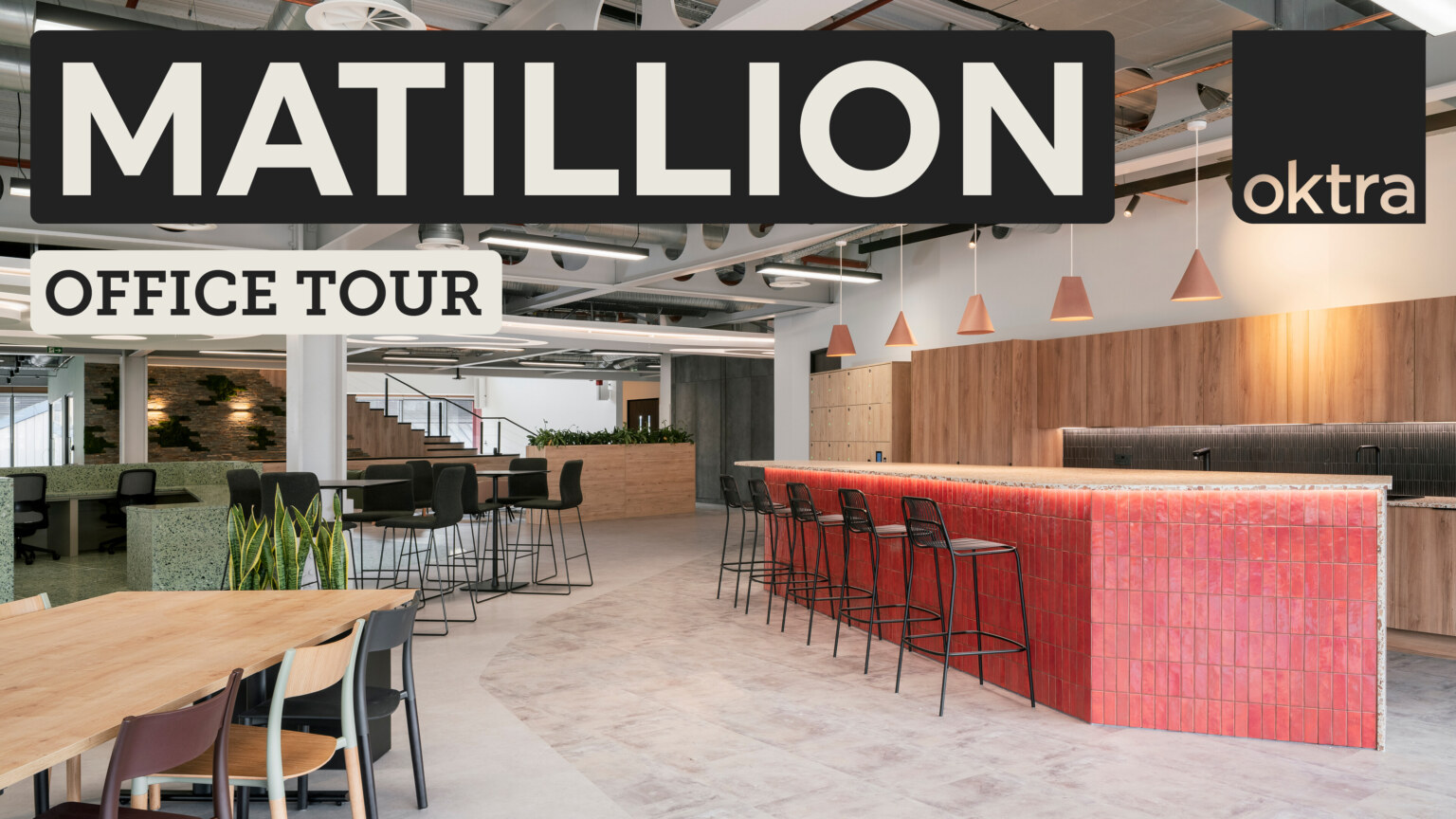
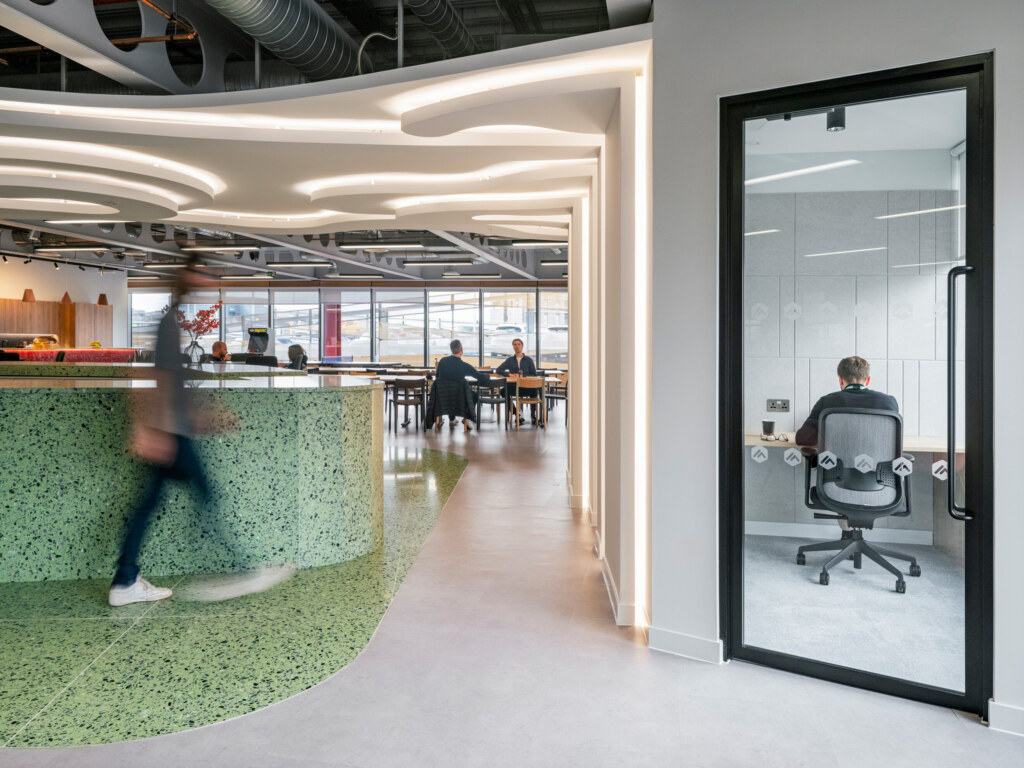
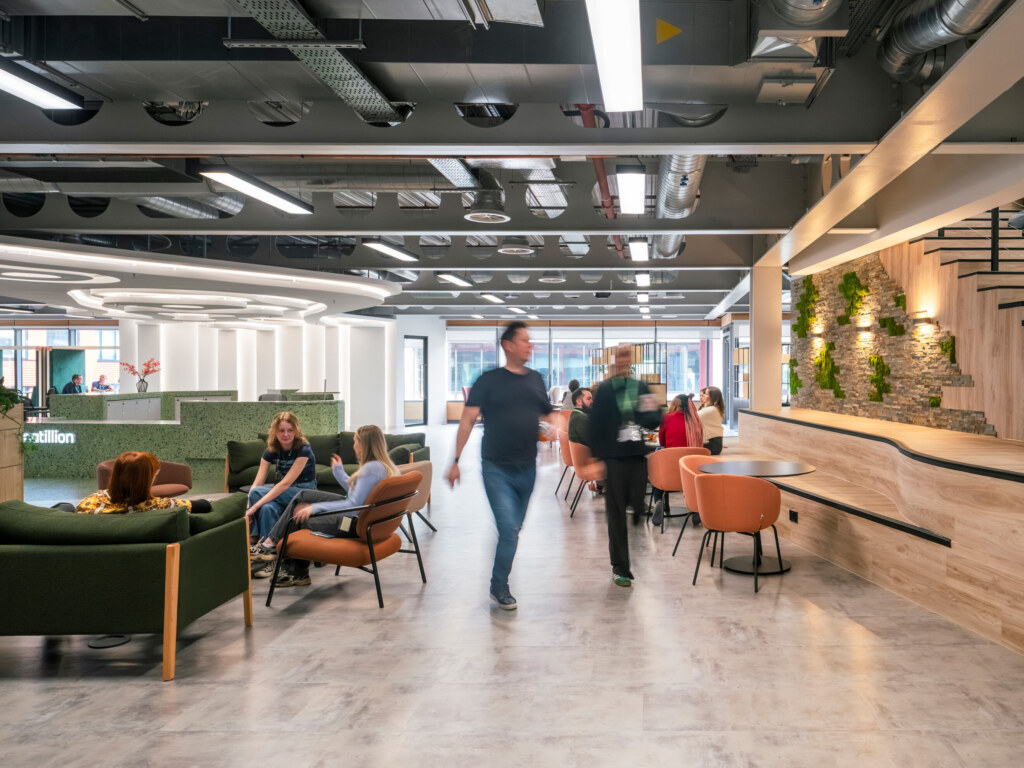
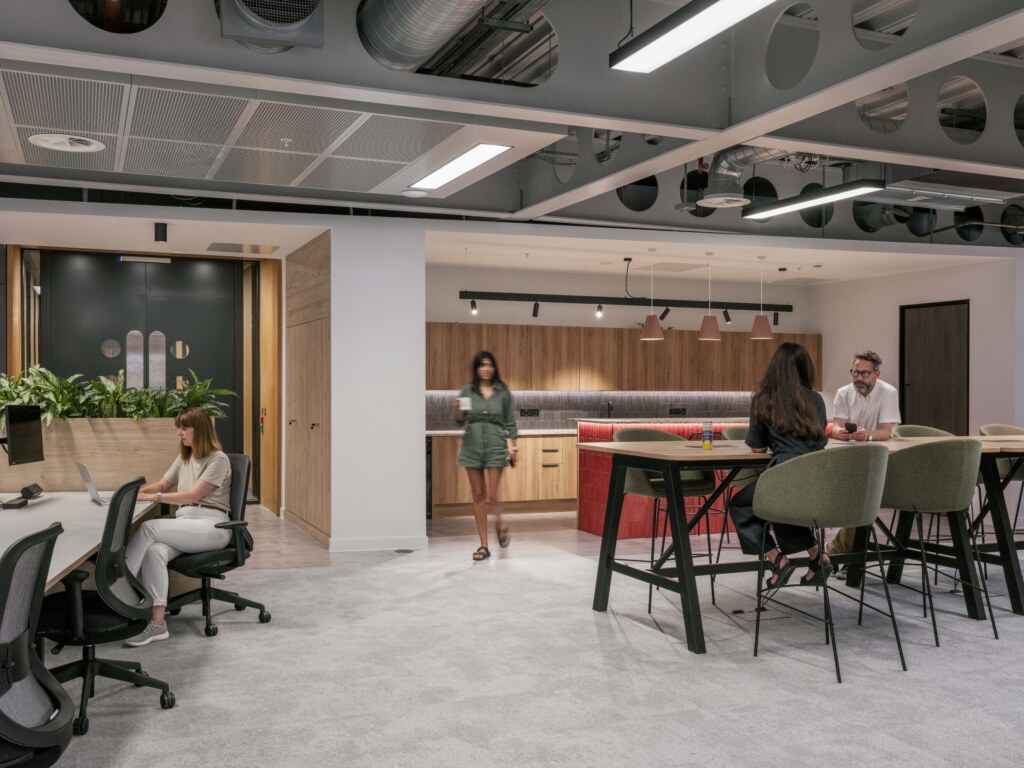
Matillion’s Manchester office is a clear example of this principle in action. The workspace was designed to echo the fluidity of the Peak District and Rocky Mountain landscapes the brand is rooted in. Meeting rooms sit as standalone islands scattered across the floorplate, breaking up the predictable ‘desk-to-destination’ commute most offices fall into.
As people move around these islands, no two journeys through the space feel the same. New paths emerge, colleagues cross unexpectedly, and the flow of movement becomes far more organic.
By nudging people away from autopilot, you encourage collaboration, curiosity and a healthier rhythm of movement through the workspace. It’s a small behavioural shift with a significant impact on how teams connect and how the office feels as a whole.
-

-
“Spaces that look good are easy to create. Spaces that shape behaviour take more work, but they’re the ones that actually make a difference.”
Dominic Dugan
Group Creative Director at Oktra
-
Sustainable & biophilic design ideas
Sustainable office design ideas are transforming modern workplaces by combining natural elements, eco-conscious materials and energy-efficient solutions. These strategies boost wellbeing, creativity and productivity while supporting ESG goals. Crucially, they allow organisations to create flexible, healthy and inspiring work environments for employees in 2026.
-
Use a circular design approach
Sustainable office design goes far beyond incorporating natural materials or energy-efficient fittings. It’s also about adopting a circular mindset. A circular design approach prioritises longevity, adaptability and waste reduction by ensuring that products and materials can be reused, repaired or reconfigured rather than discarded.
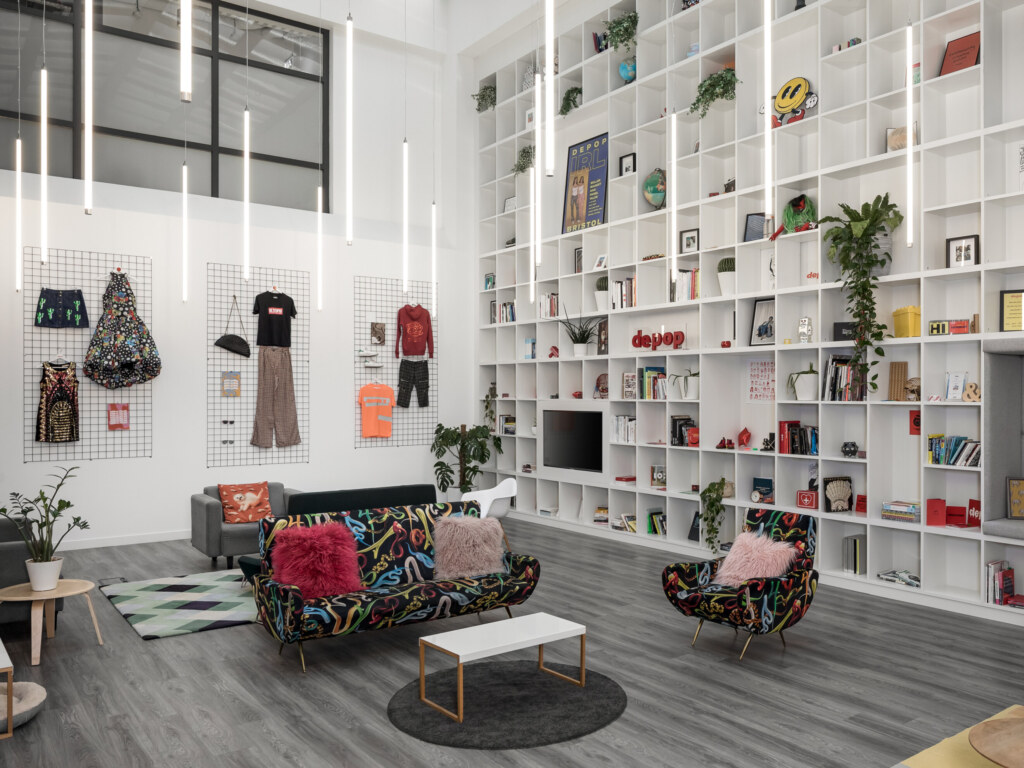
At their London office, Depop has used reclaimed furniture throughout the space. It aligns with their brand as a re-sale marketplace and highlights their commitment to sustainability.
-
-
Another effective strategy is designing for disassembly. Furniture built with removable components can be repaired, upgraded or rearranged to suit future changes in team size or workstyle. Likewise, opting for modular carpets with replaceable tiles avoids the need for full-floor replacements when only small sections are worn.
Businesses can also choose manufacturers that offer take-back schemes, ensuring old furniture or fixtures are either refurbished or responsibly recycled rather than sent to landfill.
This approach not only reduces waste but also makes future office refreshes more efficient and cost-effective, supporting both environmental goals and long-term operational resilience.
-
-
Integrate sensor-based energy efficiency
Energy efficiency is another key pillar of sustainable office design ideas, and it doesn’t need to dominate the space or feel overly technical. Simple, low-impact sensor-based solutions can make a significant difference to environmental performance.
Smart lighting systems that adapt to natural daylight levels help reduce unnecessary energy use, while occupancy sensors automatically control heating, cooling and lighting in unused areas. Zoned climate control ensures different parts of the office are heated or cooled only when required, preventing energy from being wasted on empty meeting rooms or low-traffic zones.
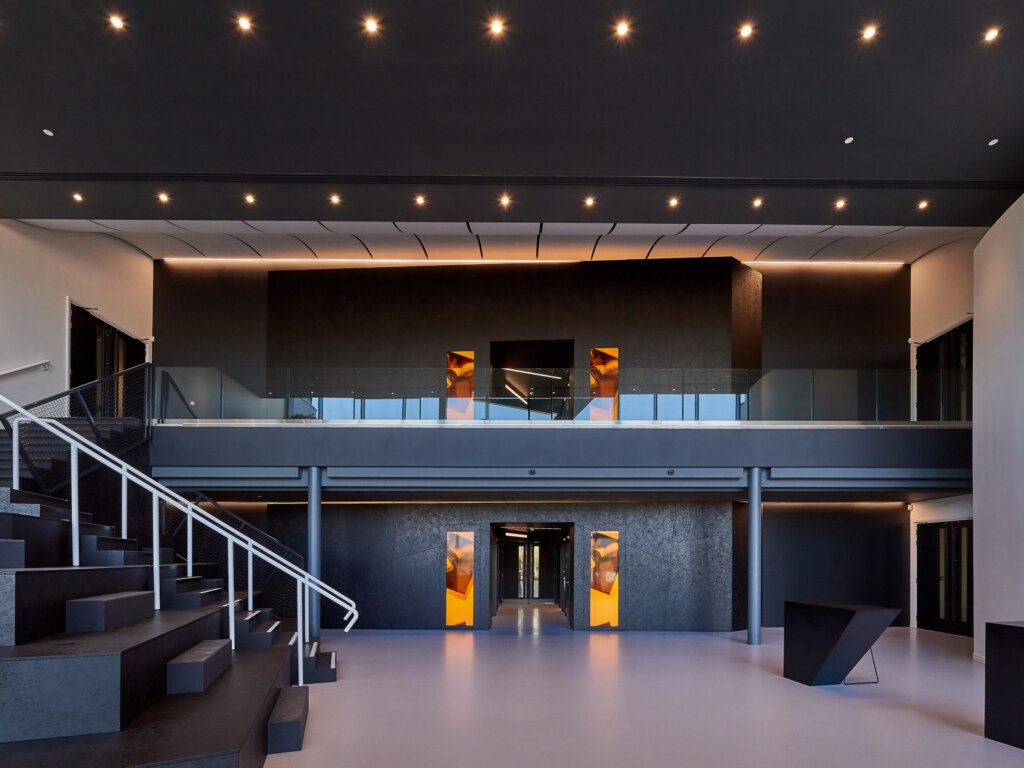
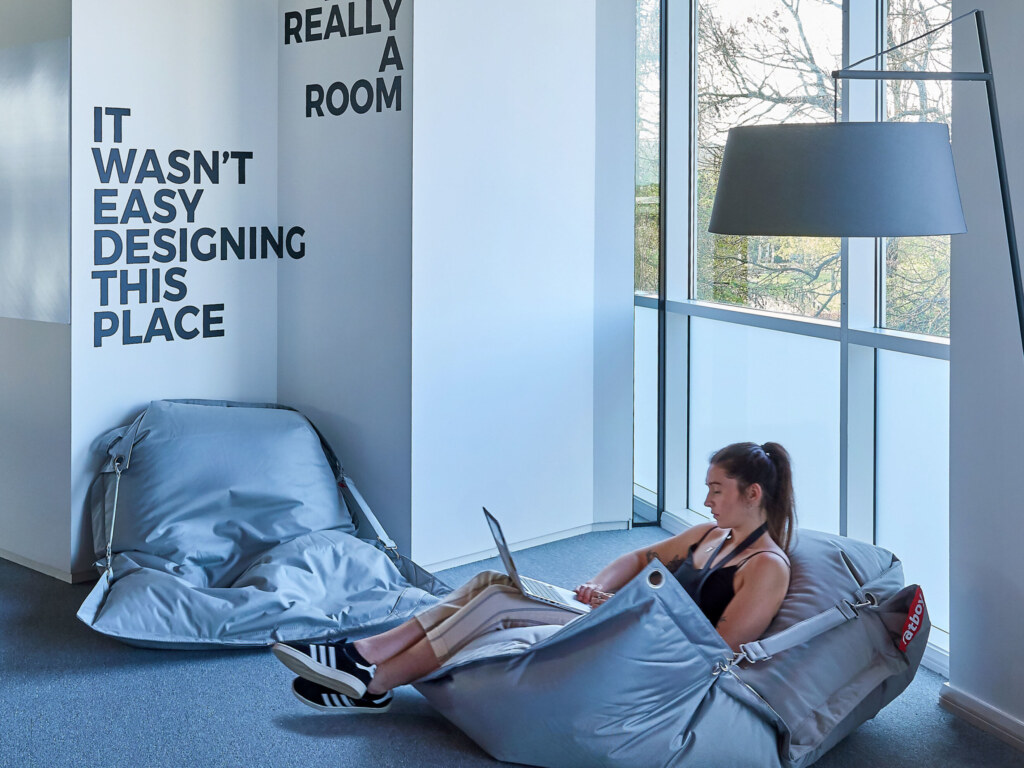
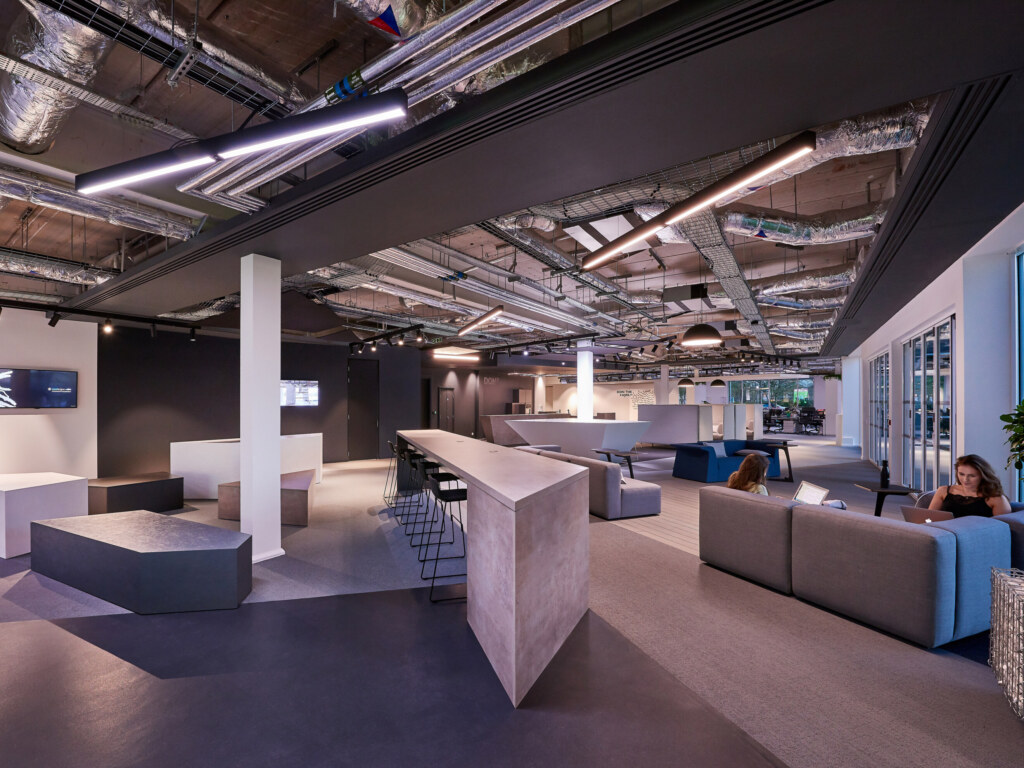
Going one further, Gymshark’s Birmingham HQ uses an innovative Human Centric smart lighting system. As well as monitoring usage throughout the building, it mimics the sun’s path to optimise energy consumption and minimise costs.
These solutions blend seamlessly into modern office environments, supporting ESG commitments while also reducing operational costs. Above all, they make sustainability both visible and practical in everyday use.
-
Incorporate biophilic design elements
Having plants in an office environment has been proven to reduce perceived stress. Biophilic office design goes a step further, incorporating various natural elements to create a workspace that fundamentally reconnects humans to nature.
Key elements include the use of natural materials, exposure to natural lighting, incorporation of vegetation and mimicking natural forms and colours within the design. The goal is to create an environment that boosts creativity, enhances peace of mind and promotes overall wellbeing.
-
In biophilic design, every detail counts – from the materials selected to the layout of the space. Materials should not only be natural but also sustainably sourced, reflecting an ecological consciousness that resonates with many of today’s employees and clients. For example, 55% of people in the UK told NielsenIQ that living sustainably is important for society.
The design should also consider how employees interact with the space, encouraging movement and providing diverse settings that cater to different needs and tasks – be it collaborative projects or solitary deep work.
-
-
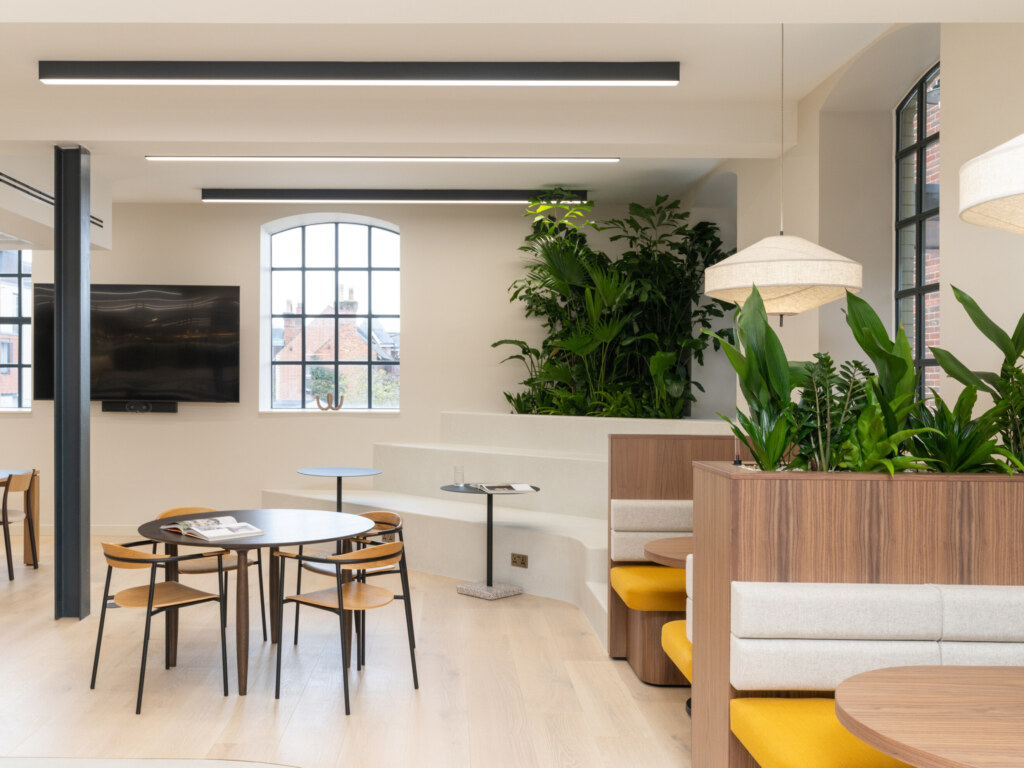
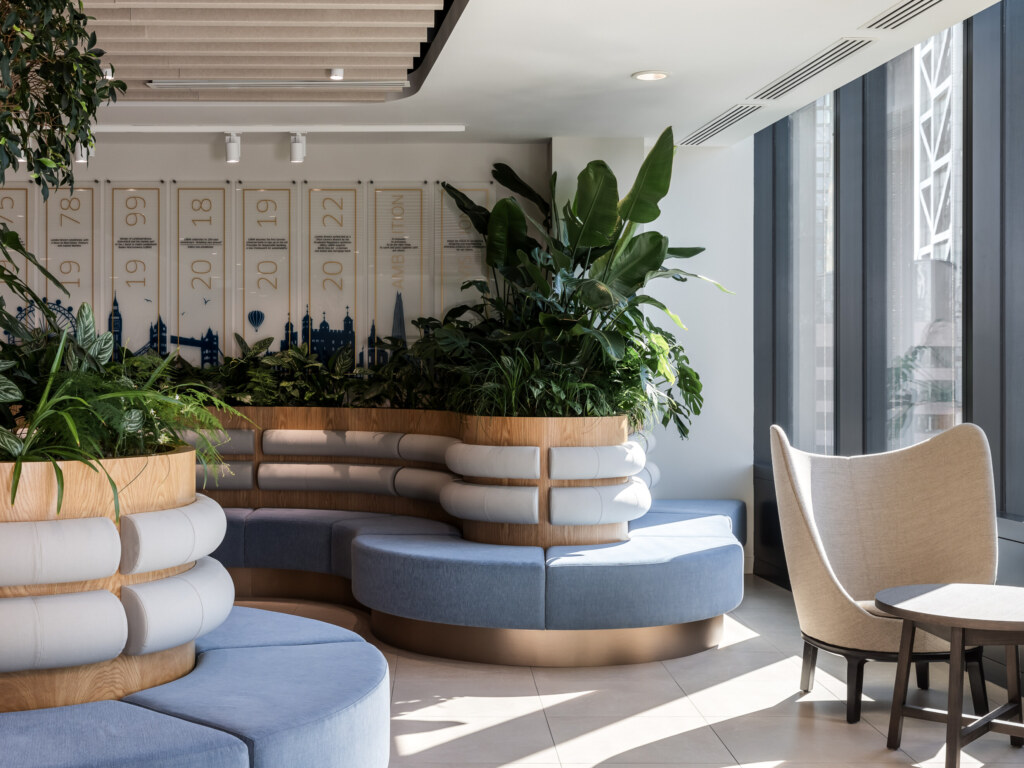
LBBW’s London office demonstrates how powerful this approach can be. The design uses natural materials and a warm, organic palette to create a calm, welcoming environment that contrasts with the intensity of the financial sector.
Soft curves, timber accents and tactile textures bring a sense of balance to the space, while thoughtfully placed planting and access to natural light promote clarity and comfort throughout the day. These biophilic choices work together to create a soothing – yet sophisticated – workplace.
-
-
Designing for hybrid & tech-enabled work
The future of office design is being increasingly shaped by hybrid working and technology integration. Hybrid office design focuses on adaptable layouts that encourage movement, collaboration and connectivity. Below, we’ll cover smart office ideas such as multi-functional social hubs and tech-enabled spaces that create flexible, engaging workplaces for modern teams.
-
Include multi-functional social hubs
Employee engagement is a key consideration when it comes to hybrid office design. It is not hard to see why. A report by Gallup found that companies with an engaged workforce have 17% higher productivity and 21% higher profitability.
Multi-functional social hubs are one of the most significant features to enhance employee engagement while ensuring the office remains optimised from a functional standpoint.
-
-
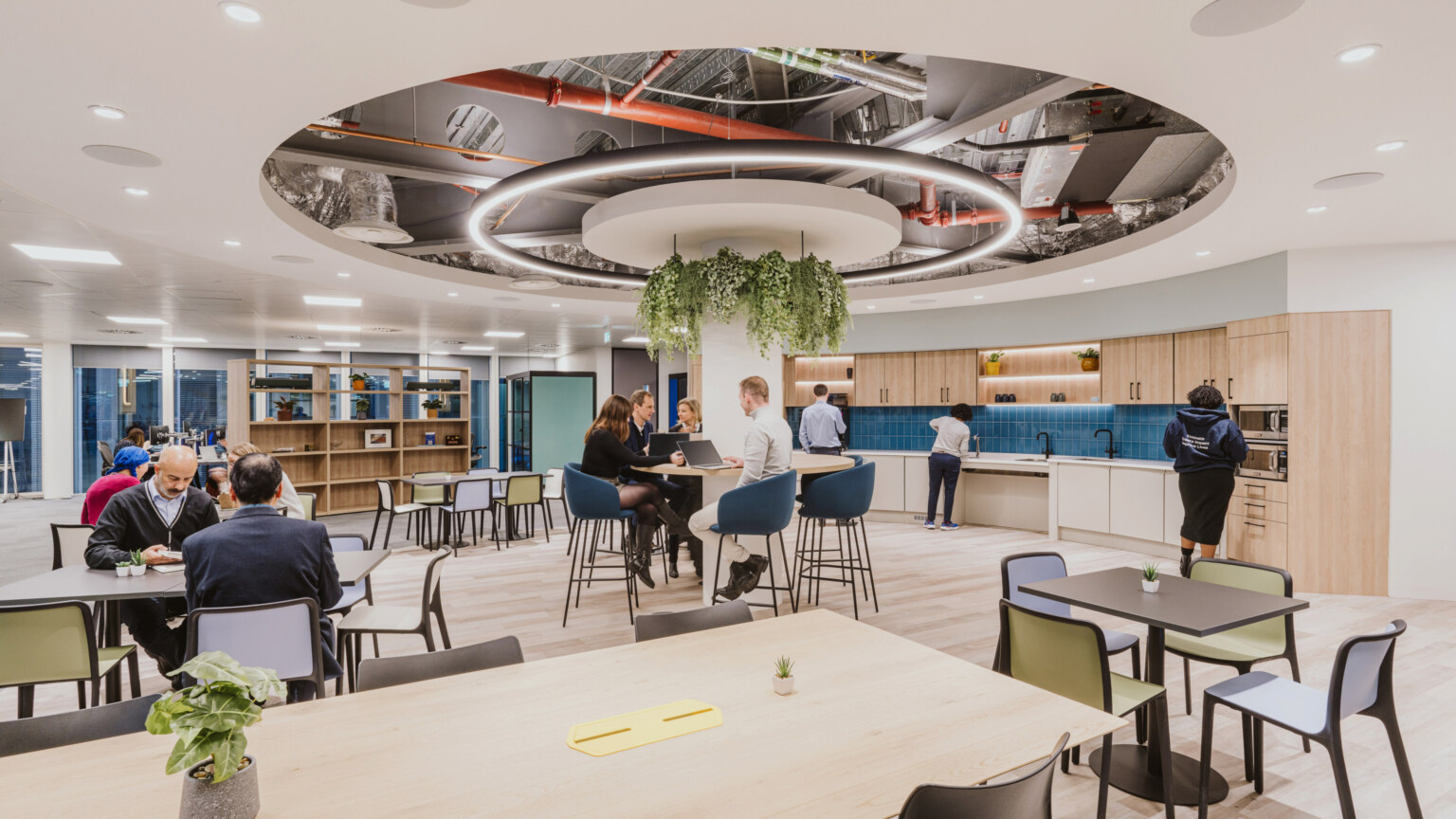
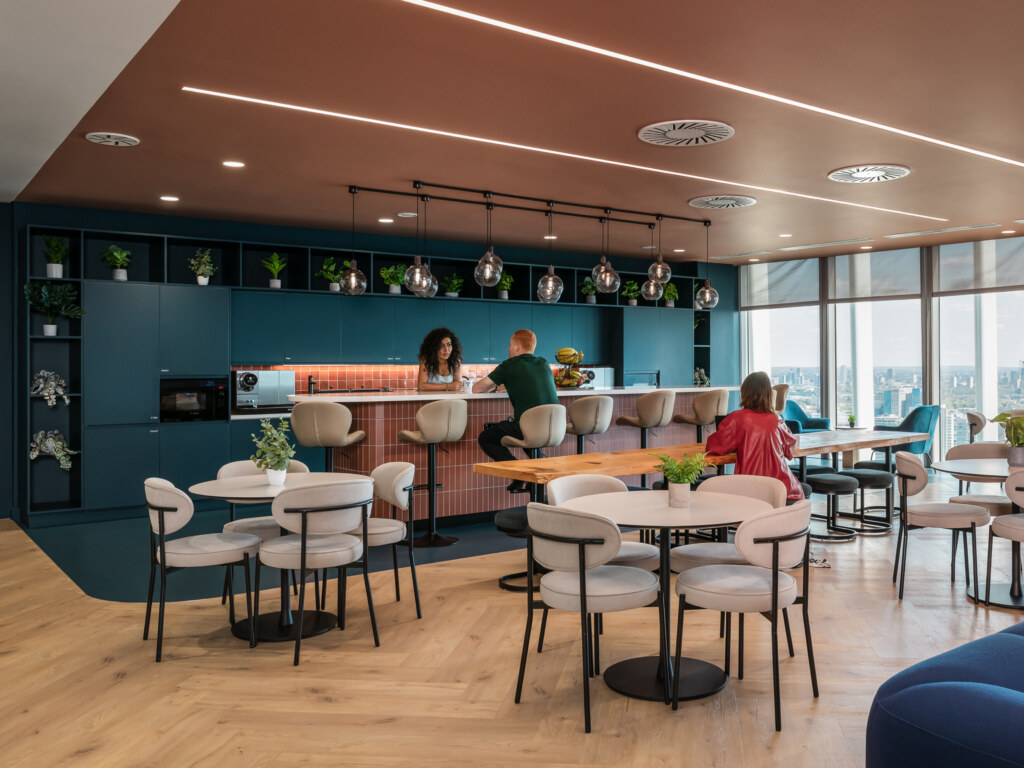
Social space should be the beating heart of the office, where employees can build relationships that ultimately drive the business forward. These spaces should serve the purpose of bringing people together, be it at an individual level or company-wide.
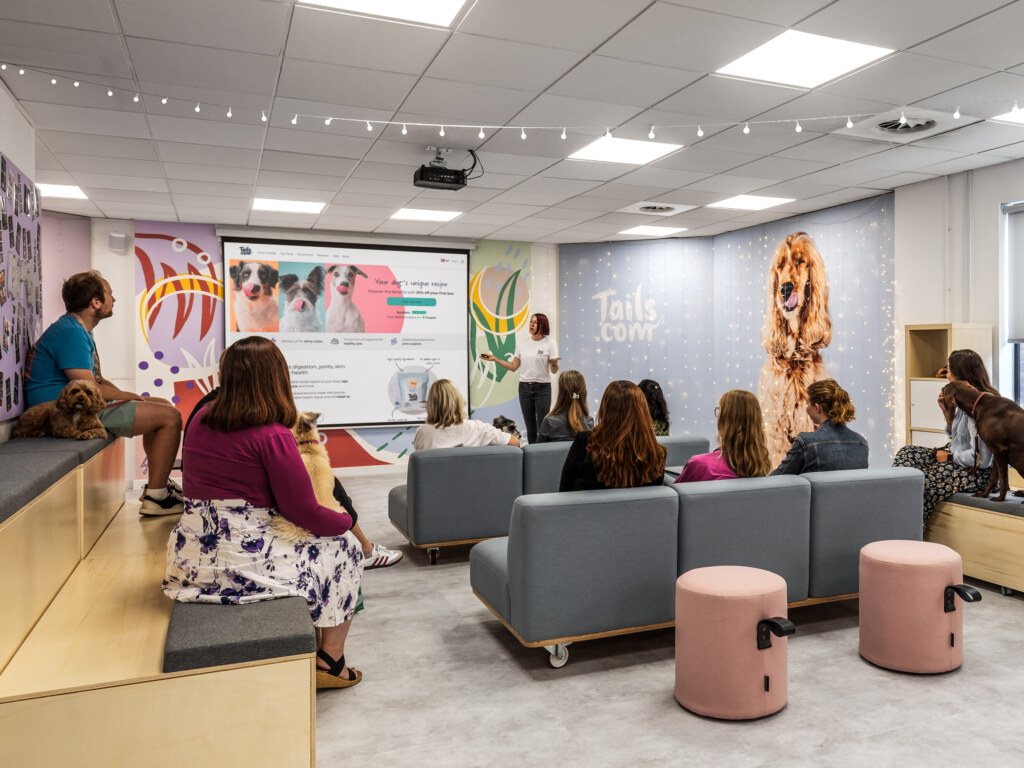
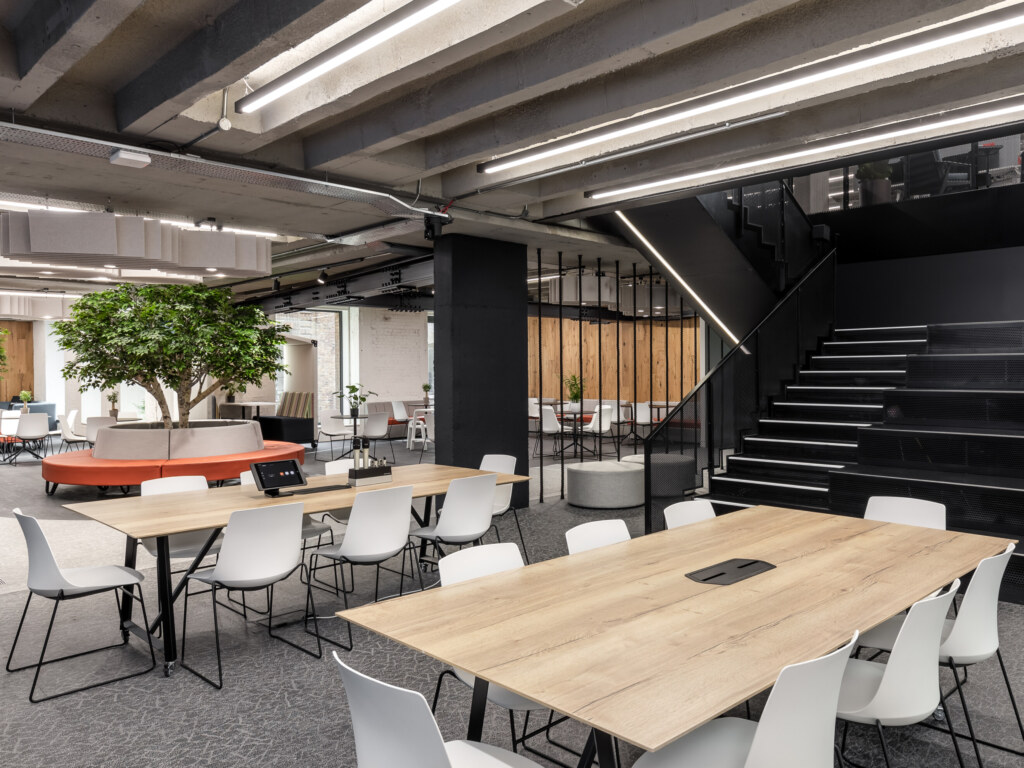
Think tea points that can adapt to hold all-hands meetings, or stairs that also function as an events space like at OwnBackup. With two floors in the building, they wanted employees to be able to move around without having to leave the office. As well as plenty of social space, their office includes a wellness and relaxation room with massage chairs and changing rooms to get ready at the office before evening social events.
-
-
Promote collaboration with dedicated spaces
We have previously cited how employees working in collaborative settings are 50% more productive than those working individually. Promoting collaboration can also reduce turnover rates, improve employee satisfaction and mitigate workplace failures. This is impossible for businesses to ignore if collaboration naturally lends itself to the way they operate.
With hybrid working the norm for many organisations in 2026, it’s important to make the most of time in the office. You can embrace this by moving away from fixed desks with office partitions. Open layouts are a vital component of collaborative spaces.
If partitions are necessary, consider screens or sliding walls for better adaptability. Additionally, providing reliable spaces in transitional areas enables businesses to support the ad-hoc needs of employees in their day-to-day tasks and interactions.
-
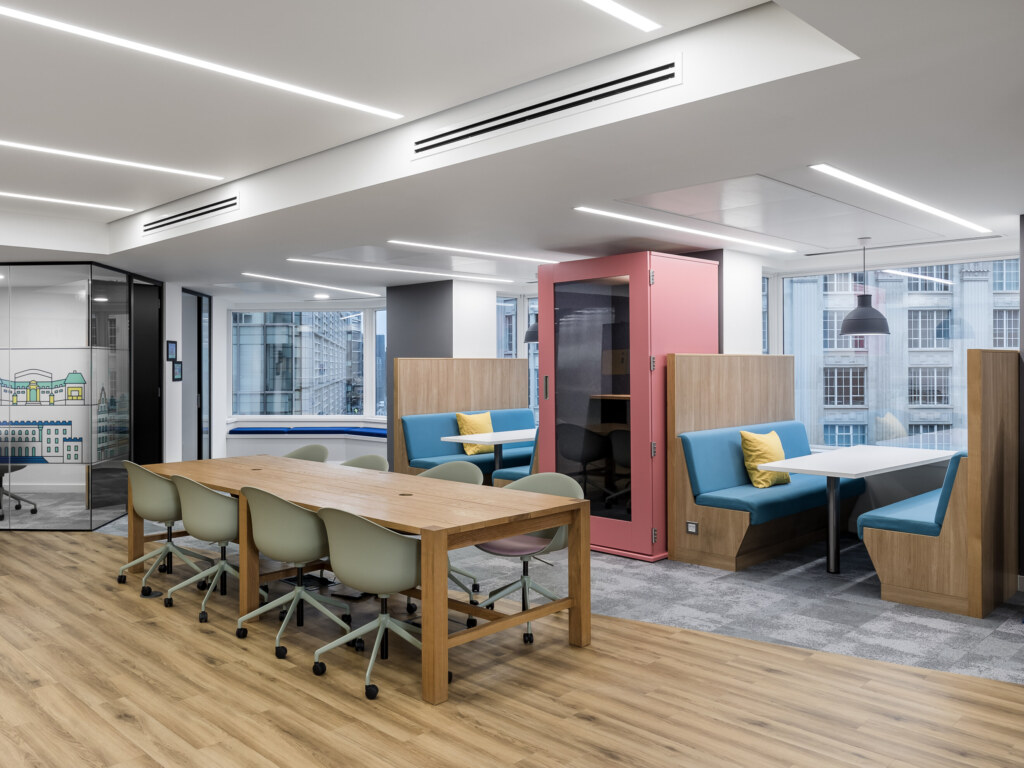
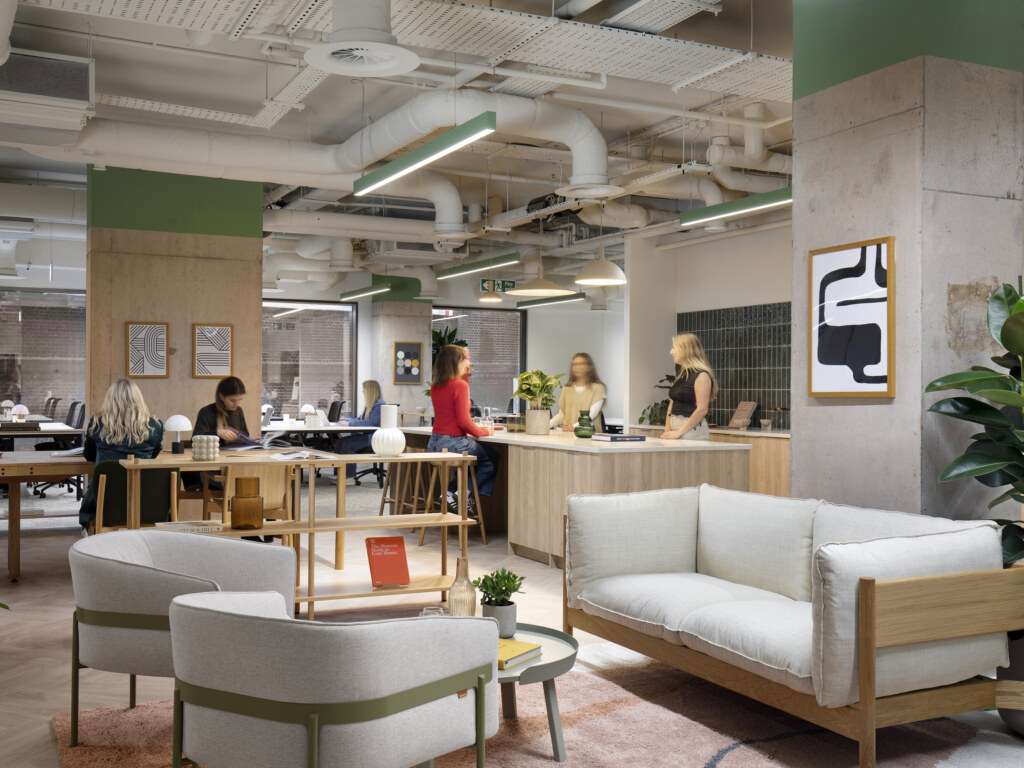
You can see many more important elements of collaborative workspace design in Trainline’s office. Collaborative spaces include meeting rooms, informal areas and high benches alongside individual desks – supporting different ways of working in the office.
Functional areas like meeting rooms and whiteboard spaces have also been brought into the middle of the property, making them easily accessible for all employees situated around the perimeter.
-
-
Design tech-integrated collaboration zones
Modern collaboration spaces aren’t just about physical layout and furniture. They’re increasingly defined by their technology capabilities. How can you collaborate across locations? How flexible is the space and its facilities for different team sizes or event types? Does it support different presentation formats like video and live demonstrations?
Tech-integrated zones allow teams to connect seamlessly, whether they are in the office or working remotely, supporting hybrid and distributed workflows.
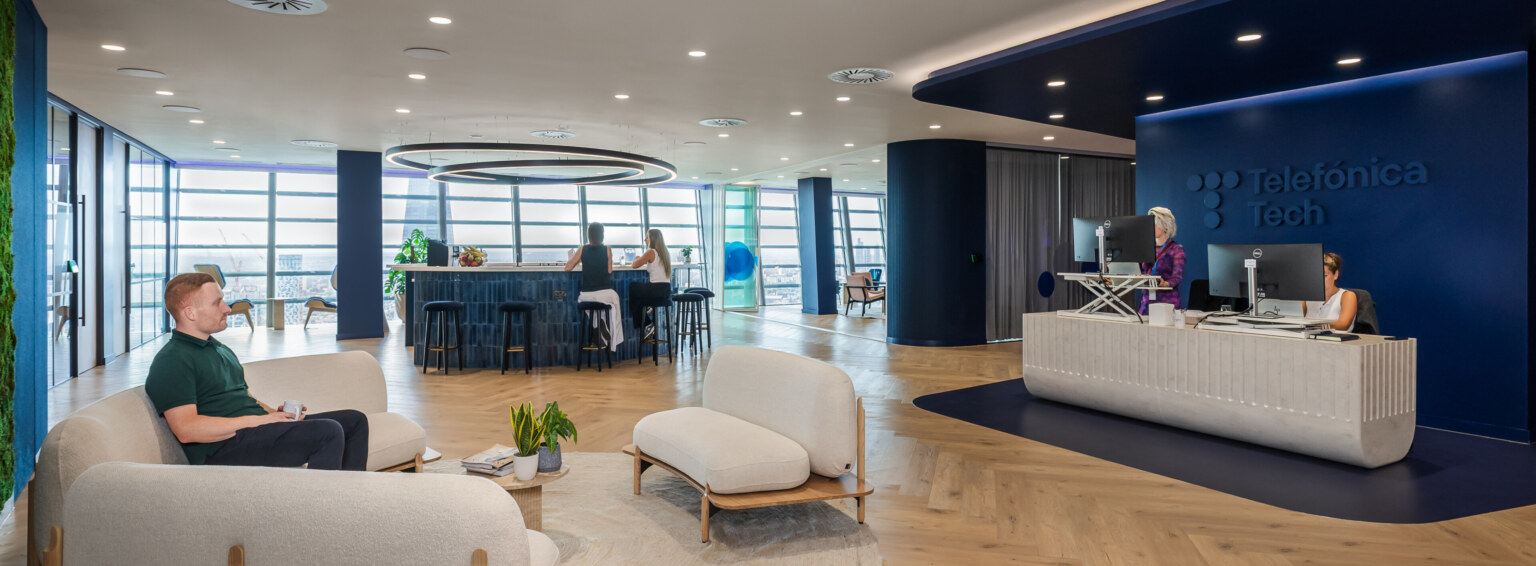
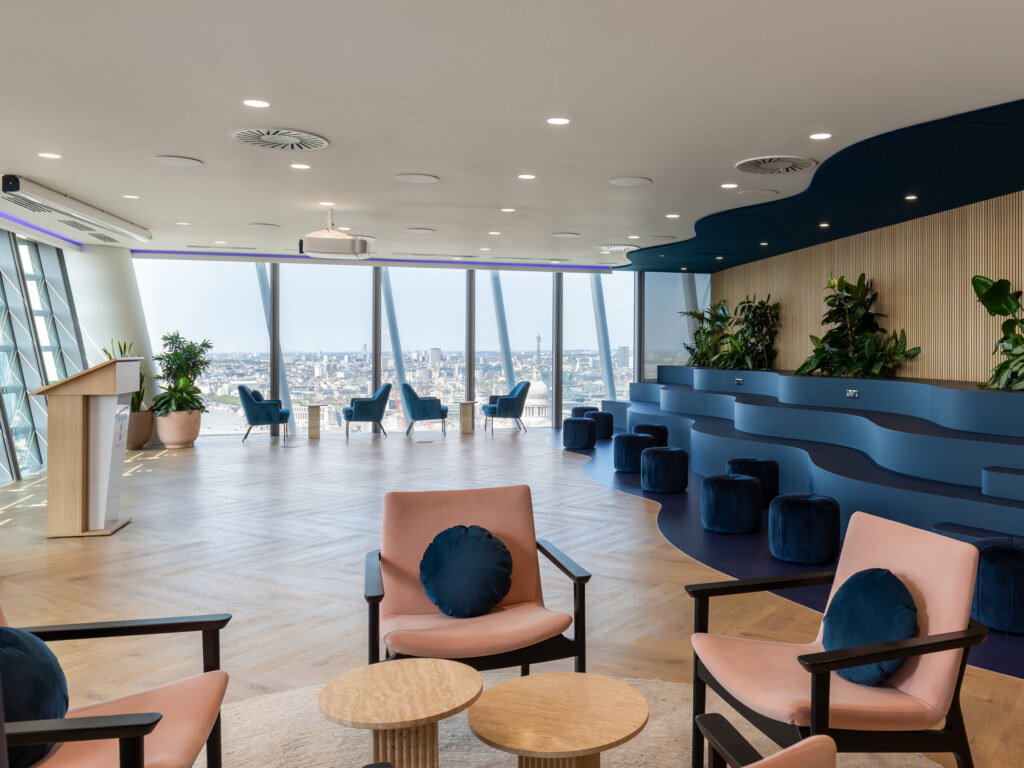
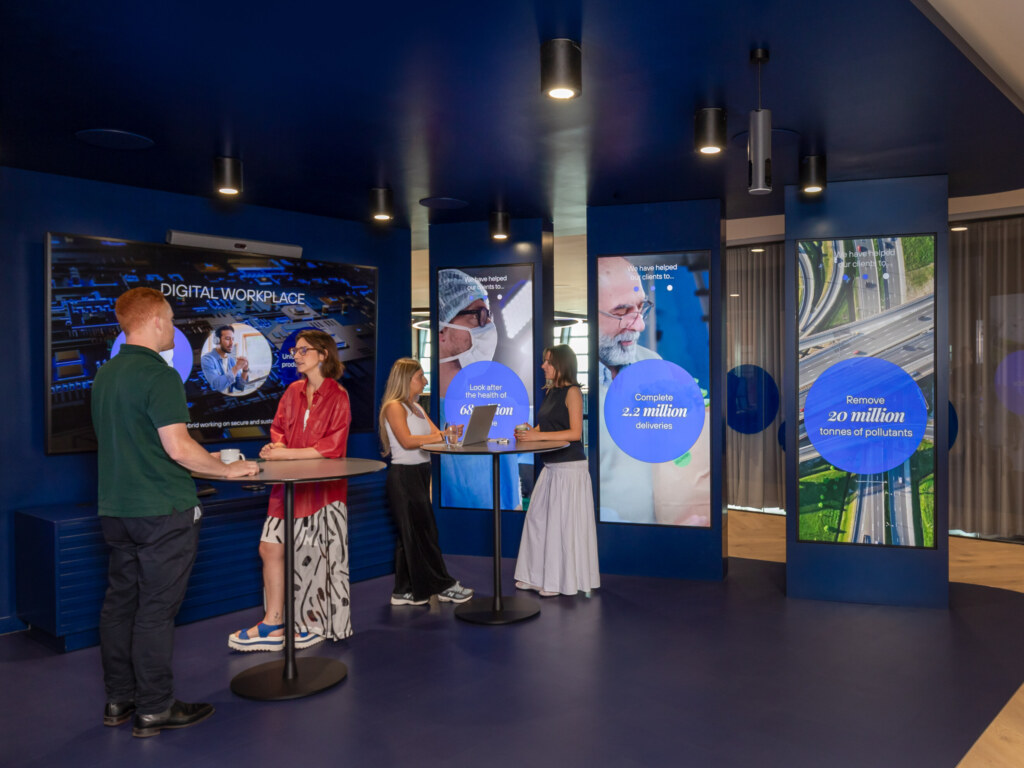
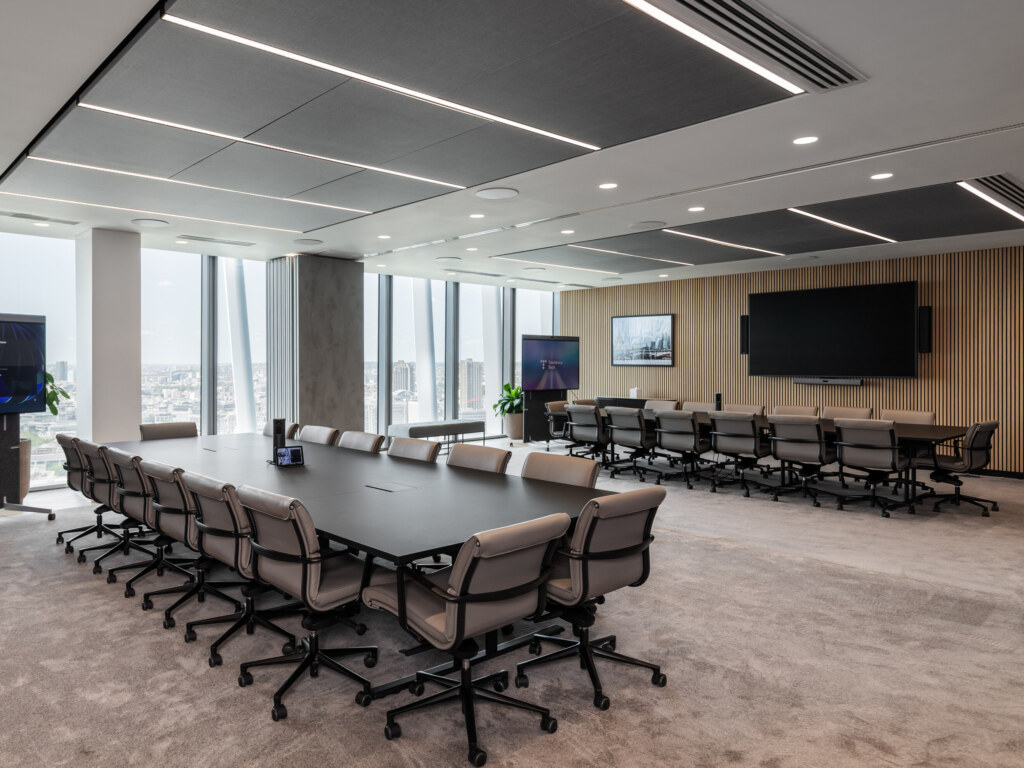
Telefonica Tech’s London office offers a prime example of a highly tech-forward collaboration and events space. Their office is designed to host everything from team meetings to large-scale town-halls with employees across the globe. High-quality AV systems, interactive screens and flexible setups make it easy to engage multiple teams simultaneously, breaking down geographic barriers.
These spaces demonstrate that when technology is embedded into the design, offices can become hubs for real-time collaboration and innovation, rather than just static work environments.
-
Let sensors and data guide your design
Data and sensors are transforming how workplaces are designed and used. By tracking occupancy, movement and usage patterns, businesses can make informed decisions to optimise office layouts and resources.
Sensors can help personalise the workplace experience, ensuring employees find spaces that suit their needs. That could be somewhere for focus, collaboration or socialising.
-
They also provide insights into how teams actually use different areas of the office, revealing trends that might not be obvious through observation alone. For example, understanding which meeting rooms are underused or how social hubs are frequented can guide redesigns that maximise engagement and productivity.
Leveraging this data ensures that office design is not just aesthetic, but also functional, responsive and aligned with real workplace behaviours. You can find out more in ‘How AI Is Shaping the Design of the Future Workplace’.
-
-
Inspiring interior design & culture-led concepts
Interior design sets the tone for how people feel and behave in a workspace. It can strengthen your culture, express your brand and make the day-to-day experience more enjoyable for your teams.
Whether you’re introducing bold features or fine-tuning the small details, thoughtful design choices can bring your workplace to life. The ideas in this section are here to help you shape a space that’s functional, engaging and aligned with what your organisation stands for.
-
Showcase and reinforce your brand
A well-executed brand presence can completely shift how people experience your office. It shapes first impressions for clients, helps visitors understand who you are before anyone speaks, and gives employees a sense of belonging. Strong employer branding also has tangible commercial benefits: research shows it can reduce staff turnover by 28%, cut recruitment costs by 50% and improve the quality of incoming applications.
Brand expression doesn’t always have to take centre stage. Sometimes it’s a bold installation, or sometimes it’s a colour thread that ties the space together. The key is choosing elements that feel authentic to your organisation and support the kind of culture you want to build.
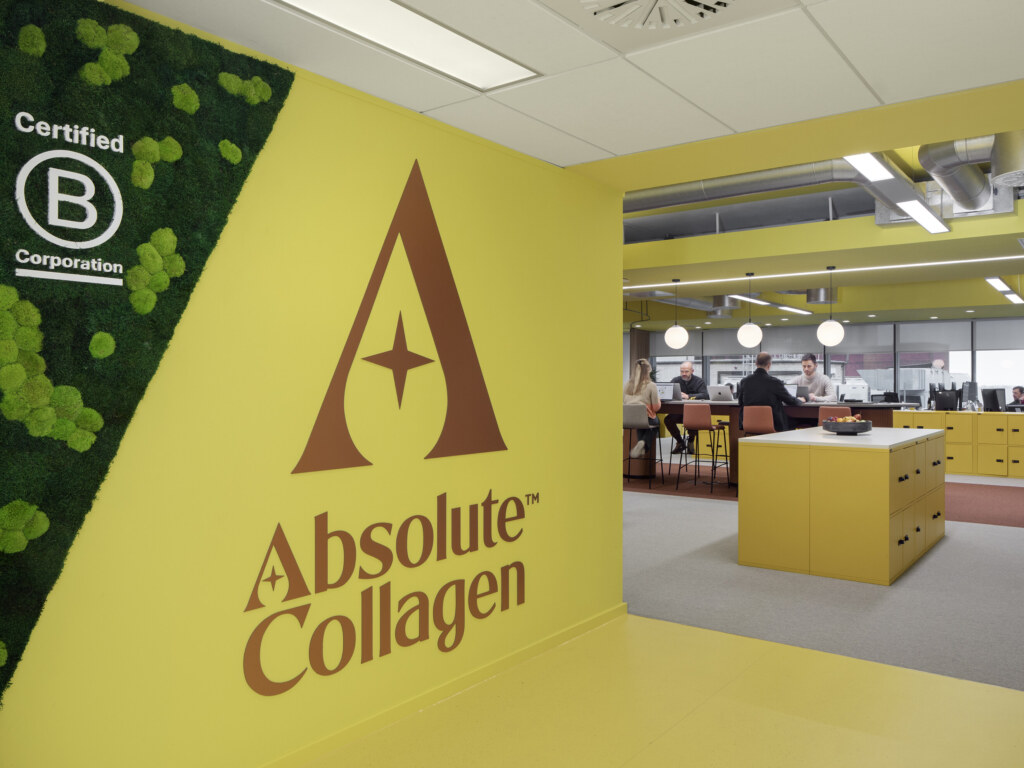
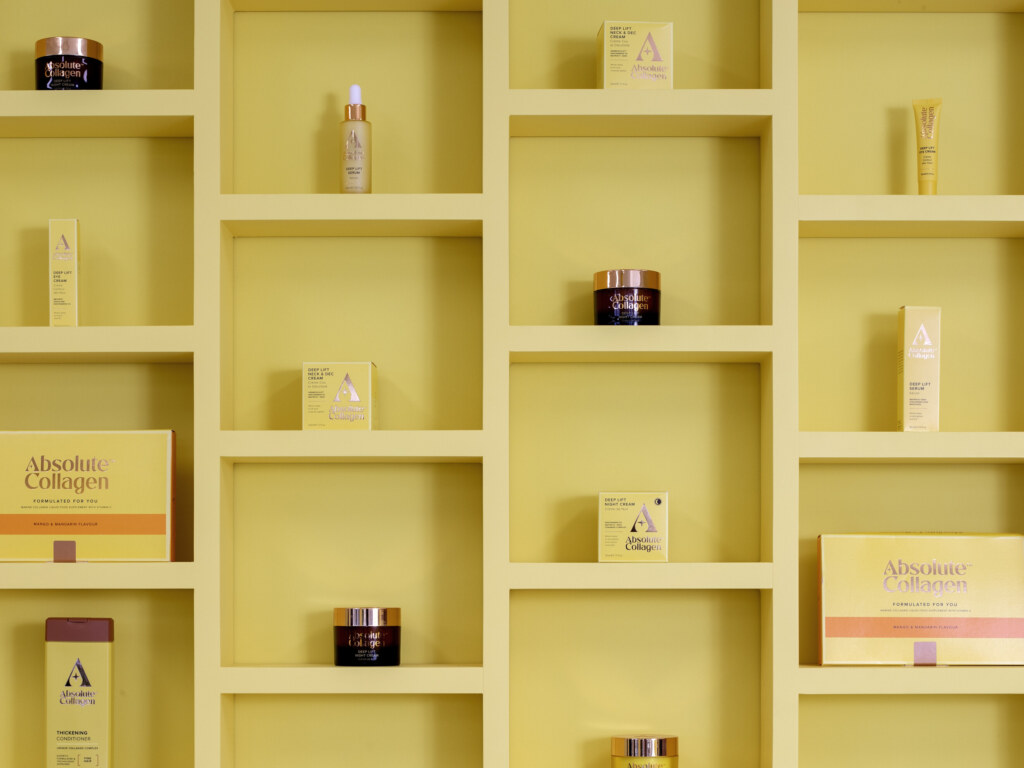
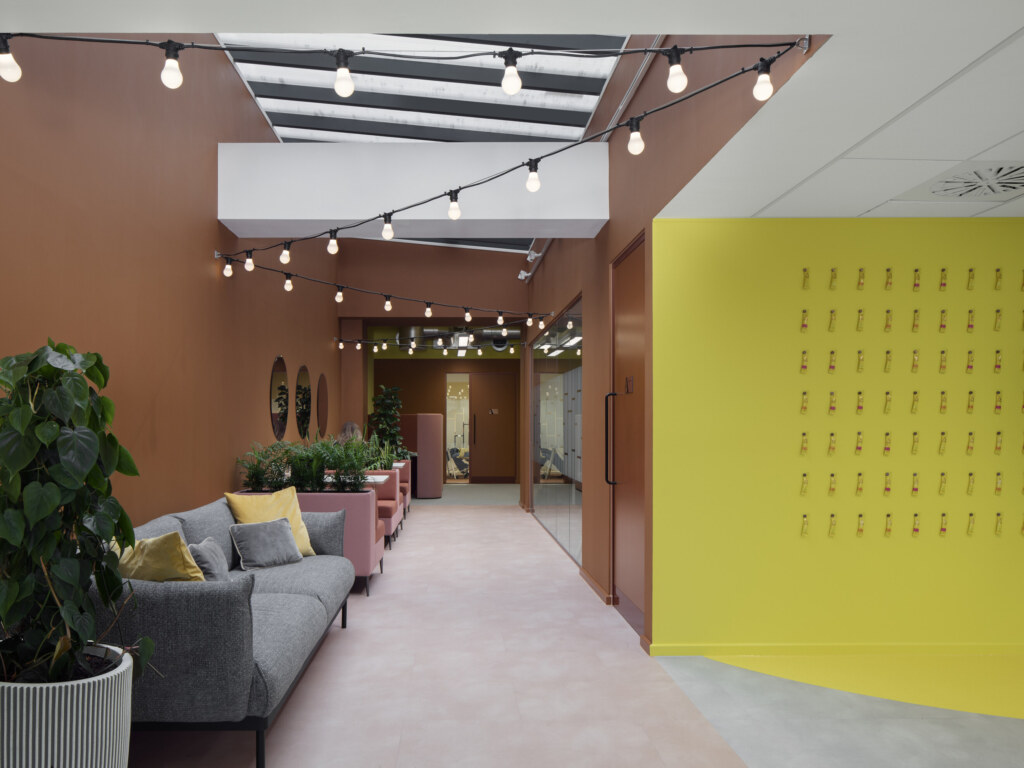
Absolute Collagen’s London office is a good example of how this balance can work. Their workplace weaves the brand’s signature confidence and warmth into the environment through a mix of standout features and refined details. Sculptural signage, confident use of the brand palette and moments of texture help bring their identity to life, while more understated touches create a cohesive, uplifting feel. The result is a workspace that looks and feels unmistakably “Absolute Collagen” without overwhelming the day-to-day experience.
-
Add a luxury tint with premium details
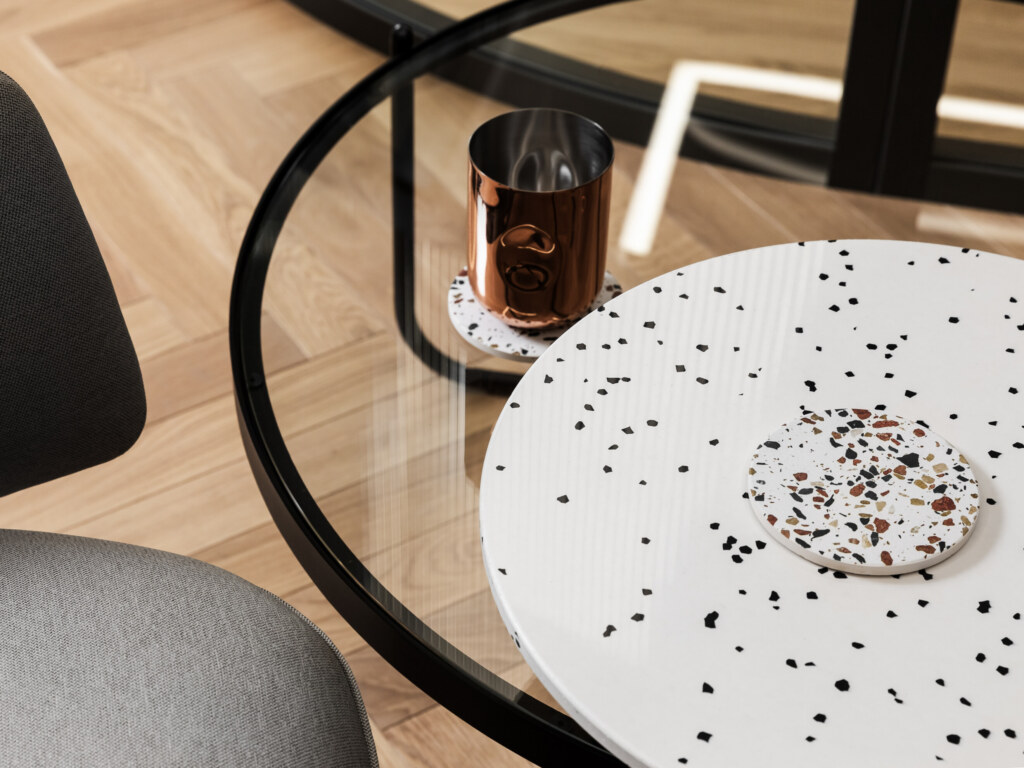
Not all office design ideas need to be complex. Some can be simple, like using high-quality finishes. Whether it is marble inlays or brass door handles, they demonstrate attention to detail and luxury by providing subtle focal points.
There are multiple benefits of this office interior design idea. Firstly, it adds a luxury tint to your brand, relating to the point above. Clients will link the premium elements of the office design to their impression of your brand, products and services. It also enhances the experiences for employees, resulting in better morale and potentially better productivity.
-
A great example of this is the Bear Capital office, where bespoke details were added throughout the building. Reeded glass and a textured backsplash finish have been hand-picked for their tactile appeal. Elsewhere, finer details like leather door handles add a refined finish. It is luxurious yet minimal, demonstrating how you can have a premium feel without going overboard.
-
-
Let employees recharge with retreat rooms
Over the last few years, we have seen more consideration for the different ways people utilise their working environment. Working from home gave people greater choice, whether that was moving into another room to focus on a specific task, or stepping outside for some fresh air.
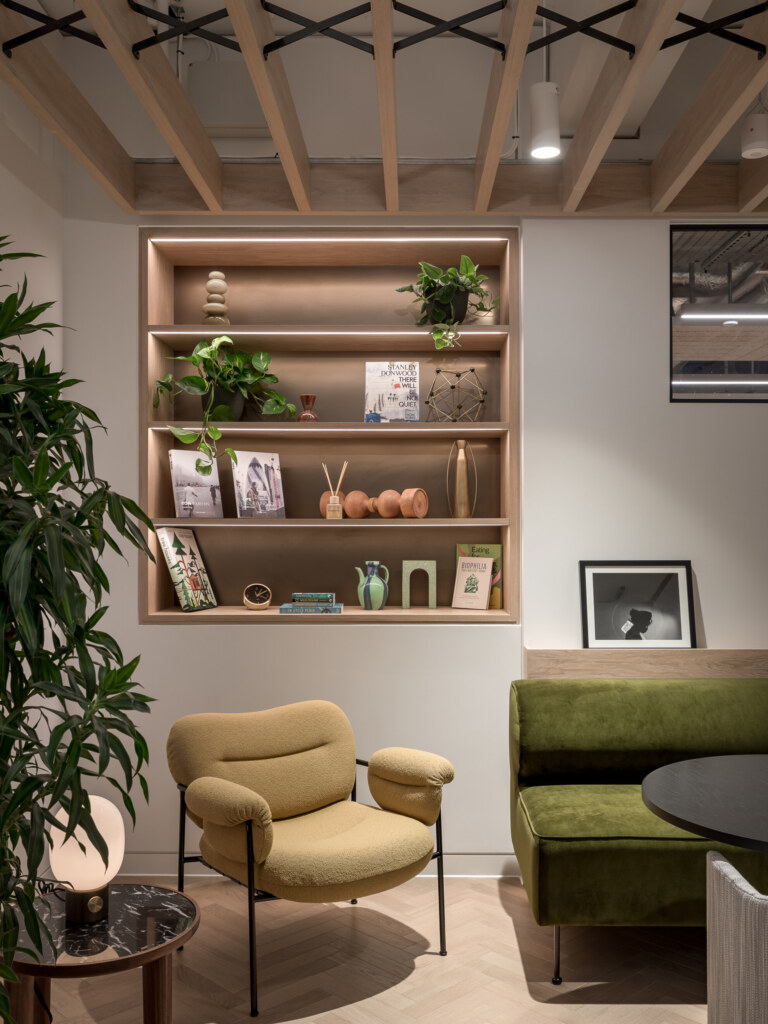
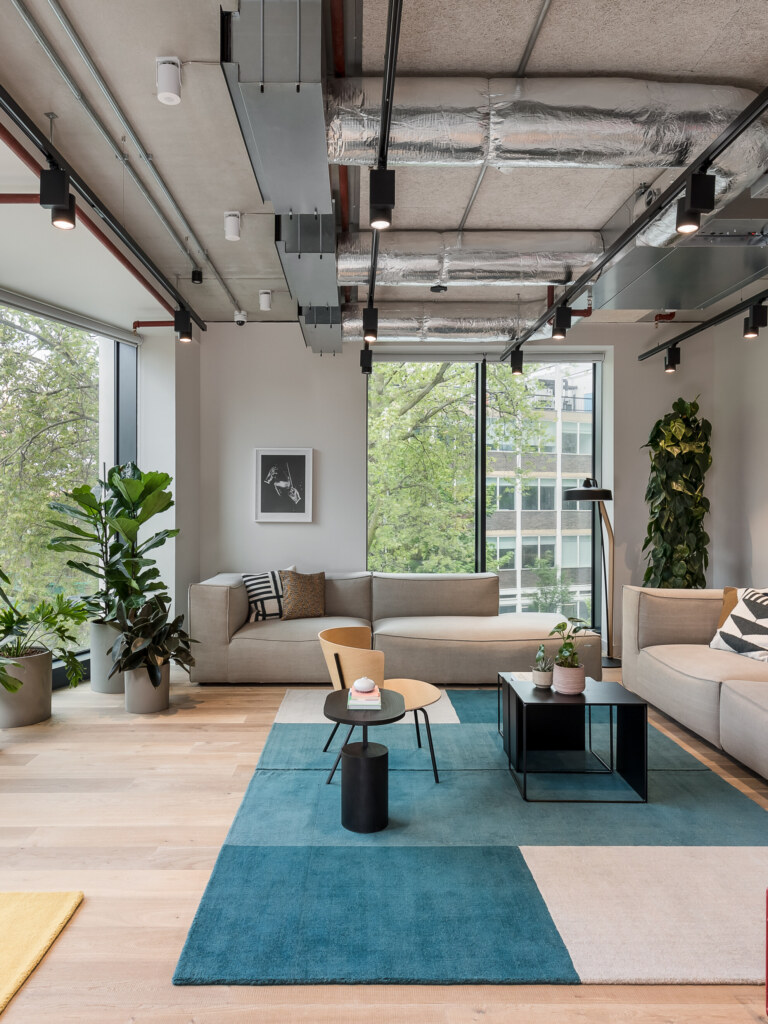
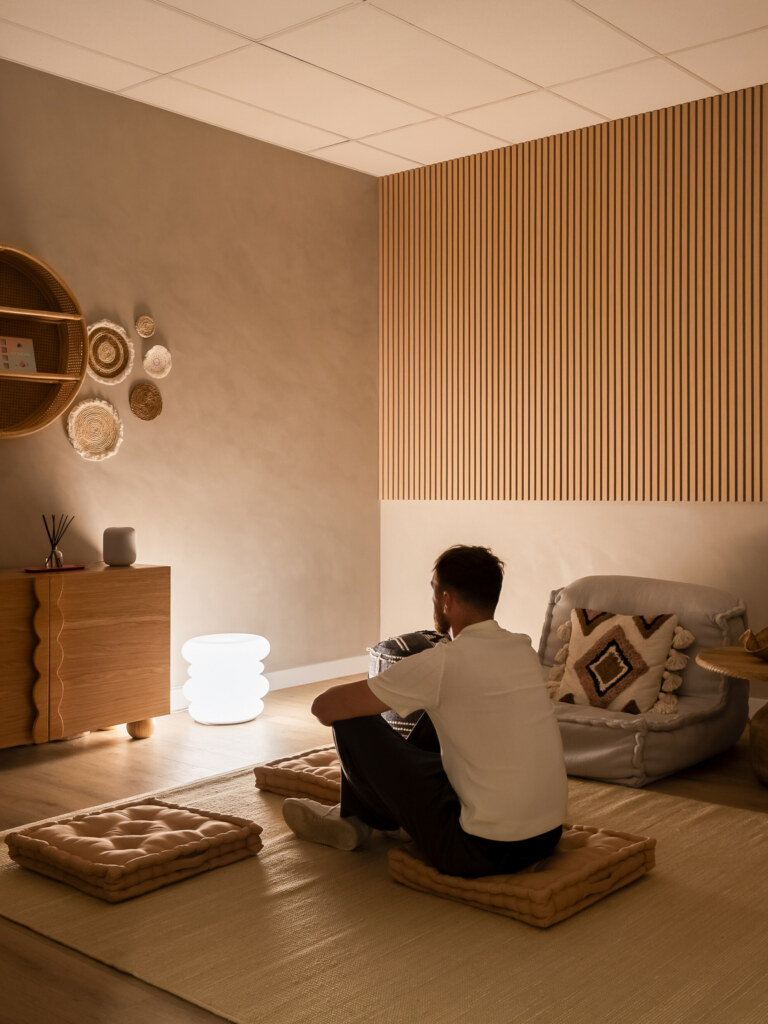
These examples demonstrate the importance of retreat spaces – areas of the office where people can recharge with some time to themselves. Retreat and wellness rooms are dedicated spaces that offer a sense of comfort, adding both physical and visual variety to your office.
The term ‘retreat’ implies not just a break from work, but also a time to reflect in a space that is decidedly different from the rest of the office. These spaces can take shape as a dedicated library or a quiet corner in the office which is furnished in a different style to its immediate surroundings.
Above all, these spaces must prioritise the user. Retreat spaces can be particularly beneficial for neurodiverse employees, meaning that acoustics and lighting need to be carefully considered. The placement of these spaces is another important aspect to consider, with employees more likely to utilise spaces that are tucked away from the office core.
-
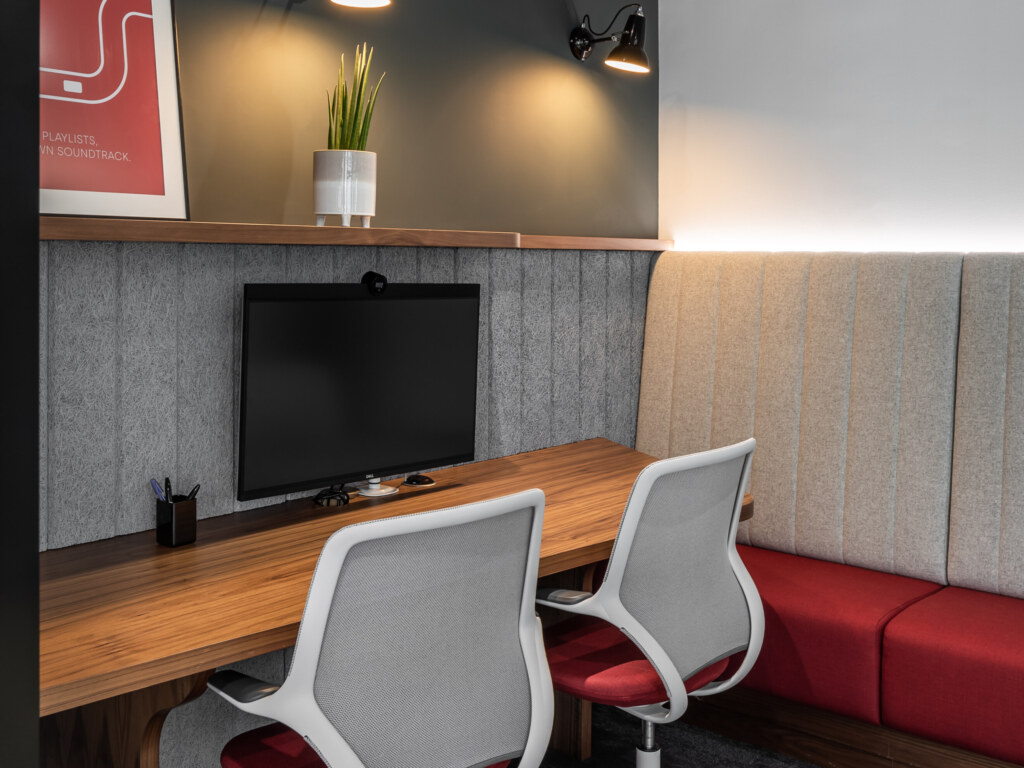
Auto Trader’s office showcases how retreat spaces can be created effectively, with residential-inspired booths providing a necessary retreat in a busy office. It gives employees the feeling of working in a different environment.
Meditation rooms are another great example of these types of spaces, which is something we are seeing as an emerging trend across projects. These rooms can have blended functions, which is a sensible way to utilise real estate and ensure the office remains optimised.
-
-
Try hospitality-led design
Many office interior design ideas revolve around the ‘hotelification’ of the workplace. In short, this means applying the rules of hotels and hospitality to the work environment. Rather than beds and a turndown service, the focus is creating more welcoming, aesthetically pleasing spaces.
This could take shape as a thoughtfully designed welcome area strategically positioned at the front of the office, acting as a dedicated space that ensures guests do not navigate through the entire office when they arrive.
Other ideas range from comfortable seating and brand touchpoints to more traditional hospitality methods such as a coffee station to make a positive impression on clients and prospective employees.
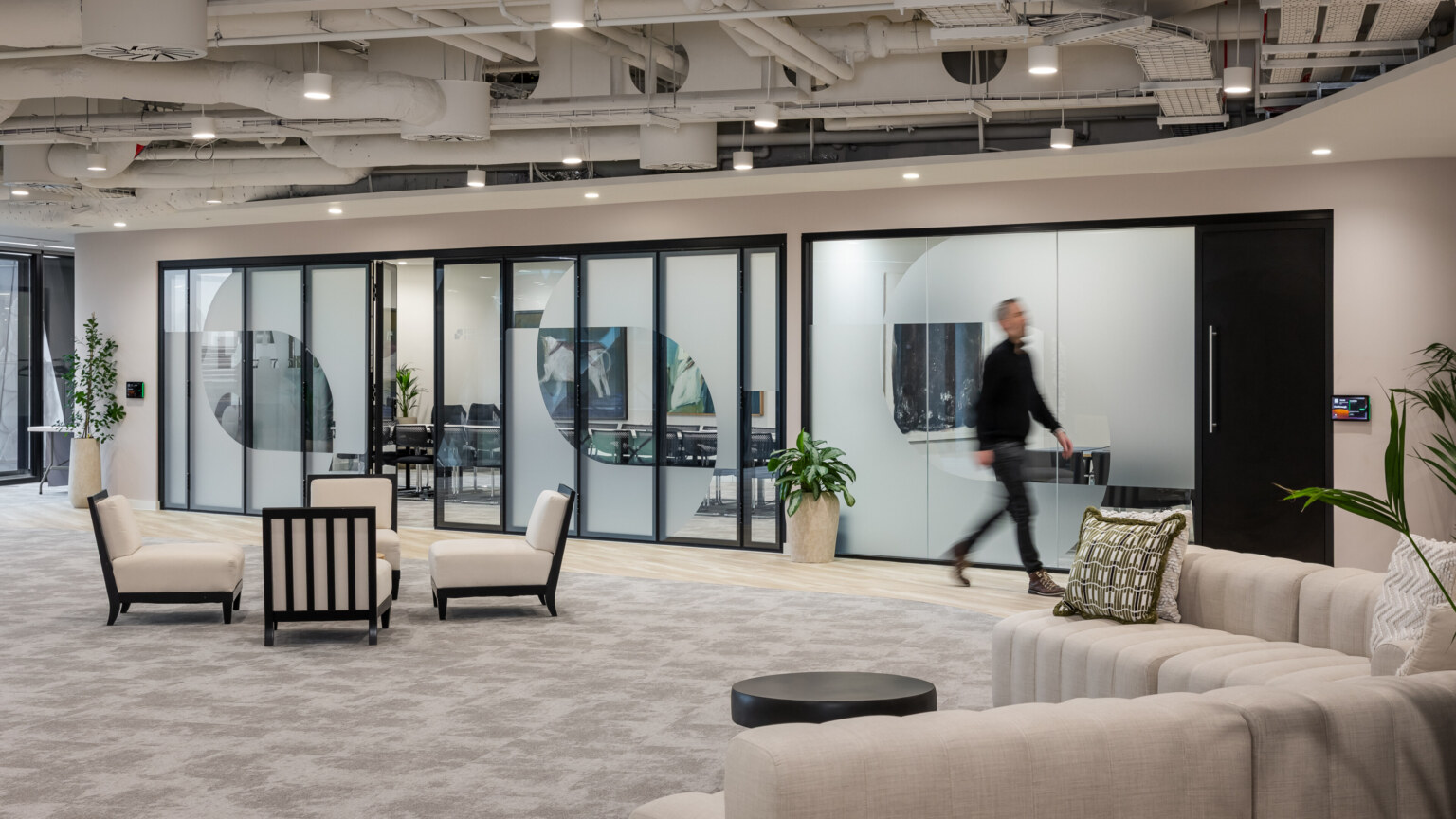
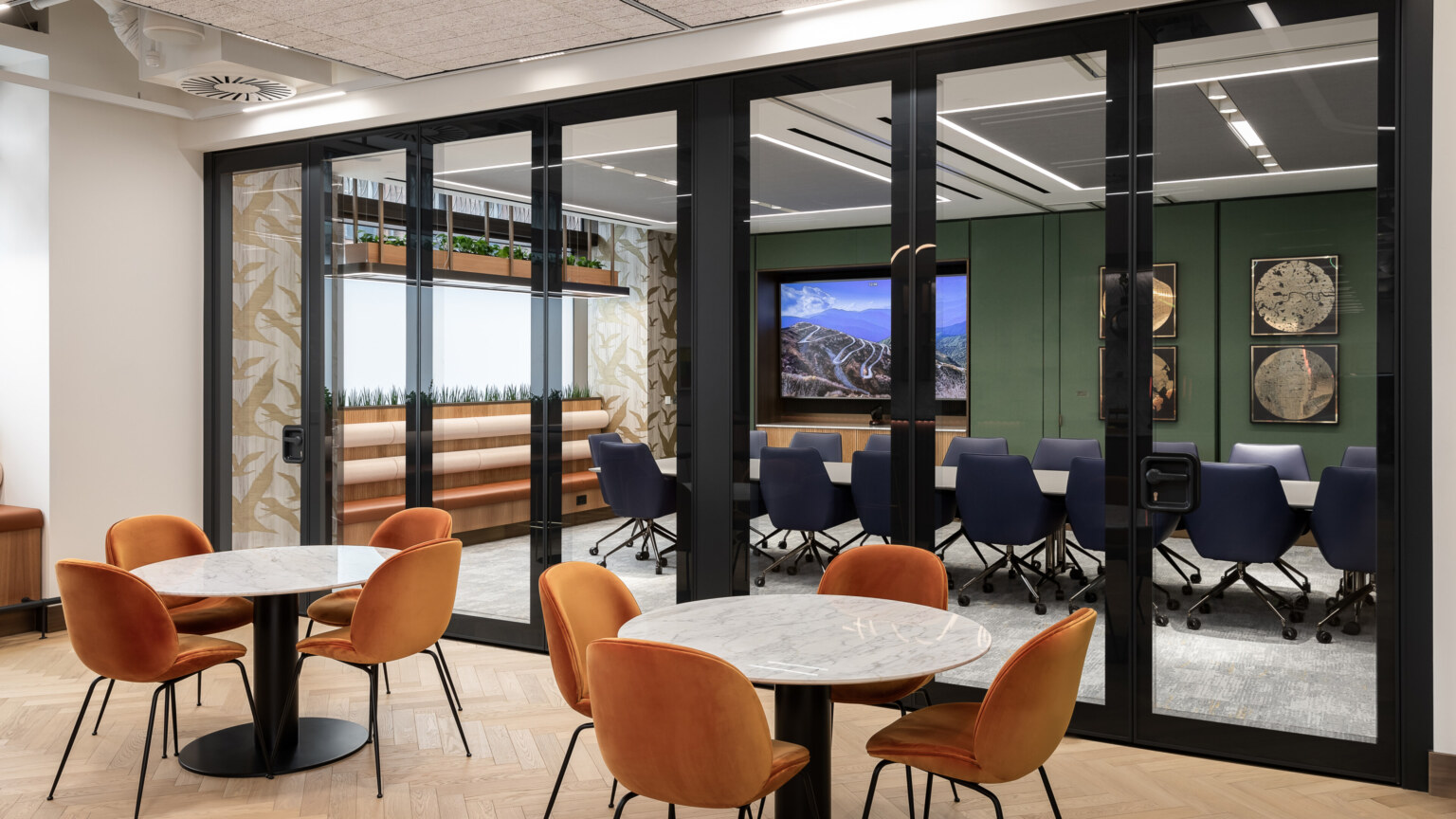
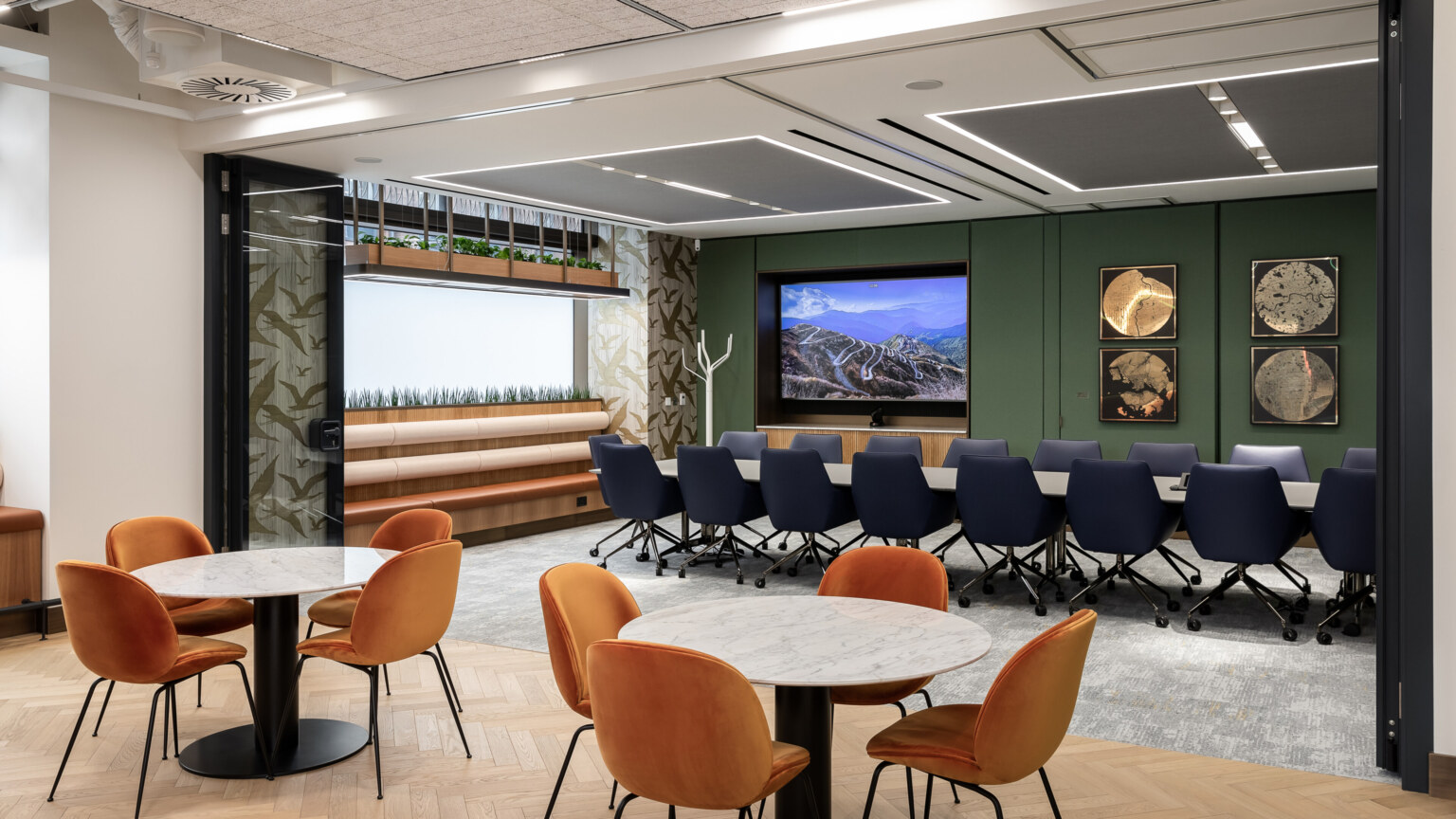
Flexible social spaces like the boardroom with folding doors at this venture capital firm’s office – seamlessly transition from a formal meeting room to a sophisticated space for client events and entertainment.
-
Implementing office design ideas
Modern office inspiration ranges from small design elements and room types to overarching themes and office layout ideas. What is most important is that offices work functionally, not just aesthetically.
It is also important to note that all examples we have included are grounded in context – whether it is from the initial brief or the discovery phase with the client. The way your business operates should always be considered when thinking about how you can adopt these ideas.
-
Get in touch
Speak to our design experts about your upcoming workplace project
020 7553 9500
info@oktra.co.uk
-